Mirrors on a Side-by-Side
Navigating the world of side-by-sides in Arkansas can feel like traversing a muddy trail after a heavy rain – confusing, sometimes frustrating, and full of unexpected turns, especially when you start thinking about riding on public roads. Many of us dream of taking our UTV from the deer lease straight to the local ice cream shop, but the question of street legality, and specifically what equipment you need, often stops us in our tracks. This guide is here to untangle the specifics of mirrors on your side-by-side, helping you understand what Arkansas expects if you ever want to get that street permit.
The Basics: Why Mirrors Matter for Arkansas Street Legality
When it comes to enjoying your side-by-side, whether it's tearing up trails at Wolf Pen Gap or tackling chores around your property, mirrors might seem like a minor detail. But once you start looking at the possibility of riding on paved roads in Arkansas, they become incredibly important, not just for safety but for staying on the right side of the law.
Understanding Arkansas's Approach to UTVs on Roads
Arkansas has a very specific stance on off-highway vehicles (OHVs) like UTVs on public roads. By default, it's generally unlawful to operate an ATV or UTV on a public street or highway. However, this isn't a blanket ban. There are statutory exceptions for specific activities, like farming or hunting operations, and critically, a provision that allows individual cities and towns to pass ordinances permitting UTVs on certain local streets. This local option is where the mirror discussion truly heats up, because these local ordinances often come with equipment requirements that you absolutely must meet.
The state statute, and subsequently local ordinances, are designed to ensure that if a UTV is going to share the road with cars and trucks, it needs to be equipped to do so safely. This means having the same basic visibility tools that other vehicles have. Imagine trying to change lanes or make a turn on a busy street without being able to see what's coming up behind you. It's not just risky; it's a recipe for an accident. That's why equipment like proper mirrors, turn signals, and sometimes even a horn become essential. It’s not about making your UTV less fun; it’s about making it safer for everyone on the road. You can dive deeper into how this works by reading [Arkansas Towns Can Open Their Streets to UTVs].
Beyond Safety: Meeting Local Ordinance Requirements
It's one thing to know that mirrors are good for safety, but it's another to understand that they are a legal requirement in many Arkansas communities that allow street-legal UTVs. If your local town has passed an ordinance, chances are high that it specifies what kind of mirrors your side-by-side needs to have before you can get that annual street permit.
These ordinances aren't always identical from one town to the next. What Bono requires might be slightly different from what another community allows, which can be a real headache for riders who live or frequently travel between different areas. However, a common thread among most, if not all, of these local UTV ordinances is the need for both a rearview mirror and side mirrors. They want you to have a comprehensive view of what's happening around your machine, just like you would in a car or truck. Failure to meet these specific equipment requirements, including having the right mirrors, means your UTV won't be considered street-legal in that town, and you could face penalties for illegal road riding. Always check [Arkansas UTV Street Legal Rules by Town] for your specific area.
What Kinds of Mirrors Does Arkansas Require for Street-Legal UTVs?
So, you're looking at getting that street permit for your side-by-side in an Arkansas town. The big question often becomes: "What exactly do I need for mirrors?" It's not just about having a mirror; it's about having the right types of mirrors that provide adequate visibility. Most local ordinances, taking their cue from general vehicle safety standards, will specify the need for both inside and outside mirrors.
Rearview Mirror: Seeing What's Behind You
A rearview mirror is typically the easiest requirement to understand. This is the mirror mounted inside the cab of your side-by-side, usually at the top center of the windshield frame, allowing you to see directly behind your machine. Its primary purpose is to give you a clear view of vehicles approaching from the rear.
For off-road use, a rearview mirror might be optional or simply a convenience, but for street use, it’s non-negotiable. When you're driving on a paved road, especially one with other traffic, being able to quickly glance up and see if there's a car tailgating you or if the lane is clear to merge is crucial. The mirror should be positioned so that it provides an unobstructed view through your rear window or cargo area, assuming your UTV has one. If your machine has a bed or cargo box that might obscure a full view directly behind, it becomes even more critical to rely on your side mirrors as well. The clarity of the mirror itself is also important; a scratched, cracked, or excessively vibratory mirror won't provide the clear, stable image needed for safe road operation.
Side Mirrors: Expanding Your Field of Vision
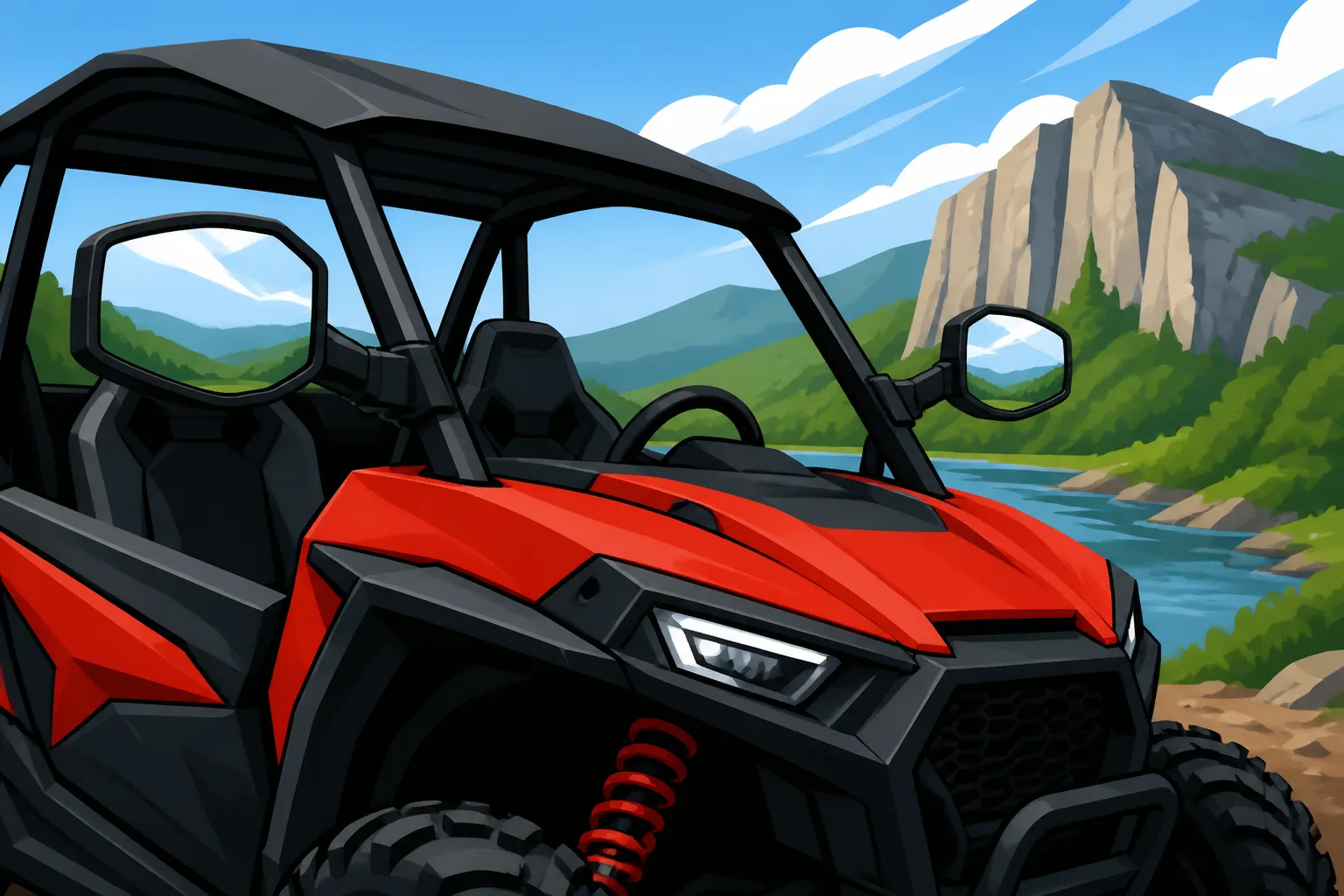
Beyond the rearview mirror, virtually all Arkansas street-legal UTV ordinances will mandate the presence of two functional side mirrors. These are mounted on the exterior of your side-by-side, typically on the roll cage or doors, one on the driver's side and one on the passenger's side. Think of them just like the side mirrors on your car.
Side mirrors are absolutely vital for safely navigating traffic. They cover your "blind spots" – those areas to the sides and slightly behind your machine that you can't see with just the rearview mirror. When you're preparing to make a turn, change lanes, or even just pulling away from the curb, a quick check of your side mirrors is essential to avoid collisions. They help you monitor traffic in adjacent lanes, spot motorcycles that might be tucked away, and generally give you a much wider field of vision. Each mirror should be securely mounted, adjustable, and provide a clear, stable reflection. They need to be robust enough to handle the vibrations and occasional bumps that come with UTV use, even on pavement. You'll find these alongside other requirements when researching [Arkansas Equipment for a Street-Permitted Machine].
Choosing the Right Mirrors for Your Arkansas Side-by-Side
Once you know that you need both a rearview mirror and two side mirrors, the next step is actually picking them out and getting them installed. This isn't just about grabbing the cheapest option; it's about finding mirrors that are durable, provide excellent visibility, and can withstand the unique demands of a UTV, whether you're on the trail or the street.
Mirror Types and Features to Consider
There's a wide world of UTV mirrors out there, and they come with various features and mounting options. For street legality, the most important thing is that they provide clear, unobstructed views to the rear and sides.
- Rearview Mirrors: These often come in universal clamp-on designs, attaching directly to your roll cage. Look for models with shatter-resistant glass or acrylic, as well as robust housings that can handle vibrations. Some even offer slightly convex designs to widen the field of view, which can be a bonus.
- Side Mirrors: These are typically more complex in their mounting. You'll find options that clamp directly to your roll cage (round or square tubing specific), mount to your doors (if your UTV has full doors), or even "breakaway" designs. Breakaway mirrors are a fantastic feature for UTVs, allowing the mirror to fold in if it strikes a tree branch or obstacle on the trail, preventing damage. This is a huge plus if you plan to still hit the trails frequently with your street-legal setup. The glass itself can be flat for a true representation or convex for a wider, though slightly distorted, view. Many riders prefer a convex side mirror for the expanded peripheral vision, especially on the street.
Consider the adjustability as well. You'll want mirrors that can be easily positioned for different drivers or quickly adjusted if they get bumped. Some mirrors include integrated turn signals, which can be a neat all-in-one solution if your town's ordinance requires [Arkansas Turn Signal Requirements for Street UTVs].
Durability for Both Trail and Pavement
The reality for most Arkansas side-by-side owners is that even if you get a street permit, your UTV will still spend a significant amount of time off-road. This means your mirrors need to be tough. Standard automotive mirrors might not cut it.
Look for mirrors made from heavy-duty materials, like aluminum or reinforced plastics. The mounting hardware should be equally robust to prevent loosening or breakage from constant vibration, bumps, and trail impacts. Brands like SuperATV specialize in UTV accessories and offer a range of mirrors designed specifically for off-road durability while still meeting road-legal requirements. They understand that a UTV mirror needs to survive more than just highway wind. Investing in a quality set now can save you the headache and cost of frequent replacements down the line. A cheap plastic mirror might seem fine until a low-hanging branch at Mill Creek OHV Trail System snaps it right off.
Here's a quick comparison of mirror options:
| Mirror Type | Purpose | Key Features for UTVs | Pros | Cons |
|---|---|---|---|---|
| Rearview Mirror | Central rear visibility | Shatter-resistant, wide-angle (convex), robust housing, roll cage clamp-on | Essential for street, easy installation, good for general awareness | Can be obscured by cargo/passengers, may vibrate on rough terrain |
| Side Mirrors | Peripheral/blind spot visibility | Breakaway function, adjustable, convex glass, durable housing, roll cage clamp/door mount | Critical for lane changes/turns, enhances overall situational awareness | Susceptible to trail damage (without breakaway), can add width to machine |
| Integrated Mirrors | Combines side mirror with turn signal | LED turn signals, robust design, typically higher cost | Streamlined look, convenient for street legality, all-in-one | Higher initial cost, more complex wiring for turn signal function |
Where to Find Quality Mirrors and Professional Advice
You can find a vast selection of UTV mirrors at specialized off-road shops, online retailers, and even some powersports dealerships. When shopping, always double-check the mounting style to ensure it's compatible with your specific side-by-side model and roll cage diameter. If you're unsure about what's required or what will fit best, don't hesitate to consult with a local UTV accessory dealer. They often have experience with the specific ordinances in surrounding Arkansas towns and can guide you toward compliant and durable options.
Remember, the goal is not just to check a box on a list of requirements for your permit. It's to equip your UTV safely for road use. A good set of mirrors is a crucial part of that equation.
Installation and Maintenance: Keeping Your Mirrors Road-Ready
Once you've got your new mirrors, the next step is proper installation and then ongoing maintenance. It's not a set-it-and-forget-it deal, especially for a machine that spends time off-road. Correct installation ensures they function as intended, and regular checks keep you compliant and safe.
DIY Installation vs. Professional Help
Most UTV mirrors are designed for relatively straightforward installation, often involving simple clamp-on mechanisms for roll cage mounting. If you're comfortable with basic hand tools, you can likely install them yourself. Always follow the manufacturer's instructions, paying close attention to torque specifications for clamps to ensure a secure fit without over-tightening and damaging your roll cage.
However, if your chosen mirrors involve more complex wiring (for example, if they have integrated turn signals), or if you're simply not confident in your DIY skills, it's always a good idea to seek professional help. A local powersports dealer or UTV customization shop can ensure everything is installed correctly, wired properly, and adjusted for optimal visibility. This can be especially valuable if you want to make sure your machine passes muster with local authorities when you apply for your [Arkansas UTV Street Permit Cost in a City].
Adjusting for Optimal Visibility
Once installed, proper adjustment is key. Sit in the driver's seat and have someone help you adjust both the rearview and side mirrors.
- Rearview Mirror: Adjust this so you have a clear, centered view directly behind your UTV. You should be able to see the top of your cargo bed (if applicable) and a good portion of the road behind you.
- Side Mirrors: Adjust each side mirror so that you can just barely see the side of your UTV in the inner edge of the mirror. This provides the widest possible view of the lanes adjacent to you and minimizes blind spots.
Take a short test drive, both on and off-road if possible, to fine-tune the adjustments. Remember that different passengers or cargo loads might slightly alter your view, so be prepared to make minor tweaks as needed.
Regular Checks and Cleaning
UTV mirrors take a beating, especially if you venture off the pavement. Dust, mud, vibrations, and even small branches can impact their effectiveness. Make it a habit to perform regular checks:
- Security: Ensure all mirrors are securely mounted and haven't vibrated loose. Tighten any clamps or bolts as necessary.
- Clarity: Clean your mirrors frequently. Mud, dust, and water spots can severely impair visibility. Carry a small spray bottle of glass cleaner and a microfiber cloth with you, especially on longer rides.
- Damage: Inspect the mirror glass for cracks, chips, or scratches. Damaged glass can distort images and reduce visibility. If a mirror is significantly damaged, replace it promptly.
- Breakaway Function: If you have breakaway mirrors, periodically check that they can still pivot freely and that their detent mechanism (the part that holds them in place) is still strong enough to keep them stable during normal driving.
Keeping your mirrors in top shape is not just about passing an inspection; it's about maintaining critical safety equipment that helps you react to changing traffic conditions, whether you're cruising down a county road or carefully crossing a state highway at [Arkansas Rules for Crossing a State Highway]. Don't overlook these simple steps.
Disclaimer
This article is for general informational purposes only and does not constitute professional advice. Laws, prices and regulations vary by location and change over time. Consult a qualified professional for guidance on your specific situation.