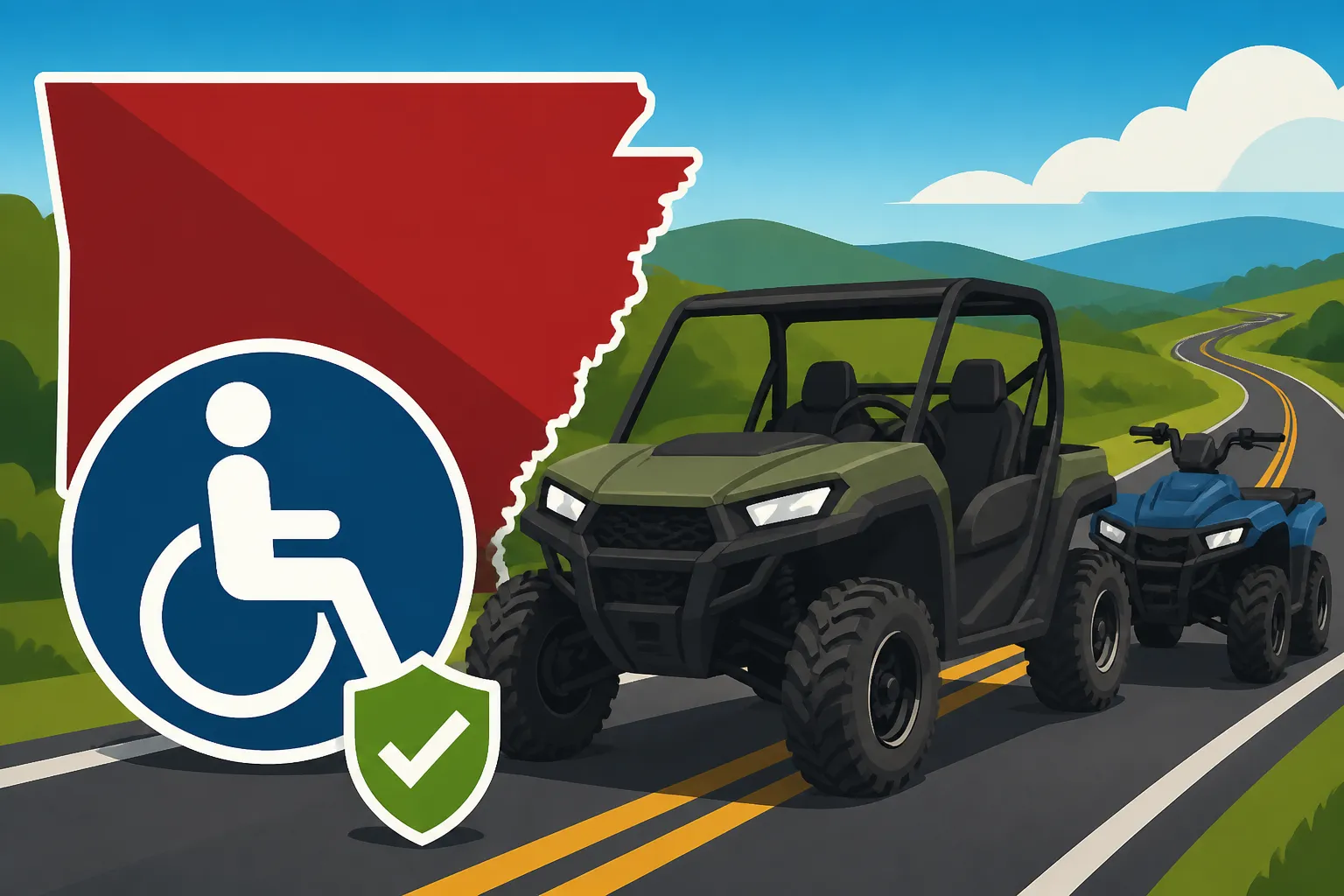
Arkansas’s Road Exception for a Serious Walking Disability
Navigating the rules for riding ATVs and UTVs on public roads in Arkansas can feel like trying to solve a puzzle, especially when personal mobility challenges are part of the equation. For individuals facing a serious walking disability, the standard prohibitions can be incredibly frustrating, making it difficult to even access land or perform essential tasks. This guide aims to clear up the confusion around Arkansas's specific road exception for those with a serious walking disability, helping you understand your rights and the necessary steps to take.
Understanding Arkansas's Disability Exception for Off-Road Vehicles
Arkansas law, while generally strict about keeping off-road vehicles like ATVs and UTVs off public roads, does recognize specific circumstances where these machines are essential. One crucial exception carved out by the state legislature addresses the needs of individuals with a serious walking disability. This isn't just a courtesy; it's a legal provision designed to ensure that those whose mobility is significantly impaired can still utilize their off-road vehicles for necessary travel.
Before this exception, many individuals found themselves in a Catch-22: their ATV or UTV was their primary means of navigating certain terrain or distances, but using it on a short stretch of public road to get to that terrain was technically illegal. This created undue hardship for those already dealing with physical limitations. The exception provides a vital pathway, allowing for reasonable use where a conventional vehicle might not be practical or accessible. It's about enabling independence and access, not just for recreation, but for practical needs such as reaching hunting grounds, checking on livestock, or simply getting from one parcel of land to another when walking is a severe challenge.
What Constitutes a "Serious Walking Disability"?
The phrase "serious walking disability" isn't just a casual term; it has a specific implication within the statute. It refers to a physical condition that significantly impairs a person's ability to walk or ambulate. This isn't about minor aches or pains, but rather a substantial and often permanent limitation. Think about conditions that require the use of assistive devices like wheelchairs, crutches, walkers, or canes for mobility, or conditions that render walking distances unsafe or impossible.
This definition is crucial because it sets the bar for who can legally claim this exception. It's not a loophole for anyone who'd rather ride than walk; it's for those for whom walking presents a genuine, debilitating challenge. Typically, this would involve a medical diagnosis from a licensed physician outlining the nature and severity of the walking impairment. While the law doesn't explicitly list specific medical conditions, it focuses on the impact of the condition on one's ability to walk. For example, severe arthritis, paralysis, chronic pain conditions, or neurological disorders that affect gait and balance could all fall under this umbrella.
The Purpose Behind the Exception
The primary purpose of creating this specific exception is rooted in accessibility and equal opportunity. Arkansas law acknowledges that off-highway vehicles (OHVs) can serve as crucial mobility aids for individuals with disabilities, allowing them to participate in activities or access areas that would otherwise be inaccessible. Imagine someone with severe knee problems who needs to check fence lines on a large rural property. Walking the entire perimeter might be impossible, but an ATV or UTV could make it manageable.
This exception helps bridge the gap between rural living or outdoor recreation and physical limitations. It recognizes the utility of these machines beyond pure sport, especially in a state like Arkansas where vast tracts of land are often best accessed by OHVs. Without it, individuals with disabilities might be unfairly excluded from hunting, fishing, farming activities, or simply enjoying the natural beauty of the state. It allows for a degree of flexibility and humanity within otherwise strict traffic laws, promoting inclusivity for all residents.
Who Qualifies for This Road Use Exception?
Qualifying for [Arkansas's Road Exception for a Serious Walking Disability] isn't a simple matter of self-declaration. The state requires clear evidence of the disability to prevent misuse of the privilege. It's important to remember that this exception is designed for a very specific need, and the burden of proof rests on the individual seeking to utilize it.
The intent is to provide genuine assistance, not to grant an unrestricted pass for ATV or UTV road use. This is where understanding the documentation and requirements becomes paramount. Trying to claim this exception without the proper paperwork could lead to fines or other penalties, which no one wants to deal with when they're simply trying to manage a disability. You need to be prepared to demonstrate that your condition genuinely limits your ability to walk to the extent that an ATV or UTV becomes a necessary mode of transportation for specific, limited road use.
Required Documentation for Proof of Disability
To legally justify using this exception, you'll need official documentation proving your serious walking disability. The most common and widely accepted form of proof is a statement or certificate from a licensed physician. This document should clearly state the nature of your disability and how it impairs your ability to walk. It doesn't need to be overly detailed about your medical history, but it does need to confirm the functional limitation.
It's wise to carry this documentation with you whenever you're operating your ATV or UTV on a public road under this exception. Think of it like carrying your driver's license or vehicle registration—it's proof of your legal right to be there. Some individuals might also carry a disability parking placard or similar state-issued identification, although the physician's note directly addressing the walking disability is often preferred. This kind of official verification is what an Arkansas deputy would typically look for if they stopped you. [What a Deputy Can Ask to See] often includes proof of authorization for special circumstances like these.
Conditions That May Qualify
While Arkansas law doesn't provide an exhaustive list of qualifying conditions, generally, any long-term physical impairment that severely restricts or prevents walking for reasonable distances would be considered. This could include, but is not limited to:
- Paralysis or significant weakness in the lower extremities due to spinal cord injury, stroke, or neurological diseases.
- Severe orthopedic conditions such as advanced arthritis, joint replacements with ongoing mobility issues, or congenital deformities that make walking difficult or painful.
- Chronic respiratory or cardiovascular conditions that cause extreme shortness of breath or fatigue with minimal exertion, preventing walking.
- Amputations or other significant limb loss affecting gait and balance.
- Balance disorders that make walking without assistance dangerous.
It’s about the functional impact of the condition. If your doctor can attest that your ability to walk is substantially limited, making an ATV or UTV a necessary tool for specified activities on roads where otherwise prohibited, you likely meet the spirit of the law. Consulting with your physician to get the most accurate and descriptive documentation is always the best first step.
Limitations of the Exception
It's absolutely critical to understand that this disability exception is not a blanket permission to ride your ATV or UTV anywhere, anytime, on public roads. It's a targeted allowance with specific limitations. First and foremost, the use of the vehicle on the road must be directly related to overcoming the walking disability for a necessary purpose. This isn't an excuse for recreational joyriding down Highway 7.
Secondly, the exception typically applies to specific types of roads and for limited distances. For instance, it might allow you to cross a state highway at a ninety-degree angle or ride a short distance down a county road to access your property, but it almost certainly won't permit you to travel extensively on high-speed arterial roads. Always refer to [Arkansas's Six Statutory Road Exceptions] to understand the full context. Also, this exception does not exempt you from other laws, such as age restrictions for drivers or general safety requirements. Even with a disability, you must operate the machine safely and responsibly, adhering to speed limits and traffic laws as applicable to the road you are on.
Where Can This Exception Be Used on Arkansas Roads?
Understanding the "where" is just as important as the "who" and "why" when it comes to [Arkansas's Road Exception for a Serious Walking Disability]. The general rule in Arkansas is that ATVs and UTVs are not street legal. However, this disability exception, like [Arkansas Farming Operation Road Use] and [Arkansas Hunting Operation Road Use], provides a narrow allowance for essential travel. It’s designed to facilitate access, not to transform your off-road vehicle into a daily commuter.
The spirit of the law focuses on enabling individuals with serious walking disabilities to perform tasks or reach destinations that would otherwise be inaccessible without risking their health or safety. This usually means short distances, specific types of roads, and for a defined purpose. It’s not about cruising through downtown Hot Springs on your quad, but rather about connecting the dots in rural settings or gaining essential access.
Types of Roads Where the Exception May Apply
Typically, this exception is most relevant and applicable on county roads, gravel roads, and for brief crossings of state highways. It's usually about connecting properties, reaching hunting or fishing spots, or accessing fields for farming operations when walking is not feasible.
- County and Rural Roads: These are the most common places where you might legitimately use this exception. If your property is bisected by a county road, or you need to travel a short distance on one to get to an adjacent parcel of land, this exception can be vital.
- Brief Highway Crossings: Arkansas law generally permits direct crossings of highways at approximately ninety degrees after coming to a complete stop, provided the crossing is made safely. The disability exception can extend this, allowing for essential travel to or from such a crossing point on the ATV/UTV itself, rather than having to load and unload the machine.
- No High-Speed Highways: It’s critical to understand that this exception is NOT for riding on major state or interstate highways. These are high-speed environments where ATVs and UTVs are inherently unsafe and disruptive, regardless of a disability. The focus remains on low-speed, essential travel in environments where traffic is minimal.
Geographical Limitations Within Arkansas
While the exception applies statewide, its practical application is more common and less scrutinized in rural areas. In urban or suburban settings, where traffic is denser and traditional vehicles are the norm, using an ATV or UTV on a public road, even with a disability, might still draw more attention from law enforcement and present greater safety challenges. Some cities may also have their own local ordinances regarding OHV use, even if the state law allows for an exception. It's always a good idea to check with local authorities if you're unsure about a specific area, especially in a town that might have passed its own rules, like [Bono's Street Rules for UTVs in Arkansas].
The general rule is that the closer you are to a high-density, high-traffic area, the more restrictive the environment becomes for OHV road use, even with an exception. The law is designed to be practical, and practical use for a walking disability is often tied to rural access.
Distances and Purpose of Travel
The use of an ATV or UTV under this exception should always be for the shortest practical distance necessary to overcome the walking disability. This is not for pleasure cruising. For example, if you need to access a hunting blind a quarter-mile down a county road that is otherwise impassable on foot due to your disability, that would likely fall under the exception. However, driving your ATV five miles to the nearest gas station, even if you have a disability, would likely fall outside the intended scope.
The purpose of travel must be clearly linked to your disability and a necessary activity. This reinforces that the ATV or UTV is serving as a mobility aid, not just a convenient vehicle. This is similar to how a person might use an electric scooter or motorized wheelchair for mobility – it’s for practical travel to address the disability, not for general transportation. Keeping your use brief, purposeful, and as minimal as possible will help ensure you stay within the bounds of the law.
Practical Considerations and Important Reminders
Navigating the world of ATV and UTV use with a disability exception means being prepared and responsible. It's not just about knowing the law; it's about practicing safe habits and ensuring you have all your ducks in a row. Ignoring these practicalities can lead to unnecessary complications, even if you are legally entitled to use the exception. Remember, the goal is to enhance your mobility and access, not to create new problems.
Beyond the legal aspect, personal safety should always be your top priority. ATVs and UTVs are powerful machines, and operating them, especially with a disability, requires extra care and attention. Making sure your machine is properly equipped and maintained is part of that responsibility.
Always Carry Your Documentation
This cannot be stressed enough: always carry your physician's statement or other official disability documentation with you when operating your ATV or UTV on public roads under this exception. This is your immediate proof of your legal right to be there. Imagine being stopped by a law enforcement officer who observes you riding an off-road vehicle on a public road. Without immediate proof of your disability exception, you could be cited for illegal road use.
Having the documentation readily accessible can save you a lot of hassle, explaining, and potential legal trouble. Keep it in a waterproof bag in your glove compartment or a secure pocket. It's just like carrying your driver's license and [Arkansas ATV Registration Paperwork Checklist] – essential items for any ride. Being prepared shows respect for the law and helps officers understand your situation quickly.
Safety First: Adaptations and Awareness
Even with the legal right to ride, safety remains paramount. If your walking disability affects your balance, strength, or reaction time, you might need to consider adaptations to your ATV or UTV. Companies like SuperATV offer a wide range of accessories that can enhance safety and comfort. For example:
- Custom Seating: More supportive or easily accessible seating can make a huge difference.
- Hand Controls: If foot pedal operation is difficult, hand controls for acceleration and braking might be an option.
- Power Steering: Can greatly reduce the physical effort needed to steer, especially on rough terrain or at low speeds.
- Wider Mirrors: Improving visibility, particularly if neck mobility is limited.
- Grab Bars/Handles: Providing extra stability for mounting, dismounting, or bracing during turns.
Beyond machine adaptations, personal awareness is key. Be extra vigilant about traffic, especially on roads where you might be unexpected. Wear appropriate safety gear, including a helmet and eye protection, even if [Arkansas Has No ATV Helmet Law]. Ensure your machine has proper lighting, brakes, and tires for the conditions you'll be encountering. Consider visibility aids like brightly colored flags or reflective tape, especially if you anticipate riding near dawn or dusk.
Local Ordinances and Their Impact
While Arkansas state law outlines this exception, individual cities and counties in Arkansas can and do pass their own ordinances regarding ATV and UTV use on public roads. While a local ordinance generally cannot supersede a state exception for disability, it’s always wise to be aware of any local rules that might impact your riding, especially if you are in or near an incorporated town. For instance, [Arkansas Towns Can Open Their Streets to UTVs], but they might have specific rules for permits, speed limits, or approved streets.
In some cases, local ordinances might require additional permits or have specific equipment requirements for any OHV operating on local streets, even if the state exception applies to you. A quick call to the city clerk's office in the area where you plan to ride can help clarify any local nuances. It's better to ask upfront than to find yourself facing a local citation, even with your state-level exception.
The Importance of Responsible Riding
Even with a serious walking disability, riding an ATV or UTV under this exception carries the same responsibilities as any other driver. This means adhering to traffic laws, respecting private property, and operating your machine safely and courteously. The privilege of this exception can be jeopardized if it's abused or if riders cause issues in their communities.
Be mindful of noise, dust, and potential impacts on other road users. Keep your speeds appropriate for the road conditions and traffic. Demonstrate that you are using this exception responsibly and respectfully, not just for your own convenience. By doing so, you help ensure that this important provision remains available for those who genuinely need it to maintain their independence and access in Arkansas.
Disclaimer
This article is for general informational purposes only and does not constitute professional advice. Laws, prices and regulations vary by location and change over time. Consult a qualified professional for guidance on your specific situation.