Crossing at Roughly Ninety Degrees
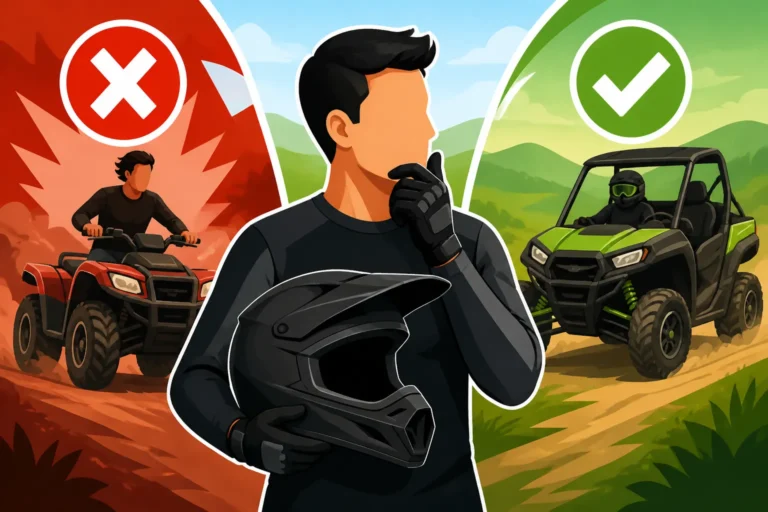
It can be incredibly frustrating to be out on your ATV or UTV, enjoying a beautiful day on the trails or tending to your land, only to find yourself needing to get from one section to another, separated by a public road. You know you're not supposed to just ride down the highway, but what about a quick hop across? This guide will dive deep into Arkansas's specific exception for crossing public roads at roughly ninety degrees, helping you understand the rules and stay on the right side of the law.
The General Rule: Off-Road Vehicles Belong Off-Road
Let's be real: Arkansas has made it pretty clear that ATVs and UTVs are primarily designed for off-highway use. You can't just hop on your machine and cruise down Main Street or Highway 63 like it's a car or motorcycle. The state statutes reflect a strong emphasis on keeping these machines off public thoroughfares due to differences in design, safety features, and often, the lack of traditional registration and licensing that street-legal vehicles require.
Why the Blanket Ban Exists
The core reason for the general prohibition is safety. ATVs and UTVs are built for dirt, mud, rocks, and uneven terrain, not paved roads with high-speed traffic. Their tires (often nonhighway specific), suspension, braking systems, and even their width can make them unstable or unpredictable in a typical road environment. Imagine trying to stop a heavy UTV with aggressive mud tires quickly on wet asphalt – it’s a very different experience than a car with road-specific tires. Plus, these machines often lack the lighting, turn signals, and mirrors mandated for street-legal vehicles, reducing visibility for both the rider and other drivers. The law aims to prevent accidents by keeping these purpose-built machines where they belong: off-road.
The Six Statutory Exceptions to the Rule
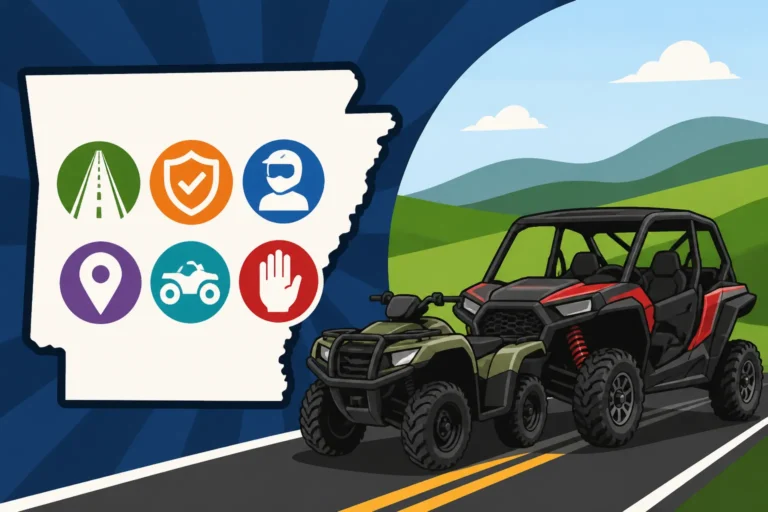
Now, while the general rule is "no public roads," the state of Arkansas isn't entirely blind to the practical realities of owning and using these machines. The law carves out specific scenarios where limited road use is permissible. These aren't loopholes; they're carefully defined exceptions designed to accommodate specific needs while still prioritizing safety. Understanding these exceptions is crucial, as straying outside them can quickly lead to a citation. We often refer to these as [Arkansas's Six Statutory Road Exceptions]. These include things like farming and hunting operations, emergency services, and, of course, the specific act of crossing a road, which is our main focus today. Each exception has its own specific set of conditions, and knowing them can make all the difference.
Understanding the "Ninety-Degree" Crossing Exception
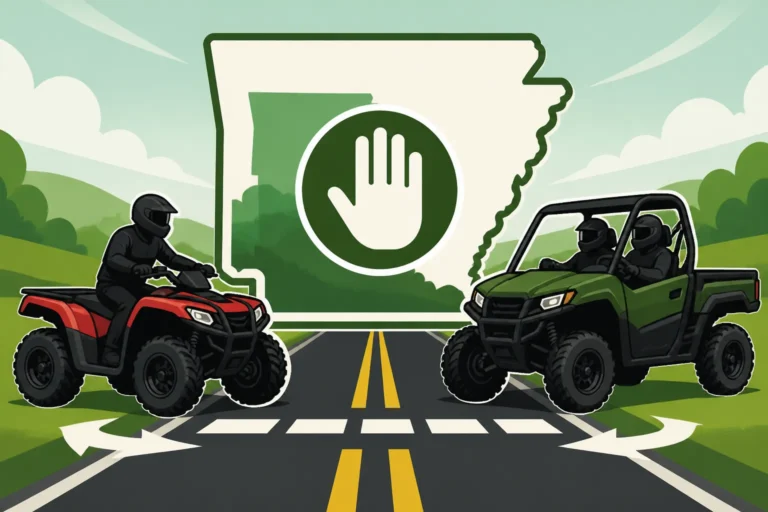
This is where the rubber meets the dirt (and then the pavement, briefly!). Arkansas law provides a very specific exception for off-highway vehicles that need to cross a public road. This isn't permission to ride on the road for any distance, but rather to make a quick, direct traverse from one side to the other.
What "Roughly Ninety Degrees" Actually Means
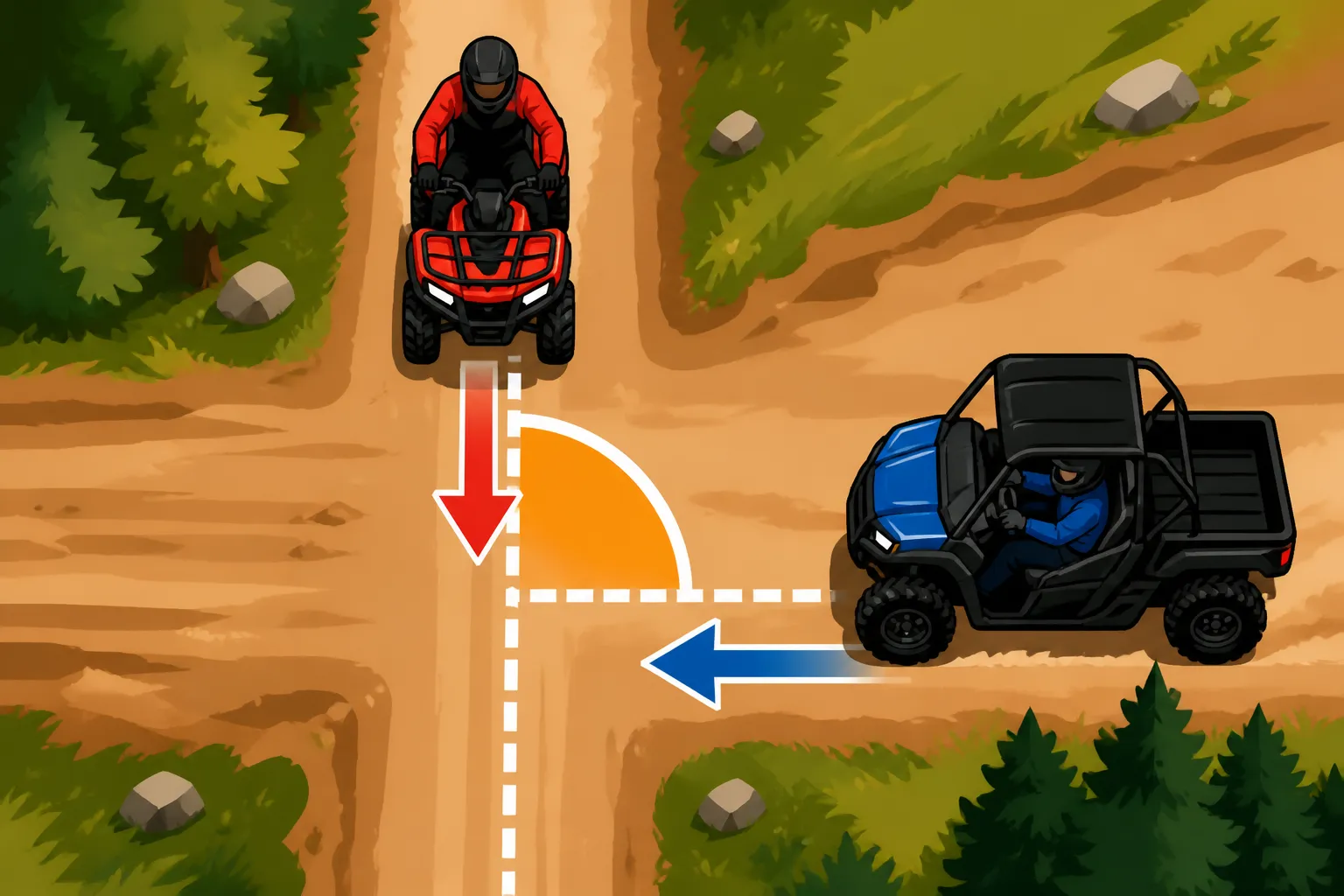
The statute specifies that you can cross a highway, street, or county road at "roughly ninety degrees." This phrasing is key. It means your intention and action should be to minimize your time on the road. You're not supposed to ride parallel to the road for any distance, even a short one, before turning to cross. The idea is to make the crossing as perpendicular to the flow of traffic as possible.
Think of it like this: if you're on a trail that ends at a highway, and there's another section of trail directly across, you can approach the road, stop, check for traffic, and then drive straight across. You wouldn't turn right, drive a hundred feet down the shoulder, and then cross. That would be riding on the highway, not just crossing it. The "roughly" part acknowledges that very few crossings will be mathematically perfect right angles, but the spirit of the law is clear: get across as directly and quickly as possible. This rule is specifically designed to allow riders to access different parcels of land or continue on a trail system, such as in areas around Wolf Pen Gap or Mill Creek, where trails might be bisected by roads. This is a critical point that helps distinguish legal crossing from illegal riding, and it's what Crossing at Roughly Ninety Degrees truly refers to.
Coming to a Complete Stop First
Before you even think about crossing, the law has another crucial requirement: you must bring your off-highway vehicle to a complete stop before entering the roadway. This isn't a suggestion; it's a legal mandate. [Crossing at a Complete Stop] is about more than just obeying the law; it's about common sense safety.
Imagine you're driving your truck down a winding county road. Suddenly, an ATV bursts out of the woods without stopping. That's a recipe for disaster. By stopping completely, you give yourself the vital seconds needed to:
- Look in both directions: Check for oncoming traffic, not just once, but twice. Remember, these machines are less visible than cars.
- Assess road conditions: Is it wet? Is there gravel at the edge that could cause you to lose traction?
- Ensure a clear path: Is there anything that would obstruct your crossing on the other side?
- Signal (if you can): While ATVs typically don't have turn signals, if you're on a UTV equipped with them (perhaps some aftermarket lights from SuperATV), use them. Hand signals are also a good idea if safe to do so.
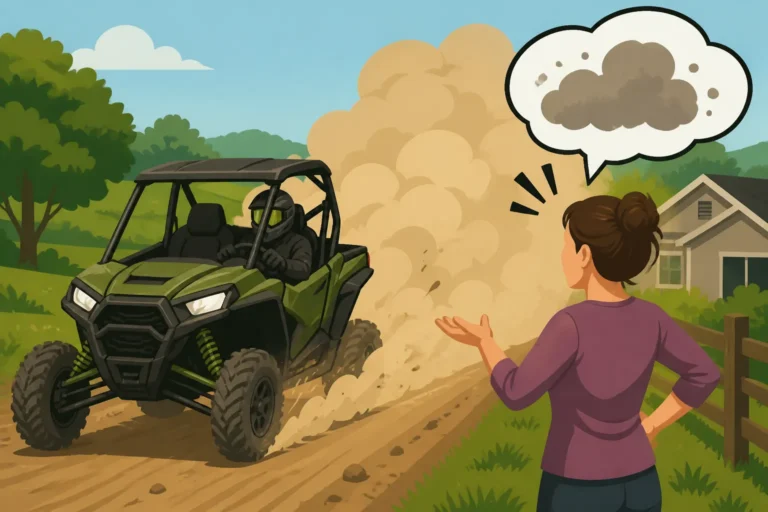
This momentary pause is your best defense against an accident and a ticket. Rushing a crossing is an easy way to get caught off guard, and deputies are often on the lookout for unsafe or illegal road behaviors, especially in rural areas where off-road vehicle use is common.
Practical Scenarios for Crossing
Let's run through a couple of real-world examples where the ninety-degree crossing rule comes into play:
- Connecting Trail Segments: You're deep in the Ouachita National Forest on a designated trail. Suddenly, the trail ends, and you see a paved county road with another segment of the trail starting directly across from you. This is a perfect scenario for a ninety-degree crossing. You'd approach the road, stop completely at the edge, scan for traffic, and once clear, proceed straight across to the other side.
- Accessing Different Parts of Your Property: Maybe you own a large tract of land, and a county road runs through the middle, separating your pasture from your timberland. To move your UTV with a small trailer of tools from one side to the other, you can use the ninety-degree crossing. You'd approach the road from your private land, stop, check traffic, and cross directly to your land on the other side. You wouldn't drive down the road a quarter-mile to an easier gate. That would be illegal road use.
- Deer Lease Access: Many hunters lease land that might be segmented by smaller, less-trafficked roads. If your [Arkansas Rules for Riding to a Deer Stand] involves crossing a county road to get from one part of your lease to another, this exception allows it. Again, the emphasis is on a direct, safe crossing, not driving down the road.
Remember, the emphasis is always on minimal exposure to public roads. If there's an alternative route on private land or designated trails that avoids public roads entirely, that's almost always the safest and most legally sound option.
Vehicles Covered by This Rule
This specific crossing exception primarily applies to Off-Highway Vehicles (OHVs) as defined by Arkansas statute. This definition generally includes:
- All-Terrain Vehicles (ATVs): These are typically three or four-wheeled vehicles designed for off-road use, with a seat straddled by the operator and handlebars for steering.
- Utility Terrain Vehicles (UTVs) or Side-by-Sides: These vehicles are also designed for off-road use, but typically have a steering wheel, foot pedals, and side-by-side seating for one or more passengers, often with a cargo bed.
The statute often uses terms like "off-road vehicle" or "all-terrain vehicle," but in common practice and enforcement, these rules generally extend to UTVs as well, especially concerning the basic prohibition on road riding and the specific exceptions. If you're wondering [Who Arkansas's Off-Road Vehicle Law Covers], it's important to check the precise definitions, but for the ninety-degree crossing, it's safe to assume both ATVs and UTVs fall under this provision. Other vehicles, like dirt bikes or golf carts, often have their own separate rules or lack this specific crossing exception.
Safety and Responsibility While Crossing
Even when you're legally crossing at ninety degrees, you're still interacting with public roadways and other vehicles. This means safety and responsibility are paramount. Negligence during a legal crossing can still lead to accidents or citations.
Visibility and Awareness
When crossing any public road, you need to be hyper-aware of your surroundings. Off-road vehicles, even large UTVs, can be surprisingly hard for motorists to spot, especially around curves, over hills, or in low light conditions.
- Daytime Riding: Wear brightly colored clothing. If your UTV has a flag (many trail systems require them, and they're a good idea anyway), ensure it's flying high. Before crossing, look twice in both directions. Assume no one sees you until you've made eye contact or are certain the path is clear.
- Nighttime Riding: While most crossings happen during the day, if you find yourself needing to cross after dark, [Night Visibility on an Ozark Back Road] becomes a huge concern. Ensure your headlights and taillights are fully functional and clean. Consider adding extra reflective tape to your machine, especially to the sides, to catch the attention of headlights. Many riders opt for aftermarket lighting from companies like SuperATV to increase their visibility exponentially, especially when navigating unlit crossings. More light equals more safety.
- Mirrors: While not always standard on ATVs, many UTVs come with or can be equipped with side mirrors. Use them. They provide an extra layer of situational awareness, allowing you to monitor traffic approaching from behind as you prepare to cross.
Equipment Considerations for Safe Crossings
While you don't need a street-legal setup just for a ninety-degree crossing, certain equipment enhances safety.
- Tires: Ensure your tires are in good condition. Aggressive knobby tires, while great for mud, can be a bit squirmy on pavement, especially if worn. Make sure they have adequate tread for traction.
- Brakes: Your brakes are your most important safety feature. Check them regularly. Ensure they are responsive and can bring your machine to a quick, controlled stop, which is crucial for [Crossing at a Complete Stop].
- Lights: As mentioned, functional headlights and taillights are non-negotiable, especially near dawn or dusk. If your machine allows, consider brighter aftermarket LED options.
- Helmet: While Arkansas has [Arkansas Has No ATV Helmet Law] for adults, wearing a helmet is always a smart choice, even for short crossings. It’s a simple piece of gear that can save your life in an unexpected accident. For younger riders, common sense (and often park rules) dictate helmet use.
Consequences of Illegal Crossing
Don't underestimate the enforcement of these rules. Deputies and state troopers in Arkansas are well-versed in the state's off-highway vehicle laws. Riding illegally on a public road, or making an unsafe crossing, can lead to significant consequences:
- Citations and Fines: You could receive a ticket for illegal operation of an off-road vehicle on a public roadway. The fine can be substantial, and court costs add up. [Arkansas Penalties for Illegal Road Riding] can be a rude awakening for riders who think a quick spin down the road is harmless.
- Machine Impoundment: In some cases, law enforcement has the authority to impound your ATV or UTV, leading to even more expenses for towing and storage fees.
- Accidents and Liability: If you're involved in an accident while illegally riding or making an unsafe crossing, you could be held fully liable for damages, injuries, and medical costs. Your off-road vehicle insurance (if you have it) might not cover incidents that occur during illegal operation on public roads. This can financially devastate you.
- Loss of Privileges: Repeated offenses could lead to more severe penalties, potentially impacting your ability to register or operate vehicles in the future.
When a deputy stops you, they have the right to ask for proof of ownership and proper registration. Knowing [What a Deputy Can Ask to See] can help you be prepared, but ultimately, adherence to the law is your best defense.
Local Ordinances and Other Road Exceptions
While the ninety-degree crossing rule is a statewide statute, it's important to remember that local governments in Arkansas have some additional powers regarding off-road vehicles.
How Towns Can Open Streets to UTVs
Separately from the state's general rules and exceptions, Arkansas Act 922 of 2025 gave cities and towns the authority to pass their own ordinances allowing UTVs (and sometimes golf carts) on certain local streets. This is a big deal, but it's crucial to understand it's a local option, not a statewide blanket permission.
A town has to actively pass an ordinance, and that ordinance will specify which streets are open, what equipment is required (like turn signals, mirrors, or specific lights), permit fees, and often age and licensing requirements for drivers. This is why [How Arkansas Cities Got the Choice on UTVs] is so important. A city like Bono might have an ordinance, while a neighboring town like Cotter might explicitly ban UTVs on its streets. You cannot assume that because one town allows it, another will. Always check with the local city clerk's office if you plan to ride your UTV on municipal streets.
This distinction is important: the ninety-degree crossing rule is a state law for any public road crossing. Local street-legal UTV ordinances are about riding on certain municipal streets. They are two different things, though both impact how you can use your machine near or on roads.
Other Key Road Exceptions
Beyond the ninety-degree crossing, remember the other statutory exceptions that permit limited road use. These typically require the rider to be actively engaged in the specified activity:
- Farming Operations: If you're using your ATV or UTV strictly for agricultural purposes, you might be allowed to travel short distances on a road between fields or to access different parts of a farm. This is outlined in [Arkansas Farming Operation Road Use]. This exception is for legitimate farm work, not joyriding.
- Hunting Operations: Similar to farming, if you're using your machine directly for hunting operations, you may have limited road access to get from a public road to your hunting camp or to retrieve game. Check the specifics of [Arkansas Hunting Operation Road Use] carefully, as there are usually strict conditions on this, such as being during open season and traveling directly to/from camp or hunting areas.
These exceptions are narrowly defined. They don't give you free rein to cruise indefinitely on public roads. They are about necessity related to specific activities.
Understanding these nuances is key to responsible and legal ATV/UTV ownership in Arkansas. Always prioritize safety, know the law, and respect other road users.
Summary of Arkansas Road Use Rules for ATVs/UTVs
To help clarify the differences between the various ways an ATV or UTV might interact with an Arkansas road, here's a quick overview. Remember, this is a simplification, and the details in the statutes and local ordinances are what truly matter.
| Rule Category | Purpose | Conditions | Key Restriction | Applicability |
|---|---|---|---|---|
| General Prohibition | Prevent accidents, ensure road safety. | Applies to almost all public roads. | No riding on public roads. | All ATVs/UTVs statewide. |
| 90-Degree Crossing | Allow access to land/trails. | Must stop, cross directly (perpendicular) to traffic, minimal distance. | No riding parallel to the road. | All ATVs/UTVs statewide, for any public road. |
| Local UTV Ordinance | Provide city-specific UTV use. | City must pass ordinance; specific streets, permits, equipment required. | Limited to specific city streets (often <55mph). | UTVs only, varies by city. Check local rules. |
| Farming Operations | Facilitate agricultural work. | Must be actively engaged in farming; travel directly to/from farm areas. | Not for recreational use. | ATVs/UTVs involved in farming. |
| Hunting Operations | Aid in hunting activities. | Must be actively hunting; travel directly to/from hunting areas, during season. | Not for general recreational riding. | ATVs/UTVs involved in hunting. |
This table highlights that while there are ways to interact with public roads, each has very specific conditions that must be met. The ninety-degree crossing is perhaps the most common, but it's also one of the most strictly interpreted to ensure safety.
Disclaimer
This article is for general informational purposes only and does not constitute professional advice. Laws, prices and regulations vary by location and change over time. Consult a qualified professional for guidance on your specific situation.