Bono’s Street Rules for UTVs in Arkansas
For anyone living in or visiting Arkansas, the thought of cruising down a city street in your Side-by-Side often feels like a pipe dream, fraught with confusion and the fear of getting a ticket. For years, the statewide ban on ATVs and UTVs on public roads has been a real headache, making it tough to even cross a highway to get to a trail. But things are starting to change, and some towns are leading the way in making UTVs a part of their local traffic. This guide is going to walk you through exactly what that looks like in Bono, Arkansas, a town that has embraced the idea of street-legal UTVs, providing a clear roadmap for how you can ride legally within its city limits.
Understanding the Arkansas Landscape for Street-Legal UTVs
For the longest time, the rules for riding your ATV or UTV on public roads in Arkansas felt incredibly restrictive, almost like the state wanted these machines confined strictly to private property or designated trails. It was a common frustration for owners who just wanted to run to the corner store, grab some gas, or simply get from one section of their land to another without having to trailer their machine. That blanket prohibition left many feeling like they owned a fun machine that was perpetually on house arrest.
The Statewide Ban and Its Frustrations
Imagine you've got a great Side-by-Side, perfect for chores around your property or hitting the local trails, but to get anywhere meaningful, you have to load it onto a trailer, drive your truck, and then unload it. This was the reality for most ATV and UTV owners across Arkansas. The state's default stance was a firm "no" to these machines on public roads, with only a handful of specific exceptions carved out for things like farming operations, hunting, or direct crossings at ninety degrees to access private property. If you lived in a rural area and just needed to get to a neighbor's house a quarter-mile down a gravel road, even that could land you in hot water with local law enforcement. It led to a lot of confusion, a lot of tickets, and a general feeling that the law wasn't quite keeping up with how people actually used their machines.
People just wanted a common-sense approach, especially for smaller towns or areas where traffic isn't a major issue. The frustration wasn't just about convenience; it was about efficiency and common sense. Why should a farm machine be allowed, but a UTV used for general errands in a tiny town not? This was the question echoing through many communities, and it laid the groundwork for significant change.
The Shift: Arkansas Act 922
That widespread frustration finally bubbled up to the state level, leading to a pivotal piece of legislation: Arkansas Act 922. This act was a game-changer because it shifted the power from a blanket state prohibition to a local option. Essentially, [How Arkansas Cities Got the Choice on UTVs] was through this act, which empowered individual city councils to pass ordinances allowing UTVs on certain municipal streets. It wasn't a free-for-all allowing UTVs on every road in Arkansas, but it opened the door for towns and cities to decide what made sense for their own communities.
This act came with specific parameters, dictating the types of roads that could be opened (generally, those with lower speed limits) and the conditions under which UTVs could operate. It recognized that a one-size-fits-all approach didn't work for a state as diverse as Arkansas. It was a victory for local control and for riders who had been advocating for more reasonable access to their streets.
Why Local Ordinances Matter
With Act 922 in place, the responsibility – and the opportunity – fell to local governments. This is where Bono comes into the picture. A local ordinance is critical because it's the official document that outlines where, when, and how UTVs can be operated on specific city streets. Without an ordinance, the statewide ban remains in effect, even with Act 922 on the books.
These local rules are tailored to the unique characteristics of each town. They consider traffic volume, road types, existing infrastructure, and community needs. For riders, it means clarity. Instead of guessing or hoping for leniency, you can look up the specific rules for a town like Bono and know exactly what's expected of you. It's about providing a legal framework that allows for responsible enjoyment of UTVs within city limits, something that was sorely missing before the legislative shift. [Arkansas Towns Can Open Their Streets to UTVs] is a powerful statement, but it only happens when a town takes action.
What Makes Bono Unique? The Path to Local UTV Ordinances
Bono, Arkansas, stands out because it was one of the first cities in the state to actually take the leap and pass an ordinance allowing UTVs on its streets. This wasn't just a casual decision; it was a move that required careful consideration by the city council, reflecting a commitment to serving the needs of its residents and embracing the recreational and practical uses of Side-by-Sides. It set a precedent for other towns wondering how to navigate the new state law.
How Bono Took the Lead
When Arkansas Act 922 came into effect, giving cities the option to allow UTVs on their streets, Bono wasted no time. [Bono and the First Arkansas UTV Ordinance] became a significant headline, marking the town as a pioneer in adopting these new regulations. The local government recognized that many residents owned UTVs for various purposes, from yard work to leisure, and saw an opportunity to improve quality of life and convenience for its citizens.
The process involved public meetings, discussions among council members, and ultimately, drafting a municipal ordinance that complied with the framework set by Act 922. It wasn't about making UTVs fully street-legal like cars, but rather about creating controlled access within defined city limits, balancing rider freedom with public safety. This proactive approach by Bono demonstrated a forward-thinking attitude and a responsiveness to community interests.
The Role of City Councils in Arkansas
This entire movement hinges on the local city councils. Under Act 922, it's not the state Department of Motor Vehicles or even the county that makes these decisions; it's your elected city officials. [What a Town Must Pass to Allow UTVs] involves a formal process, typically including introducing a proposed ordinance, holding public readings, allowing for public comment, and then voting on its adoption. Each town has the autonomy to decide if, and how, they want to allow UTVs.
This local control means there isn't a single, uniform set of rules across Arkansas; what's legal in Bono might be different from a neighboring town, or completely prohibited in another. This is why it's absolutely crucial for UTV owners to check the specific ordinances of any city they plan to ride in. These elected bodies play a vital role in shaping the daily lives of their citizens, including how they can use their recreational vehicles on local thoroughfares.
The Benefits for Bono Residents and Visitors
For Bono, embracing UTVs on its streets brings several tangible benefits. For residents, it offers unparalleled convenience. Imagine being able to hop on your UTV to run to the grocery store, pick up supplies from the hardware store, or simply visit a friend down the street without the hassle of a truck and trailer. This enhances mobility, especially in smaller towns where distances are short and traffic is minimal. For businesses, it could even mean a slight uptick in local commerce as more people use their UTVs to access shops within town.
While not a major tourist destination solely for UTV riding, the clarity provided by Bono's ordinance also benefits visitors who might be passing through or staying locally and want to use their UTVs responsibly. It removes the guesswork and the anxiety of potential citations, making the town more accessible and welcoming for UTV enthusiasts. It's about creating a harmonious environment where these machines can be enjoyed safely and legally within the community framework.
Key Provisions of Bono's UTV Ordinance: Riding Legally
So, what exactly does Bono's ordinance entail for UTV owners who want to ride on city streets? It's not a free-for-all, but rather a structured approach that outlines specific conditions for legal operation. Understanding these rules is paramount to enjoying your UTV on Bono's streets without any legal headaches.
Approved Streets and Speed Limits
Bono's ordinance, like most under Act 922, doesn't open up every single road to UTV traffic. The core principle is generally that [Arkansas Streets Under 55 mph for UTVs] are the ones considered. This is a common-sense safety measure, as UTVs are designed for off-road conditions and typically don't perform as safely at higher speeds as traditional vehicles. The ordinance will specify which city streets, by name or type, are permissible. It's often the case that streets with lower posted speed limits – usually 35 mph or less – are included, allowing UTVs to integrate smoothly with slower local traffic.
Riders in Bono need to be aware that exceeding these speed limits, even on an approved street, is a violation of the ordinance and could lead to a citation. The goal is safe integration, not reckless driving. Always pay attention to posted speed limits, and remember that these machines are not built for highway speeds.
Restrictions on State Highways and Four-Lane Roads
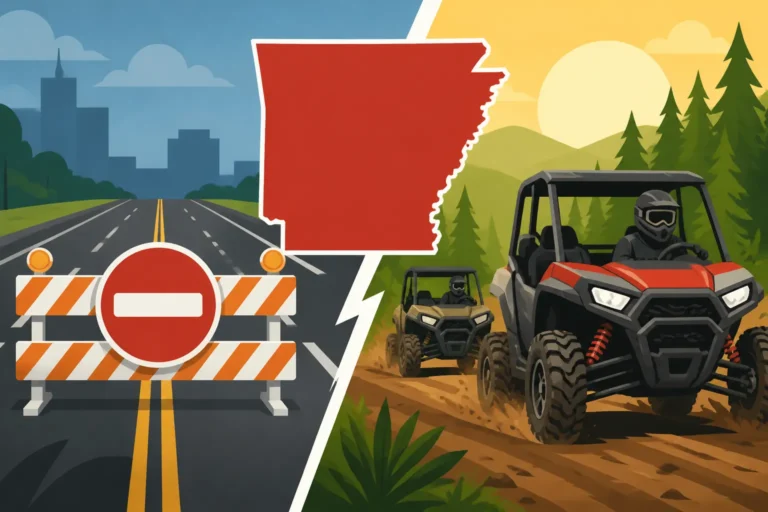
Even with a local ordinance, there are still significant limitations on where you can ride. A key restriction in Bono, mirroring the state law's intent, is that [Arkansas Four-Lane Streets Stay Closed] to UTV traffic. This means you generally won't be able to ride your UTV on major state highways or multi-lane roads that cut through the city, even if they have lower speed limits within town. Bono, for example, specifically excludes certain heavily trafficked routes, such as Highway 63, from UTV access, ensuring that UTVs do not interfere with higher-speed state traffic.
These restrictions are in place for safety reasons, as UTVs are less visible, slower, and generally less protected than cars on high-speed or high-volume roads. Attempting to ride on these prohibited roads in Bono will put you in direct violation of the ordinance and state law, potentially leading to significant fines and penalties. Always consult the specific ordinance map or description to understand which roads are off-limits.
Age and License Requirements for Drivers
Operating a UTV on Bono's streets isn't just for anyone with a machine. The ordinance likely stipulates that a driver must meet certain age and licensing requirements, much like operating any other motor vehicle on a public road. Generally, under Act 922, [Arkansas Driver's License at 16 for Street UTVs] is the standard. This means that the person behind the wheel must possess a valid, unrestricted driver's license, just as they would for driving a car. This ensures that operators have a basic understanding of traffic laws and road etiquette.
This is a crucial point, especially for younger riders or those accustomed to off-road riding where licensing isn't always a prerequisite. A learner's permit or a suspended license would not qualify. It's about ensuring responsible, knowledgeable drivers are on the road, minimizing risks to themselves and others. Always carry your driver's license with you when operating your UTV on Bono's city streets.
Equipment Requirements for Street-Legal UTVs in Bono
Just because your UTV can hit the trails doesn't mean it's ready for city streets. Bono's ordinance, like any responsible street-legal regulation, will have specific equipment requirements to ensure your machine is safe and visible to other drivers. This isn't just about legality; it's about your safety and the safety of everyone else on the road. Many riders turn to aftermarket companies like SuperATV to get their machines up to snuff with the necessary accessories.
Essential Safety Gear: Lights, Signals, Mirrors
To blend in with regular street traffic, your UTV needs to mimic the safety features of a standard vehicle. This typically includes:
- Headlights and Taillights: These must be functional and illuminated when riding, especially at dawn, dusk, or night.
- Brake Lights: Essential for signaling when you're slowing down or stopping.
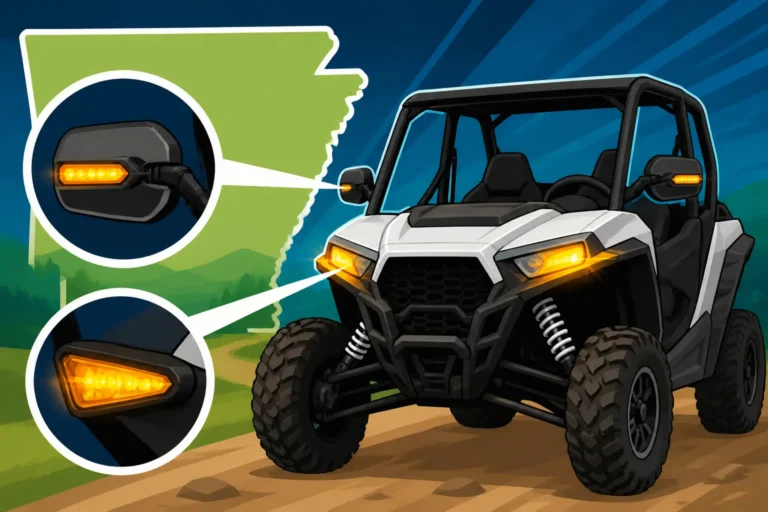
- Turn Signals: [Arkansas Turn Signal Requirements for Street UTVs] are vital for indicating your intentions to turn or change lanes. These are often not standard on UTVs right off the showroom floor, so an aftermarket kit from a reputable brand like SuperATV is a common upgrade.
- Rear-view Mirrors: At least one, but often two (one on each side), are required to provide adequate visibility of traffic approaching from behind.
These items ensure that your UTV is visible and its movements predictable to other drivers, significantly reducing the risk of accidents. Without these basic safety features, your UTV is not considered street-legal in Bono, even if you have a permit.
Proving Factory Safety Standards
Beyond the basic lighting and signaling, Bono's ordinance may also require that the UTV meet certain factory safety standards. This is a broader requirement intended to ensure the machine itself is fundamentally safe for road use, not just equipped with bolt-on accessories. This might refer to the manufacturer's original design, weight capacity, braking systems, and overall structural integrity. The idea is to avoid highly modified or homemade machines that haven't been subjected to rigorous safety testing from a recognized manufacturer.
This often means that you need to be able to show proof, such as an owner's manual or a manufacturer's certificate, that your UTV was built to certain safety specifications. It's not about making your UTV pass a car inspection, but rather confirming it's a legitimate, factory-produced machine designed with a degree of inherent safety.
Width Restrictions
One important practical consideration for UTVs on public roads is their width. While many UTVs are wider than traditional ATVs, there's often an upper limit to what's permissible on city streets, both for safety and to ensure they don't impede traffic or take up too much road space. [An 80-Inch Width Cap in Local Rules] is a common standard you might find in municipal ordinances, including Bono's.
This means if you have an extra-wide UTV, perhaps one heavily customized with wide A-arms or specialty tires, you'll need to measure it carefully. Many modern Side-by-Sides already push this limit or exceed it, so checking your machine's dimensions against the ordinance is a must. If your UTV is too wide, it simply won't qualify for a street permit in Bono, regardless of other modifications.
Navigating the Permit Process in Bono
Getting your UTV street-legal in Bono isn't just about outfitting it with the right gear; it also involves an official permit process. This annual permit is your authorization to operate on city streets and signifies that your machine meets all local requirements. Think of it like a specialized registration for your UTV within Bono's city limits.
Applying for Your Annual UTV Permit
The process for applying for a UTV permit in Bono typically involves visiting the city clerk's office. You'll likely need to bring several items with you to complete the application:
- Proof of Ownership: This could be your title, registration, or bill of sale.
- Proof of Insurance: Like any vehicle on the road, your UTV will need to be covered by liability insurance.
- Driver's License: To prove you meet the age and licensing requirements.
- Payment for Fees: There will be an application fee.
- Inspection (potentially): Some ordinances require a visual inspection of your UTV by a city official or police officer to verify all required equipment is present and functional.
It's a good idea to call the Bono city clerk's office ahead of time to confirm their exact requirements and hours of operation. Being prepared with all necessary documents will make the process much smoother.
Fees and Renewal Processes
Like most municipal permits, [Arkansas UTV Street Permits and Annual Fees] are a reality. There will be a fee to obtain your permit, which helps cover the administrative costs of the program and potentially contributes to local road maintenance. This fee is typically an annual charge, meaning your permit will need to be renewed each year to remain valid.
The renewal process will likely be similar to the initial application, possibly requiring an updated proof of insurance and a check of your driver's license status. It’s crucial to keep track of your permit's expiration date to avoid riding with an expired permit, which could lead to fines. Some towns might send out renewal notices, but it's always best to mark your calendar as a reminder.
Displaying Your Permit
Once you've successfully obtained your UTV permit from the City of Bono, it's not enough to just have it in your wallet. The ordinance will almost certainly require that the permit, or a decal associated with it, be clearly displayed on your UTV. This allows law enforcement to quickly identify legally permitted UTVs without having to stop every rider.
The exact placement will be specified in the ordinance – it might be on the windshield, a fender, or another prominent location. Ensure your permit is visible and securely affixed. This isn't just a formality; it's part of your compliance with the city's rules and helps ensure smooth operation within the town. If a police officer stops you and you can't produce or display a valid permit, you could be cited for violating the local ordinance.
Comparing Bono's Rules to Other Arkansas Towns
One of the most important takeaways from Act 922 is that UTV street rules are not uniform across Arkansas. While Bono has embraced UTVs on its streets, other towns have taken different approaches. This patchwork of regulations means that UTV owners must be diligent in understanding the specific rules of any municipality they intend to ride in.
Cotter's Ban Versus Bono's Opening
For a clear contrast, look no further than Cotter, Arkansas. While Bono has opened its streets to UTVs, Cotter has gone in the opposite direction, explicitly banning them from city roads. This difference highlights the local autonomy granted by Act 922. Cotter's decision likely stems from different community priorities, traffic concerns, or perhaps a lack of desire from residents for UTV street access.
This stark contrast between Bono and Cotter serves as a powerful reminder: do not assume that if one town allows UTVs, a neighboring town will too. Always check the local ordinances directly. [Cotter's Ordinance Banning ATVs in Arkansas] is a real example of a town making a different choice, and it illustrates the importance of understanding the specific legislative actions of each individual municipality.
The Spectrum of Local Decisions
Between Bono's open embrace and Cotter's outright ban, lies a broad spectrum of possibilities for UTV regulations in Arkansas. Some towns might allow UTVs only on a very limited number of streets, or only for specific purposes, or with even stricter equipment requirements. Others might be in the process of drafting an ordinance, while many still haven't even considered it, leaving the statewide ban fully in effect.
This variety can be confusing for riders, but it's a direct result of the local control afforded by Act 922. Each city council weighs its own unique circumstances – traffic volume, road conditions, pedestrian safety, and community input – when making these decisions. There's no single "Arkansas rule" for street-legal UTVs; there are only individual city rules.
Why Town Ordinances Differ So Much
The primary reason for such variation lies in how Act 922 was structured: it provides the option, not a mandate. This means that factors like a city's population density, the amount of through-traffic, the types of roads within its jurisdiction, and even the political leanings of its city council can all influence the final decision. A small, rural town like Bono might see UTVs as a natural fit for its low-traffic streets, while a larger, busier city might view them as a safety hazard.
Furthermore, community feedback plays a huge role. If residents are vocal about wanting street access for their UTVs, councils are more likely to pursue an ordinance. Conversely, strong opposition from residents concerned about noise or safety could halt such efforts. The differing outcomes underscore that these are truly local decisions, reflecting the unique character and priorities of each Arkansas town.
Remember, riding your UTV illegally on public roads can result in [Arkansas Penalties for Illegal Road Riding], so always verify the current ordinances for any specific town before you venture onto its streets.
Comparative Table: UTV Street Legal Rules – Bono vs. General Arkansas State Law
To help clarify the differences, here's a quick look at how Bono's approach to UTVs on streets compares to the general statewide law in Arkansas, which largely bans them.
| Feature / Rule | Arkansas Statewide Law (Default) | Bono's UTV Ordinance (Example) |
|---|---|---|
| Primary Status on Roads | Generally Unlawful | Lawful on designated municipal streets |
| Local Authority | No (state pre-emption) | Yes (via Act 922) |
| Approved Roads | Limited statutory exceptions only (e.g., farm work, direct crossing) | Most streets with posted speed limits under 55 mph; specific exceptions for major highways (e.g., Highway 63 excluded) |
| Driver's License | Not applicable for road use | Required (valid, unrestricted driver's license, typically 16+) |
| Insurance | Not required for road use | Required (proof of liability insurance) |
| Annual Permit/Fee | No | Yes, annual permit with associated fees |
| Equipment Requirements | Minimal for exceptions | Headlights, taillights, brake lights, turn signals, mirrors, horn, proof of factory safety standards, width restrictions (e.g., 80-inch cap) |
| Decal/Display | No | Required (permit or decal must be visibly displayed) |
| Helmet Law | [Arkansas Has No ATV Helmet Law] (for ATVs, generally extends to UTVs) | No specific helmet law for UTVs, but recommended for safety |
This table provides a snapshot of the key distinctions. While Bono has created a framework for UTV use, it still comes with responsibilities and specific rules that are designed to ensure safety and order on public roads.
Disclaimer
This article is for general informational purposes only and does not constitute professional advice. Laws, prices and regulations vary by location and change over time. Consult a qualified professional for guidance on your specific situation.