Arkansas Makes Road Riding Unlawful by Default
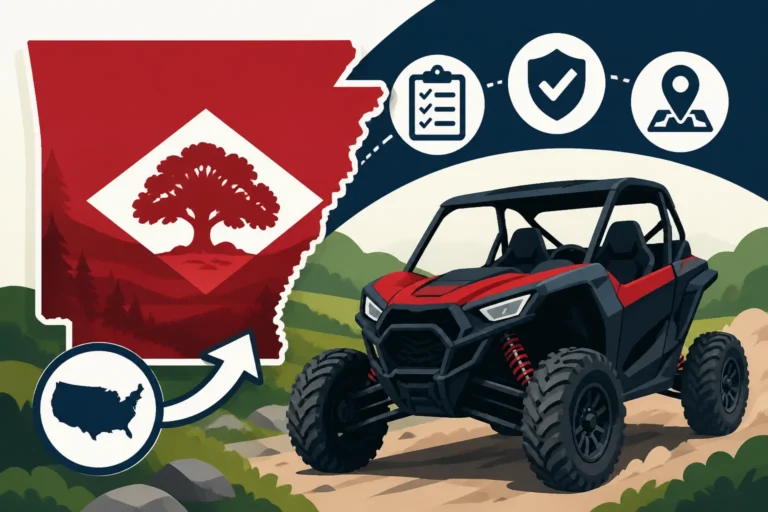
It's a common frustration for ATV and UTV owners in Arkansas: you've got this incredible machine, perfect for chores, hunting, or just exploring, but the moment you think about taking it on a public road, a wave of confusion washes over you. This guide is here to untangle the complex web of Arkansas laws surrounding off-highway vehicles and public roads, clarifying when and where you can legally ride your ATV or UTV without risking a citation.
The Default Rule: No Road Riding in Arkansas
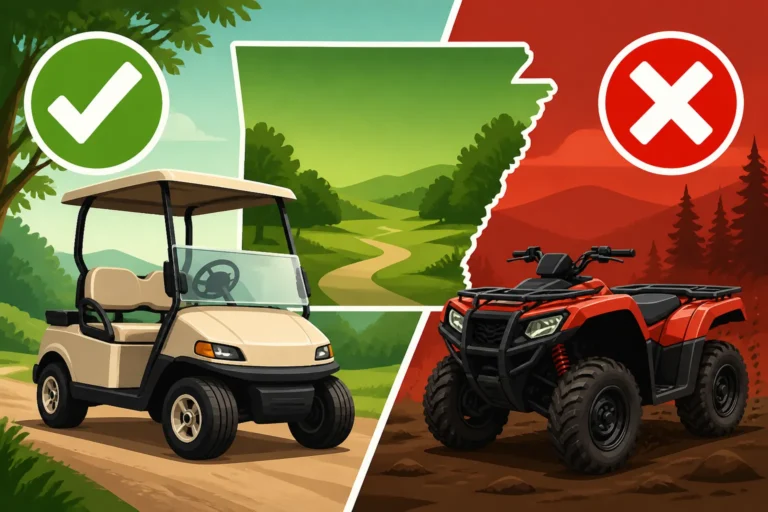
Let's cut right to the chase: in Arkansas, the general rule is that ATVs and UTVs are not street legal. This isn't just a suggestion; it's the law. For many years, this blanket prohibition meant that your beloved quad or side-by-side was strictly for off-road use, private property, or designated trails. It's a tough pill to swallow when you just want to get from one part of your land to another, or even cross a highway to reach a new riding area. This default ban has been a source of significant inconvenience and, frankly, annoyance for riders across the state, and understanding its foundation is the first step to navigating the exceptions.
What the Law Says
The foundational legal framework that governs off-highway vehicles (OHVs) in Arkansas, including ATVs and UTVs, explicitly restricts their operation on public roads and highways. This isn't some obscure, forgotten rule; it's a clear legislative directive designed to separate purpose-built off-road machines from conventional street-legal vehicles. For a long time, the statute made no real distinction between an ATV and a UTV when it came to road use, treating both with the same strict prohibition. This often left riders feeling like their powerful and capable machines were unfairly categorized.
The legal definition of an ATV in Arkansas often centers on width, engine size, and intended use, classifying them as "off-highway vehicles." Because they aren't designed to meet the same safety standards as cars or trucks for on-road operation – things like brake lights, turn signals, and mirrors being standard equipment – they've historically been kept off the pavement. It's not about whether your specific machine could handle the road, but rather the broad legal classification that dictates its permissible areas of operation. You might think your machine is perfectly safe, but the law looks at the category, not individual capabilities. [What Arkansas's ATV Statute Covers] provides a deeper dive into these definitions.
Why This Rule Exists
The primary reason behind the default ban on road riding for ATVs and UTVs boils down to public safety. These vehicles are engineered for uneven terrain, mud, rocks, and tight turns in off-road environments. Their suspension systems, tire designs, and often open cabins are not optimized for the speeds, traffic patterns, and hard surfaces of public roads. Imagine a typical ATV with knobby tires hitting a patch of wet asphalt – the handling characteristics are vastly different from a car or even a motorcycle.
Furthermore, most ATVs and older UTVs lack standard road safety features such as proper headlights, taillights, brake lights, turn signals, and rearview mirrors that are mandatory for street-legal vehicles. While many riders add these modifications, the factory-standard versions often don't meet the Department of Transportation (DOT) requirements for on-road use. This discrepancy creates a significant safety concern, not just for the OHV operator but also for other motorists who might not anticipate the presence or unpredictable movements of an off-road vehicle on a paved road. It's about minimizing accidents and ensuring that all vehicles sharing the road meet a baseline of safety equipment.
Six Statutory Exceptions to the Road Riding Ban
While the default rule prohibits road riding, Arkansas law does carve out specific, limited exceptions where ATVs and UTVs can legally operate on public roads. These exceptions are critical for landowners, farmers, hunters, and emergency personnel, recognizing the practical necessity of using these machines for specific tasks. However, it's crucial to understand that these aren't loopholes for joyriding; they are tightly defined circumstances with clear limitations.
Farming and Hunting Operations
One of the most significant and widely used exceptions allows for the operation of ATVs and UTVs on public roads when directly related to farming or hunting operations. This exception is a lifeline for many rural Arkansans who use their machines as essential tools for their livelihoods or recreational pursuits. Think about a farmer needing to move a piece of equipment from one field to another across a county road, or a hunter transporting gear and a harvested animal from a deer lease to their truck.
However, "farming operation" and "hunting operation" are not open-ended terms. The statute typically requires the use to be "incidental to and not for the primary purpose of recreational riding." This means you can't just take your UTV on a scenic cruise down a county road and claim you're scouting for deer. The intent and direct purpose of the road use must be tied to the agricultural or hunting activity. This might include transporting seed, feed, tools, or even livestock for farming, or moving hunting stands, game, or retrieving downed animals for hunting. [Arkansas Farming Operation Road Use] further elaborates on what qualifies.
Directly Crossing a Highway
Another common and practical exception is for direct crossings of public roads or highways. This is incredibly important for riders who might have land or trails on both sides of a paved road. The law generally permits an ATV or UTV to cross a public road, but with very specific conditions. You can't just weave across whenever you feel like it.
The crossing must be made as directly and perpendicularly as possible, typically at a roughly ninety-degree angle to the roadway. Furthermore, the operator is usually required to come to a complete stop before entering the roadway and yield to all traffic. This isn't a "drive-through" privilege; it's a momentary crossing. The idea is to minimize the time the off-highway vehicle is on the road, reducing potential conflicts with faster-moving traffic. It's a blink-and-you-miss-it maneuver designed for safety and efficiency, not extended travel. [Arkansas's Six Statutory Road Exceptions] covers this and other exceptions in detail.
Disability, Emergency, and Utility Exceptions
Beyond farming and hunting, Arkansas law also provides specific road use exceptions for individuals with certain disabilities, emergency personnel, and utility company employees. These are even more specialized and are granted based on the necessity of the activity.
For individuals with a serious walking disability, an ATV or UTV may be permitted on roads to access hunting or fishing locations, provided they display a special permit or placard. This recognizes the mobility challenges faced by some individuals and allows them to participate in outdoor activities that might otherwise be inaccessible. Similarly, authorized law enforcement officers, emergency medical services personnel, and firefighters can use ATVs and UTVs on public roads when performing their official duties. This allows them to quickly respond to incidents in areas inaccessible by conventional vehicles. Finally, utility company employees are also often exempt when operating their machines in the course of maintaining or repairing utility lines and infrastructure. These exemptions are about enabling essential services and ensuring accessibility for those with specific needs, rather than general recreational use.
Local Ordinances: A Game Changer for UTVs
While the state law generally restricts off-road vehicles from public roads, a significant shift occurred with Arkansas Act 922, which opened the door for cities and towns to create their own ordinances allowing UTVs on certain local streets. This has introduced a patchwork of rules across the state, making it crucial for riders to check local regulations. This wasn't about making ATVs street legal statewide, but rather empowering local communities to address their unique transportation needs for side-by-sides.
How Cities Can Open Their Streets
Arkansas Act 922, which went into effect on August 5, 2025, represents a monumental change for UTV owners. Before this act, cities had no legal authority to permit UTVs on their streets. Now, the power rests with local city councils and quorum courts to enact ordinances that define where and how UTVs can be operated on public roads within their jurisdiction. This local option was a direct response to the growing popularity of UTVs and the desire of many residents to use them for short trips around their communities, whether for errands, visiting neighbors, or accessing local businesses.
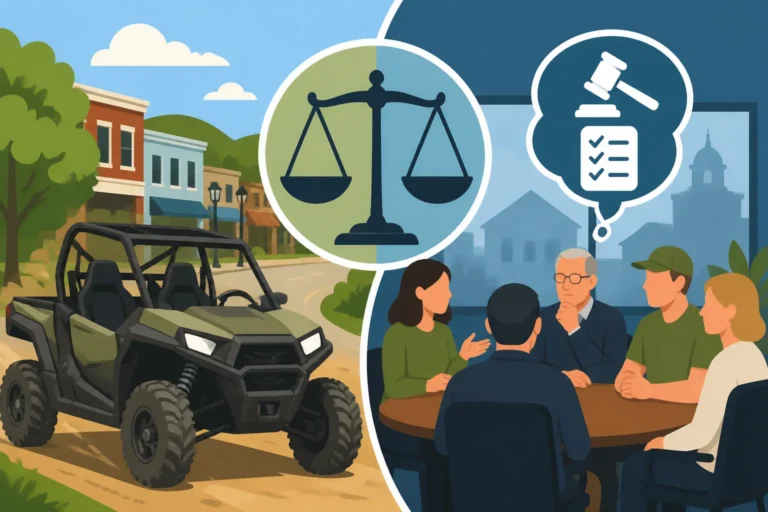
For a city to open its streets, its governing body (city council or town council) must pass an ordinance specifically allowing UTVs. This process typically involves public hearings, community input, and careful consideration of safety implications. Once an ordinance is passed, it will outline the specific streets, speed limits, and equipment requirements for UTVs. This means that riders can't assume that if one town allows UTVs, the next town over does too. It's a truly localized decision, which is why researching your specific area is paramount. [How an Arkansas City Council Opens Streets to UTVs] offers more details on this process.
What Local Ordinances Allow
When a city or town passes a UTV ordinance, it typically includes specific rules that dictate permissible operation. These often include restrictions on the types of streets UTVs can use, such as limiting them to roads with posted speed limits under 55 mph, and often explicitly prohibiting them from state highways or four-lane streets. For example, some towns might allow UTVs on residential streets but ban them from main thoroughfares. Bono, Arkansas, was one of the first towns to embrace this, allowing UTVs on most streets under specific conditions, though even there, certain state highways remain off-limits.
Beyond road access, these ordinances usually stipulate mandatory equipment for street-legal UTVs. This often includes requirements for turn signals, brake lights, headlights, taillights, a rearview mirror, and sometimes a horn. Many cities also require UTVs to be insured, and the operator must possess a valid driver's license, often with a minimum age of 16. Furthermore, a local permit, often with an annual fee, is usually required, and this permit decal must be prominently displayed on the UTV. These requirements aim to ensure that UTVs operating on public roads meet a baseline of safety and accountability similar to other vehicles. You'll often find accessory kits from companies like SuperATV that help UTV owners meet these types of requirements. [Arkansas UTV Street Legal Rules by Town] is a good resource for checking local specifics.
Key Differences: ATVs vs. UTVs on Roads
It's really important to draw a distinction between ATVs and UTVs when talking about road access in Arkansas. While state statute often lumps them together as "off-highway vehicles," recent changes and local ordinances primarily benefit UTVs, not traditional ATVs. This distinction isn't just semantics; it has real legal implications for where and how you can ride. Many riders mistakenly believe that if their UTV is street-legal in a town, their ATV automatically is too, and that's usually not the case.
The 50-Inch Width Rule
One of the most defining characteristics that often separates ATVs from UTVs, and critically impacts their eligibility for certain road uses, is width. Arkansas's definition of an ATV, for registration purposes and sometimes for trail access, often refers to machines that are 50 inches or less in width. While many older ATVs fit this description, most modern UTVs (side-by-sides) are significantly wider, often ranging from 60 to 72 inches or more. This difference in width is a key reason why local ordinances, enabled by Act 922, are almost exclusively focused on UTVs.
The narrower profile of traditional ATVs, combined with their typical single-rider or tandem design, makes them behave differently on roads compared to wider, multi-passenger UTVs. When local ordinances open streets, they often specify "UTVs" or "side-by-sides" rather than including all ATVs, in part due to perceived stability and safety on paved surfaces. A traditional ATV is often seen as less stable at road speeds and more difficult to equip with all necessary road safety features in a practical manner. So, while your UTV might be getting street privileges in a town, don't assume your quad is included. [Arkansas Machines Wider Than 50 Inches] covers this width distinction.
Equipment and Safety for Street-Permitted Machines
If you're lucky enough to live in an Arkansas town that has adopted a UTV ordinance, the machine itself needs to be properly equipped to be considered street-legal within that jurisdiction. This isn't just about throwing on a few blinkers; it's about meeting a specific set of requirements designed to integrate the UTV safely into traffic. Many riders find that their off-the-lot UTV needs significant upgrades to comply.
Typically, a street-permitted UTV will need fully functional headlights, taillights, brake lights, and turn signals – a full lighting package. It will also require at least one rearview mirror, and often a horn. Some ordinances might even specify things like windshields, seat belts for all occupants, or even DOT-approved tires, though tire requirements can vary greatly. The idea is to make the UTV as visible and communicative on the road as a standard car. You can find aftermarket kits designed specifically for UTVs, often from brands like SuperATV, that provide these necessary components to meet local street-legal conversion requirements. It’s not just about having the equipment, but ensuring it's properly installed and maintained. [Arkansas Turn Signal Requirements for Street UTVs] is a useful guide if you're considering these upgrades.
Here's a quick comparison of common requirements:
| Feature | Default Arkansas ATV Road Rules (State Level) | Arkansas UTV Local Ordinance (Example) |
|---|---|---|
| Road Use | Generally Prohibited (except 6 exceptions) | Permitted on specific local streets |
| Vehicle Type | ATVs & UTVs generally excluded | Primarily UTVs (side-by-sides) |
| Width Limit | Often <= 50 inches for ATV definition | No explicit width limit, but focuses on UTVs |
| Turn Signals | Not required | Typically required |
| Brake Lights | Not required | Typically required |
| Headlights | Basic (off-road) | Full, functional |
| Taillights | Basic (off-road) | Full, functional |
| Rearview Mirror | Not required | Typically required (at least one) |
| Horn | Not required | Often required |
| Insurance | Not required (unless on private land) | Typically required |
| Driver's License | Not required (off-road) | Valid driver's license required |
| Permit | No state-level road permit | Local annual permit often required |
| Speed Limit | N/A (not on road) | Limited to streets with 35mph-55mph limits |
Note: Local ordinances vary widely. Always check your specific city or town's regulations.
Navigating the Rules: Practical Advice for Riders
Given the complexities of Arkansas's ATV and UTV road laws, simply hoping for the best isn't a viable strategy. As a rider, you need to be proactive and informed to avoid legal trouble, stay safe, and genuinely enjoy your machine. Ignorance of the law is never a valid defense, and the fines and penalties for illegal road use can quickly add up.
Checking Local Laws Before You Ride
This cannot be stressed enough: always, always check the local ordinances of the specific city or town where you plan to ride your UTV on public roads. As mentioned, Arkansas has adopted a "local option" approach, meaning that what's legal in one town might be strictly prohibited just a few miles down the road in another. If you're planning a trip to a new area, or even if you live in a rural area that borders a town, take the time to research.
The best way to do this is to contact the city clerk's office or the local police department in the jurisdiction you're interested in. Ask specific questions about UTV (side-by-side) ordinances, required equipment, permit processes, and any restricted roads. Many cities now have their ordinances published online, but a quick phone call can clarify any ambiguities. Don't rely on hearsay from fellow riders, as rules can change, and interpretations can differ. Being diligent here will save you a lot of potential headaches and ensure you're compliant. [Arkansas Rules for Riding a County Road] might be helpful if you're navigating more rural areas.
Penalties for Illegal Road Use
Operating an ATV or UTV illegally on public roads in Arkansas can lead to more than just a stern warning. Law enforcement officers are well aware of the state's default ban and the specific exceptions and local ordinances. Getting caught can result in significant fines, court costs, and potentially even impoundment of your machine. These aren't minor traffic tickets; they're violations of specific vehicle codes.
A common scenario might involve a deputy pulling you over on a paved county road where no local ordinance exists. You could face citations for operating an unregistered vehicle (if not registered for off-road use), operating an uninsured vehicle (if a local ordinance requiring insurance is in place), and simply operating an off-highway vehicle on a public road where it's prohibited. The costs associated with these citations, including fines and court fees, can easily run into hundreds of dollars. Furthermore, if your machine is deemed a public nuisance or safety hazard, it could even be towed and impounded, adding recovery fees to your financial burden. It's simply not worth the risk. [Arkansas Penalties for Illegal Road Riding] gives a clearer picture of potential consequences.
Disclaimer
This article is for general informational purposes only and does not constitute professional advice. Laws, prices and regulations vary by location and change over time. Consult a qualified professional for guidance on your specific situation.