Farming Operations and What Qualifies
It can be incredibly frustrating to own an ATV or UTV in Arkansas, especially when you use it for legitimate farm work, only to feel like you're constantly looking over your shoulder on public roads. You know your machine is essential for your livelihood, but the laws around road use can feel like a tangled fence line. This guide is here to clear up the confusion surrounding what truly qualifies as a "farming operation" under Arkansas law, so you can understand when you can legally take your quad or side-by-side onto the asphalt for farm-related tasks.
The Core Rule: Why Most ATVs and UTVs Can't Just Cruise Arkansas Roads
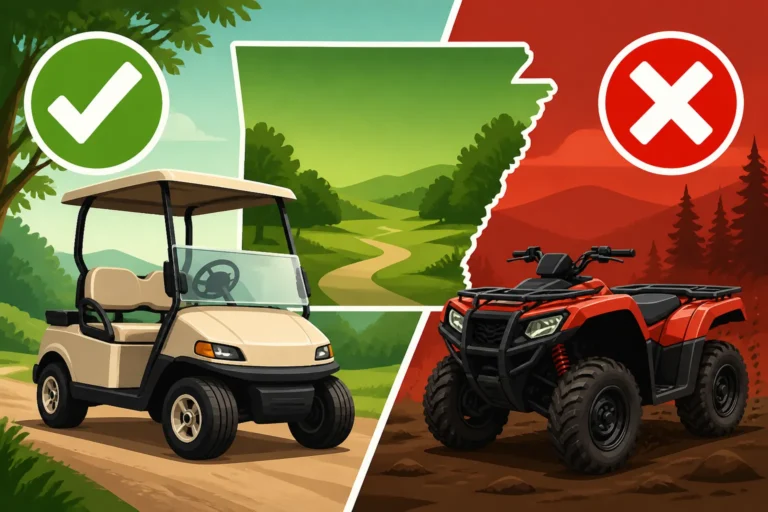
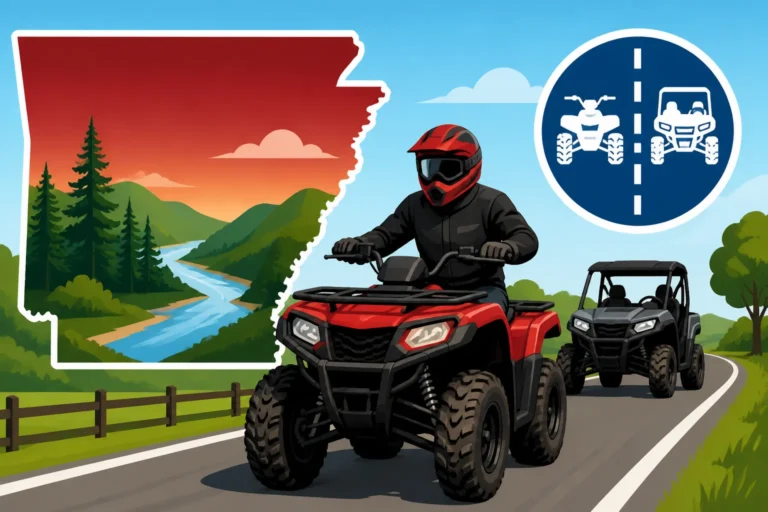
Let's get right to it: by default, Arkansas law generally prohibits ATVs and UTVs from being operated on public streets and highways. It’s a common point of confusion and a real headache for many riders who just want to get from point A to point B. The state sees these machines primarily as off-highway vehicles, designed for trails, fields, and private property, not for mixing with cars and trucks on paved roads. This isn't just a random rule; it's rooted in concerns about safety, vehicle design (things like turn signals, headlights, and brakes built for highway speeds), and how these machines interact with traditional traffic.
Think about it this way: your ATV or UTV likely doesn't have the same safety features as a car. While many modern side-by-sides are getting closer, they still aren't typically manufactured to meet federal highway safety standards. This foundational ban means that if you're pulling out of your driveway onto a county road for a joyride, you're likely breaking the law. However, Arkansas law does carve out specific exceptions to this general prohibition, recognizing that these machines are vital tools for certain activities. Our focus today is on one of the most important of these exceptions: the "farming operation." It’s a nuanced area, and understanding it is key to avoiding an unwelcome conversation with a deputy. The main thing to remember is that without a specific exemption or a local ordinance allowing it, [Arkansas Makes Road Riding Unlawful by Default].
Defining "Farming Operations" Under Arkansas Law: More Than Just a Backyard Garden
When the law talks about a "farming operation" in the context of ATV and UTV road use, it's referring to legitimate agricultural activities, not just casual gardening or using a small plot for personal vegetables. This isn't about semantics; it's about the purpose and scale of the work you're doing. The intent of the exemption is to allow farmers and those engaged in similar agricultural pursuits to use their machines as necessary tools to conduct their business. This recognition comes from the understanding that an ATV or UTV can be far more efficient than a tractor or truck for many farm-related tasks, especially when traversing varied terrain or making quick trips across property lines.
The Spirit of the Law: What the Statute Intends
The statute aims to facilitate the actual work of farming, ranching, and related activities. It’s not a loophole for recreational riding. This means the activities must be directly related to the production, cultivation, growing, harvesting, or processing of agricultural products, including timber, livestock, poultry, and fish. It also extends to maintaining the infrastructure necessary for these operations, such as fences, irrigation systems, barns, and fields.
For example, checking on cattle in a pasture that borders a public road, or moving from one section of a leased hayfield to another might fall under this umbrella. The key is that the ATV or UTV is being used as an integral part of the agricultural enterprise, not simply as a convenient mode of personal transport that happens to be near a farm. This distinction is paramount, as misinterpreting it can lead to legal issues. The law understands that modern farming isn't always confined to one contiguous parcel; often, fields, pastures, or timber tracts are separated by public roads, making the need for crossing or brief road travel essential. This is exactly what the [Arkansas Farming Operation Road Use] exception is designed to address.
Practical Examples: When Your Ride Truly Qualifies
Let's get specific about what typically does qualify under the farming operation exception. Imagine you’re a cattle farmer with pastures on both sides of a county road. You might use your UTV to check fences, move salt blocks, or transport a sick calf to a different paddock. Or perhaps you're a row crop farmer needing to quickly inspect irrigation lines in a field across a state highway. These are prime examples.
- Livestock Management: Checking on cattle, sheep, or goats in different pastures separated by a road; transporting small tools, feed, or medication to an animal; moving fencing supplies.
- Crop Cultivation: Traveling between fields to monitor crop growth, spray small patches for weeds, or deliver parts to a broken down piece of farm equipment.
- Timber Operations: Moving between timber tracts to assess tree health, mark trees for cutting, or transport small equipment for trail clearing.
- Farm Maintenance: Going from your barn to a remote pump house for an irrigation system, inspecting a dam on a pond used for aquaculture, or moving tools to repair a gate on a property line that abuts a road.
In all these scenarios, your ATV or UTV is an active participant in the work of the farm. It's not about convenience for personal errands, but about necessity for the agricultural process. Many farmers even equip their machines with specialized gear, like sprayers, small trailers, or toolboxes, which further visually supports the "farming operation" claim if questioned. Some folks use heavy-duty components from companies like SuperATV to ensure their machines can handle the rigorous demands of farm work, whether it's hauling feed or navigating rough terrain, making them even more clearly tools of the trade.
Navigating Public Roads as a Farmer: Restrictions and Best Practices
Even when your use clearly falls under the "farming operation" umbrella, there are still rules about how you can use public roads. This isn't a free pass to drive indefinitely on any public road; it's a narrowly tailored exception designed to facilitate specific, necessary movements. Understanding these parameters is crucial for staying on the right side of the law.
Direct Travel and Proximity: Staying Within the Lines
The farming operation exception generally allows for direct travel related to the operation. This means you should be moving from one part of your farm to another, or from your farm to an adjacent farm, with the specific purpose of conducting farm work. You shouldn't be making detours or extending your journey beyond what's reasonably necessary for the agricultural task at hand. The spirit of the law implies a certain proximity; you're not expected to travel across an entire county on public roads using your ATV for farm work. The journey should be relatively short and directly link two points of your farming operation.
For example, if you have fields two miles apart, connected by a county road, using your UTV to travel between them to check crops is likely acceptable. However, taking that same UTV five miles in the opposite direction to pick up personal groceries or visit a friend, even if your farm is nearby, would not be covered by the farming operation exception. It's about the immediate necessity for the farm work. This is part of what separates [Arkansas Farming and Hunting Road Exceptions] from general street legal considerations.
Crossing Highways: The Ninety-Degree Rule
One very specific allowance for farming operations (and other exceptions like hunting) is the ability to cross a public road or highway. However, this isn't just a casual drive across; it comes with its own strict requirements. Arkansas law typically states that when crossing a paved public road or highway, you must do so as directly as possible, at an angle of approximately ninety degrees to the roadway. You should also come to a complete stop before entering the roadway and yield to all oncoming traffic.
This "ninety-degree rule" is a safety measure, ensuring you spend the least amount of time exposed to fast-moving traffic. It prevents you from driving down a highway for a stretch just to get to a field that's a bit further down the road. If you need to turn, you should cross straight over, pull onto private property on the other side, and then continue your journey if needed. This is a critical detail, as improper crossing can not only lead to a citation but also put you and others in serious danger. Navigating this particular aspect means you need to be acutely aware of [Crossing a Highway on an ATV in Arkansas].
What Doesn't Qualify: Common Pitfalls and Misunderstandings
One of the biggest sources of confusion and potential legal trouble for ATV and UTV owners in Arkansas is misunderstanding what doesn't qualify as a farming operation for road use. It's easy to rationalize a trip, but law enforcement officers are trained to look beyond superficial claims.
Recreational Rides vs. Essential Farm Work
This is perhaps the most common area of misinterpretation. Just because you own land or live on a farm, it doesn't mean every ATV ride on public roads is automatically a "farming operation." Taking your side-by-side out for a leisurely spin to enjoy the scenery, going to a neighbor's house for a visit, or simply "cruising" around for fun, even if you stay on county roads near your property, does not qualify. The machine must be actively engaged in or directly supporting an agricultural task.
For instance, if you're driving your UTV to check a remote deer stand on your hunting lease, that falls under the hunting operation exception, not farming. If you're just driving it for fun on a weekend, that's recreational. The distinction lies in the primary purpose of that specific trip. If you intend to use your machine purely on private land for recreational purposes, you might even consider options like [Arkansas ATV Registration for Private Land Only Machines] for proper registration, though this specific article focuses on road use exceptions.
The "Convenience" Trap: Why Running Errands Is Out
Another common pitfall is using the farming operation exception as an excuse for personal convenience. Need to run to the corner store for a gallon of milk? Want to pick up a part at the local hardware store that isn't directly for a broken piece of farm equipment currently in use? These types of errands, while perhaps convenient, do not qualify as a farming operation. Your ATV or UTV is not intended to be a replacement for a street-legal car or truck for general transportation, even if you live miles from town on a working farm.
This often comes up when people register their machines. For instance, questions around [Arkansas Registration for a Farm Machine] might come up, but that registration status doesn't automatically grant road use for any purpose. The exception is tied to the activity being performed, not simply the ownership or registration type. The law is quite clear: if the errand isn't directly related to and immediately necessary for the farm's agricultural production or maintenance, then it's not a covered activity for public road use. Even if you've added turn signals and a horn with a SuperATV street legal kit, that doesn't override the fundamental "purpose of the trip" requirement for the farming operation exception. Those kits are fantastic for areas where local ordinances allow street-legal UTVs, but the farming exception is about the activity, not the vehicle's modifications.
Proving Your Farming Operation Status to Law Enforcement
So, you're legitimately using your ATV or UTV for a farming operation on an Arkansas public road, and you get pulled over. What happens next? It's important to be prepared and understand what an officer might be looking for to verify your claim. Deputies are familiar with these exceptions, but they also encounter many individuals attempting to misuse them.
What Deputies Look For
When a law enforcement officer stops you, they'll likely ask about your destination and the purpose of your trip. Their goal is to determine if your travel falls squarely within the statutory exception. They might ask questions like:
- "Where are you coming from and where are you going?"
- "What are you doing for your farming operation right now?"
- "What type of farming operation is it?"
They will also observe your vehicle and its contents. Are you carrying tools, feed, fencing materials, or other items consistent with farm work? Is your machine itself configured for utility, perhaps with a sprayer, a small trailer attached, or a toolbox in the bed? The answers to these questions and the visual evidence will help the deputy assess the legitimacy of your claim.
It's also about your demeanor. Being respectful, clear, and concise in your explanation can go a long way. If you can clearly articulate the direct link between your travel and a specific agricultural task, you're in a much better position. This is where understanding [What a Deputy Can Ask to See] becomes important, as it helps you prepare for such an encounter.
Equipment and Modifications: Are You Set Up for Farm Work?
The way your ATV or UTV is equipped can subtly support your claim. While having specialized farm attachments isn't strictly required, it certainly helps. A UTV with a sprayer tank, a bed full of fence posts, or even just a well-used toolbox can visually communicate its purpose. Conversely, a stripped-down ATV with mud tires and no visible equipment might raise more questions if you claim to be heading to check on a fence line.
Many farmers choose to equip their machines with practical accessories for their work. For instance, heavy-duty winches, cargo racks, or robust tires from a company like SuperATV are often found on farm-used machines. These additions, while not making the machine street legal for general use, clearly signify a utility or work-oriented purpose, which aligns with the "farming operation" exception. Having these types of modifications can be a silent advocate for your claim. Ultimately, the burden is on the rider to demonstrate that their road use falls within the narrow scope of the farming operation exception, not that their machine is inherently "street legal" for all purposes. If you're caught riding your ATV on public roads outside of these specific exceptions, the consequences can include fines and other penalties as outlined in [Arkansas Penalties for Illegal Road Riding].
Comparison of Eligible vs. Ineligible Road Use for Arkansas Farming Operations
Let's break down some common scenarios to make it clearer what typically qualifies and what doesn't under the farming operation exception in Arkansas.
| Feature | Eligible Farming Operation Use | Ineligible Use (Not a Farming Operation) |
|---|---|---|
| Purpose of Trip | Checking livestock, fence lines, crop health, field equipment. | Recreational riding, visiting friends, joyriding. |
| Destination | Between fields, pastures, barns, or adjacent farm properties. | Town for groceries, personal errands, recreational trails. |
| Cargo Carried | Tools, feed, fencing supplies, seeds, small parts for farm gear. | Cooler for a picnic, hunting gear (unless hunting specific exception), no cargo. |
| Vehicle Configuration | Often equipped with racks, small trailers, sprayers, utility beds. | Primarily set up for speed, recreation, or casual use. |
| Road Type | Direct travel on county roads, crossing state highways. | Extended travel on state highways, city streets (unless local ordinance applies). |
| Frequency | As needed for daily/seasonal farm tasks. | Frequent, non-essential trips on public roads. |
| Required Action | Complete stop, 90-degree crossing on paved roads. | Disregarding traffic laws, driving long distances on paved roads. |
Disclaimer
This article is for general informational purposes only and does not constitute professional advice. Laws, prices and regulations vary by location and change over time. Consult a qualified professional for guidance on your specific situation.