Kids’ Machines and Whether They Count
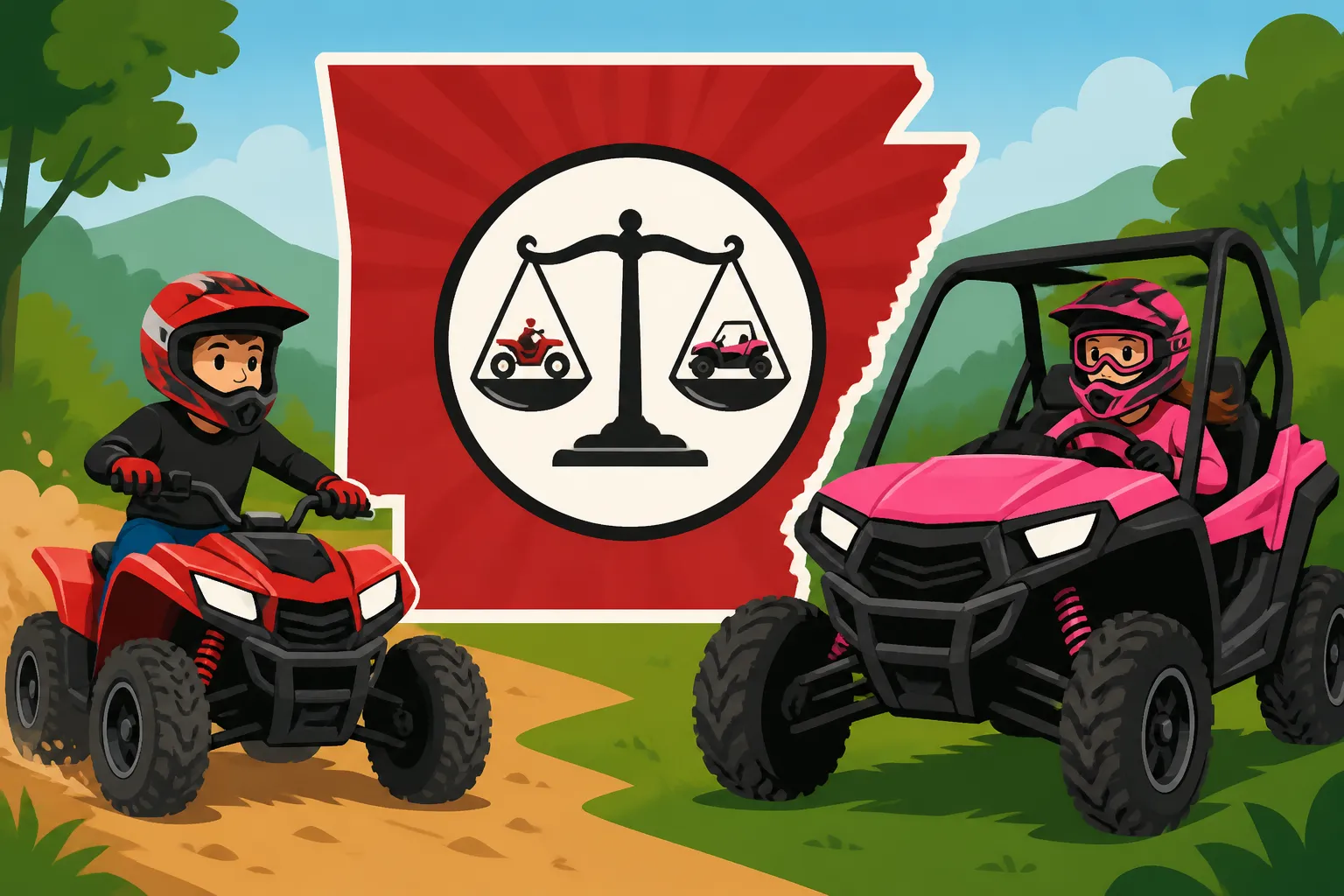
It's a common scenario, isn't it? You get your child that first shiny ATV, perhaps a small 90cc quad, or maybe even a slightly larger 125cc for a growing teenager. You might naturally assume that because it's a "kid's machine" or because it's only meant for the backyard or the deer lease, it somehow flies under the radar of Arkansas's ATV registration laws. But that assumption can lead to a rude awakening, and a potential citation if you're not careful. This guide is here to cut through the confusion and clarify exactly when and why your child's ATV, no matter how small, needs to be registered in Arkansas, helping you avoid unnecessary headaches down the road.
Does Arkansas Law Define a "Kid's Machine" Differently?
The short answer here, and this is where a lot of folks get tripped up, is generally "no" when it comes to the need for registration. Arkansas's definition of an all-terrain vehicle (ATV) under state statute is pretty broad, and it doesn't typically carve out special exemptions based on who the primary rider is or what the engine size is below a certain threshold. The state is more concerned with the characteristics of the machine itself and, crucially, where it will be ridden.
The Statewide ATV Definition and Its Limits
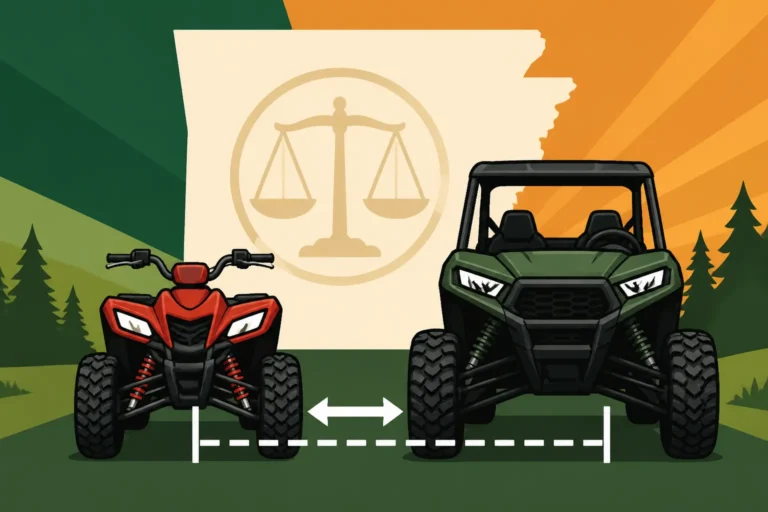
Let's dive into what Arkansas actually considers an ATV. The statute typically covers off-highway vehicles designed for recreational use, generally having three or more low-pressure tires, a seat designed to be straddled by the operator, and handlebars for steering. While it does mention engine size and width limitations – specifically, machines wider than 50 inches or with engines exceeding 1,000cc often fall into a different classification like a side-by-side or "wheeled off-road vehicle" – machines below those thresholds are still very much considered ATVs. This means that little 70cc quad your elementary-aged child rides, or the 150cc machine for your teen, fits squarely within the definition of an ATV that could require registration. You can explore [Arkansas's 50-Inch, 1,000cc ATV Definition] for a deeper understanding of these specific metrics.
Why Size Doesn't Always Exempt You
Many parents naturally think, "It's so small, it can't possibly need to be registered like a full-sized adult quad!" It's an understandable thought process, rooted in the common sense that smaller machines are often less powerful and seemingly less impactful. However, from the state's perspective, the potential for using that machine on public lands, even inadvertently, is what drives the registration requirement. The law isn't primarily focused on the machine's cubic centimeters for exemption purposes, but rather its classification as an ATV and its intended use. If it's an ATV, and you plan to ride it anywhere beyond very specific private property boundaries, then its size is largely irrelevant to the registration question.
The Intent to Use: Public vs. Private
This is the hinge upon which the entire registration question often swings. The state's primary motivation for ATV registration is tied to use on public land, designated trails, or for certain off-highway vehicle activities where identification and a record of ownership are important. If your child's ATV is strictly and exclusively used on private property that you own, or on private land with express permission from the landowner, then it generally does not need to be registered with the state. This is a critical distinction that many people miss, often leading to confusion. The moment that machine crosses onto a public road (even to get to another section of private land), a public trail system, or any other area deemed public, the registration requirement kicks in.
When Your Child's ATV Absolutely Needs Registration
While the idea of registering a youth ATV might seem like an extra hassle, it's a necessary step to ensure you're riding legally and responsibly, especially if your adventures extend beyond your own backyard. Ignoring these requirements can lead to fines and other legal issues, which nobody wants to deal with, especially when it involves a family outing.
If It Touches Public Land or Designated Trails
This is the big one. If you plan for your child to ride their ATV on any public land in Arkansas—think state parks, national forest trails, or county roads where ATVs are permitted by local ordinance—then that machine must be registered. This applies whether it's a weekend trip to a popular riding area like Wolf Pen Gap or just crossing a paved county road to get from one section of your friend's property to another. Even short jaunts on public rights-of-way can trigger the need for registration. For more on this, you should definitely read [Who Must Register an ATV in Arkansas]. Each machine used on these public access points needs its own unique registration decal.
The Often-Misunderstood "Private Land" Rule
We touched on this earlier, but it bears repeating because it's such a common point of misunderstanding. Many people assume that if they only ride on a deer lease, hunting club property, or large tracts of private land they don't own but have permission to use, they are exempt. This is where you need to be very careful. Arkansas law makes it clear: the exemption for "private land only" use typically applies only to land that you own. If you are riding on land that belongs to someone else—even if you have their blessing, even if you lease it for hunting—and that land isn't your private property, the state still requires registration if you ever intend to ride it off that specific parcel in a way that would put it on public land. The best practice is to assume registration is needed unless the machine never leaves your personally owned private property. It's often safer to register it, especially if there's any ambiguity. For a deeper dive into this, check out [Arkansas ATV Registration for Private Land Only Machines].
Sales Tax Obligations for All ATV Purchases
Here's another crucial point that often surprises people: sales tax isn't tied to whether or not you register the machine. If you purchase an ATV in Arkansas, whether it's new from a dealer or used from a private seller, you are generally obligated to pay Arkansas sales tax. This holds true for your child's smaller machine just as it would for a full-sized side-by-side. The state wants its share of the sales tax, regardless of the vehicle's size or the age of its primary rider. This tax is typically paid at the revenue office when you go to register the vehicle, but it's important to understand it's a separate obligation from the registration fee itself. Even if you determine your child's machine doesn't need registration because it's strictly on your own private land, you would still owe sales tax on the purchase price. [Arkansas Sales Tax on an ATV Purchase] provides more details on how this process works.
Navigating the Registration Process for a Youth ATV
So, you've determined your child's ATV needs to be registered. Don't worry, it's not an overly complicated process, but it does require attention to detail and having the right documents in order. The Department of Finance and Administration (DFA) handles these registrations, and they're typically processed at your local revenue office.
Essential Documents for Your Kid's Machine
Just like with any other ATV registration, you'll need to gather a few key pieces of paperwork. The most important is proof of ownership. This usually means a manufacturer's statement of origin (MSO) if the machine is brand new, or a bill of sale if you bought it used. If you bought it from a private party, a clear, dated bill of sale with the seller's information and the machine's VIN (Vehicle Identification Number) is paramount. Make sure the VIN on the bill of sale matches the VIN on the machine itself exactly. Sometimes, especially with private sales, people overlook getting a proper bill of sale. Tools like LawDepot can be incredibly helpful here, offering templates for a legally sound bill of sale that covers all the necessary information for Arkansas registration. You'll also need a completed Arkansas DFA Form 10-381, which is the official application. Don't forget your Arkansas driver's license or state ID for yourself, as the owner. Having a complete [Arkansas Registration Paperwork Checklist] before you go will save you a lot of time and frustration.
Understanding Sales Tax for Smaller Investments
When you register the ATV, you'll also pay the applicable sales tax. This includes the state sales tax rate and any local sales taxes that apply to your city and county. Unlike some other vehicle purchases, ATVs in Arkansas are not subject to a vehicle tax cap, meaning you pay the full percentage on the entire purchase price. This can sometimes be a surprise to people expecting a lower tax amount. Even for a smaller, less expensive youth ATV, these taxes add up. For example, if you bought a used 90cc quad for a few hundred dollars, you'll pay sales tax on that full amount, plus the registration fee. It's always a good idea to factor this into your budget when purchasing. For a comprehensive look at what you can expect, refer to [Arkansas Sales Tax Rate on a Quad] and [Arkansas Local Sales Tax on a Machine]. The revenue office clerks are very helpful in calculating the exact amount due, but having an estimate in mind is always smart.
The One-Time Nature of Arkansas ATV Registration
One of the great things about Arkansas ATV registration is that it's a one-time deal. Once you register your child's machine and receive the decal, you never have to renew it. That's right, no annual fees, no yearly trips back to the revenue office for the same machine. This is a huge relief for many riders! You pay the fee and the sales tax once, get your decal, and you're good to go for the life of that machine in your ownership. This is a significant difference from how cars and trucks are registered, and it's a definite bonus for ATV owners. You can read more about this convenient aspect in [Arkansas ATV Registration Has No Annual Renewal].
Responsible Ownership Beyond the Paperwork
Getting the registration sorted is a big step, but owning an ATV, especially one ridden by a child or teenager, comes with responsibilities that go far beyond just the paperwork. Safety, proper equipment, and setting clear rules are paramount to ensuring a fun and safe riding experience for everyone.
Age Restrictions and Supervision Requirements
Arkansas does have rules regarding age and supervision for ATV riders. Generally, riders under the age of 12 must be under the direct supervision of an adult who is at least 18 years old. This adult must be physically present and able to monitor and control the operation of the ATV. It's not just about letting them loose in a field; it's about active, immediate oversight. For older children and teenagers, while direct supervision might not be legally mandated in the same way, it's still highly recommended. Accidents can happen quickly, and having an experienced adult nearby can prevent serious injury. Make sure you're familiar with [Arkansas Rules for Riders Under Twelve] and [Arkansas Supervision Rules Under Twelve] to keep your young riders safe and compliant with the law.
Equipping Your Child for Safe Riding
Beyond legal requirements, common sense dictates that your child should be properly equipped every time they get on an ATV. A properly fitting helmet is non-negotiable, even if the state doesn't have a specific helmet law for ATVs in every scenario. Goggles, gloves, long pants, and sturdy, over-the-ankle boots are also critical to protect against debris, impacts, and scrapes. Ensure the ATV itself is appropriate for your child's size and skill level; don't put a small child on an overly powerful machine. Regular maintenance on the ATV, like checking tire pressure, brakes, and fluid levels, is also crucial. A safe machine and safe gear are your best defense against accidents.
Protecting Your Investment and Limiting Liability
Finally, once your child's ATV is registered and you've addressed safety, think about protecting your investment. While Arkansas doesn't typically require insurance for ATV registration, it's a very wise idea to have liability insurance. This can cover damages if your child accidentally causes property damage or injury to another person while riding. Check with your home insurance provider or an independent agent about specific ATV coverage options. Furthermore, always keep copies of your registration documents and proof of ownership in a safe place. If you ever need to sell the machine, having these documents in order will make the process much smoother. Again, services like LawDepot can help you generate comprehensive forms, like a robust bill of sale, that clearly transfer ownership and protect both buyer and seller should you decide to upgrade your child's machine down the line. Keeping everything properly documented is a part of being a responsible ATV owner in Arkansas, whether the machine is for you or your kids.
| Youth ATV Registration in Arkansas: Common Scenarios | Does it Require Registration? | Key Considerations |
|---|---|---|
| Ridden exclusively on your personally owned land. | No | Sales tax still owed on purchase. |
| Ridden on a deer lease / hunting club property. | Yes (generally) | Unless lease is part of your private land; public access often implied. |
| Ridden on designated public ATV trails (e.g., National Forest). | Yes | Essential for legal riding on these trails. |
| Ridden on county roads (where permitted by ordinance). | Yes | Crossing or traveling on public roads. |
| Ridden at a private off-road park. | No (generally, check park rules) | Most private parks only require park fees/waivers, not state registration. |
| Bought used from a private seller. | Yes (if used publicly) | Need a valid bill of sale for proof of ownership. |
| Brand new from a dealer. | Yes (if used publicly) | Dealer may handle some paperwork; MSO is key. |
Disclaimer
This article is for general informational purposes only and does not constitute professional advice. Laws, prices and regulations vary by location and change over time. Consult a qualified professional for guidance on your specific situation.