Registration Rules for a Quad Used Only for Chores
It's a common dilemma in Arkansas: you've got a trusty quad that's invaluable for hauling feed, checking fences, or just getting around your property, but it rarely, if ever, touches a public road. You hear all this talk about ATV registration, decals, and fees, and you're left wondering if your hard-working machine, used purely for chores, really needs to go through all that hassle. This guide will cut through the confusion and explain exactly when and why your chore-focused ATV might or might not need to be registered in the Natural State, helping you stay compliant without unnecessary steps.
When an Arkansas Chore ATV Needs Registration (And When It Doesn't)
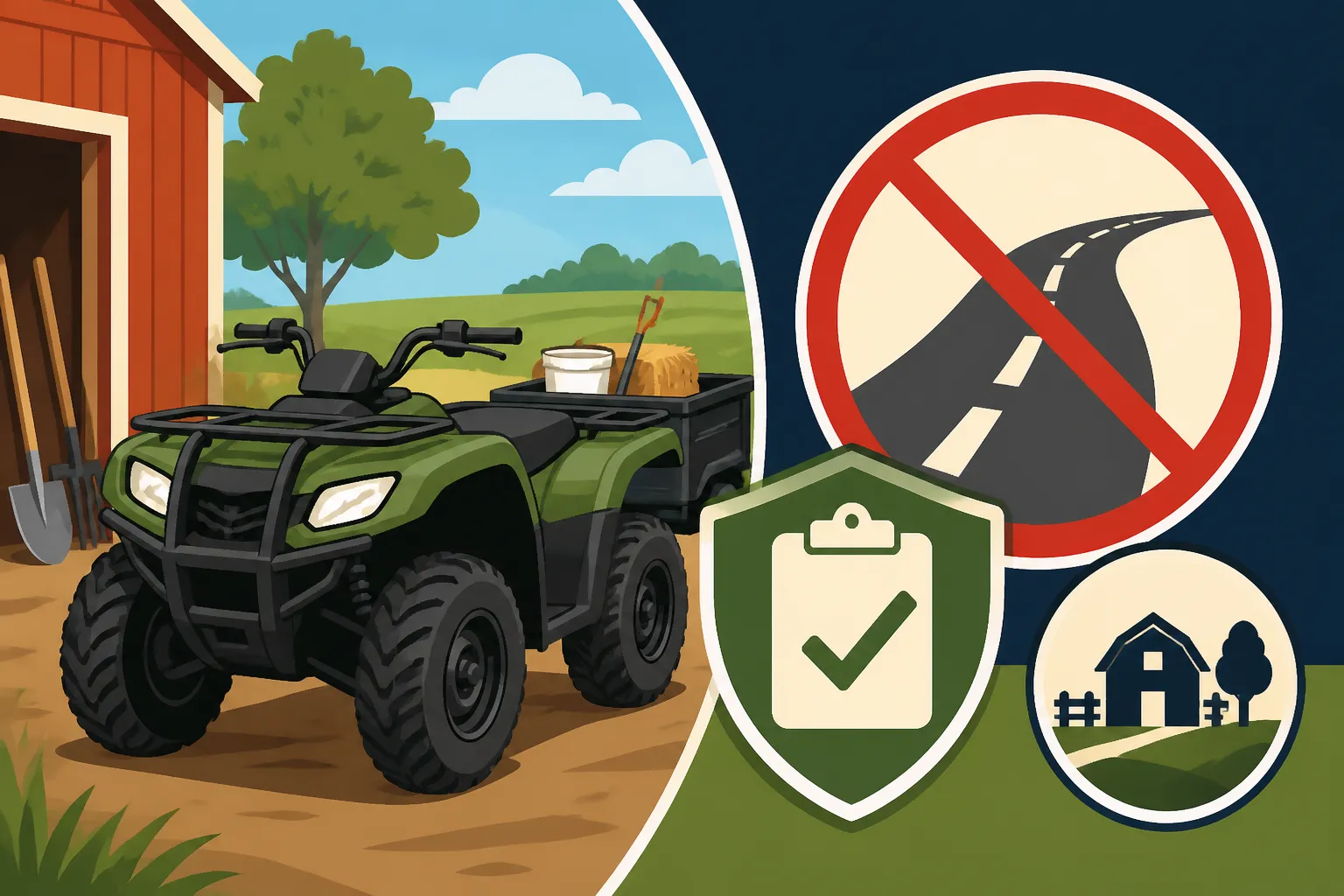
Let's get right to the heart of the matter for those of us who primarily use our ATVs as workhorses around the farm, hunting lease, or private acreage. The good news for many is that if your ATV truly stays confined to your own private property and never ventures onto public roads or state-maintained trails, Arkansas generally doesn't require it to be registered. This is a huge relief for landowners and farmers who rely on these machines daily but have no intention of taking them on public thoroughfares.
The "Private Land Only" Exemption
Arkansas's ATV registration laws are primarily concerned with machines operating on public lands, roads, or trails where the state has a vested interest in safety, identification, and revenue for maintenance. If your quad is strictly a private property tool, think of it like your lawnmower or tractor—it's not generally subject to the same registration requirements as a vehicle meant for public use. You could use it to pull a small trailer filled with firewood, spray weeds in your orchard, or check on livestock without ever needing to visit a revenue office. The key here is private land only. This means land that you own, or land where you have explicit permission to operate, and which doesn't involve any public access points like dedicated trails or roadways. This distinction is crucial and often misunderstood. For a deeper dive into this, check out [Arkansas ATV Registration for Private Land Only Machines].
What Happens if Your ATV Briefly Touches Public Land?
Here's where things can get a little tricky for the chore-focused ATV. Sometimes, even the most diligent private land user might need to cross a short stretch of county road, or perhaps a section of a public road to get from one part of their property to another. Or maybe your property abuts a public road, and you need to move your ATV across it to access another field. This brief exposure to public land is where the "private land only" exemption can quickly disappear. Arkansas law is quite clear: operating an ATV on a public road, street, or highway generally requires registration. There are specific exceptions, such as direct crossings at roughly 90-degree angles after coming to a complete stop, or specific allowances for farming and hunting operations to use county roads, but these are exceptions that need to be understood in detail. If your chore ATV needs to make even a short trip on a public road, you'll likely need to register it. It's a common frustration, especially when the intent is purely functional and not recreational road riding.
Defining "Private Land" Versus "Public Roads" in Arkansas
Understanding the boundary between "private land" and "public roads" is absolutely critical for determining whether your chore ATV needs registration. It's not always as straightforward as it seems, and misinterpreting this can lead to unexpected citations.
What Constitutes Private Land?
In Arkansas, private land is generally any property that is privately owned and not open to public use, or areas where access is restricted and controlled by the landowner. This includes your own farm, ranch, timberland, or personal residential property. If you're on a hunting lease or a friend's acreage, and you have explicit permission to ride there, that also counts as private land for your use. The key is that the land is not maintained by the state or county for public travel, and there are no public easements or rights-of-way that would transform it into a public thoroughfare. Even if a private road exists on private land, if it's not dedicated for public access, it remains private. This means you can confidently use your ATV for tasks like moving equipment, checking fences, or rounding up livestock without state registration, as long as you remain within these bounds. You don't want to get caught off guard, so ensuring your understanding of your property lines and any public easements is paramount.
Public Roads and Their Nuances
A "public road," street, or highway in Arkansas refers to any way or place of whatever nature generally open to the use of the public as a matter of right for the purposes of vehicular travel. This includes state highways, county roads, and even municipal streets. Even a gravel road that you might think of as "private" could be a county-maintained public road. The lines can get blurred, especially with unmarked county roads or old logging roads that have gained public access over time. If your property is bisected by a county road, for example, even just crossing that road to get to another field triggers a public road interaction. This is where many people inadvertently cross the line and find their unregistered chore ATV subject to the law. Always assume a road is public unless you have explicit, verifiable information that it is strictly private and not maintained by any public entity. For specific rules on road use, you'll want to review [Arkansas ATV Road Rules: What 27-21-106 Says].
Here's a quick comparison to help clarify:
| Scenario | Land Type | Registration Required? | Key Consideration |
|---|---|---|---|
| Mowing Fields on Own Property | Private | No | Strictly private, no public access |
| Hauling Feed on Leased Land | Private (with permission) | No | Landowner permission, no public access |
| Crossing a County Road | Public Road | Yes | Brief public road use generally triggers registration |
| Driving Down a County Road | Public Road | Yes | Public road use always requires registration (with few exceptions) |
| Using an ATV on WMA Trails | Public Land (State/Fed) | Yes | Requires registration/permit for public trails |
What Arkansas Defines as an ATV for Registration Purposes
Before you even worry about whether your chore machine needs to be registered, it's essential to confirm that Arkansas actually classifies it as an "ATV" in the first place. The state has specific criteria that define an all-terrain vehicle (ATV), and if your machine falls outside these parameters, different rules might apply. This definition is crucial because it dictates which set of regulations your vehicle is subject to.
Arkansas's Official ATV Definition
Arkansas Code Title 27, Chapter 21, Section 102 lays out the state's official definition for an all-terrain vehicle. It generally refers to a motorized vehicle that is:
- Three, four, or six-wheeled.
- Designed for off-highway use.
- Has a width of 50 inches or less.
- Has a dry weight of 1,000 pounds or less.
- Is designed for a single operator or a single operator and a passenger.
Many standard quads and even some smaller utility vehicles (UTVs) designed for farm work will fit neatly within these parameters. For instance, a typical four-wheel quad used for checking cattle will almost certainly meet this definition. However, if your "chore machine" is a larger side-by-side or UTV, especially one designed to carry multiple passengers or haul heavy loads, it might exceed the 50-inch width or 1,000-pound dry weight limits. If it's wider than 50 inches or heavier than 1,000 pounds, it likely falls into the category of a "utility terrain vehicle" (UTV) or "off-road vehicle," which can have slightly different rules regarding registration, particularly if it's used on local public roads where city ordinances might apply. Understanding these specifics is key, and you can learn more by looking at [Arkansas's 50-Inch, 1,000cc ATV Definition].
How the Definition Impacts Your Chore ATV
Let's say your chore ATV fits the standard definition. If it's only used on private land, then the initial rule still applies: no registration needed. The definition matters more when you start considering public road use or trail access. If your machine is not considered an ATV under the state's definition (for example, it's a wider UTV), then the general prohibitions on road use might still apply, but the specific registration type could differ if a local ordinance allows for UTV street permits. However, for the purpose of this discussion on general chore quads, most will fall under the standard ATV definition. The important takeaway is to know what your machine is classified as, because it sets the stage for whether specific rules apply. If you ever sell your machine, having a clear understanding of its classification and origin will be important for generating a bill of sale, which resources like LawDepot can help you draft professionally.
The Registration Process for an Arkansas Chore ATV (If Required)
So, you've assessed your situation, and it turns out your chore ATV does need to be registered because it sometimes crosses or uses a public road. While the thought of more paperwork might be frustrating when your primary goal is just to get work done, the process in Arkansas is relatively straightforward, and thankfully, it's a one-time deal with no annual renewals.
Gathering Your Paperwork
If you find yourself needing to register your chore ATV, you'll generally need to provide a few key documents to the Arkansas Department of Finance and Administration (DFA) Revenue Office. This paperwork is crucial for establishing ownership and ensuring the machine meets the state's criteria.
Here's a rundown of what you'll typically need:
- Proof of Ownership: This is paramount. For a new ATV, this would be the Manufacturer's Statement of Origin (MSO) or Certificate of Origin (MCO). If you bought it used, you'll need the previous owner's bill of sale and possibly the previous registration if they had one. A properly executed bill of sale, perhaps drafted using a template from LawDepot, is critical for proving you legitimately own the machine, especially if it's a private sale without an MSO. For more on what counts, see [Arkansas Proof of Ownership for Registration].
- DFA Form 10-381: This is the application for an Arkansas ATV/UTV registration decal. You'll fill this out with all the details about your machine and yourself. It's not a complicated form, but accuracy is key.
- Proof of Arkansas Residency: A valid Arkansas driver's license or state ID is usually sufficient.
- Payment for Fees: There's a one-time registration fee. While I can't give specific figures, expect a modest charge. You'll also owe sales tax on the purchase price if you haven't already paid it to a dealer or if you bought it in a private sale. This sales tax is a significant part of the cost for many. For details on the fees, check out [What Arkansas Charges to Register an ATV].
Once you have everything in order, you can typically complete the process at any Arkansas Revenue Office. Some offices are busier than others, so planning your visit can save you time. You can also sometimes mail in your registration, but for a first-time registration, visiting in person might be easier if you have questions or need to ensure all documents are correct.
What Happens After Registration?
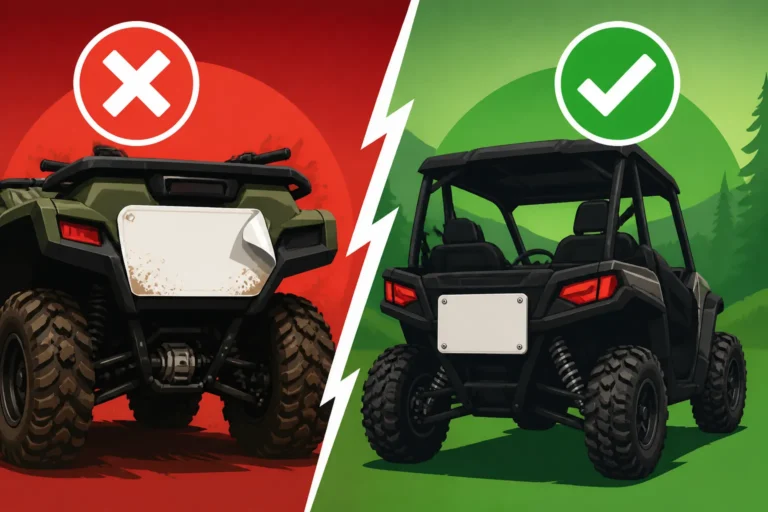
After you've successfully registered your chore ATV, you'll receive a unique decal. This decal must be affixed to the left front of your machine, clearly visible. This decal signifies that your ATV is registered with the state and allows you to legally operate it on public roads where allowed by law or exception. One of the best aspects of Arkansas ATV registration is that it's a [Arkansas ATV Registration Has No Annual Renewal]. Once you've paid the fee and received your decal, it's good for the lifetime of your ownership of that specific machine. This means no yearly reminders, no recurring fees, and one less administrative task to worry about while you're busy with your chores. If you ever sell the machine, you'll want to retain proof of sale, and the decal will stay with the ATV for the new owner. Understanding [Arkansas ATV Decal Rules and Where It Goes] can help prevent any placement issues.
This one-time registration offers peace of mind. While it might seem like an extra step for a machine primarily used for work, it allows you the flexibility to legally cross roads or use specific public access points when your chores demand it, without fear of being ticketed. It's about empowering you to use your ATV effectively and legally, whether it's for moving hay bales or simply getting to the back forty.
Disclaimer
This article is for general informational purposes only and does not constitute professional advice. Laws, prices and regulations vary by location and change over time. Consult a qualified professional for guidance on your specific situation.