Tagging the Trailer at a Revenue Office
It’s easy to get swept up in the excitement of a new ATV or side-by-side, dreaming of tearing up trails or tackling chores around the farm. But as you focus on getting your machine ready, a crucial piece of the puzzle often gets overlooked: the trailer you’ll use to haul it. Many folks arrive at the Arkansas Revenue Office, quad paperwork in hand, only to realize their trusty utility trailer also needs to be properly tagged. This guide will walk you through the often-confusing process of ensuring your trailer is legally ready for the road, saving you a headache and potential fines down the line.
Why Your ATV/UTV Trailer Needs a Tag in Arkansas
Let’s be honest, for many, a trailer is just a workhorse. It hauls lumber, moves furniture, and most importantly for us, gets our ATVs and UTVs from the garage to the trail or job site. It’s easy to think of it as merely an extension of your truck, but Arkansas law sees it differently. If that trailer touches a public road, it needs to be properly registered and tagged. Neglecting this step can turn a fun day out into a costly inconvenience, leaving you stranded with a citation.
The Law's Eye on the Road
Arkansas, like most states, has clear regulations regarding vehicles on public roadways, and that includes trailers. It doesn't matter if it's a massive enclosed toy hauler or a small 4×8 utility trailer designed for a single quad; if it's hitched to your vehicle and traveling on state highways, county roads, or city streets, it's considered a vehicle requiring registration. This isn't just about generating revenue for the state; it's about public safety and accountability.
Think about it: if a trailer becomes unhitched, breaks down, or is involved in an accident, law enforcement needs to be able to identify its owner quickly. A license plate and registration are the primary tools for this. Without them, it becomes a much bigger headache for everyone involved. For us riders, we’re often hauling our machines quite a distance to get to those prime riding spots like Wolf Pen Gap or Mill Creek. The last thing you want is a deputy pulling you over because your trailer is missing its proper identification, especially when you’re already focused on [Arkansas ATV Road Rules: What 27-21-106 Says].
More Than Just a Box on Wheels
Beyond the legal requirements, registering your trailer offers practical benefits. It establishes clear proof of ownership, which is incredibly important if your trailer is ever stolen. Thieves often target trailers, especially those loaded with valuable ATVs or UTVs, precisely because they can sometimes be less rigorously documented than the machines themselves. Having a registered tag on your trailer helps law enforcement track it down.
Furthermore, proper registration is often tied into other aspects of vehicle ownership, such as insurance. While Arkansas doesn't mandate insurance for ATVs in the same way it does for cars, having your trailer properly documented can streamline insurance claims should it be damaged or stolen. It's an often-overlooked detail, but ensuring your trailer is legally recognized means it's less of a liability and more of a secure asset. It’s a proactive step that protects your investment, much like understanding [Arkansas ATV Title Questions Answered] for your actual quad.
The Paperwork Puzzle: What to Bring to the Revenue Office
Gathering the right documents for anything involving the Department of Finance and Administration (DFA) can feel like a scavenger hunt. The key to a smooth visit to the Revenue Office for your trailer tag is preparation. Showing up with incomplete paperwork is a surefire way to end up making multiple trips, which nobody has time for. This is especially true if you're trying to register both your ATV and trailer at the same time, because while the general process is similar, the specific forms and details for each are distinct.
Proof of Ownership: The Bill of Sale or MSO
This is the absolute cornerstone of your registration application. Without verifiable proof that you own the trailer, the state won’t issue a tag.
- For a New Trailer: If you bought your trailer new from a dealership, you'll need the Manufacturer's Statement of Origin (MSO) or Manufacturer's Certificate of Origin (MCO). This document is the trailer's birth certificate and will be provided by the dealer. It typically lists the trailer's VIN, make, model, and original owner. The dealership often handles some of the initial paperwork and tax collection, making this process a bit smoother.
- For a Used Trailer: When buying a used trailer from a private seller, a clear and comprehensive Bill of Sale is essential. This document should include:
- The date of sale.
- The full names and addresses of both the buyer and seller.
- A detailed description of the trailer, including its make, model, year (if known), and crucially, its Vehicle Identification Number (VIN) or serial number.
- The purchase price.
- Signatures of both the buyer and seller.
A properly filled-out bill of sale protects both parties and is vital for your registration. If you're dealing with a private sale and the seller doesn't have a formal bill of sale, or if you want to ensure the document is legally robust, online services like LawDepot can help you generate a professional and compliant bill of sale template. This can be a real lifesaver for documenting transactions, especially for private sales where formal dealership paperwork isn't available. For more details on what constitutes a good ownership record, you can reference [Arkansas Proof of Ownership for Registration].
What if your trailer is very old, or perhaps homemade, and you don’t have an MSO or a formal bill of sale? This is a common conundrum. In such cases, the Revenue Office might require additional steps, such as a VIN inspection or a notarized affidavit of ownership explaining the circumstances. Sometimes, a series of older bills of sale showing the chain of ownership can work. It’s best to call your local Revenue Office beforehand to inquire about their specific requirements for unusual situations.
Your Identification and Arkansas Residency
Just like registering any other vehicle, you’ll need to prove who you are and that you’re an Arkansas resident.
- Photo Identification: Bring a valid government-issued photo ID, such as your Arkansas driver's license or state ID card. This is standard procedure for any transaction at the Revenue Office.
- Proof of Residency: Your driver’s license often serves this purpose, but if your address isn’t current, you may need additional documents. Acceptable proof of residency can include a utility bill (electric, water, gas), a bank statement, or a lease agreement, all showing your current Arkansas address. Make sure these documents are recent, typically within the last 30-60 days. This is similar to the requirements for registering your primary vehicles or even your ATV, as outlined in [Arkansas Registration Paperwork Checklist].
Money Matters: Fees and Taxes
Yes, there are fees and taxes involved. While we can’t give you exact numbers here (they can change!), it’s important to understand the components.
- Registration Fee: There will be a set fee to register your trailer and receive its license plate. This is a standard administrative charge.
- Sales Tax: If you purchased your trailer recently, you will likely owe Arkansas sales tax on the purchase price, unless it was a gift or you can demonstrate tax was paid in another state (and even then, Arkansas may levy a "use tax" if its rate is higher). The sales tax applies to the purchase price of the trailer itself. It’s important to understand that the sales tax calculation for trailers generally follows the same rules as other vehicles. It's not capped like vehicle sales tax used to be, so you'll pay the full percentage on the entire purchase price. This is a common point of confusion for buyers. For context on how this applies to recreational vehicles, see [Arkansas Sales Tax on an ATV Purchase].
You'll need to pay these fees at the Revenue Office. They typically accept various forms of payment, including cash, check, or credit/debit cards, but it's always a good idea to confirm their accepted payment methods before your visit.
The Step-by-Step Process at the Revenue Office
Once you have all your ducks in a row – your proof of ownership, identification, and a clear understanding of potential costs – it’s time to head to one of the [Arkansas Revenue Offices That Handle ATVs] (and trailers!). The process is usually straightforward if you’re prepared, but knowing what to expect can ease any anxiety.
What Happens at the Counter
When you arrive at the Revenue Office, you'll take a number and wait your turn. When called, you’ll approach the counter and present your collected documents to the clerk.
- Document Review: The clerk will meticulously review your MSO or Bill of Sale, verifying all the information, especially the VIN. They’ll also check your ID and proof of residency.
- Form Completion: You'll be given an application form for trailer registration to fill out. This form will ask for details about you and the trailer. Take your time and fill it out accurately. If you have any questions, don’t hesitate to ask the clerk for clarification. While it won't be [Arkansas DFA Form 10-381 Explained] (which is for ATVs), the information requested will be similar in nature.
- VIN Verification: For certain trailers, especially homemade ones or those with unclear previous registrations, the clerk might require a physical VIN verification. This usually means someone from the office will step outside to visually inspect the VIN on your trailer to ensure it matches your paperwork.
- Payment Processing: Once all documents are approved and the form is correctly filled, the clerk will calculate the total fees and taxes due. You'll then make your payment.
The clerks at the Revenue Office deal with these transactions constantly, so don't be afraid to ask if something isn't clear. Their goal is to help you get your trailer legally registered.
Receiving Your Tag and Decal
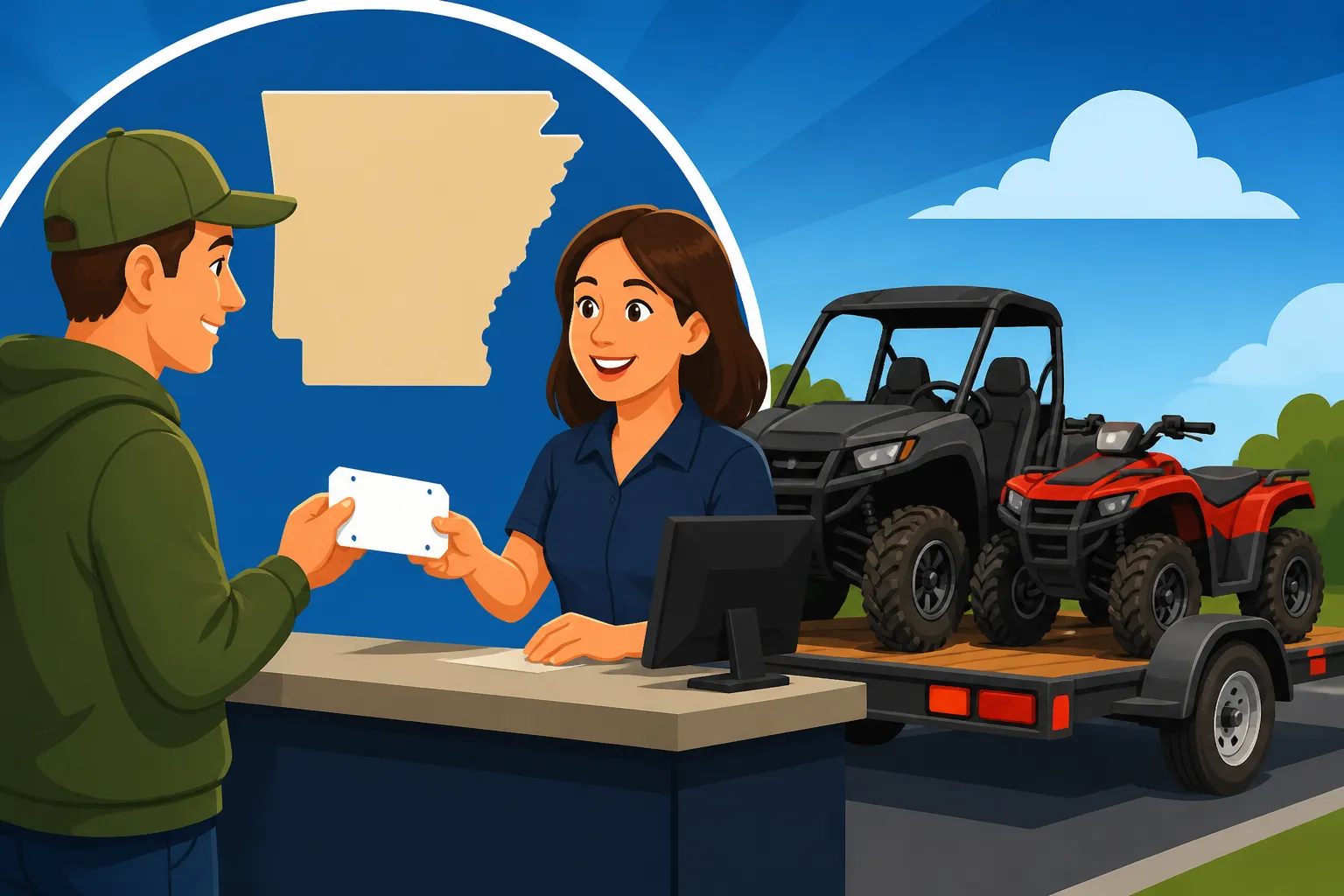
Upon successful completion of the process and payment, you will typically receive your metal license plate and a registration decal on the spot.
- The License Plate: Unlike ATVs, which receive a small decal, your trailer will get a standard-sized metal license plate, similar to what you’d put on a car or truck. This plate must be securely affixed to the rear of your trailer, in a visible location, and kept clean so it can be easily read.
- The Registration Decal: Along with the plate, you'll receive a small sticker, or decal, that indicates the current registration year. This decal is typically applied to the license plate itself, usually in a designated corner. It’s important to ensure this decal is properly affixed and legible, as it visually confirms your registration is up-to-date.
Remember, once you have that plate and decal, your trailer is officially recognized as road-legal in Arkansas!
Common Hiccups and How to Avoid Them
Even with the best preparation, sometimes things can go sideways. Knowing the common pitfalls can help you navigate them more smoothly.
- Missing or Incomplete Paperwork: This is by far the most common reason for delays. Double-check everything before you leave home. Does the bill of sale include the VIN? Are all names and addresses correct? Is your ID current? A quick review can save you a return trip.
- Issues with VIN: Sometimes, a trailer's VIN might be faded, damaged, or simply not present (especially on very old or homemade trailers). If you suspect this might be an issue, contact the Revenue Office ahead of time to understand their procedure for VIN verification or assignment. They may require a specific form or a visit from a law enforcement officer to verify the identity of the trailer.
- Discrepancies in Information: If the name on your bill of sale doesn’t exactly match your ID, or if there’s a typo in the VIN, it can cause problems. Ensure consistency across all your documents.
- Unclear Private Sale History: If you bought a used trailer and the previous owner didn't have a clear title or MSO, or their bill of sale was handwritten and sparse, you might face extra scrutiny. This is where a robust, formally drafted document created through a service like LawDepot can really strengthen your position, showing a clear intent to legally transfer ownership. Having a solid, unambiguous [Arkansas ATV Bill of Sale Requirements] template adapted for a trailer can be a game-changer.
- Sales Tax Confusion: Be prepared to pay sales tax if you haven't already. If you believe you're exempt (e.g., it was a gift, or you paid tax in another state), bring all supporting documentation.
Being patient, polite, and prepared are your best tools when dealing with the Arkansas Revenue Office. They are there to help, and having all your ducks in a row makes their job, and your experience, much easier.
Disclaimer
This article is for general informational purposes only and does not constitute professional advice. Laws, prices and regulations vary by location and change over time. Consult a qualified professional for guidance on your specific situation.