Utility Crews and Their Exemption
It's incredibly frustrating when you're trying to understand the seemingly endless rules about riding ATVs and UTVs on Arkansas roads. Most of the time, the general answer is a resounding "no," leaving many riders scratching their heads about how anyone gets essential work done. This guide is going to clear up one specific, but vital, exception: how utility company crews are legally allowed to operate these vehicles on our public roads, ensuring they can keep our essential services running.
The General Rule: Why ATVs and UTVs Are Banned from Arkansas Roads
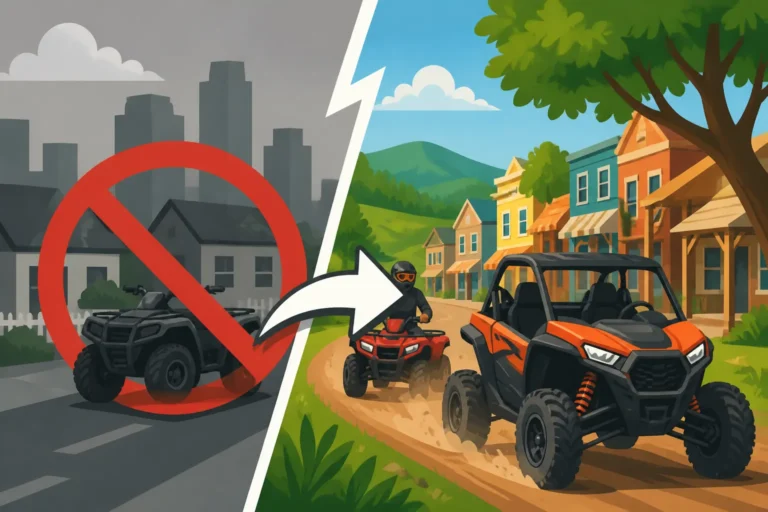
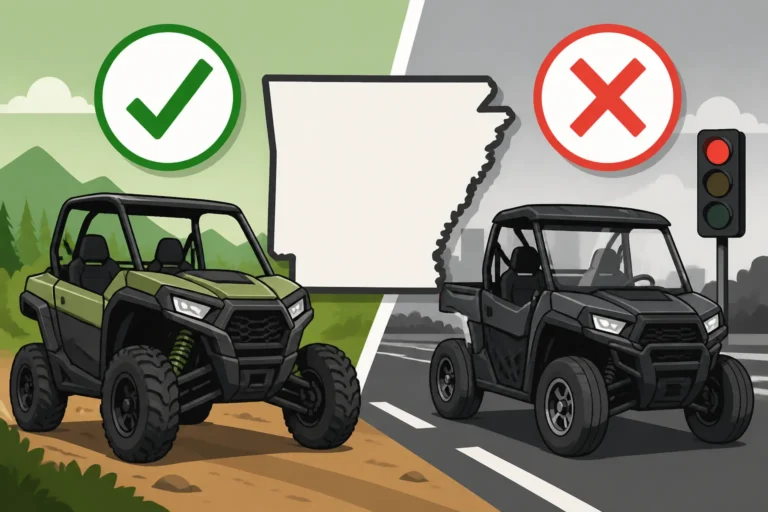
When you first start looking into the rules for riding ATVs and UTVs in Arkansas, it can feel like you're running into a brick wall. The default setting for our state's laws is pretty clear: off-highway vehicles (OHVs) generally don't belong on public roads. This isn't just some arbitrary decision; it's rooted in safety and the fundamental differences between these machines and traditional street-legal vehicles. Many riders express frustration, feeling like they're being unfairly targeted, but the law aims to prevent accidents and maintain order on our shared roadways.
The Fundamental Legal Stance
Arkansas statute explicitly outlines what constitutes an off-highway vehicle and, more importantly, where it can and cannot be operated. Essentially, ATVs and UTVs are designed for off-road environments – think dirt trails, rocky paths, and open fields, not paved highways or city streets. They often lack many of the safety features mandated for cars and trucks, such as advanced signal systems, crush zones, and often, even basic mirrors. Their handling characteristics, top speeds, and tire types (often non-highway tires with aggressive treads) are simply not suited for the demands of public road travel, especially at higher speeds or in heavy traffic.
This fundamental legal stance means that if you're not operating under a specific exception, taking your ATV or UTV onto a public road is considered illegal. It’s a point of contention for many riders who just want to get from one section of land to another, or access trails that require a short hop on a county road. The law, however, is designed to protect both the OHV operator and other motorists by keeping these machines where they are intended to be ridden.
The Burden on Riders and Law Enforcement
The strict general prohibition places a significant burden on riders. Imagine you own a large property, but a public road cuts through it, separating two halves of your land. Or perhaps the only way to access your favorite hunting spot is a short stretch on a paved road. Without knowing the specific exceptions, it feels impossible and incredibly restrictive. The fear of getting a ticket or even causing an accident looms large. Riders often feel like they're constantly looking over their shoulder, even for the briefest moment on a public thoroughfare.
For law enforcement, enforcing these rules can also be a delicate balance. Officers understand that many people use these machines for legitimate purposes, but distinguishing between someone trying to do essential work or just crossing a road versus someone illegally joyriding can be challenging. They have a duty to uphold the law, and that includes the provisions against unauthorized OHV use on public roads. This often leads to uncomfortable encounters and, unfortunately, citations for those who aren't aware of or don't qualify for the few, specific exceptions. You can explore [What Arkansas Law Forbids on a Public Road] for more context on these restrictions.
Understanding Arkansas's Six Statutory Road Exceptions
While the general rule against riding ATVs and UTVs on Arkansas roads is quite firm, the state legislature isn't entirely blind to the practical realities of life, work, and recreation in a rural state. They've carved out a handful of very specific, narrowly defined exceptions. These exceptions aren't a free pass to ride anywhere you want; rather, they're a lifeline for certain situations where the use of an OHV on a public road is deemed necessary and justifiable.
A Lifeline for Specific Uses
These exceptions acknowledge that sometimes, an ATV or UTV is simply the best, or even the only, tool for the job. Without these allowances, essential tasks would become significantly harder, more time-consuming, or even impossible. It's a pragmatic approach to a complex issue, ensuring that while general safety is prioritized, vital services and activities aren't unduly hampered. You can read more about [Arkansas's Six Statutory Road Exceptions] to get a full picture of these allowances.
Some of these exceptions include provisions for [Arkansas Farming Operation Road Use] and [Arkansas Hunting Operation Road Use], which recognize the practical needs of those working in agriculture or managing hunting lands. There are also exceptions for individuals with certain disabilities, for law enforcement and emergency medical services, and for state park employees in the performance of their duties. These are all about allowing necessary tasks to be completed, and the utility company exemption fits right into this critical framework.
The Utility Company Exemption Explained
Now, let's talk about the specific exemption that allows utility company crews to operate ATVs and UTVs on public roads. This is a crucial allowance that impacts everyone, whether you realize it or not. Imagine a severe storm rolls through, knocking out power to thousands. Or a gas line breaks in a remote area, posing a serious hazard. How do crews get to these locations quickly and efficiently, especially if the terrain is rough, muddy, or otherwise inaccessible to standard vehicles?
This is where the utility company exemption shines. It explicitly permits utility company crews to use off-highway vehicles on public roads when they are engaged in the performance of their official duties. This isn't about letting a lineman take his personal ATV for a joyride; it's about enabling him to reach a downed power pole that's deep in the woods but requires a short stretch of road travel to access. These vehicles, often UTVs equipped with specialized gear, perhaps even heavy-duty tires and lift kits from SuperATV, are indispensable for navigating challenging landscapes and performing critical infrastructure maintenance and repair.
The types of utility companies that fall under this umbrella are broad, covering electrical power, natural gas, water, wastewater, and telecommunications (internet, phone). These crews need to inspect lines, respond to outages, repair pipes, and maintain equipment that is often spread across vast rural areas or located in places where conventional vehicles cannot tread. The efficiency and capability of an ATV or UTV in such scenarios are unmatched, making this exemption absolutely essential for public safety and service continuity. You can find more details on this specific allowance in [Utility Company Crews on ATVs].
What the Exemption Allows and Its Limitations
Understanding the utility company exemption isn't just about knowing it exists; it's about grasping the scope of what it permits and, equally important, what it does not permit. This distinction is vital for both the crews operating under the exemption and for the public who might observe these vehicles on the road. It's not a blanket approval for all ATV/UTV use, but a carefully defined provision for specific, critical functions.
Permitted Road Use for Essential Services
Under this exemption, utility company crews are allowed to drive their ATVs and UTVs on public roads specifically to perform their job duties. This means they can travel along a county road, for instance, to reach a remote access point for power lines, inspect a pipeline right-of-way, or get to a water main break that's just off the pavement. Unlike the general "direct crossing at ninety degrees" rule that applies to many other exceptions, this utility exemption allows for travel along the road itself, making it far more practical for extensive fieldwork.
Consider a crew responding to a storm. Trees are down, roads might be partially blocked, and the ground off the pavement is saturated. A heavy-duty UTV, perhaps one of the larger [Arkansas Machines Wider Than 50 Inches], equipped with a winch and cargo space for tools and supplies, becomes an invaluable asset. They might even use specialized [Arkansas Six-Wheeled ATVs and the Statute] for particularly difficult terrain, needing to utilize short stretches of public road to connect work sites. Without the ability to use these machines on the road, their response times would plummet, and the restoration of essential services would be significantly delayed, impacting homes, businesses, and emergency services.
The key here is "in the performance of their official duties." This isn't for commuting to the office or running personal errands. Every time a utility crew member operates an ATV or UTV on a public road under this exemption, it must be directly related to their work: responding to an emergency, conducting routine maintenance, or accessing infrastructure for repair or inspection. These vehicles are tools, and their use on roads is for a very specific, work-related purpose.
Distinguishing Utility Use from Personal Use
It’s absolutely critical to understand that this exemption is tied to the function of the vehicle and its operator at that specific time, not just who owns it. This means the exemption does not extend to an employee using their personal ATV or UTV for recreational purposes, even if they happen to work for a utility company. Nor does it permit a private citizen to claim they are doing "utility work" to justify riding their machine on the road. The law is very clear about the specific circumstances.
When you see a utility company's ATV or UTV on the road, it will almost invariably be identifiable. These machines are typically marked with company logos, names, or official decals. They often have specialized equipment, such as amber flashing lights for safety, toolboxes, or unique racks designed to carry specific utility gear. These visual cues serve as important distinctions, helping both the public and law enforcement understand that this isn't an individual illegally riding for fun. This helps differentiate their legitimate work from activities that would otherwise incur [Arkansas Penalties for Illegal Road Riding].
If a law enforcement officer pulls over a utility vehicle, they would expect to see proper identification, possibly work orders, and clear evidence that the operation is within the scope of the exemption. This layer of accountability ensures the privilege is not abused and that the public can have confidence in the legal framework governing these vehicles on our shared infrastructure.
Practical Implications for Utility Companies and the Public
The utility company exemption for ATVs and UTVs on Arkansas roads has significant practical implications, both for the companies providing essential services and for the general public who relies on those services. It’s a delicate balance that allows critical work to proceed efficiently while maintaining public safety.
Ensuring Safety and Accountability
For utility companies, this exemption means they can equip their crews with the right tools for challenging jobs. However, it also comes with a heightened responsibility for safety. Companies typically have robust training programs for their ATV and UTV operators, covering everything from safe driving practices on varying terrains to specific protocols for road use. They'll often invest in additional safety equipment, such as enhanced lighting, mirrors, and maybe even aftermarket accessories like heavy-duty roll cages or windshields from SuperATV to protect their employees in the field. This commitment to safety is paramount, especially when operating on public roads where interactions with other traffic are a possibility.
The ability for utility crews to use ATVs and UTVs on roads directly translates to better, faster service for everyone. Imagine a situation where conventional trucks couldn't access a remote communication tower after a storm, but a UTV could. This exemption means a quicker restoration of internet and phone services, which are critical for communication, commerce, and even emergency calls. The economic and social benefits of efficient utility service are immense, making this exemption far more than just a legal technicality; it's a cornerstone of modern infrastructure maintenance in Arkansas. For crews who might be working outside of daylight hours, understanding [Arkansas Rules for Riding After Dark] is also critical for safety.
Public Understanding and Enforcement
From the public's perspective, seeing an ATV or UTV on a road might instinctively trigger thoughts of illegal activity, given the general prohibition. However, understanding this specific utility exemption helps to clarify what might otherwise appear to be unlawful. When you see a marked utility vehicle, whether it’s a standard ATV or one of the more robust side-by-sides, it’s important to recognize that they are likely operating within legal parameters, performing duties that benefit the entire community.
Law enforcement officers are well-versed in these exemptions. If a deputy encounters an ATV or UTV on a public road, their first step will often be to ascertain if it falls under one of the statutory exceptions. They might stop the vehicle to check for company identification, work orders, or to ensure the vehicle is being used for its stated purpose. Knowing [What a Deputy Can Ask to See] can help both the officer and the operator handle the situation efficiently. This careful enforcement helps to prevent abuse of the exemption while ensuring that vital work continues unimpeded. It's a system designed to protect everyone and maintain the flow of essential services.
Here's a quick comparison of general road rules versus the utility crew exemption:
| Feature | General ATV/UTV Road Rule in Arkansas | Utility Crew Exemption |
|---|---|---|
| Primary Use | Off-road recreation, property access | Essential utility service & infrastructure work |
| Road Travel | Generally prohibited | Permitted for official duties |
| Travel Along Road | Prohibited (except for direct crossing) | Allowed for job access and maintenance |
| Required Identification | Not typically marked for road use | Company logos, specialized safety markings |
| Purpose | Personal/recreational | Professional, public service-oriented |
| Enforcement | Strict prohibition, fines apply | Lawful, subject to verification of duties |
| Benefits | Personal enjoyment | Public safety, service continuity |
| Common Vehicle Type | ATVs, smaller UTVs, dirt bikes | Often larger UTVs, specialized vehicles |
| Driver Status | Any licensed driver or supervised youth | Trained employee of a utility company |
This table clearly illustrates the distinct differences and why the utility company exemption is such a vital carve-out in Arkansas law. It ensures that the lights stay on, the water flows, and communication lines remain open, even in the most challenging conditions.
Disclaimer
This article is for general informational purposes only and does not constitute professional advice. Laws, prices and regulations vary by location and change over time. Consult a qualified professional for guidance on your specific situation.