Are Side-by-Sides Street Legal in Arkansas?
Ah, the age-old question that plagues so many of us here in Arkansas who love our side-by-sides: can you actually take that beauty on the paved roads? It's a common point of confusion, and frankly, a source of frustration for many riders who just want to understand the rules without getting a ticket. This guide is going to meticulously break down the intricate legal landscape surrounding UTVs on Arkansas roads, exploring everything from state statutes to the recent, game-changing local ordinances.
The Default Rule: Why UTVs Are Generally Not Street Legal in Arkansas
Let's start with the baseline, because it's important to understand the foundation before we dive into the exceptions and the newer changes. In Arkansas, by default, off-highway vehicles (OHVs), which include side-by-sides (UTVs), are not permitted on public roads and highways. This isn't just a suggestion; it's written right into state law, specifically Arkansas Code Annotated § 27-21-106. The state views these machines primarily as recreational or utility vehicles designed for off-pavement use, not for sharing lanes with cars and trucks.
The rationale behind this default ban is rooted in safety and infrastructure. UTVs often lack many of the standard safety features required for on-road vehicles, such as specialized lighting, specific tire types, and crash-worthiness standards. While our side-by-sides feel sturdy and capable on the trail, they aren't engineered to the same specifications as passenger cars for high-speed impacts or sustained highway travel. Furthermore, their typical knobby, low-pressure tires, while fantastic for gripping dirt and rocks, aren't ideal for asphalt, affecting handling and braking. For years, this default rule created a real headache for landowners, farmers, and recreational riders who might just need to cross a short stretch of road or travel a few miles between their property and a deer lease. It felt like common sense was being ignored, and it led to a lot of whispered advice and grey areas that often landed people in trouble.
Understanding Arkansas's Legal Definition of an OHV
To grasp why UTVs are generally excluded from public roads, it helps to look at how Arkansas law defines them. The term "off-highway vehicle" is broad, but it specifically captures side-by-sides and ATVs. Essentially, an OHV is any motorized, non-highway vehicle 50 inches or less in width, with an unladen dry weight of 1,000 pounds or less, traveling on three or more low-pressure tires, with a seat designed to be straddled by the operator. That's the classical ATV definition. However, the same statute also generally covers machines wider than 50 inches or heavier than 1,000 pounds that are not designed for highway use, bringing side-by-sides firmly into the OHV category.
This legal definition is crucial because it sets the stage for how these machines are regulated. If your side-by-side doesn't meet the criteria of a street-legal vehicle like a car or truck, it automatically falls under the OHV rules, which means it's barred from most public roads. Many riders have tried to argue that their particular side-by-side, maybe a larger, more powerful model, should be treated differently, but the law's intent is clear: if it's primarily designed for off-road use, it stays off the road, unless a specific exception applies. This means your pride and joy, while a marvel of off-road engineering, isn't considered highway-ready by the state, irrespective of how much you paid for it or how fast it can go.
Common Frustrations with the Statewide Ban
If you've ever found yourself with a side-by-side on your property, needing to get to a friend's house just down a county road, or move equipment from one field to another across a state highway, you've likely felt the bite of this statewide ban. It's a significant point of frustration for many Arkansans. Imagine owning a UTV for farm work, only to discover you can't drive it to the next parcel of land without trailering it, even if it's only a quarter-mile away. Or perhaps you want to enjoy a leisurely ride through the countryside, and a crucial connection point between two trails is a short stretch of paved road. These situations make the broad prohibition feel incredibly restrictive and, at times, impractical.
For folks living in rural areas, where roads are often less trafficked and communities are more familiar with agricultural or recreational machines, the ban can seem particularly out of touch. We often hear from riders who say, "Everyone else around here does it, why can't I?" This common sentiment highlights the disconnect between the official legal stance and the practical realities and community norms in many parts of the state. The lack of clarity and the seemingly arbitrary nature of some of these restrictions have long been a pain point, pushing riders to seek out any and all legitimate workarounds or, unfortunately, to disregard the rules altogether. This is where understanding the specific exceptions and new local ordinances becomes absolutely essential.
Arkansas's Six Statutory Road Exceptions for OHVs
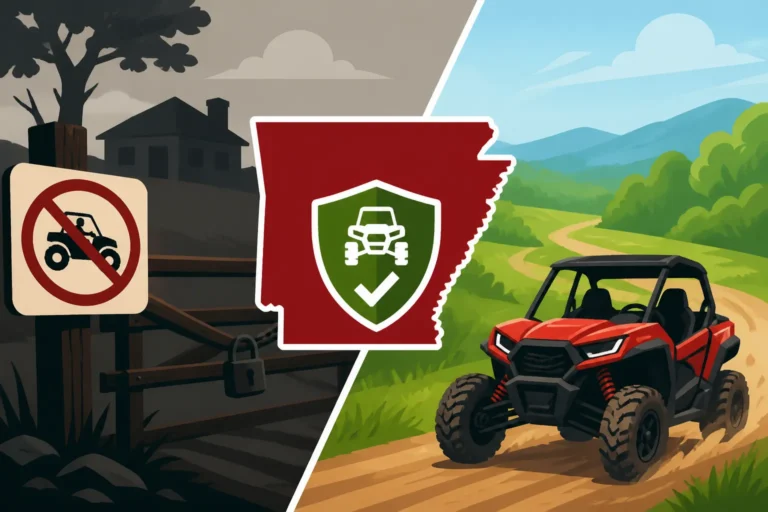
While the default rule is a clear "no" for UTVs on public roads, Arkansas law does carve out specific, limited exceptions. These aren't blanket permissions, but rather narrow circumstances where an OHV can legally operate on a highway or road. It's vital to understand these exceptions thoroughly, because they often come with strict conditions. Misinterpreting them can still lead to a ticket. These exceptions were put in place to address practical needs, primarily in agricultural, hunting, and emergency contexts, recognizing that sometimes, taking an OHV on a road is the most logical or necessary option. [Arkansas's Six Statutory Road Exceptions] provides a good overview of these.
Exception 1: Farming Operations and Road Use
One of the most important exceptions, particularly in our largely rural state, is for farming operations. This allows a UTV to be used on public roads and highways when it's being operated by a farmer or someone working on a farm, and the operation is directly related to "farming operations." Think about a farmer needing to drive their side-by-side from one field to another, perhaps hauling tools, feed, or fencing materials. Or maybe they're checking irrigation lines, moving livestock, or transporting equipment to a barn that's across a state highway.
The key here is the direct link to farming. You can't just be going for a joyride and claim you're checking on your one tomato plant in the backyard. The operation must be a legitimate part of an agricultural enterprise. For example, if you're driving your UTV with a sprayer attached to treat a distant field, that would clearly fall under this exception. If you're simply using your UTV to commute to a non-farm job, even if you happen to live on a farm, that would not qualify. It’s all about the purpose of the trip. This exception helps ensure that the backbone of our state's economy can continue to operate efficiently, even if it means momentarily sharing the road with non-highway vehicles. [Arkansas Farming Operation Road Use] further explains this critical exception.
Exception 2: Hunting Operations and Road Use
Similar to farming, hunting operations also have a specific exemption. This permits a UTV to be used on public roads and highways when it's being operated by a hunter or someone assisting a hunting operation, and the use is directly related to "hunting operations." This covers situations like driving your side-by-side from your hunting camp to a deer stand, retrieving a harvested animal, or moving gear and supplies within your hunting lease or property.
Again, the purpose is paramount. You can't just be driving your side-by-side around town and claim you're "looking for deer" from the pavement. The intent must be genuinely tied to the act of hunting, managing wildlife, or supporting a hunting party. For example, using your UTV to drag a deer out of the woods and then driving it on a county road for a short distance to get it to your processing station would likely be acceptable. If you're using it to drive to the local gas station for snacks before going hunting, that's a much greyer area and could easily be deemed outside the spirit of the exception. This exception is incredibly useful for the countless hunters who rely on UTVs to navigate rugged terrain and manage their hunting activities. [Arkansas Hunting Operation Road Use] delves deeper into these specific rules.
Exception 3: Disability Exception for Road Riding
Arkansas law also makes an allowance for individuals with a physical disability that impairs their ability to walk. If a person has a valid permit or identifying document from a state agency (like a handicapped placard or similar official designation), they may operate an OHV on a public road or highway if it's the only reasonable means of transportation to access specific areas for hunting, fishing, or other outdoor recreational activities where their disability would otherwise prevent access.
This exception is designed to ensure that those with mobility challenges aren't completely shut out from enjoying Arkansas's abundant outdoor opportunities. It's a compassionate provision that recognizes the unique role UTVs can play in providing access. However, it's not a carte blanche to drive anywhere. The vehicle must be operated safely, and the purpose of the trip must be directly tied to accessing an area due to the disability. You can't, for instance, use this exception to drive your UTV to the grocery store. It's specifically for accessing those harder-to-reach outdoor recreational spots.
Exception 4: Law Enforcement and Emergency Services
This one is fairly straightforward and makes perfect sense. UTVs are permitted on public roads and highways when they are being operated by law enforcement officers or emergency medical service personnel during the course of their official duties. Imagine a search and rescue team using a side-by-side to navigate a flooded road or a remote area that a patrol car couldn't access. Or a local sheriff's deputy using one to patrol a large rural property or respond to an incident off the beaten path.
These machines are invaluable tools for first responders, allowing them to reach locations and situations that conventional vehicles simply can't handle. Whether it's for patrolling parks, responding to medical emergencies in rough terrain, or assisting in disaster relief, this exception ensures that our essential services have the flexibility and capability to perform their critical jobs effectively and safely.
Exception 5: Utility Company Crews on ATVs
Utility companies also receive an exemption to use OHVs on public roads and highways. This applies when the vehicle is being operated by an employee of a public utility company, a rural electric cooperative, or a municipal utility, and the operation is necessary for the installation, maintenance, or inspection of utility facilities. Think about power line crews needing to access a remote transmission line, or telecommunications technicians needing to inspect equipment located off the main road.
UTVs are incredibly practical for these types of jobs, allowing crews to haul tools and equipment over challenging terrain to reach poles, pipelines, and other infrastructure. This exception is vital for maintaining the critical services that keep our homes lit, our water flowing, and our communication systems working. It acknowledges the practical necessity of using these machines to ensure the reliable delivery of essential utilities across the state.
Exception 6: Direct Crossing at Ninety Degrees
This exception is perhaps the most commonly used and also the most misunderstood. It allows an OHV to cross a public road or highway, provided the crossing is made at "approximately a ninety-degree angle" to the road, and only after the operator has come to a "complete stop" and yielded to all traffic. This is for when your trail or property is literally bisected by a road, and you need to get from one side to the other.
It's crucial to stress that this is for crossing, not for traveling down the road. You can't drive a quarter-mile down the shoulder to find a better crossing point. You must stop, look both ways, and proceed straight across the road as perpendicularly as possible. Think of it like crossing a railroad track – you stop, look, and go straight over. This exception is a lifeline for many riders who access trails or properties divided by roads, but it requires strict adherence to ensure safety and avoid violations. It's a quick dash across, not a journey along the pavement. [Arkansas Direct Crossing at Ninety Degrees] is a good resource for understanding this specific rule.
The Big Shift: Local Ordinances for UTVs (Act 922)
For years, those six state-level exceptions were essentially it. If your situation didn't fit, you couldn't legally ride your side-by-side on public roads. This created a lot of discontent, especially in smaller towns and rural communities where UTVs were becoming increasingly popular for everything from quick errands to visiting neighbors. Recognizing this widespread desire for more flexibility, the Arkansas Legislature passed Act 922, which went into effect on August 5, 2025. This act dramatically changed the landscape by empowering local governments – specifically city councils and quorum courts – to pass their own ordinances allowing UTVs on certain public roads within their jurisdictions. This was a monumental shift, moving the decision-making from a rigid statewide ban to a local-option approach. [August 5, 2025 and What Changed] explains the significance of this date.
How Arkansas Cities Got the Choice on UTVs
Act 922 didn't suddenly make UTVs street legal everywhere. Instead, it gave cities and counties the authority to make them street legal. Before August 5, 2025, a city council couldn't pass an ordinance allowing UTVs on their streets because state law explicitly forbade it. The state law trumped any local desire. Act 922 essentially lifted that preemption, telling local governments, "Okay, if you want to allow them, you now have the power to do so, but you have to set your own specific rules."
This means that whether your side-by-side is street legal in a particular town now depends entirely on whether that town's city council has passed an ordinance to allow it, and what that ordinance specifically says. It's a bottom-up approach, designed to let local communities decide what works best for their unique traffic patterns, population density, and rider culture. This was a direct response to the frustration of residents who felt their specific needs were being ignored by a one-size-fits-all state law. Now, the power is truly in the hands of the local community to decide how they want to manage UTV traffic. [How an Arkansas City Council Opens Streets to UTVs] outlines this process.
What a Town Must Pass to Allow UTVs
For a city or county to allow UTVs on its streets, it's not as simple as just saying "yes." The local government must pass a formal ordinance (for cities) or resolution (for counties, though most of these ordinances apply to cities within the county) that outlines the specific conditions under which UTVs can operate on public roads. This ordinance will typically cover several key areas to ensure safety and order. These conditions often include:
- Designated Streets: The ordinance will specify which roads are open to UTVs. Often, this means streets with speed limits under a certain threshold (e.g., 35 mph or 55 mph), and typically excludes state highways or multi-lane arterial roads.
- Operating Hours: Some ordinances might restrict UTV operation to certain hours, such as daylight hours, or allow night riding only if specific lighting requirements are met.
- Permit Requirements: Many towns require UTV owners to obtain an annual permit from the city clerk or police department. This permit usually involves a fee and proof of insurance and registration.
- Equipment Standards: The ordinance will stipulate what safety equipment your UTV must have to be street legal, going beyond basic factory specs. We'll dive into this in more detail later.
- Driver Requirements: Age limits, driver's license requirements, and insurance mandates are also common components of these local laws.
Without a specific ordinance in place, the statewide ban still applies. So, while Act 922 opened the door, it's up to each individual community to walk through it and establish their own framework.
The 80-Inch Width Cap in Local Rules
One significant aspect that often appears in local UTV ordinances is a width restriction, typically an 80-inch cap. This means that if a town passes an ordinance allowing UTVs on its streets, your side-by-side generally cannot be wider than 80 inches, including any modifications or accessories. This specific measurement is critical because many modern UTVs, especially some of the more performance-oriented or larger utility models, can exceed this width.
This width cap is primarily a safety measure. It helps ensure that UTVs can safely share narrower municipal streets, fit within standard lane markings, and maneuver without posing an undue hazard to other vehicles or pedestrians. For riders, it means you absolutely must measure your machine before assuming it qualifies for street legal status in a town with such an ordinance. If your machine, perhaps a heavily modified SuperATV build with wider A-arms and offset wheels, pushes past that 80-inch mark, it might still be relegated to off-road use, even if the town otherwise permits UTVs. Always check your UTV's actual width and the specific ordinance's requirements.
What Local Ordinances Entail: Permits, Equipment, and Rules
So, your town passed an ordinance—fantastic! But what does that actually mean for you as a UTV owner? It's not a free pass. These local ordinances come with a host of specific requirements that you'll need to meet if you want to legally drive your side-by-side on city streets. This usually involves obtaining a permit, ensuring your machine has certain safety equipment, and adhering to specific operational rules. Think of it like getting a miniature driver's license for your UTV, complete with its own set of responsibilities.
Arkansas UTV Street Permits and Annual Fees
If your city or county decides to allow UTVs, one of the first things you'll likely encounter is the requirement for a local permit. These aren't state registrations (which are a different beast entirely for off-road use) but rather city-specific or county-specific permits that grant you permission to operate your UTV on their designated roads. To get one, you'll typically need to visit the city clerk's office or the local police department.
The process often involves:
- Application: Filling out a form with your UTV's VIN, make, model, and your personal information.
- Proof of Ownership: Showing a bill of sale or title.
- Proof of Insurance: Providing documentation that your UTV is insured with at least the state minimum liability coverage for motor vehicles. This is critical, as many standard off-road policies don't cover on-road incidents.
- Driver's License: Presenting a valid driver's license (usually a standard Class D license).
- Inspection (sometimes): Some towns might require a quick inspection to ensure your UTV has all the necessary safety equipment mandated by their ordinance.
- Fee Payment: Paying an annual fee. This fee varies widely from town to town.
Once issued, you'll usually receive a decal or sticker that needs to be prominently displayed on your UTV, often on the windshield or a visible part of the body. These permits are typically annual, meaning you'll need to renew them each year to continue legally riding on city streets. [Arkansas UTV Street Permits and Annual Fees] can give you an idea of what to expect.
Equipment for a Street-Permitted Machine
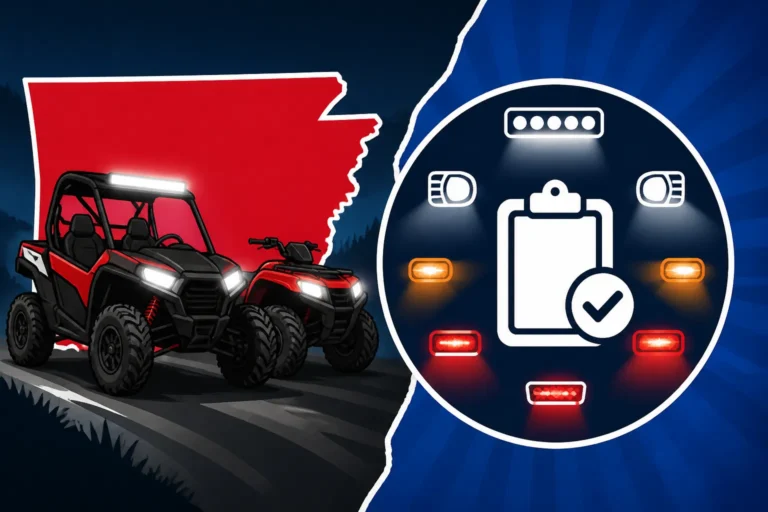
This is where your UTV might need some upgrades to meet the street-legal criteria of a local ordinance. Simply having factory lights isn't usually enough. Local ordinances are designed to bring UTVs closer to the safety standards of conventional vehicles when they share public roads. Common equipment requirements include:
- Headlights and Taillights: These must be fully functional and often specific brightness or visibility standards. Some ordinances require them to be on at all times while operating on public roads.
- Brake Lights: Essential for signaling when you're slowing down or stopping.
- Turn Signals: Front and rear turn signals are almost universally required for indicating your intentions. Many riders find complete turn signal kits from reputable brands like SuperATV to be an easy and effective way to add this crucial safety feature.
- Horn: A working horn is necessary to alert other drivers or pedestrians.
- Rearview Mirrors: At least one, but often two (one on each side), functional rearview mirrors are typically required to provide visibility of traffic behind you. Again, aftermarket options are plentiful and often necessary.
- Windshield: While not always mandatory, some ordinances may require a windshield to protect the operator and passengers from debris.
- Seat Belts: Factory-installed seat belts are almost always required to be worn by all occupants.
- Parking Brake: A functional parking brake is a must.
- Tires: While specific "street legal" tires might not always be explicitly required, your off-road tires should be in good condition and suitable for road use without causing excessive damage to the pavement.
It's critical to review your local ordinance carefully, as the exact requirements can differ. Don't assume that what works in one town will work in another, even if they're neighbors. [Arkansas Turn Signal Requirements for Street UTVs] and [Arkansas Turn Signals and Mirrors on a UTV] provide more details on these vital safety additions.
Arkansas Streets Under 55 mph for UTVs
One common stipulation found in many local UTV ordinances is that operation is restricted to streets with posted speed limits below a certain threshold, most often 55 miles per hour. However, it's increasingly common for ordinances to limit UTVs to streets with even lower speed limits, such as 35 mph or 25 mph. The reason for this is primarily safety. UTVs are not designed for high-speed highway travel. Their handling characteristics, braking distances, and general stability at higher speeds differ significantly from conventional cars and trucks.
By limiting UTVs to slower roads, cities aim to reduce the risk of serious accidents. These lower-speed roads are often residential streets, back roads, or smaller community thoroughfares where traffic moves at a more leisurely pace. This means you won't be taking your side-by-side down major state highways or multi-lane arterial roads, even if they technically have a 55 mph limit. The intent is to allow UTV use in a neighborhood or small-town context, where they can serve as convenient transportation, rather than for long-distance commuting. Always pay attention to the posted speed limit signs and adhere strictly to what your local ordinance allows.
Four-Lane Streets Stay Closed
Building on the speed limit restriction, another frequent exclusion in local UTV ordinances is four-lane streets or highways. Even if a four-lane road has a posted speed limit below 55 mph, many ordinances specifically prohibit UTVs on them. This prohibition isn't just about speed; it's also about traffic volume, complexity, and safety. Four-lane roads typically carry higher volumes of faster-moving traffic and often involve more complex intersections, turn lanes, and merge points.
Allowing UTVs, which generally accelerate and maneuver differently than cars, on these types of roads would create an elevated safety risk for both the UTV operator and other motorists. The goal of Act 922 and the subsequent local ordinances is to integrate UTVs safely into community life, not to turn them into highway vehicles. Therefore, if you're planning a route, be sure to avoid any four-lane roads, even if they seem to fit other criteria. Sticking to two-lane, lower-traffic streets is generally the rule of thumb where UTVs are permitted.
How to Check Your Specific Town's Rules
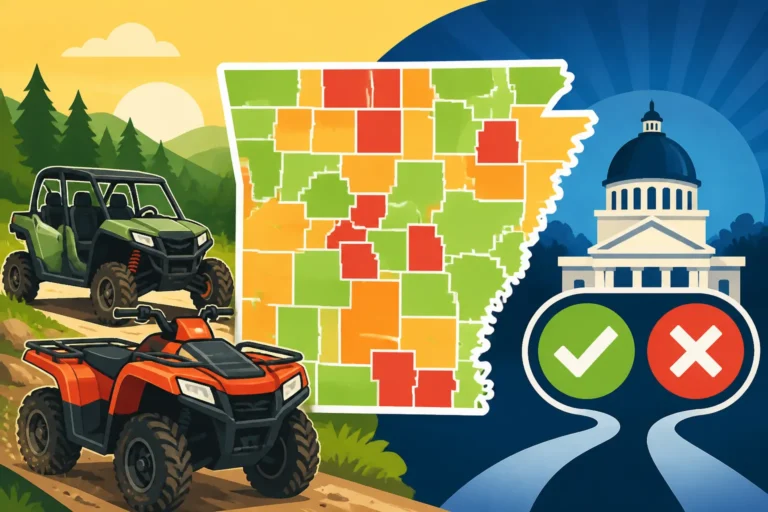
With Act 922 empowering local governments, the legal landscape for UTVs on roads in Arkansas has become incredibly localized. What's legal in Bono might be strictly forbidden in Cotter, and even within the same county, different cities can have entirely different rules. This means that assuming anything about UTV legality based on what you've heard or what applies in a neighboring town is a risky gamble. You absolutely must verify the specific rules for the jurisdiction you intend to ride in.
Reading Your Town's Ordinance Before You Ride
The most reliable way to know if and how you can ride your UTV on public roads in a specific town is to get your hands on a copy of their local ordinance. Don't rely on hearsay, social media chatter, or even what a friend's cousin's neighbor told you. Go directly to the source.
Here's how you can typically access this information:
- City Clerk's Office: The city clerk is the official custodian of all city ordinances. You can usually visit their office during business hours, and they should be able to provide you with a copy of any UTV ordinance that has been passed. Sometimes, they might even have a printed brochure or a summary of the rules for riders.
- City Website: Many municipalities now post their ordinances online. Check the official website for your city or county. Look for sections related to "ordinances," "city code," "municipal laws," or "vehicles/traffic." You might need to use the search function on their site.
- Local Police Department (Non-Emergency Line): While the city clerk is the official source, the local police department will be enforcing these rules. You can call their non-emergency line to ask if an ordinance exists and where you can obtain a copy. They might not be able to send you the full legal text, but they can often confirm its existence and point you in the right direction.
When you obtain the ordinance, read it thoroughly. Pay close attention to definitions, permitted streets, required equipment, permit processes, and any penalties for non-compliance. It's a legal document, so treat it as such. [Reading Your Town's Ordinance Before You Ride] cannot be stressed enough as a crucial step.
Bono's Street Rules for UTVs in Arkansas
Bono, Arkansas, holds the distinction of being one of the first towns in the state to embrace the new local-option law for UTVs. Their ordinance, passed soon after Act 922 went into effect, offers a real-world example of what these local rules often look like. In Bono, UTVs are permitted on city streets with a speed limit of 35 miles per hour or less. They also require operators to be at least 16 years old and possess a valid driver's license.
Crucially, Bono's ordinance also stipulates specific equipment requirements, mirroring many of the standards discussed earlier: headlights, taillights, brake lights, turn signals, a horn, and rearview mirrors. They also have a permit system with an annual fee. However, one specific exclusion in Bono's ordinance is Highway 63, a major state route that runs through the town. Even though sections of it might have speed limits under 55 mph, the city explicitly kept it off-limits for UTVs due to its high traffic volume and role as a primary artery. This illustrates how specific and nuanced these local ordinances can be, often making exceptions for major thoroughfares even within the allowed speed limits. [Bono's Street Rules for UTVs in Arkansas] provides valuable insight into this pioneering ordinance.
Cotter's Ordinance Banning ATVs in Arkansas
On the flip side, it's important to understand that not every town will choose to open its streets to UTVs. Cotter, Arkansas, for example, is a town that has chosen to ban the operation of ATVs and UTVs on its city streets, except for the state's six statutory exemptions (like farm use or direct crossing). This is a perfect illustration of the "local option" aspect of Act 922. While the state gave cities the power to allow them, it didn't mandate it.
A town might choose to maintain a ban for various reasons: concerns about safety, existing traffic congestion, noise complaints, or simply a desire to keep non-highway vehicles off their roads. Cotter's stance serves as a reminder that the default state law still applies if a local government doesn't actively pass an ordinance to allow UTVs. So, just because your friend's town a few miles away allows UTVs, don't assume that applies to every community in Arkansas. Always verify. This is why checking the specific local ordinance is paramount before you ever take your side-by-side onto public pavement.
Driver and Insurance Requirements for Street UTVs
Beyond the machine itself, local ordinances permitting UTVs on city streets will invariably impose requirements on the operator. These are designed to ensure that those behind the wheel are competent, responsible, and prepared for the unique challenges of sharing the road. Just like driving a car, operating a street-legal UTV comes with its own set of rules for the driver and mandates for financial responsibility.
Arkansas Driver's License at 16 for Street UTVs
One of the most consistent requirements across any local ordinance allowing UTVs on public roads is that the operator must possess a valid driver's license. Typically, this means a standard Class D driver's license, the same one you'd use to drive your car. This requirement usually comes with an age minimum, which means you generally need to be at least 16 years old to operate a street-permitted UTV.
This makes sense from a safety perspective. Driving on public roads, even low-speed ones, requires a certain level of maturity, knowledge of traffic laws, and experience. A driver's license signifies that the individual has passed a written test on rules of the road and a practical driving test, demonstrating a basic level of competency. This prevents younger, unlicensed riders from taking UTVs onto city streets, reducing the risk of accidents caused by inexperience or lack of formal training. So, if you're hoping to drive your side-by-side to the local store, make sure you've got your driver's license in your wallet. [Arkansas Driver's License at 16 for Street UTVs] clarifies this age requirement.
Arkansas Insurance for a Street-Permitted UTV
Another non-negotiable requirement for legally operating a UTV on public roads under a local ordinance is proof of insurance. And not just any insurance. While your standard off-road policy might cover you for incidents on trails or private property, it may not extend to accidents that occur on public roads. You'll need an insurance policy that provides at least the minimum liability coverage required for motor vehicles in Arkansas, and specifically covers your UTV for on-road use.
Why is this so important? Accidents happen, and if your UTV is involved in a collision with a car on a city street, the damages and potential medical costs can be substantial. Adequate insurance protects you from financial ruin and ensures that anyone you might harm (and their property) is compensated. When you apply for your city permit, you will almost certainly be asked to provide proof of this specific type of insurance. If you're considering making your UTV street legal in your town, contact your insurance provider well in advance to discuss adding the necessary coverage. Don't assume your current policy is sufficient; always verify. [Arkansas Insurance for a Street-Permitted UTV] covers the details.
Penalties for Illegal Road Riding in Arkansas
Even with all these new local options, it's easy to get caught up in the excitement and forget the gravity of the rules. Riding your side-by-side illegally on Arkansas roads, whether it's on a state highway or a city street without an ordinance, carries real consequences. These aren't just minor slaps on the wrist; they can involve significant fines, court costs, and even the impoundment of your machine. It's far better to understand and follow the rules than to learn them the hard way.
Arkansas Penalties for Illegal Road Riding
If you're caught operating your side-by-side on a public road or highway in Arkansas without meeting the legal requirements (either one of the six state exceptions or a valid local permit and compliant machine), you're typically looking at a misdemeanor offense. The specific penalties can vary depending on the jurisdiction and the discretion of the enforcing officer and court, but they commonly include:
- Fines: These can range significantly, but expect them to be substantial enough to be a deterrent.
- Court Costs: In addition to the fine, you'll also be responsible for court costs, which can add a significant amount to the overall bill.
- Impoundment: In some cases, especially for repeat offenders or particularly egregious violations, your UTV could be impounded, meaning you'll have to pay impound fees and storage costs to get it back, in addition to any fines.
- Criminal Record: As a misdemeanor, the offense will go on your criminal record, which can have long-term implications.
Beyond the legal penalties, there's also the risk of an accident. If you're involved in a collision while illegally riding your UTV on the road, your insurance company might deny coverage, leaving you personally liable for all damages, which could be catastrophic. The financial and legal risks far outweigh any perceived convenience of illegally riding your UTV on the road. [Arkansas Penalties for Illegal Road Riding] gives a clearer picture of these consequences.
What a Deputy Can Ask to See
If you're stopped by a law enforcement officer while operating your UTV on a public road in Arkansas, they have the authority to ask for specific documentation to verify your compliance with the law. Just as if you were driving a car, you'll need to be prepared to present these items. Typically, a deputy or police officer will ask for:
- Your Driver's License: This confirms you are a licensed operator, as required by both state law for farm/hunting exceptions and local ordinances.
- Proof of Insurance: You'll need to show that your UTV is covered by an appropriate insurance policy, particularly if you're operating it under a local street-legal ordinance.
- Proof of Ownership/Registration: While Arkansas does not title ATVs, you should have your proof of ownership (like a bill of sale) and, if applicable, your Arkansas ATV registration decal (for off-road use, not street legal status). If operating under a local ordinance, they'll also look for the city/county permit decal.
- Explanation of Purpose: If you're claiming one of the state's six statutory exceptions (like farming or hunting), the officer may ask for an explanation of your travel and how it relates to that exception. Be prepared to articulate this clearly and truthfully.
Being polite, cooperative, and having your documents readily available can often help in these situations. Fumbling for paperwork or being uncooperative can escalate a simple stop into a more difficult situation. It's always a good idea to keep copies of these documents securely stored on your UTV, perhaps in a waterproof pouch, so they are accessible if needed. [What a Deputy Can Ask to See] details these interactions.
Distinguishing UTVs from Other Vehicles on Arkansas Roads
The world of recreational vehicles can be a bit of a alphabet soup sometimes: ATVs, UTVs, golf carts, dirt bikes. Each has its own set of rules, and what applies to one absolutely does not apply to another. This distinction is crucial in Arkansas, especially when it comes to road use, because the laws are often very specific about the type of vehicle. Don't make the mistake of assuming your UTV is treated the same as a golf cart, for example, because the legal frameworks are entirely different.
Arkansas Golf Cart Ordinances Under 14-54-1410
It's common for people to confuse UTVs and golf carts when it comes to street legality, but Arkansas law treats them distinctly. While some cities have long had ordinances allowing golf carts on specific, low-speed streets, this authority comes from a different statute (Arkansas Code Annotated § 14-54-1410) than the one governing UTVs. This statute specifically empowers municipalities to regulate the operation of golf carts on city streets.
Golf cart ordinances typically have their own set of rules, often being more permissive than UTV rules. They might allow golf carts on any street with a speed limit below, say, 25 mph, without requiring turn signals or extensive modifications, though often requiring basic lighting and a permit. The key takeaway is that an ordinance allowing golf carts in a town does not automatically extend to UTVs. Your side-by-side, even a smaller one, is explicitly an Off-Highway Vehicle (OHV) under state law, not a golf cart. So, if you see golf carts zipping around a town, don't assume your UTV has the same privilege unless there's a specific UTV ordinance in place. [Arkansas Golf Cart Ordinances Under 14-54-1410] explains this difference.
Arkansas Has No ATV License Plate
One common misconception that often comes up in discussions about street legal status is the idea of an "ATV license plate." In Arkansas, ATVs and UTVs do not get traditional license plates like cars or motorcycles. What they do get, for off-road registration purposes, is an Arkansas ATV decal. This decal is proof that your machine is registered with the state for off-road use, as required by law for operation on public lands, and it has no bearing on street legal status.
The decal simply sits on the left front of your machine and indicates registration for its intended purpose: off-road riding. It doesn't magically make your UTV street legal. If a local ordinance allows UTVs on city streets, you'll get a local permit decal from that city, not a state-issued license plate. This distinction is vital for avoiding confusion. Don't expect to walk into a revenue office and request a license plate for your UTV; you'll get the standard OHV decal, and any street-legal status will come from a separate, local process. [Arkansas Has No ATV License Plate] further clarifies this point.
Comparing State Exceptions and Local Ordinances
To wrap our heads around all these rules, it's helpful to compare the two main avenues for UTV road use in Arkansas: the six state statutory exceptions and the newer local ordinances. They operate under different authorities, have different scopes, and require different things from the rider.
| Feature | State Statutory Exceptions (e.g., Farm/Hunt) | Local City/County Ordinances (Act 922) |
|---|---|---|
| Authority | Arkansas State Law (ACA § 27-21-106) | Local City Council/Quorum Court |
| Scope | Statewide, but very narrow, purpose-driven scenarios | Within the specific city/county that passed ordinance |
| Purpose | Primarily for necessity (farm, hunt, utility, crossing) | General transportation, recreation within specified areas |
| Permit Required | No state permit beyond OHV decal (for off-road reg) | Typically requires an annual city/county permit |
| Equipment Add-ons | Not explicitly required by state law for the exceptions | Mandates specific street-legal safety equipment |
| Driver's License | Required (16+ with valid license for operation) | Required (16+ with valid Class D license) |
| Insurance | Recommended, but not state-mandated for exceptions | Explicitly required (street-legal liability) |
| Road Types Allowed | Any road/highway for specified purpose (brief crossing) | Restricted to lower-speed, non-arterial city streets |
| Travel Distance | As short as possible; direct to purpose (crossing, between fields) | Can be for longer travel within city limits, as allowed |
| Enforcement | State Police, County Sheriffs, Local Police | Local Police (within city limits) |
| Key Distinction | What you are doing with the UTV matters | What the local government allows matters |
This table highlights that while state exceptions are about what you're doing, local ordinances are about where you're doing it and how your machine is equipped. Both are distinct pathways to legal UTV road use, and understanding their differences is key to staying compliant.
Disclaimer
This article is for general informational purposes only and does not constitute professional advice. Laws, prices and regulations vary by location and change over time. Consult a qualified professional for guidance on your specific situation.