What Arkansas Charges to Register an ATV
Figuring out the true cost of registering your ATV in Arkansas can feel like navigating a muddy trail with a faulty map – a lot of bumps and uncertainty about what's around the next bend. Many riders get frustrated trying to untangle state fees, local taxes, and the seemingly endless paperwork, worried they'll encounter hidden charges. This guide is designed to clarify exactly what Arkansas charges to register an ATV, giving you a clear financial picture before you head to the revenue office.
Breaking Down the Core Registration Fees in Arkansas
When it comes to getting your ATV properly registered in Arkansas, there's often a sigh of relief when people learn about one significant difference compared to many other states: the core registration itself is typically a one-time affair. This isn't like renewing your car tags every year; it's a permanent registration tied to the machine. Understanding this fundamental aspect helps frame all the other potential costs involved.
The One-Time Registration Fee
Unlike vehicle registrations in many places, Arkansas implements a unique system for ATVs and UTVs. The fee you pay to register your off-highway vehicle (OHV) is a one-time charge. This means once you've registered your machine and paid the initial fee, you won't be hit with annual renewal notices or recurring charges from the state for that specific registration. It's truly a "set it and forget it" kind of deal, which can be a pleasant surprise for new residents or those accustomed to yearly hassles. You can learn more about this by reading [Arkansas ATV Registration Has No Annual Renewal].
This one-time payment is often a modest, flat fee, consistent across the board for all eligible ATVs. While the exact figure isn't something I can provide, it's generally a relatively small portion of the overall cost you'll incur when considering your ATV purchase. This structure helps make long-term ownership more predictable and affordable, removing the annual administrative burden and associated costs that can add up over time in other states.
Decal Issuance and Replacement Costs
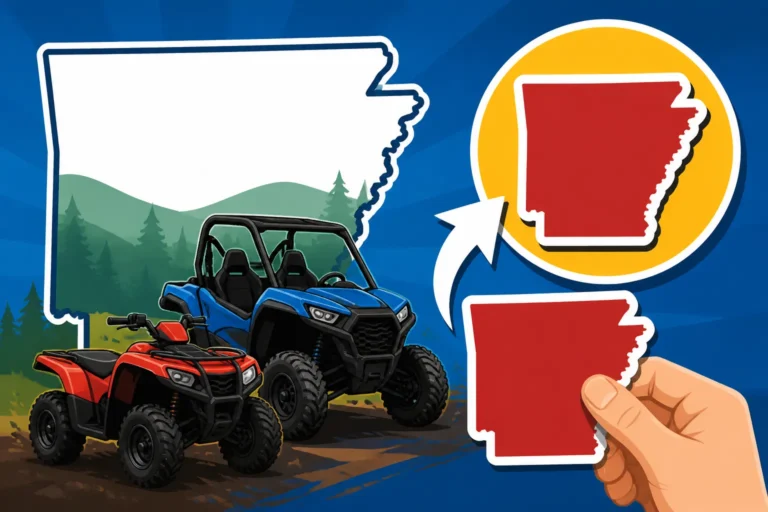
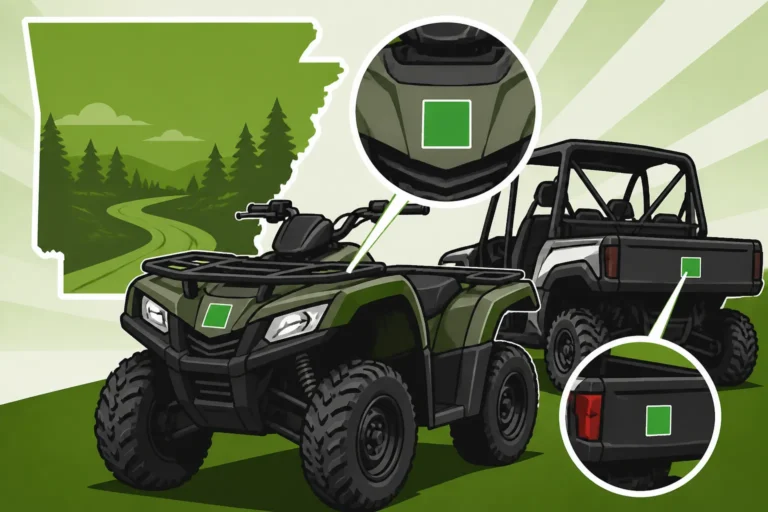
As part of your ATV's registration, the state of Arkansas issues a decal. This isn't just a fancy sticker; it's tangible proof that your machine is properly registered according to state law. The initial decal is included in that one-time registration fee, so you won't be paying extra for it when you first register. It's critical to place this decal correctly on your ATV, as it helps law enforcement quickly identify registered vehicles. For detailed guidance on placement, check out [Arkansas ATV Decal Rules and Where It Goes].
However, life happens out on the trails. Decals can fade from sun exposure, get scraped off during a close encounter with a tree branch, or even peel away over time. If your decal becomes unreadable or gets lost, you will need to apply for a replacement. There is typically a small administrative fee associated with obtaining a new decal. While not a huge expense, it's something to budget for if you find yourself needing to replace it down the line. It's always best to keep your registration current and visible to avoid any issues while riding.
No Separate Title Fee Usually
One of the most common questions riders have when moving to Arkansas or purchasing their first ATV here is about titling. In many states, you'd pay a separate fee for a vehicle title, which is a legal document proving ownership. Arkansas, however, does not issue traditional titles for ATVs. This is a significant point, as it means you won't be paying an additional, distinct "title fee" when you register your machine. You can explore this topic further in [Does Arkansas Issue a Title for an ATV?].
Instead of a title, the state relies on other forms of documentation to prove ownership, such as a manufacturer's statement of origin (MSO) for new machines, or a bill of sale for used ones. This approach streamlines the process and eliminates one more fee that riders in other states often have to pay. It’s a relief not to have to worry about an extra layer of cost and paperwork when you’re already navigating the complexities of purchasing a new machine.
Understanding Arkansas Sales Tax on Your ATV Purchase
While the core registration fee for an ATV in Arkansas is a straightforward, one-time payment, the sales tax component is often the largest financial consideration for most buyers. This is where the overall cost can vary significantly, depending on your purchase price and where you live. It's crucial to understand how state and local sales taxes apply to your ATV acquisition, as they can add a substantial amount to your final bill.
State Sales Tax and How It Applies
Arkansas applies a statewide sales tax to the purchase of most goods, and ATVs are no exception. This means that a percentage of your ATV's purchase price will be collected as sales tax. It's important to remember that this tax is calculated on the full purchase price of the machine before any trade-in values are considered, although there are specific scenarios where trade-ins can reduce the taxable amount. The state sales tax rate is applied uniformly across Arkansas, regardless of the county or city where you make your purchase. This makes the state portion of the tax fairly predictable once you know your ATV's cost. For a deeper dive into this, see [Arkansas Sales Tax on an ATV Purchase].
This state sales tax is a non-negotiable part of buying an ATV, whether it's new from a dealer or used from a private seller. If you buy from a licensed dealer, they will typically collect this tax at the point of sale. If you purchase from a private party, you will be responsible for paying the sales tax directly to the Arkansas Department of Finance and Administration (DFA) when you register your ATV. It's vital to factor this percentage into your budget, as it can be a significant addition to the sticker price.
The Impact of Local Sales Taxes
Beyond the state sales tax, many cities and counties in Arkansas also levy their own local sales taxes. These local taxes are stacked on top of the statewide rate, meaning your total sales tax burden can be considerably higher depending on your specific location. This is where the cost can really start to fluctuate for different buyers across the state. For example, someone buying an ATV in a rural county with no local sales tax might pay less overall than someone in a bustling metropolitan area with both city and county taxes applied.
These local sales tax rates vary widely, from a small additional percentage to several percentage points. It’s absolutely crucial to determine the combined state and local sales tax rates for your specific area or the area where you'll register the ATV, as this will directly impact the final amount you pay. You'll typically find information on these rates through the Arkansas DFA website or by asking at your local revenue office. Understanding [Arkansas Local Sales Tax on a Machine] is key to budgeting accurately.
Sales Tax on Private Sales vs. Dealer Purchases
The way sales tax is handled differs slightly depending on whether you're buying your ATV from a licensed dealer or a private individual. When you purchase a new or used ATV from a dealership, they are legally obligated to collect all applicable state and local sales taxes from you at the time of sale. They then remit these funds to the state on your behalf. This simplifies the process for you, as the tax is handled upfront, and you generally won't have to worry about it again when you go to register.
However, if you buy an ATV from a private seller, the responsibility for paying sales tax shifts to you, the buyer. You won't pay sales tax directly to the private seller. Instead, when you take your bill of sale and other required documents to the revenue office to register your ATV, you will be required to pay the state and local sales taxes directly to the DFA at that time. This is also true if you're bringing an ATV into Arkansas that you purchased out of state; you'll typically pay "use tax" when you register it here. Be prepared for this, as it can be a significant amount due on the day you register. You can get more details on [Arkansas Sales Tax on a Private Sale] and [Arkansas Registration for a Machine Bought Out of State].
Avoiding Surprises: Common Additional Costs and Considerations
Beyond the straightforward registration fee and sales tax, there are a few other potential costs and considerations that ATV buyers in Arkansas should be aware of. Overlooking these can lead to unexpected expenses or delays in getting your machine legally on the trails. Being prepared for these possibilities means a smoother process and no unwelcome surprises at the counter.
Documentation and Paperwork Costs
Gathering the correct documentation is paramount for registering your ATV, and sometimes there are costs associated with ensuring you have everything in order. For instance, if you're buying a used ATV from a private seller, you'll need a proper bill of sale. While a handwritten bill of sale can sometimes be accepted, a professional and clear document can prevent headaches. If you're unsure how to draft one, or if your seller doesn't provide one, you might look to online resources or legal document services. For example, platforms like LawDepot offer templates for bills of sale and other legal forms, which can provide peace of mind that your documentation meets general requirements.
Similarly, if the ATV was a gift, a gift letter might be required, which also needs to be properly executed. Should any of your documents need notarization – like a more formal bill of sale or an affidavit – there will be a small fee for the notary public's services. These aren't direct fees charged by the state for registration, but they are crucial preparatory steps that can incur minor costs to ensure your [Arkansas ATV Bill of Sale Requirements] are met, making your registration appointment efficient and successful.
Penalties for Late Registration or Non-Compliance
Arkansas law specifies a timeframe within which you must register your newly acquired ATV. Generally, you have a period of thirty days from the date of purchase to complete your registration. This clock starts ticking from the day you sign on the dotted line or otherwise take ownership. Missing this deadline can lead to penalties, which are essentially fees tacked onto your standard registration costs. These late fees are designed to encourage timely compliance and can vary, so it's always best to get your registration done promptly. You can find more information on [Thirty Days From the Day You Buy].
Furthermore, riding an unregistered ATV on public lands, or in any area where registration is required, can lead to citations and fines. These penalties for non-compliance are typically much higher than any late registration fee you might face. It’s a costly mistake that’s easily avoided by ensuring your ATV is properly registered before you ever hit the trails. Understanding [Arkansas Penalties for Riding Unregistered] highlights the importance of timely and accurate registration to prevent legal trouble and unnecessary expenses.
Dealership Fees vs. Private Seller Savings
When purchasing a new ATV from a dealership, you might encounter various additional charges that are not state-mandated but are part of the dealer's business practices. These can include "documentation fees," "dealer preparation fees," or "delivery charges." These fees can vary significantly from one dealership to another and can add a few hundred dollars or more to the final price of your ATV. While some of these might be negotiable, it’s important to ask for a full, itemized breakdown of all costs before you commit to a purchase. Knowing [Arkansas Dealer Fees to Expect] can help you prepare for these conversations.
Conversely, buying from a private seller typically means you won't face these kinds of dealer-specific fees. Your costs will primarily be the agreed-upon purchase price, plus the state and local sales tax you pay at the revenue office, and the one-time registration fee. This can sometimes make a private sale appear more attractive purely from a cost perspective, as you're cutting out those middleman charges. However, private sales also come with their own considerations, such as verifying the machine's condition and ensuring you get a legitimate bill of sale. If you need a reliable bill of sale template for a private transaction, remember that resources like LawDepot can assist you in creating one.
Calculating Your Total ATV Registration Cost
Putting all these pieces together – the registration fee, sales tax, and potential additional costs – helps you arrive at a realistic estimate for your total ATV registration expense in Arkansas. This isn't just about the small fee for the decal; it's a broader financial picture that every smart buyer needs to consider. Having a clear calculation in mind means no last-minute surprises or budget blowouts.
Step-by-Step Cost Estimation
To accurately estimate your total cost, let's break it down into manageable steps. First, start with the purchase price of your ATV. This is your baseline. Next, calculate the state sales tax, which will be a specific percentage of that purchase price. Then, determine the applicable local sales taxes (county and city) for your area and add those percentages to the state rate to get your combined sales tax. This combined percentage is then applied to your ATV's purchase price. For example, if your ATV costs a certain amount, and your combined state and local sales tax rate is, say, a certain number of percentage points, you'll calculate that amount.
Finally, add in the fixed, one-time ATV registration fee. This flat rate applies to all ATVs and is consistent across the state. Include any minor costs for notarization if needed, or if you used a service like LawDepot for documentation. Summing these figures together – purchase price + (purchase price * combined sales tax rate) + one-time registration fee + other small expenses – will give you a robust estimate of your total out-the-door cost related to registration.
Factors That Can Increase or Decrease Your Costs
Several factors can influence the final amount you pay. The biggest variable, of course, is the purchase price of the ATV itself; a more expensive machine will naturally incur higher sales tax. Another factor is the location of the buyer, due to the fluctuating local sales tax rates mentioned earlier. A significant way to potentially decrease your taxable amount is through a trade-in. If you trade in an older ATV or other eligible vehicle when purchasing a new one from a dealer, Arkansas generally allows the value of the trade-in to reduce the taxable amount of your new purchase. This means you only pay sales tax on the difference between the new ATV's price and your trade-in's value. Explore [Does an Arkansas Trade-In Lower the Sales Tax?] for more information.
Additionally, certain exemptions might apply in specific situations, such as for agricultural use. If your ATV is used exclusively for legitimate farming operations, you might be eligible for a sales tax exemption. It's always worth inquiring about these possibilities if they apply to your situation, as they can significantly reduce your costs. Researching [Arkansas Farm Exemptions Worth Asking About] could save you a good chunk of change.
Payment Methods and What to Expect at the Revenue Office
When you head to your local Arkansas revenue office to register your ATV and pay the associated fees and taxes, you'll generally find a variety of payment options available. Most offices accept cash, checks, and major credit or debit cards. However, it's always a good idea to confirm their accepted payment methods beforehand, especially for larger amounts like sales tax, as some smaller offices might have limitations or prefer certain methods. Be prepared with your chosen payment method to ensure a smooth transaction.
The process at the revenue office usually involves presenting all your required paperwork, such as your bill of sale, proof of ownership (like an MSO for a new machine), and identification. A clerk will review your documents, calculate the exact amount of sales tax owed (if applicable), and process your one-time registration fee. Once everything is verified and paid, you'll typically receive your registration receipt and the all-important decal on the spot. Understanding [Arkansas ATV Registration Payment Methods] can help you plan your visit effectively.
Here's a quick overview of the typical costs you might encounter:
| Cost Type | Description | Frequency | Where Paid | Primary Determinant |
|---|---|---|---|---|
| Registration Fee | Fixed, one-time fee for registering the ATV. Includes initial decal. | One-time | Revenue Office | Flat Rate |
| State Sales Tax | Percentage of ATV purchase price. | At Purchase/Reg. | Dealer or Revenue Office | ATV Purchase Price |
| Local Sales Tax | Additional percentage from county/city. | At Purchase/Reg. | Dealer or Revenue Office | Location & Purchase Price |
| Decal Replacement | Small fee if original decal is lost, stolen, or damaged. | As Needed | Revenue Office | Flat Rate |
| Notary Fees | If bill of sale or other documents require notarization. | As Needed | Notary Public | Service Fee |
| Late Registration Fines | Penalties for registering beyond the 30-day window. | If Applicable | Revenue Office | Late Fee Schedule |
| Dealer Fees | (Optional) Processing, prep, or documentation fees from a dealership. | At Dealer Purchase | Dealership | Dealer Policy |
Long-Term Cost Perspective: What Arkansas Doesn't Charge
One of the most appealing aspects of registering an ATV in Arkansas is what the state doesn't charge you. While the initial outlay for sales tax can be significant, the long-term financial commitment for state-mandated costs is remarkably light compared to many other states. Understanding these "non-costs" helps paint a clearer picture of the overall affordability of ATV ownership in the Natural State.
No Annual Renewal Fees
Perhaps the most significant financial relief for ATV owners in Arkansas is the absence of annual renewal fees for registration. Once you've paid that initial one-time registration fee and received your decal, you're done. There's no yearly bill, no annual trip to the revenue office just to keep your registration current, and no recurring charges to worry about. This "Arkansas ATV Registration Has No Annual Renewal" policy stands in stark contrast to states where vehicle registrations require annual payments, which can add up to hundreds of dollars over the lifetime of a machine.
This lack of recurring fees means that your cost of ownership from a state registration perspective is incredibly low after the initial purchase. It simplifies budgeting and takes away a common administrative headache, allowing you to focus on enjoying your ATV rather than constantly tracking renewal dates and sending in payments. It's a rider-friendly approach that makes long-term ATV enjoyment more accessible and less burdensome.
No Mandatory Insurance Costs for Registration
Another important "non-cost" to note is that Arkansas does not require ATV owners to carry specific insurance as a condition for registration. While automobile insurance is mandatory for street-legal vehicles, this requirement does not extend to off-highway vehicles used strictly off-road. Therefore, you won't be charged an insurance premium by the state or be required to show proof of insurance to complete your ATV registration. This is a common question, and [Is Insurance Part of Arkansas ATV Registration?] clarifies this distinction.
However, it's crucial to understand that while not legally mandated for registration, purchasing ATV insurance is still a highly recommended practice. Insurance can protect you financially in case of an accident, theft, or damage to your machine. Many private riding parks or organized events do require proof of insurance to participate, so while the state doesn't demand it for registration, responsible ownership often means securing coverage anyway. It's a cost you should weigh for your own protection, even though it's not part of the registration process itself.
No Mandatory Safety Course Fees for Registration
Finally, unlike some states that require ATV riders to complete a safety course and pay an associated fee before they can register their machine, Arkansas does not have a mandatory ATV safety course requirement for registration. This means you won't encounter an additional fee or a hurdle of completing specific training simply to get your ATV registered with the state. This is another area where Arkansas keeps the initial barriers to entry relatively low for ATV owners. You can learn more about this through [Arkansas Has No Mandatory ATV Safety Course].
While not required for registration, taking an ATV safety course is always a smart investment in your own well-being and the safety of those you ride with. These courses teach critical riding techniques, promote responsible off-road etiquette, and help prevent accidents. Many organizations offer voluntary safety courses, and while they might come with their own fee, it's not a cost imposed by the state as part of the registration process. It's a personal choice that prioritizes safety over a state mandate.
Disclaimer
This article is for general informational purposes only and does not constitute professional advice. Laws, prices and regulations vary by location and change over time. Consult a qualified professional for guidance on your specific situation.