What Arkansas Requires of an ATV Owner
It can feel overwhelming trying to understand all the rules and regulations that come with owning an ATV or UTV in Arkansas. Many folks just want to hit the trails or get their chores done, but they worry about getting into trouble because they didn't know about some obscure requirement. This comprehensive guide is here to unravel all the key things Arkansas expects from you as an ATV owner, making sure you can ride with peace of mind.
The Basics: When Registration and Sales Tax Kick In
One of the biggest hurdles for new (and even seasoned) ATV owners in Arkansas is understanding when and why you need to register your machine and, of course, the ever-present question of sales tax. It's not always as straightforward as buying a car, and the unique nature of ATVs means there are specific details you absolutely need to grasp.
Understanding Arkansas's Definition of an ATV
Before you even think about registration, it's crucial to know if your machine actually is an ATV in the eyes of Arkansas law. The state has a fairly specific definition that helps determine what rules apply. Generally, an ATV (or "all-terrain vehicle") is a three, four, or six-wheeled vehicle designed for off-highway use, powered by a motor, and weighing less than 1,200 pounds. It's intended to be ridden by a single operator or a single operator and passenger, if designed for it.
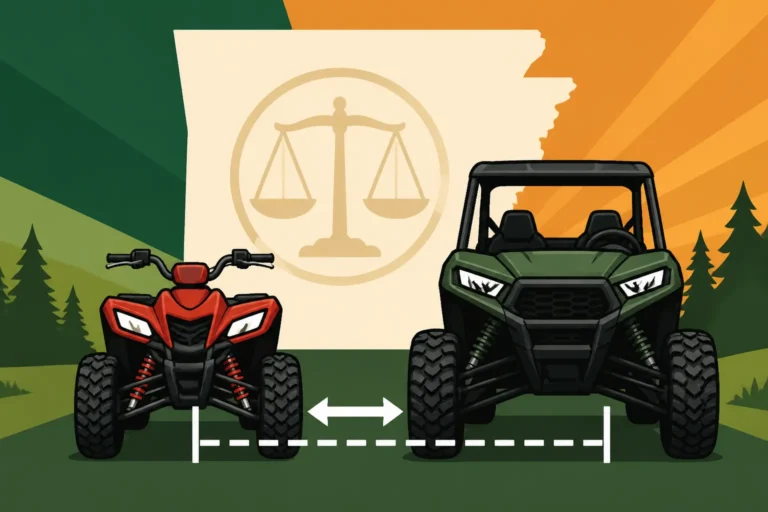
Now, this definition has some important specifics. For example, the engine size cap is 1,000cc, and the width is limited to 50 inches. This means if you've got a super-wide side-by-side or a machine with an engine that really roars past that limit, it might fall into a different category, like a UTV, which has its own set of rules. For instance, [Arkansas's 50-Inch, 1,000cc ATV Definition] covers these nuances in more detail. This distinction is vital because it impacts everything from registration to where you can legally ride. Don't just assume your cool new toy fits the bill without checking those dimensions and specs.
When Registration is Absolutely Required
Here's the deal: almost every ATV in Arkansas needs to be registered. There's a common misconception that if you only ride on private land, you're exempt, but that's often not the case for an Arkansas resident. If you're going to operate your ATV anywhere in the state, even just on your own hunting lease or farm, you generally need to register it. The only real exceptions are for machines used exclusively for farming operations by a farmer or those brought in by non-residents who are just visiting for a short period and already have valid registration from their home state. Even then, there are rules. If you're an Arkansas resident and you bought an ATV, expect to register it. You might want to check out [Do You Need to Register an ATV in Arkansas?] for a full breakdown.
The state wants to ensure that these vehicles are properly identified, primarily for theft prevention and to establish clear ownership. When you register, you receive a decal that needs to be displayed on your machine, signifying that you've completed this important step. This is a one-time registration, which is pretty neat – there's no annual renewal to worry about, unlike a car. However, that also means you won't get a yearly reminder, so if you misplace your decal, you'll need to know how to get a replacement.
Navigating Sales Tax Obligations
Ah, sales tax – the often-unpleasant but unavoidable part of any purchase. When you buy an ATV in Arkansas, you'll be on the hook for sales tax. This applies whether you buy from a dealer or a private seller. The good news is, if you buy from a dealer, they'll usually handle collecting and remitting the sales tax for you. It's all part of the purchase price.
If you buy from a private party, however, the responsibility falls on you to pay that sales tax when you go to register your machine at a state revenue office. This means budgeting for that amount, which will be based on the purchase price of your ATV. Be prepared to show a bill of sale that clearly states the purchase price, as this is what the tax will be calculated on. Don't forget that local sales tax can also apply, which means the rate can vary depending on where you live or where you bought the machine. For more details on the financial side, [Arkansas Sales Tax on an ATV Purchase] is a good read. Unlike some states, Arkansas doesn't have a vehicle tax cap, so the full purchase price is typically subject to the state and local sales tax rates.
Essential Paperwork and the Registration Process
Getting your ATV registered isn't just about showing up at the Revenue Office; it's about having all your ducks in a row with the right documentation. Missing even one piece of paper can turn a quick trip into a frustrating multiple-visit ordeal. Trust me, you don't want to be that person making extra trips to the DFA.
Gathering Your Proof of Ownership
This is perhaps the most critical part of the registration process. The state needs undeniable proof that you legally own the ATV you're trying to register. What constitutes acceptable proof can vary slightly depending on how and where you bought the machine, but generally, you'll need one of the following:
- Manufacturer's Statement of Origin (MSO): If you're buying a brand-new ATV from a dealer, this is your golden ticket. The MSO is essentially the birth certificate of the vehicle, issued by the manufacturer. It shows the original ownership from the factory to the dealer, and then to you.
- Original Title: If you're buying a used ATV from an individual who previously titled it (not all states title ATVs, but if they did, you'll need it), this will be required. The seller should sign over the title to you.
- Bill of Sale: This is incredibly important, especially for private sales or if the machine came from a state that doesn't issue ATV titles. A comprehensive bill of sale, signed by both buyer and seller, detailing the ATV's make, model, VIN, and purchase price, is crucial. You might also need a previous registration if a title isn't available.
Remember, the Revenue Office clerk needs to be able to trace ownership clearly. If there are gaps, you'll face delays. For scenarios like buying a machine with no previous paperwork, the process can become more complex, sometimes requiring additional steps like a bonded title or a trip to a local law enforcement agency for a VIN inspection. It's always a good idea to ensure you have solid paperwork from the get-go. [Arkansas Proof of Ownership for Registration] delves into these requirements in depth.
The Importance of a Proper Bill of Sale
While any piece of paper with "Bill of Sale" at the top might seem sufficient, Arkansas revenue offices look for specific details to ensure the sale was legitimate and to accurately assess sales tax. A good bill of sale isn't just a receipt; it's a legal document. It should include:
- The full legal names and addresses of both the buyer and the seller.
- The date of the sale.
- A clear description of the ATV, including its make, model, year, and crucially, its Vehicle Identification Number (VIN).
- The agreed-upon purchase price. If it's a gift, a statement to that effect is usually required, sometimes with a gift affidavit.
- Signatures of both the buyer and seller.
- Notarization is often recommended, though not always legally required for registration, as it adds an extra layer of authenticity.
Using a template from a reputable source, like one you might find through LawDepot, can ensure you cover all your bases. A professionally drafted bill of sale protects both parties and makes the registration process much smoother. If the bill of sale is incomplete or looks suspicious, the clerk has the right to refuse it, meaning you'll be sent back to get it corrected. This happens more often than you'd think, especially with handwritten notes on scraps of paper.
Steps to Registering at a Revenue Office
Once you've got your paperwork in order, the actual registration process at an Arkansas Revenue Office is fairly straightforward. You'll need to visit a local office during business hours. Here's a general rundown of what to expect:
- Gather Your Documents: As discussed, bring your proof of ownership (MSO, title, or bill of sale), proof of identity (like a driver's license), and proof of Arkansas residency (utility bill, etc.).
- Complete the Application: You'll typically need to fill out Arkansas DFA Form 10-381, which is the official application for ATV registration. This form asks for all the details about you and your machine. Don't worry, [Filling Out Arkansas Form 10-381 Line by Line] offers guidance on how to navigate each section.
- Pay Fees and Sales Tax: You'll pay the one-time registration fee and any applicable state and local sales tax at this point. The fee for the registration itself is usually quite modest, but the sales tax can be a significant amount, so be prepared.
- Receive Your Decal: Once everything is processed and paid, you'll be issued your Arkansas ATV decal. This decal is your proof of registration and must be affixed to your machine. Remember, this is a one-time thing; you won't get a new one every year.
- Keep Your Records: The clerk will typically give you a copy of your registration paperwork. Store this in a safe place, and it's always a good idea to carry a copy with you when you ride.
Going to the office prepared can save you a lot of hassle. Check the specific requirements of your local Arkansas Revenue Office before you go, as sometimes individual offices might have slightly different preferences for how they want things presented.
Displaying Your Decal and Other Key Requirements
Once you've done the hard work of gathering paperwork and paying the fees, you'll walk out with that coveted decal. But getting it is only half the battle; knowing what to do with it and understanding what it means for the long haul is equally important.
Proper Placement of Your Arkansas Decal
Your Arkansas ATV decal isn't just a sticker; it's your visible proof of registration, and it needs to be displayed correctly. The state specifies that the decal must be placed on the left front of the ATV. This is typically the left-hand side of the front fender or the left-hand side of the brush guard, if your machine has one. The key is that it needs to be clearly visible and accessible for inspection by law enforcement or park rangers.
Why the left front? It's often the easiest spot to see without having to dig around or turn the machine. Imagine a ranger trying to check decals on dozens of ATVs at a trailhead – they need a consistent, visible location. Don't put it on the back, under a seat, or in your glove compartment. It needs to be out in the open. For side-by-sides, it's often placed on the left side of the hood or the front frame, again, making sure it's easy to spot. [Arkansas ATV Decal on the Left Front] goes into more detail about this specific requirement.
Understanding the "No Renewal" Rule
Here's one of the best parts about Arkansas ATV registration: it's a one-time registration with no annual renewal. This is a huge relief for many owners who are used to yearly vehicle tag renewals. Once you've registered your ATV and received your decal, you generally don't have to worry about renewing it again. That decal is good for the life of the machine in Arkansas.
However, this "no renewal" feature comes with a small catch: no annual reminder. Since you won't get a notice in the mail every year, you'll need to be extra careful to keep your decal in good condition. If it fades, peels off, or gets damaged, it's your responsibility to request a replacement decal from the Revenue Office. They won't send you a new one automatically. It's a system designed for simplicity, but it relies on the owner being mindful of their decal's condition. [Arkansas ATV Registration Has No Annual Renewal] clarifies why this system is in place and what it means for you.
Carrying Proof of Registration on the Trail
Even though your decal is visible on your machine, it's always a smart idea to carry a copy of your registration paperwork with you when you ride. Think of it like your driver's license and vehicle registration in your car. While the decal is the primary visual proof, the paper document serves as detailed backup.
In the event that you are stopped by a game warden, forest ranger, or local law enforcement officer, they may ask to see proof that your ATV is legally registered. Having the physical document, or even a clear photograph of it on your phone, can quickly resolve any questions. This is especially true if your decal happens to be obscured by mud or has faded over time. It shows you're a responsible owner and helps prevent unnecessary delays or complications. While it's not strictly mandated to carry the paper copy, it's a strongly recommended best practice for any ATV owner in Arkansas.
Road Rules and Other Considerations for Arkansas ATV Owners
Beyond registration, there are critical rules about where and how you can operate your ATV in Arkansas. Many frustrations stem from people not knowing these rules, especially regarding public roads and age requirements.
The General Ban on Public Roads (and Exceptions)
By default, it is unlawful to operate an ATV on a public street or highway in Arkansas. This is a statewide rule that many riders unfortunately learn the hard way. These machines are designed for off-road use, and riding them on paved public roads presents safety hazards and is generally prohibited. This includes state highways, county roads, and city streets.
However, like most rules, there are some important exceptions. These exceptions typically apply to specific situations and purposes, such as:
- Direct Crossing: You can usually cross a public road at roughly a ninety-degree angle, provided you come to a complete stop first and yield to all traffic.
- Farming or Hunting Operations: There are specific exemptions for ATVs being used in recognized farming or hunting operations, but these are often limited to certain types of roads and direct travel to and from the operation.
- Emergency or Utility Services: Law enforcement, EMS, and utility crews often have exemptions when performing their duties.
- Local Ordinances for UTVs: A significant change in Arkansas law now allows individual cities and towns to pass ordinances permitting UTVs (but generally not ATVs) on certain public streets within their jurisdiction. This is a local-option rule, meaning it varies greatly from town to town. You absolutely cannot assume you can ride your UTV on city streets unless you've confirmed your specific town has passed such an ordinance and you've obtained any required local permits.
It's vital to research the specific rules for your area and your type of machine. Just because one town allows UTVs on its streets doesn't mean the next town over does. And remember, the state law still bans ATVs on public roads. [Arkansas ATV Road Rules: What 27-21-106 Says] offers a deep dive into the legal framework.
Age and Supervision Rules for Riders
Arkansas has specific rules designed to protect young riders, recognizing the inherent risks of ATV operation. These rules generally focus on age minimums and the requirement for adult supervision.
- Riders Under 12: Children under the age of 12 are generally prohibited from operating an ATV on public lands, including designated ATV trails, unless they are under the direct supervision of an adult who is at least 18 years old. "Direct supervision" usually means the adult is within sight and can immediately intervene.
- Training and Safety: While Arkansas does not mandate a specific ATV safety course for all riders, it is highly recommended, especially for younger or inexperienced operators. Many private parks and rental facilities may also have their own age restrictions or require proof of a safety course completion.
Parents and guardians bear a significant responsibility under Arkansas law for ensuring that their children operate ATVs safely and legally. This includes making sure they ride machines appropriate for their size and skill level and always wear appropriate safety gear, even though Arkansas doesn't have a statewide ATV helmet law. Considering eye protection and a helmet is just common sense, even if it's not legally required. [Arkansas ATV Age Rules for Young Riders] elaborates on these important guidelines.
Insurance, Helmets, and Local Ordinances
When it comes to ATV ownership in Arkansas, there are a few other important considerations that often pop up in discussions:
- Insurance: Arkansas does not mandate liability insurance for ATVs operated off-road. However, if your local municipality has passed an ordinance allowing UTVs on city streets, that ordinance will almost certainly require you to carry liability insurance for your UTV while on those streets. Even if not legally required, having insurance is a smart choice. Accidents happen, and a good policy can protect you from significant financial burdens for damage to your machine or, more importantly, to others' property or personal injury. Many homeowners' policies might offer limited coverage, but a dedicated ATV policy from an insurance provider can offer much more comprehensive protection.
- Helmets: Unlike motorcycles, Arkansas does not have a mandatory helmet law for ATV riders. However, as a seasoned rider and blogger, I can tell you unequivocally that wearing a helmet is one of the most crucial safety decisions you can make. Head injuries are devastating. Always wear a DOT-approved helmet and eye protection, regardless of the law. Your safety isn't worth the risk.
- Local Ordinances: We touched on this earlier regarding UTVs on city streets, but it bears repeating: local rules can add layers of complexity. Cities and counties can have specific ordinances that affect how and where you can ride within their boundaries. This might include noise ordinances, restrictions on riding hours, or even bans on certain types of off-road vehicles in specific areas. Always check with the local city or county clerk's office if you plan to ride within municipal limits, even if you think it's private land. Sometimes, a private dirt road within city limits might still be subject to local rules.
Understanding these requirements and best practices ensures not only your legal compliance but also your safety and the longevity of your riding enjoyment in the beautiful state of Arkansas.
| Requirement | Applies to ATVs (Generally) | Applies to UTVs (Generally) | Notes |
|---|---|---|---|
| State Registration | Yes (one-time) | Yes (one-time) | Decal on left front. |
| State Sales Tax | Yes | Yes | Paid at purchase or registration. |
| Public Road Ban | Yes (with specific exceptions) | Yes (with specific exceptions) | Cities can allow UTVs on certain streets via ordinance. |
| Mandatory Insurance | No (for off-road use) | No (for off-road use) | Often required by city ordinance for street-legal UTVs. |
| Mandatory Helmets | No | No | Strongly recommended for all riders. |
| Age Rules (Under 12) | Yes (adult supervision required) | Yes (adult supervision required) | On public lands/trails, adult must be 18+. |
| Proof of Ownership | Yes (MSO, Title, or Bill of Sale) | Yes (MSO, Title, or Bill of Sale) | LawDepot can provide reliable Bill of Sale templates. |
Disclaimer
This article is for general informational purposes only and does not constitute professional advice. Laws, prices and regulations vary by location and change over time. Consult a qualified professional for guidance on your specific situation.