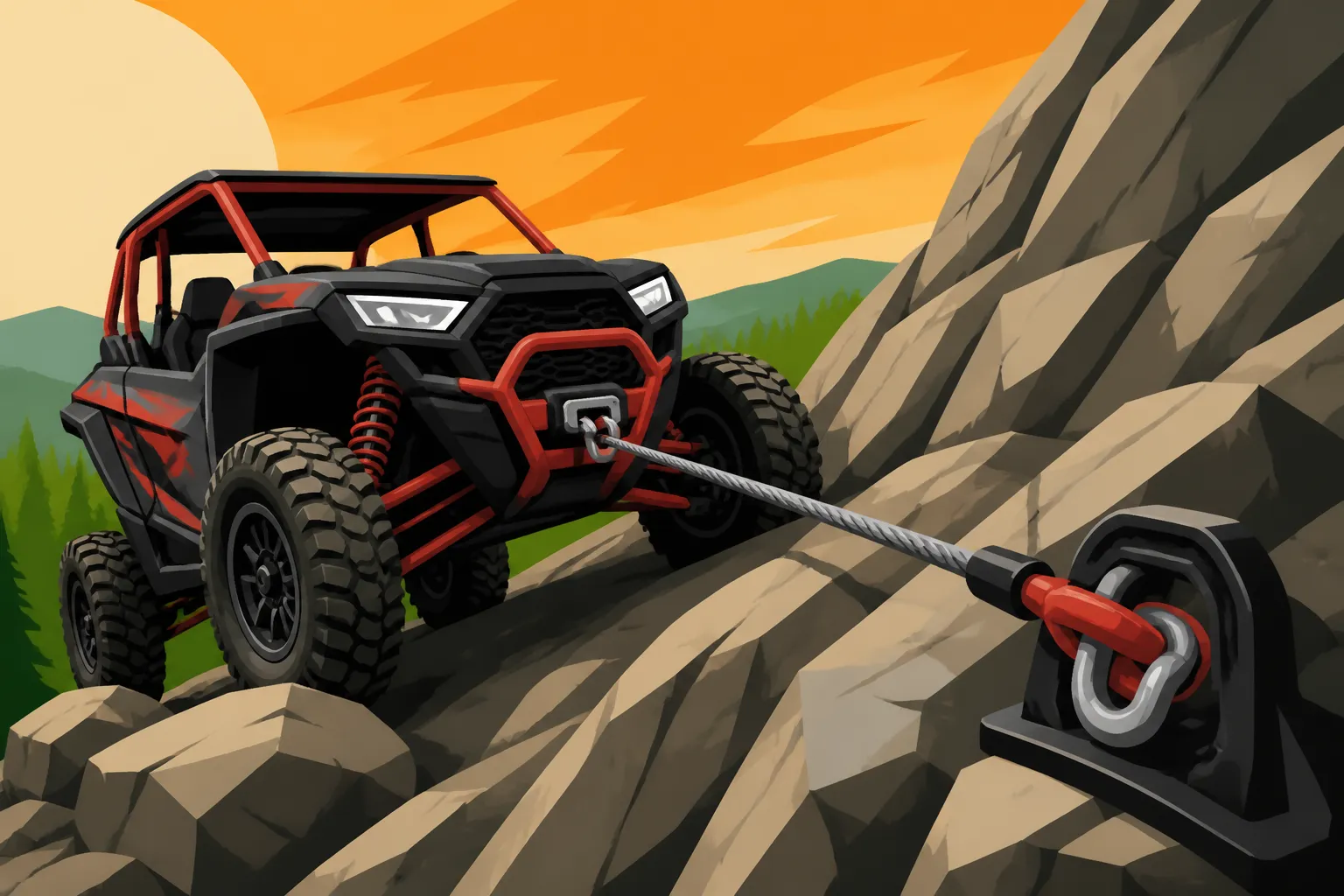
Winches and Steep Rock Climbs
A steep rock face can look manageable until your ATV loses traction halfway up, the tires start spinning, and backing down feels just as risky as continuing. In Arkansas, changing weather can make rocky trails especially unpredictable. This guide explains how to decide when to climb, when to turn around, and how to use a winch more safely if a recovery becomes necessary.
Decide Whether the Rock Climb Is Rideable
Read the surface before you commit
A climb that looks dry from the bottom may have loose gravel, polished stone, leaf litter, or a wet patch just beyond the first ledge. Walk the line first when it is safe and permitted to do so. Look for a route with consistent traction, room to maneuver, and a clear path at the top. Also check what is beyond the crest: a narrow turn, drop-off, or another steep section can make a successful climb unsafe to finish.
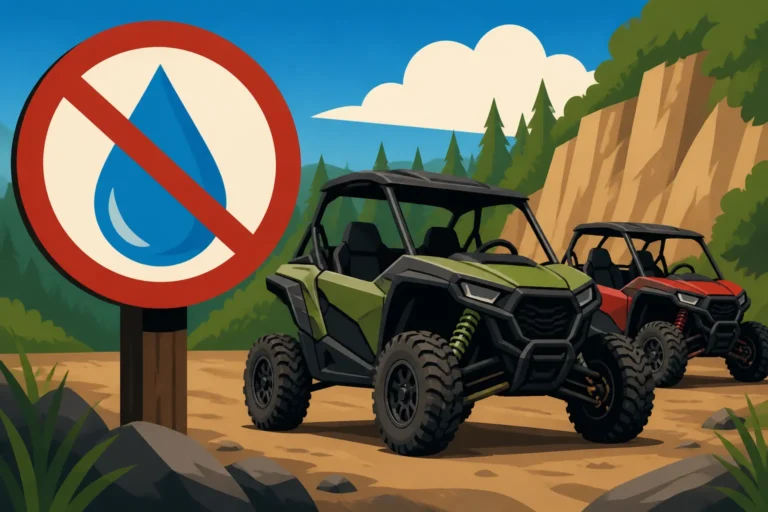
Arkansas weather can change trail conditions quickly. A rocky route may feel predictable when dry, then become slick after rain. Mud can collect in low spots between rocks, while runoff may leave loose material on top of otherwise solid stone. If the surface is wet, your tires are spinning, or you cannot see a safe line, stop and reassess rather than relying on extra throttle to force the climb.
It helps to ask yourself three questions before moving:
- Can the machine climb this grade without a sudden burst of speed?
- Is there a safe place to stop or turn around if traction disappears?
- Is there a clear recovery plan if the machine cannot continue?
If you cannot answer those questions comfortably, choose a different route. Trail systems and riding areas vary in terrain, access, and conditions, so plan around the route you can actually ride rather than the most challenging one on a map. Start with Arkansas ATV Trails: Where to Ride and check local trail information before heading out.
Match the route to the machine and the rider
A capable machine does not make every climb appropriate. Tire condition, ground clearance, wheelbase, loaded weight, rider experience, and the machine’s width all affect how it handles a rocky slope. A side-by-side carrying passengers and gear may behave differently from a lightly loaded quad. A longer machine may have trouble cresting a sharp breakover, while a wide machine may not fit a narrow route or gate.
Before a ride, consider the least experienced person in your group—not just the strongest rider or most capable vehicle. If a rider is unfamiliar with steep rock, give them time to watch an experienced rider choose a line on a manageable section. Do not pressure anyone to attempt a climb because the group is waiting or because another machine made it up.
Trail restrictions matter, too. Check the width of your machine against the route’s posted limits and access points. A route that is suitable for a narrow ATV may not be open to every side-by-side. Arkansas ATV Trails With Width Limits can help you think through that issue, but verify the rules for the specific riding area before you travel.
Choose a line and keep your speed controlled
On a steep climb, a smooth, deliberate approach usually gives you more control than a run-up. Use the gear range recommended by your owner’s manual, keep your body position balanced, and avoid abrupt throttle or steering inputs. The right technique depends on the machine and terrain, so practice on modest slopes before attempting a difficult climb.
Do not ride directly behind another machine on a steep section. If the lead rider stops, loses traction, or needs to reverse, a close following distance can leave you with nowhere to go. Give the rider ahead room and wait for a clear signal before entering the climb. If you are spotting, stand in a place where the rider can see you and where you are not in the machine’s path.
When tires begin to spin, more throttle may dig a hole or slide the vehicle sideways. Ease off, hold your position if you can do so safely, and communicate with your group. If backing down is possible, do it slowly and with a clear path. If the machine is stuck or unstable, do not ask someone to push from behind or stand downhill in its path. That is the moment to consider a recovery plan, not to improvise a risky one.
Prepare the Winch and Recovery Gear
Check the winch before the ride
A winch is useful recovery equipment, but it is not a guarantee that every machine can be pulled up every slope. Before leaving home, inspect the winch, mounting points, wiring, remote, line, hook, and fairlead. Follow the winch and vehicle manufacturers’ instructions, and make sure the system is suitable for the machine’s loaded weight and the kind of recovery you might need. Passengers, tools, racks, and other accessories all add weight.
Test the controls in a safe, level location. Learn how to engage and disengage the clutch, operate the remote, and spool the line evenly. A winch that has not been checked until a machine is stranded on a hillside can create a second problem when the remote fails, the line binds, or the operator is unsure how to use it.
Pack recovery gear that fits your setup. Depending on the equipment and manufacturer guidance, that may include a tree-saver strap, rated shackles, gloves, and a winch-line damper. A tow strap and a winch line serve different purposes; do not substitute one for the other or use equipment whose rating and intended use you do not understand. For a broader recovery kit discussion, see Carrying a Tow Strap in the Hills.
Identify a safe anchor and protect it
Before winching, identify a suitable anchor point that is aligned with the direction of pull. A sturdy tree may be appropriate when it is allowed and can be protected with a tree-saver strap. Never wrap a bare winch line around a tree trunk: it can damage the tree and the line, and the connection may fail unpredictably.
Do not assume a rock, root, thin tree, fence, or another vehicle is a safe anchor simply because it is nearby. The anchor, strap, shackles, winch, and mounting points all need to be appropriate for the load. Keep the pull as straight as practical. A severe side pull can put extra stress on the winch and fairlead and may pull the machine off its intended path.
If there is no sound anchor, do not keep searching for a way to make an unsafe one work. A second machine can sometimes assist, but only when the recovery method and attachment points are suitable, both operators understand the plan, and nobody is positioned in the line of pull. When the conditions are beyond your group’s experience, stop and seek qualified help instead of escalating the recovery.
| Situation | Safer response | Avoid |
|---|---|---|
| The rock is dry and the route is clear | Walk the line, select a controlled approach, and leave space between machines | A high-speed run-up |
| The surface is wet or loose | Reassess, choose another route, or wait for safer conditions | Spinning the tires to force a climb |
| The machine stops but remains stable | Pause, communicate, and assess whether a controlled reversal is possible | Pushing from downhill or standing behind the vehicle |
| A winch recovery is appropriate | Use rated gear, a suitable anchor, and a clear pull path | Attaching to an uncertain anchor or using improvised connections |
| No safe anchor or recovery plan is available | Stop and contact someone qualified to help | Continuing with a risky pull because the group is in a hurry |
Keep people out of the danger zone
Winch lines, straps, hooks, and attachment points can store and release force. Everyone should stand well clear of the line and the likely path of the machine if something shifts. Never step over a tensioned line or reach near the fairlead while the winch is operating. Use the controls from a position where you can see the machine and remain out of the recovery path.
A line damper can help reduce the movement of a line if it fails, but it does not make standing near the line safe. Keep bystanders away, remove unnecessary people from the slope, and agree on simple commands before applying tension. One person should direct the recovery so the operator is not trying to interpret several people shouting at once.
If the machine begins to move unexpectedly, the operator should stop the winch when doing so is safe. Do not grab a moving machine, a taut strap, or a rolling tire. A recovery is not successful if the vehicle reaches the top but someone is hurt in the process.
Winch a Stuck ATV or UTV With a Plan
Set up the pull before applying tension
Park the machine as securely as possible and keep the operator in a position where they can control it. If the vehicle is on a slope, consider whether it could roll or slide when tension changes. Use the parking brake or other equipment as directed by the manufacturer. If wheels are at risk of moving, do not assume that a winch line alone will keep the vehicle stable.
Route the line carefully. Avoid sharp rock edges that can abrade or cut a synthetic line, and avoid pinching the line between the vehicle and the ground. If you use a line extension or another recovery accessory, make sure it is designed for the job and connected according to its instructions. Keep hands clear of the line while it is under tension and use gloves when handling the equipment.
Take up slack slowly and check that the hook, strap, shackle, and anchor are seated properly before applying a steady pull. The operator and spotter should agree on when to stop. If the vehicle starts moving in an unexpected direction, the anchor shifts, or the equipment makes an unusual sound, stop and reassess rather than adding more force.
Do not use the winch to make a bad climb seem safe
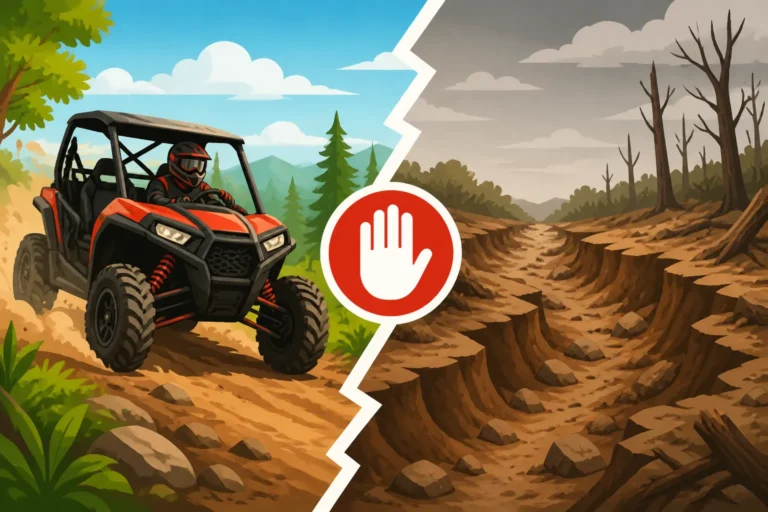
A winch can help recover a machine that is stuck, but it does not turn an unsuitable route into a safe one. Pulling a vehicle up a steep face may create new risks: the tires can catch suddenly, the machine can tilt, or the anchor can fail. It may also damage the trail. On public or managed land, follow the area’s rules and do not create a new route around an obstacle or closed section.
A winch is often best treated as a way to regain a stable position or move the machine out of a problem area—not as permission to attempt a climb beyond the rider’s skill. In some situations, a controlled retreat is safer than a pull to the top. In others, the safest answer is to stop riding and get experienced help.
Groups can reduce confusion by agreeing on a recovery lead before anyone gets stuck. The lead checks the scene, confirms the anchor and equipment, and tells everyone where to stand. Other riders should give that person room to work rather than adding suggestions from several directions. Good communication is especially important when wind, engine noise, or the shape of the trail makes it hard to hear.
Protect the trail and respect other riders
Avoid creating new tracks by driving around a difficult section. Cutting around an obstacle can widen a trail, damage vegetation, and put riders into terrain that has not been assessed. If a machine blocks a narrow route, let other riders know what is happening and leave a safe way for people to wait or turn around when possible. Trail etiquette matters as much during a recovery as it does during ordinary riding; Arkansas Trail Etiquette Locals Expect offers useful context for sharing a busy trail.
Rock can be hard on tires and undercarriage protection, especially when a rider tries to climb with spinning wheels. Choose a deliberate line and inspect the machine afterward for cuts, loose parts, or damaged protection. Tires That Work on Sharp Rock can help you understand why tire choice matters on rocky ground.
Riding areas also have their own conditions and access rules. Before planning a trip to places such as Wolf Pen Gap: Arkansas’s Best Known OHV Complex or Mill Creek OHV Trail System in Arkansas, confirm the route information and current access guidance for the specific area. For route planning, onX Offroad can be one tool for reviewing mapped trails and organizing a ride, but do not treat an app map as confirmation that a trail is open or that a particular climb is safe. Check the land manager’s information as well, and review Arkansas Trail Conditions Before You Tow before hauling your machine.
Plan for the Ride Before You Leave
Make a recovery plan part of the route plan
A useful ride plan includes more than the trailhead and return time. Tell someone where you expect to ride, who is in the group, and when you plan to check in. Carry the recovery gear that matches your machine, and make sure at least one person knows how to operate the winch and communicate a recovery plan.
Cell service can be unreliable in remote riding areas, so do not assume you can call for help from every trail. onX Offroad may help you review a route and prepare maps for your trip, but carry a backup navigation option and know how to use it before you lose service. A paper map, a charged phone, and a power bank can all be useful parts of a plan, depending on the ride and your equipment.
Check forecast and trail information before you leave, then reassess if the weather changes. A route that was manageable on a dry morning may not be a good choice after heavy rain. If trail access, gates, or conditions are unclear, contact the relevant land manager or riding-area operator rather than assuming the route is open.
Set a group rule for turning back
It is easier to make a sensible decision before anyone is halfway up a difficult slope. Agree that any rider can call for a pause or a turn-around without being teased or hurried. Set expectations for spacing, spotting, and recovery before you reach the challenging section. That makes it less likely that frustration or group pressure will dictate the next move.
If you are new to a riding area, begin with easier terrain and learn how the surface changes across the route. A first ride is a chance to understand the trail, not a test of whether you can conquer every steep section. A machine that returns undamaged—and a group that gets back safely—is a better outcome than a dramatic climb that could have been avoided.
onX Offroad can help you compare route options when preparing, but make the final decision on the ground. If a climb looks different from the map, the weather has changed, or the group is uncomfortable, choose another line or turn around. The best recovery is often the one you never need because the group recognized the warning signs early.
Disclaimer
This article is for general informational purposes only and does not constitute professional advice. Laws, prices and regulations vary by location and change over time. Consult a qualified professional for guidance on your specific situation.