Arkansas Hunting License and Quad Access
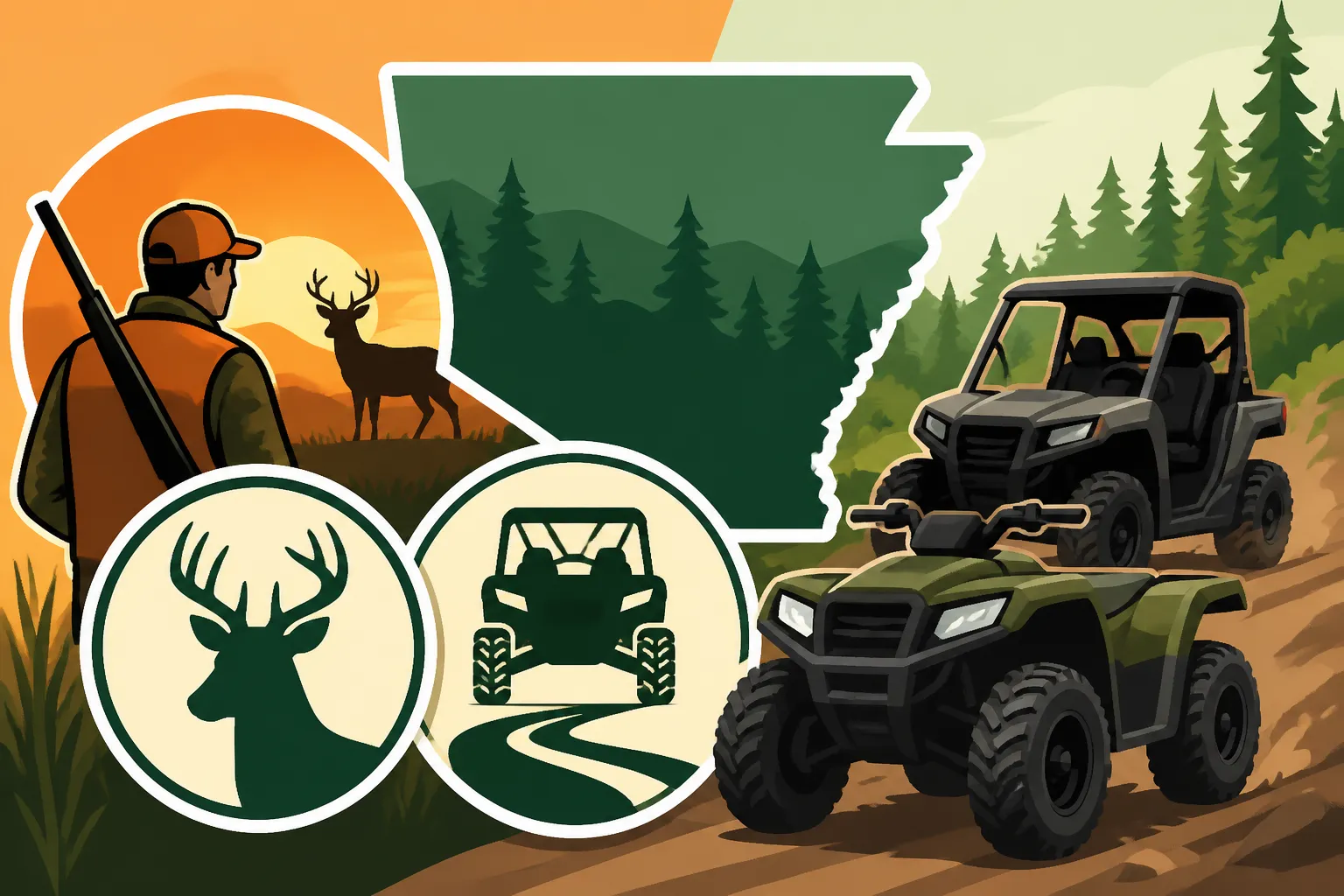
An Arkansas hunting license can make you eligible to hunt, but it does not automatically give you permission to ride a quad wherever you hunt. The key is to check the rules for the specific land, road, season, and machine. Here’s how to separate hunting authorization from ATV access before you load up.
A hunting license does not grant quad access by itself
A hunting license and permission to operate an ATV answer different questions. Your license relates to hunting: whether you may hunt particular game under the applicable season and license rules. Quad access depends on where you are riding and what that land’s vehicle rules allow.
That distinction matters most on public land. A WMA may allow vehicle travel on certain roads but prohibit riding beyond them, even for a licensed hunter. Another area may have a specific hunter-use exception or seasonal restrictions. Rules can vary by area, road, and time of year, so a license should never be treated as a general vehicle pass.
Before a trip, identify the land you plan to enter and check its current rules. For an Arkansas Game and Fish Commission area, start with the area-specific regulations and map, then review Arkansas AGFC WMA Rules for Riders and Arkansas WMAs That Allow ATVs and Those That Do Not. The details for one WMA should not be assumed to apply to another.
| What you have or plan to do | What it generally authorizes | What it does not automatically authorize |
|---|---|---|
| Arkansas hunting license | Hunting when the license and season rules permit | Riding a quad on any public or private land |
| Access to a WMA | Entry subject to that area’s rules | Leaving open roads to reach a hunting spot |
| Permission to hunt private land | Hunting within the permission granted | ATV use, unless the owner also permits it |
| Forest OHV permit | Riding where that permit applies and routes are open | Hunting or riding on a separate WMA |
| Local or land-specific vehicle authorization | The use allowed by that authorization | Use outside its location, dates, or conditions |
A useful way to think about it is to check two separate permissions: “May I hunt here?” and “May I ride here, on this route, at this time?” If either answer is unclear, confirm before riding. A hunting license does not override a gate, closure, posted restriction, or landowner’s decision.
Check the WMA’s vehicle rules, not just its hunting rules
A WMA’s hunting regulations and its vehicle-access rules can appear in different parts of the same area information. Read both. Look for the roads open to vehicles, any restrictions on ATVs or UTVs, seasonal closures, and directions about travel to and from a camp or designated access point.
Do not assume that an open hunting season means the whole area is open to quad travel. An exception, where one exists, may be limited to particular routes or purposes. For example, a rule might permit certain travel connected with reaching camp but not riding trails for recreation or driving cross-country to a hunting location. Check the exact wording for the area rather than relying on a general summary. Arkansas Hunters Riding During Open Season and Travel To and From Camp Only address why the purpose and limits of a hunter-use rule matter.
Road status also matters. A road that appears on a map is not necessarily open to motor vehicles, and a route that looks passable is not permission to use it. Check Arkansas WMA Roads Open to Vehicles for the distinction, and treat gates and barriers as meaningful. A closed or blocked route is not an invitation to go around the barrier; see Arkansas WMA Gated and Cabled Barriers.
A practical pre-ride check looks like this:
- Identify the exact area. Confirm the WMA name and boundaries. If your route crosses more than one property or management area, check the rules for each.
- Read the current vehicle rules. Look for ATV or UTV restrictions, roads open to vehicles, seasonal closures, and any hunter-specific exception.
- Match your route to the rule. Confirm that the road or trail you plan to use is open to your machine, not just open to foot travel or hunting access.
- Check timing and purpose. A route may be open only during a defined period or for a limited purpose. Hunting activity alone does not make an otherwise closed route legal.
- Carry the information you need. Save or bring the current area map and any required permit or proof of authorization. Do not depend on a phone signal at the trailhead.
If you cannot find a clear answer for a particular road, contact the managing agency before you ride. A map, an old online post, or another hunter’s experience may not reflect a current closure or area-specific rule.
Keep WMA access separate from forest OHV permits
Arkansas has public riding areas managed under different systems. A WMA is not interchangeable with a national forest OHV area, and a hunting license does not replace a forest riding permit. Likewise, a forest permit does not authorize hunting or quad use on a WMA.
For forest riding, check which forest and riding area you are entering, whether a permit is required, and where it is valid. The pass system can differ between forests; Arkansas Riders Need Two Different Forest Passes explains why one forest pass may not cover another. If your trip combines hunting with riding in a forest OHV area, treat the hunting license and riding permit as separate requirements.
This distinction is especially useful when a hunting trip involves driving a quad between a parking area, camp, and hunting location. A forest road, an OHV trail, and a WMA road can each have different access rules, even when they are close together. Check the specific land manager’s directions for each part of the route. For area access details, see Arkansas WMA Access for a Quad and Arkansas WMA Vehicle Rules in Plain English.
Also avoid confusing permission to ride with permission to hunt. A riding pass or open trail does not provide hunting authorization. Before hunting, confirm your license, season, location, and any additional rules that apply to the game you intend to pursue. Before riding, confirm the route and any vehicle permit that applies to that property.
Private land, leases, and a safer way to plan
On private property, the landowner’s permission is central. Permission to hunt does not necessarily include permission to bring or ride a quad. Ask separately whether you may use the machine, which routes you may take, where you may park, and whether the permission applies to other members of your group. If the land is leased or managed by a hunting club, check the lease or ask the person authorized to set access rules. A hunting license does not replace that permission.
On public land, posted notices, maps, gates, and current area regulations still matter. Do not treat a hunter’s access to a WMA as permission to cross neighboring private land, and do not assume that a route connecting two public areas is open throughout. If land boundaries or road status are uncertain, stop and verify instead of riding farther in.
Before leaving home, make a short plan that covers both activities:
- Hunting: Confirm that your license is appropriate for your planned hunt and that the season and location allow it.
- Riding: Confirm that quads are allowed in the area, the intended route is open, and any required riding authorization applies.
- Land access: Check whether the property is public, private, leased, or managed under a separate permit system.
- Restrictions: Note closures, barriers, route limits, and any rules about travel to or from camp.
- Backup plan: Choose a legal place to park or ride if a road is closed or an exception does not cover your intended trip.
The safest rule is straightforward: carry the documents you need, but do not assume one document covers every purpose. A hunting license can establish hunting eligibility; it does not, on its own, establish quad access. Confirm the current rules with the land manager for the specific area before setting out.
Disclaimer
This article is for general informational purposes only and does not constitute professional advice. Laws, prices and regulations vary by location and change over time. Consult a qualified professional for guidance on your specific situation.