Speed Limits Inside an Arkansas Trail Park
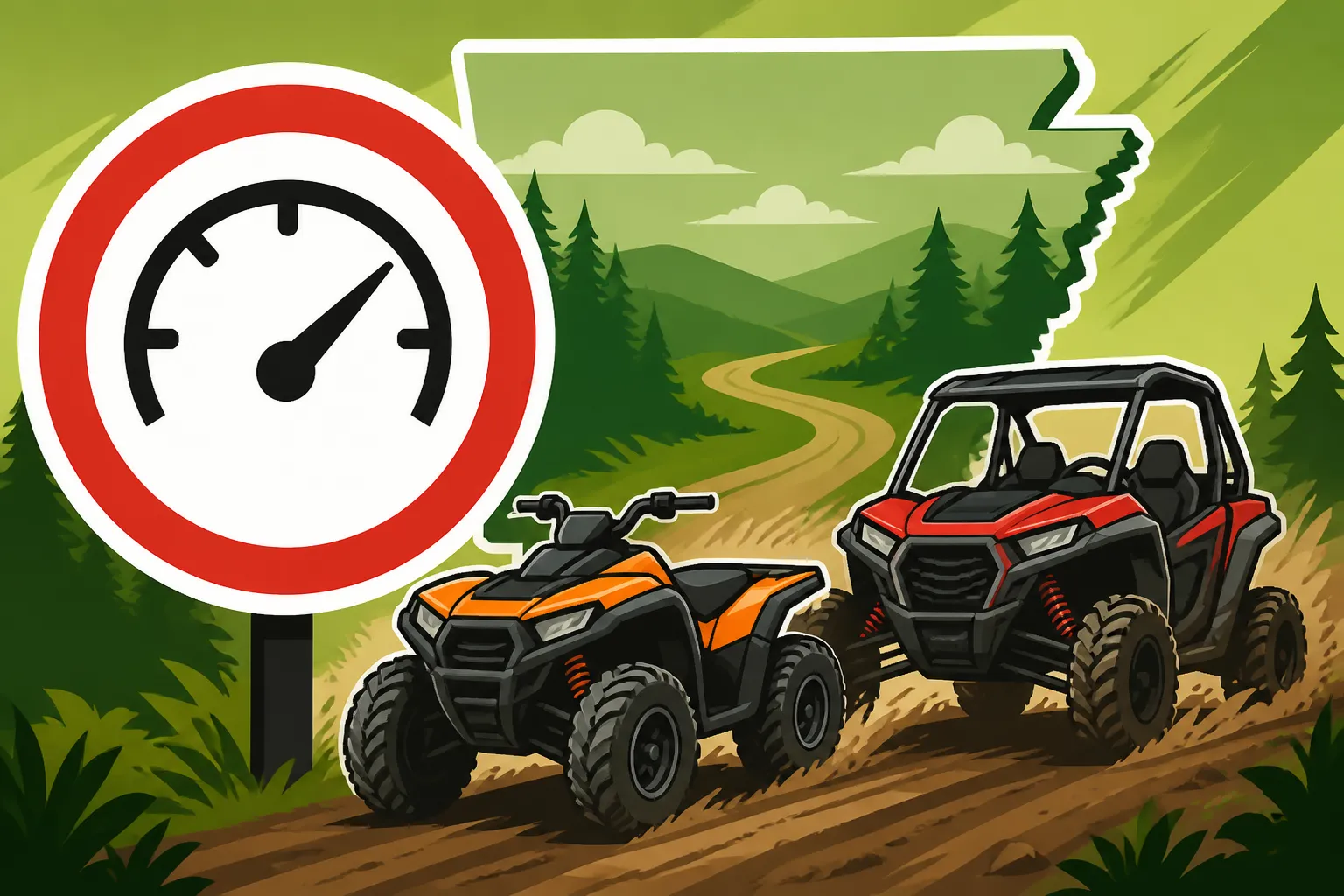
A posted speed limit at an Arkansas trail park can be easy to miss when you are focused on the trail, your group, and changing terrain. The right speed may depend on the park’s rules, the kind of route you are on, and what is happening around you. Here is how to find the applicable limit and ride within it.
Who sets the speed limit at an Arkansas trail park
There is no single speed limit that applies to every Arkansas trail park. Rules depend on who manages the riding area and where you are riding. A privately operated park can establish site rules for its trails, roads, staging areas, and campground. A public-land trail system may instead be subject to the land manager’s rules, posted restrictions, and road regulations.
That means the speed limit at one park may not apply at another, even if both allow ATVs and side-by-sides. Do not assume that a familiar number from a previous visit, a different park, or an online discussion is valid at the trailhead you are using today.
At a private park, check the waiver, rider briefing, posted signs, and any rules supplied at check-in. Some operators post limits at entrances or at particular parts of the property. Others may explain them during orientation or include them in written materials. If the posted signs and paperwork seem to conflict, ask staff before riding rather than choosing the higher number.
The written rules may also address behavior without giving one universal speed limit. A park can require riders to slow near pedestrians, parking areas, cabins, intersections, or other machines. It may prohibit racing or require a controlled speed in certain zones. These rules matter even if you do not see a speed sign at every turn. See Arkansas Private Park Waivers and Rules for more on the policies riders may be asked to accept.
Public-land riding requires a separate check. A trail may pass through an area managed under rules that differ from those at a private park. Posted signs, gates, closures, and land-manager instructions can govern where and how you travel. A forest permit, for example, is not a substitute for checking the rules of the particular trail system. The basic distinctions are covered in Arkansas OHV Permits: Two Forests, Two Prices and Arkansas ATV Trails: Where to Ride.
| Where you are riding | What to check | Why it matters |
|---|---|---|
| Private trail park | Waiver, briefing, signs, and staff instructions | The operator may set property-wide limits and slower zones |
| Public-land trail | Land-manager rules, posted signs, and current closures | Rules can vary by area, road, and trail |
| Campground or staging area | Local signs and park instructions | Pedestrians, parked machines, and trailers are common |
| Road open to public traffic | Applicable road rules and legal access | A park trail rule does not decide whether road riding is allowed |
A speed limit is only one part of the rule set. A park can also restrict which vehicles may use a trail, require certain equipment, or close a route. Before a trip, check that your machine is allowed and that the route is open. A wide side-by-side may not fit a narrow trail or gate, even if the posted speed is low.
How to find and understand the limit before riding
Start with the park’s current information, not an old photograph or a remembered number. Rules can change, and a sign may be added or moved after maintenance, a change in traffic patterns, or a safety concern. Contact the operator or land manager if the current instructions are unclear.
When you arrive, look for signs before unloading or joining the trail. Check the entrance, registration or check-in point, map board, trail intersections, campground, and any route-specific notices. If the limit is stated during a rider briefing, pay attention to where it applies. It may cover the entire property, or only specific sections.
A practical pre-ride routine is:
- Read the current rules and any waiver before signing.
- Ask staff where speed limits and slow zones are posted.
- Look over a trail map for staging areas, shared routes, crossings, and closed sections.
- Make sure every rider in your group understands the rules.
- Recheck signs at intersections and wherever a trail enters a different area.
- If you cannot tell whether a limit applies, slow down and ask before continuing.
Speed limits are often given in miles per hour, but do not rely on a machine’s speed display as the only way to comply. Some ATVs do not have a readily visible speedometer, and readings may not be easy to monitor over rough ground. Keep a pace that lets you stay in control and respond to hazards. If you use a phone or other device for navigation, do not handle it while moving.
Also distinguish between the posted maximum and a safe speed for the conditions. A speed limit is a ceiling, not a promise that traveling at that speed is safe everywhere. A narrow, rocky section, a blind crest, loose gravel, mud, dust, standing water, or a sharp turn may call for a much slower pace. The same applies when visibility is poor or the trail is crowded.
A reasonable approach is to slow before a hazard, not after you reach it. Reduce speed when approaching a bend, rise, intersection, bridge, water crossing, or area where another trail joins yours. Leave enough room to stop without skidding or striking the machine ahead. On steep or uneven ground, use a controlled speed that matches the terrain and your experience.
If a group ride is moving faster than you are comfortable with, let the group know and ride at a safe pace. Do not let pressure to keep up turn a marked limit into a target. Group leaders should set expectations before the ride and make sure the slowest rider has a safe way to participate.
Why slow zones and changing conditions matter
Parks may use lower speeds in places where riders and other visitors are likely to interact. Common examples include trailheads, parking and unloading areas, campgrounds, shared-use routes, narrow passages, and areas near buildings. The exact zones vary by property, so look for local signs rather than assuming every park uses the same layout.
Slow zones protect people as well as machines. A person walking behind a parked vehicle, a child near a campsite, or another rider entering a trail can be difficult to see. Dust can further reduce visibility, especially when several machines are traveling close together. Slowing down gives everyone more time to notice and avoid one another.
Conditions can change during a ride. A trail that was dry in the morning may become slippery after rain. Loose rock or debris may appear after other riders pass, and a route may be rutted or washed out. If the surface or visibility changes, adjust your pace. Do not rely on a speed that felt manageable on the previous section.
Respect closure signs and barriers, too. A closed route can indicate a hazard, maintenance work, erosion, or a restriction on vehicle access. Riding around a barrier can put you in an unsafe place and may violate the park’s rules. If a trail appears blocked or damaged, turn around where safe and report the issue to staff.
Good trail etiquette helps prevent close calls. Keep a sensible following distance, avoid sudden stops in the middle of a route, and do not pass unless the trail is wide enough and the move is clearly safe and permitted. Yield as directed by signs or park rules. These habits are useful whether or not a specific speed sign is nearby; Arkansas Trail Etiquette Locals Expect covers other ways to share a trail responsibly.
Night riding deserves extra caution. Darkness shortens the distance you can see, and dust, glare, and uneven ground can make hazards harder to identify. Follow the park’s hours and lighting rules, and travel at a speed that lets you stop within the distance illuminated ahead. Check Arkansas Rules for Riding After Dark for the separate considerations that may apply outside a private park’s own policy.
What happens if you ride too fast
Consequences depend on the property and the circumstances. A private operator may warn a rider, require the rider to slow down, suspend riding privileges, or ask the rider to leave. The park’s waiver and posted policies may explain its enforcement process. Serious or repeated violations can affect the rest of your group, too, especially if staff decide that the group is not following instructions.
On public land, consequences depend on the applicable rules and the situation. Do not assume that a park employee’s instruction, a forest rule, or a public-road rule is interchangeable with another. If a ranger or authorized staff member tells you to slow down or leave a route, follow the instruction and ask questions once you are safely stopped.
Excessive speed can also lead to a collision, rollover, injury, or damage to the trail. It can send rocks or debris toward other riders, reduce your ability to avoid a stopped machine, and make a recovery more difficult if you leave the route. If someone is injured or a machine is damaged, notify park staff and follow the site’s incident procedure. For a crash on an Arkansas trail, Arkansas Accident Reporting for an ATV Crash explains why it is important to understand what information may need to be reported.
If you receive a warning, treat it as a clear signal to adjust your behavior. Ask which rule or zone applies if you are unsure, but do so when stopped and out of the way. Do not argue while riding or try to demonstrate that your machine can handle a higher speed. The safest response is to comply first, then clarify the rule with staff.
Before leaving home, save or print the park’s rules if they are available, but confirm they are current. On arrival, follow posted signs and the latest instructions from the operator or land manager. If you cannot find a speed limit, ask directly; until you get an answer, use a controlled pace that leaves room to stop safely. Park-specific rules, conditions, and trail access can all differ, so checking the details at the riding area is the most reliable way to avoid a preventable violation or crash.
Disclaimer
This article is for general informational purposes only and does not constitute professional advice. Laws, prices and regulations vary by location and change over time. Consult a qualified professional for guidance on your specific situation.