Alcohol Rules on an Arkansas Trail Weekend
An Arkansas trail weekend can involve public forest roads, private riding parks, leased land and a campsite, each with different rules. The safest plan is to separate drinking from riding completely, then check the rules for the place where you plan to camp or ride. Here’s how to think through impaired operation, alcohol at camp, passengers and permits before the keys come out.
Separate Riding From Drinking
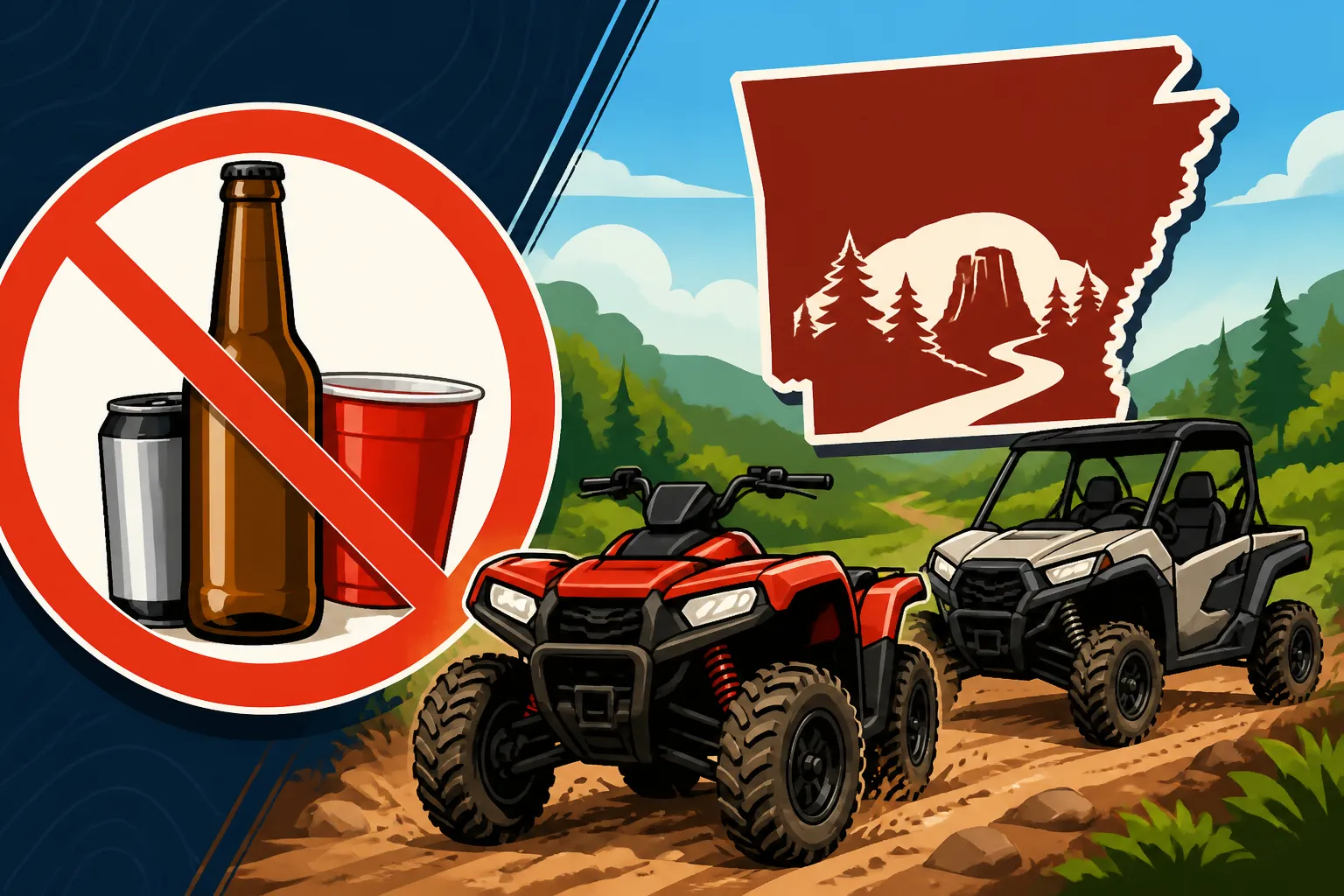
Treat every ATV or UTV ride as a no-alcohol activity. Do not operate after drinking, and do not count on a quiet trail, a short trip or a slow pace to make it safe. Alcohol can affect judgment, balance, reaction time and the ability to manage changing terrain. Those risks matter on rocky trails, near water, in dust, around other riders and when handling a machine with passengers.
Arkansas DUI laws may apply to operation of off-road machines, depending on the circumstances. Being away from a public highway does not automatically make impaired operation lawful. The machine, location and situation can all matter, so avoid trying to judge whether a particular trail or private property creates an exception. For the legal overview, see Arkansas DUI Law and Off-Road Machines.
A practical rule is simple: if you plan to drink, your riding for the day is over. Do not ride back to camp, move the machine to another parking area or take a “quick” trip to retrieve something after drinking. Park the machine, put the keys away and arrange a sober person to handle any necessary vehicle movement. If no sober operator is available, leave it where it is until one is.
| Situation | Safer approach |
|---|---|
| Drinks planned after a ride | Finish the ride, park the machine and secure the keys before drinking |
| Someone has been drinking | Do not let that person operate, even for a short move |
| The group needs to return to camp | Use a sober operator or another safe way to get back |
| A passenger has been drinking | Do not assume the ride is safe; consider balance, judgment and the park’s rules |
| A rider is unsure whether they are impaired | Do not ride |
A trail permit or registration decal is not permission to operate after drinking. Permits address access to particular riding areas; they do not replace safe operation or change applicable alcohol laws. If your weekend includes more than one public land area, check which pass applies to each before setting out. Arkansas Riders Need Two Different Forest Passes explains why a pass for one forest may not cover another.
Alcohol at Camp and at Private Parks
Alcohol rules away from the machine are not necessarily the same as rules for operating one. A private riding park may allow alcohol in some places and prohibit it in others, or may restrict it throughout the property. Forest campgrounds and other public lands may also have site-specific restrictions. Check the current rules for the exact location rather than assuming that a practice allowed at one campground or park is permitted at another.
For a private park, review its visitor rules before arrival and ask the operator if the wording is unclear. Check whether alcohol is allowed at campsites, in common areas or only in designated locations, and whether rules differ during organized events. Arkansas Private Park Alcohol Rules covers the questions to ask, while Arkansas Private Park Waivers and Rules is a useful reminder that property rules can cover more than the waiver itself.
When calling or checking posted information, ask specific questions:
- Is alcohol allowed anywhere on the property?
- Are there restrictions at campsites, trailheads or shared facilities?
- Do rules differ during events or for overnight guests?
- Are glass containers, outside beverages or public consumption restricted?
- What happens if a guest violates the rule?
Do not assume that permission to have a drink at camp means permission to carry alcohol on a moving machine or drink while riding. Keep beverages at the campsite, leave the machine parked and follow the property’s directions about where containers may be used or stored. If an employee or land manager gives a clear instruction, follow it.
On public land, check the current land manager’s rules for camping and alcohol rather than relying on what you have seen at a different trail system. A ranger or other official may also check whether you have the required permit and whether you are following area rules. What a Forest Ranger Checks on an Arkansas Trail can help you prepare for that side of the trip.
If you are camping on leased land or property owned by someone else, ask the landowner or lease manager about their alcohol rules. A riding group’s customary practice does not override the owner’s requirements. For access and permission questions, see Arkansas Rules on Land You Lease.
Plan the Weekend So Nobody Has to Ride After Drinking
The easiest way to avoid a bad decision is to decide in advance when riding ends and who is responsible for the machines. A group may be tempted to make an extra trip back to the trailhead, retrieve a forgotten item or relocate a vehicle after dinner. Those tasks should be handled before anyone drinks or by someone who has remained sober.
Use a clear plan rather than relying on a vague understanding that “someone will be okay to drive.” Before the first ride, agree on:
- A riding cutoff. Set a time when all machines will be parked for the day. Do not restart riding after alcohol is served.
- A sober operator. Identify someone who will not drink if a machine or support vehicle may need to be moved.
- A key plan. Put keys away once the machines are parked. A designated person can hold them if that helps the group stick to the plan.
- A return plan. Decide how everyone will get back to camp or lodging without asking an impaired person to operate a machine.
- A next-day check. Start riding only when each operator is rested, alert and able to ride safely. A late night can affect judgment and coordination the next morning too.
A passenger’s presence does not make an impaired ride acceptable. Passengers can also be injured if the operator loses control, and a passenger may be unable to respond effectively to a rollover or sudden stop. If a passenger has been drinking, use extra caution and follow the park’s passenger rules. Never rely on a passenger to supervise an impaired driver.
Plan for hydration and food as well. These do not reverse impairment or make it safe to ride after drinking, but they can help support a more comfortable trip before and after riding. Keep water separate from alcoholic drinks and easy to identify. If you are packing supplies, a labeled water jug or insulated bottle is more useful on a ride day than assuming everyone will remember to drink enough. Basic gear and drink containers are available from many retailers, including Amazon, but the important part is having enough water accessible to the group.
Fatigue, heat and difficult terrain can compound the danger. A rider who is tired or overheated may already have slower reactions before alcohol enters the picture. On an Arkansas trail weekend, conditions can change with rain, mud, dust, steep sections or crowded trailheads. If someone seems unsteady, confused, unusually tired or unable to follow instructions, keep them off the machine and get appropriate help if their condition is concerning.
Permits, Incidents and What to Do When Rules Are Unclear
Alcohol is only one part of a safe and lawful weekend. Confirm the trail’s access requirements, machine restrictions and campsite rules before travel. A pass or permit generally relates to a particular area and use; it does not grant unrestricted access to every road, trail or neighboring property. Arkansas OHV Permits: Two Forests, Two Prices provides more context on the difference between forest permits.
Do not mix uncertainty about alcohol rules with uncertainty about where you may ride. If posted signs, a park’s written policy or an official’s instructions are unclear, stop and ask before consuming alcohol or operating a machine. On public land, check with the relevant land manager. At a private park, contact the operator. Keep any required permit information available, and make sure the whole group understands where riding is allowed and where the machines must stay parked.
If an incident occurs, focus first on safety: stop the machines, move people away from immediate hazards if it is safe to do so, and contact emergency services when someone is seriously hurt or needs urgent help. Do not let an impaired person take over the machine or attempt to manage a complicated recovery. For an ATV crash, reporting steps can depend on the circumstances; Arkansas Accident Reporting for an ATV Crash covers what to consider.
If you see someone in your group preparing to ride after drinking, intervene before the machine moves. A calm, direct response is better than debating legal thresholds or whether the route is short. Offer to hold the keys, arrange a sober ride or help the person stay at camp. If the person becomes aggressive or someone appears to be in immediate danger, prioritize your safety and contact the appropriate authorities.
A few simple boundaries make the weekend easier for everyone: no alcohol before or during riding, no “one last trip” after drinks, and no assumption that a campsite’s alcohol policy changes road or trail laws. Verify local and property-specific rules, keep machines parked once drinking begins and choose a sober alternative whenever there is doubt.
Disclaimer
This article is for general informational purposes only and does not constitute professional advice. Laws, prices and regulations vary by location and change over time. Consult a qualified professional for guidance on your specific situation.