Arkansas Leased Lands Permit WMAs
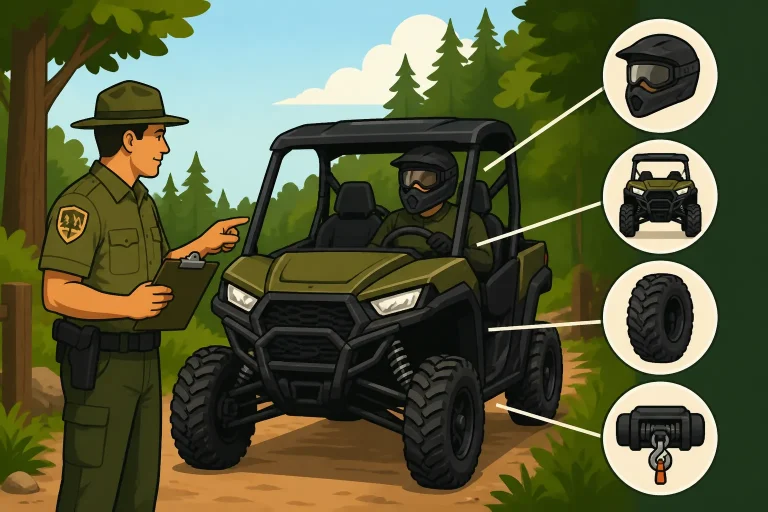
Arkansas leased lands can look like ordinary public riding areas on a map, but access depends on the specific property, the purpose of your visit and the current rules. A Leased Lands Permit does not automatically make ATV or UTV riding legal. The safest approach is to confirm the land designation, permit requirements and roads open to vehicles before unloading.
What an Arkansas Leased Lands Permit Covers
The phrase “leased lands” describes land the Arkansas Game and Fish Commission (AGFC) makes available for public use through a lease or similar access arrangement. It does not mean every parcel is open under the same terms. A tract may have its own access conditions, seasonal restrictions and rules for hunting, fishing or other activities.
That distinction matters because a permit is permission for a defined activity or access purpose, not a blanket pass for every use of the property. If a Leased Lands Permit is required for your planned activity, having one does not necessarily authorize you to drive an ATV or UTV wherever you want on the tract.
The word “WMA” can also cause confusion. Wildlife management areas include properties with different ownership and management arrangements. Some may be leased lands, while others have different access rules. A map label alone may not tell you whether a particular parcel requires a Leased Lands Permit or whether an off-highway vehicle can be used there.
Before you plan a trip, identify the exact property and check its current entry requirements. The broad overview in Arkansas AGFC WMA Rules for Riders can help you understand the difference between accessing a management area and being allowed to ride within it. For the permit’s specific scope, use Where an Arkansas Leased Lands Permit Actually Applies as a companion.
| Question | What to check | What not to assume |
|---|---|---|
| Is this a leased lands property? | The current AGFC property listing, map and regulations | That every WMA has the same status |
| Do I need a Leased Lands Permit? | The requirement for the particular property and activity | That a hunting license or another pass automatically replaces it |
| Can I ride an ATV or UTV? | The property’s vehicle rules and roads open to motor vehicles | That access permission includes off-road riding |
| Is a road open today? | Posted signs, gates, seasonal notices and current closures | That a road shown on a map is open to public vehicles |
| Does my machine have its paperwork? | Applicable registration and ownership documents | That an AGFC permit is vehicle registration |
There may be more than one permission or document involved in a single outing. Depending on where you ride and what you are doing, you may need to consider an access or activity permit, the rules for your machine, and any separate trail or forest permit. These requirements address different things; one does not automatically stand in for another.
If you are unsure whether a property belongs to a leased lands program, do not decide based only on its name, a social media post or an old map. Check the current AGFC information for that specific location, including any special notes about the access permit. If the information is unclear, ask the agency before you travel.
Why the Permit Does Not Automatically Authorize ATV Riding
A permit can establish that you are allowed to enter or use a property for a specified purpose. Vehicle rules determine where and how you can ride once you are there. Treat those as separate checks.
A common mistake is to think that having permission to hunt, fish or enter leased land means an ATV can be driven across the entire parcel. That conclusion may be wrong. A property can allow access for one activity while limiting motorized travel to designated roads, excluding certain routes or prohibiting off-road use altogether.
The practical rule is simple: permission to access the land is not the same as permission to ride any route on it. Check whether the property allows your kind of machine, whether the route is open to public motor vehicles and whether any seasonal or activity-specific conditions apply. The details in Arkansas WMA Access for a Quad and Arkansas WMA Roads Open to Vehicles are useful when you need to separate general access from vehicle access.
Roads, gates and signed closures
A road that appears on a map is not necessarily open to your ATV or UTV. It may be closed to public motor vehicles, restricted to certain users, or temporarily unavailable because of management work, weather or seasonal conditions. A road can also look passable while a barrier or sign indicates that vehicle travel is prohibited.
Treat signs and barriers as important information, not as obstacles to work around. Do not go around a gate, move a cable or take a machine onto a closed route just because the ground looks firm. Review Arkansas WMA Gated and Cabled Barriers and Arkansas WMA Riding on Open Roads before assuming that a route is available.
Some areas within a WMA may be managed for habitat or other purposes and may not be open for riding. A food plot, fire lane, levee, dam or wildlife opening is not automatically a public ATV route. The rules and signs for that property control. For more on these limits, see Arkansas WMA Food Plots and Fire Lanes.
Hunting access and recreational riding are different plans
A hunter may use an ATV to reach a lawful access point or travel on a road that is open to vehicles, subject to the property’s restrictions. That does not mean the same property is open for recreational trail riding. The purpose of the trip can affect which permit applies, but it does not erase vehicle restrictions.
If your plan is a recreational ride, describe it that way when checking the rules. Do not rely on a permit or exception intended for a different activity. If you are hunting, confirm the hunting requirements separately and make sure the route you intend to use is open to your machine.
This distinction is especially important when an outing combines several activities. A rider might plan to travel to a hunting location, camp, fish and explore trails in one visit. Each activity can have its own conditions. Confirm that the permit covers the activity and that the vehicle route is permitted rather than treating the trip as a single all-purpose use.
How to Confirm the Right Property and Rules
The most reliable check starts with the exact place you intend to visit. “We’re riding on a WMA near town” is not specific enough to resolve permit or vehicle questions. Find the property name, the relevant access point and, if possible, the roads or areas you plan to use.
Use current AGFC information for the property and look for special access requirements, activity restrictions and vehicle rules. If a map and a regulation page seem to say different things, do not choose the interpretation that is more convenient. Contact the appropriate agency office or manager and ask how the rule applies to the exact location.
A useful call or message should include:
- The property or WMA name and the nearest access point
- Whether you are visiting to hunt, fish, camp or ride recreationally
- Whether the machine is an ATV or a side-by-side
- The route or road you intend to travel
- Whether you are an Arkansas resident or visiting from another state
- The date or season of your planned visit
Ask direct questions: Is a Leased Lands Permit required for this activity on this property? Are ATVs or UTVs allowed? Which roads are open to public vehicle use? Are there seasonal closures or special limits? Does a separate permit apply? Specific questions are more likely to produce a useful answer than asking generally whether “the area is open.”
If the property spans multiple tracts, verify the status of the tract you will actually enter. A road can pass near or through land with different ownership or management status. Do not assume a permit that applies to one parcel extends to adjacent land.
Check again close to the trip
Rules and access conditions can change. A route that was open on a previous visit may be closed now, and a permit requirement may apply to a particular activity or property rather than to all land in the region. Check before leaving, especially if you are traveling a long distance or planning around a hunting season.
Save the current property information and contact details where you can reach them. A screenshot or downloaded map may help when mobile service is limited, but an old saved page should not be treated as proof that a route remains open. Check dates, notices and posted signs when you arrive.
At the property, follow the most specific information available. If an entrance sign indicates a closure or restriction, stop and confirm before proceeding. If you cannot establish that a road is open to your machine, choose another route rather than riding through and trying to sort out the rule later.
Permits, Residency and Reciprocity
People often use “permit” to mean several different documents. An AGFC access or activity permit, an Arkansas hunting license, an ATV registration decal and a forest OHV permit are not interchangeable. Each relates to a different requirement, and having one does not prove that you have satisfied the others.
For example, an access permit may address entry to a specified leased property or an activity there. Registration relates to the machine under the applicable rules. A forest permit, where one is required, concerns riding on that forest’s OHV system. Before a ride, identify which requirements apply to the property, activity and machine rather than asking whether you have “a permit” in general.
For riding on national forest OHV systems, Arkansas has separate permit arrangements for its forests. Those permits do not automatically apply to leased lands, and a Leased Lands Permit does not replace a forest OHV permit. The distinction is covered in Arkansas Riders Need Two Different Forest Passes. Do not buy or carry a pass for one place assuming it covers a different land manager’s property.
If you live outside Arkansas
A visitor should confirm both the property’s access conditions and the rules for the planned activity. Do not assume that an out-of-state hunting license, trail pass or machine registration automatically satisfies Arkansas requirements. Likewise, do not assume that an Arkansas access permit is a substitute for the paperwork required by your home state or for rules governing the machine where you live.
The key is to check each document separately:
- Property access: Is a Leased Lands Permit or another access permission required for this property and activity?
- Hunting or fishing: What licenses, permits or other qualifications apply to the activity?
- Machine paperwork: What registration or ownership documents are required for your machine?
- Trail or forest access: Does the land manager require a separate OHV permit for this riding area?
- Local restrictions: Are there property-specific limits, seasonal closures or posted road rules?
If you are visiting from another state, Do Out-of-State Riders Need an Arkansas Registration Decal? can help with the machine-registration question. It does not answer whether a particular WMA requires a Leased Lands Permit or allows your chosen route, so verify those separately.
The same caution applies to residents. An Arkansas registration decal does not grant access to private or leased property, and it does not turn a closed WMA road into an open one. The property’s rules, vehicle rules and applicable registration requirements are separate questions.
A Practical Before-You-Ride Checklist
A few checks before loading the machine can prevent a wasted trip and reduce the risk of riding somewhere you are not allowed. Use this sequence for each property rather than relying on what was permitted at another WMA.
- Identify the exact property. Confirm its name, boundaries and access point. Make sure your planned route stays on the property where you have permission to be.
- Confirm the land and permit status. Check whether the tract is part of a leased lands program and whether a Leased Lands Permit is required for your activity. Review Arkansas Leased Lands Permit Cost for the permit details, then confirm current requirements with AGFC.
- State your actual purpose. Be clear about whether you are hunting, fishing, camping or riding for recreation. Do not assume a permit for one purpose covers another.
- Verify machine access. Confirm that the specific type of machine is allowed and identify the roads or routes open to public vehicle use. Ask about seasonal restrictions and closures.
- Check on-the-ground conditions. Read entrance signs and obey gates, cables and posted notices. If the signage conflicts with an old map or a previous trip, stop and verify.
- Separate each document. Check access permission, activity licenses, machine registration and any trail or forest permit independently.
- Carry useful records. Keep required documents available, and save the current property information in case cell service is weak. A waterproof document pouch can protect papers from rain and mud; outdoor retailers, including Amazon, may carry them.
- Have a backup plan. If the route or property is closed, choose another place where you have confirmed access instead of trying an unofficial entrance or crossing onto neighboring land.
If you are using a machine to reach a hunting area, check the applicable hunting rules as well as the road restrictions. [Arkansas Hunting License and Quad Access] addresses that related issue. And if the property is a WMA rather than a leased-land tract, do not assume the same access terms apply; use the rules for the precise area.
Good preparation also includes checking the machine itself. Make sure its identifying information and paperwork are in order, and carry whatever documentation the applicable rules require. For a broader view of property access restrictions, see Arkansas WMA Vehicle Rules in Plain English.
Frequently Asked Questions
Does a Leased Lands Permit automatically allow ATV riding?
No. A permit may apply to access or a particular activity, while vehicle rules determine whether and where you can ride. Confirm the property’s specific motorized-vehicle rules and open routes.
Does every Arkansas WMA require a Leased Lands Permit?
No single assumption works for every property. WMAs and leased lands can have different designations and conditions. Check the current requirements for the exact property and planned activity.
Does an Arkansas registration decal let me ride on leased lands?
No. Registration paperwork for a machine is separate from permission to enter or ride on a property. You must meet both the applicable vehicle requirements and the land manager’s access rules.
Does a Leased Lands Permit replace an OHV forest pass?
No. A permit for leased lands does not automatically cover a national forest OHV system. Check the permit requirements for each location and land manager.
What should I do if the map and signs do not match?
Stop before entering the questionable route. Follow posted closures and contact the responsible agency or property manager to clarify the current rule. Do not rely on an old map or a previous visit as permission to proceed.
Disclaimer
This article is for general informational purposes only and does not constitute professional advice. Laws, prices and regulations vary by location and change over time. Consult a qualified professional for guidance on your specific situation.