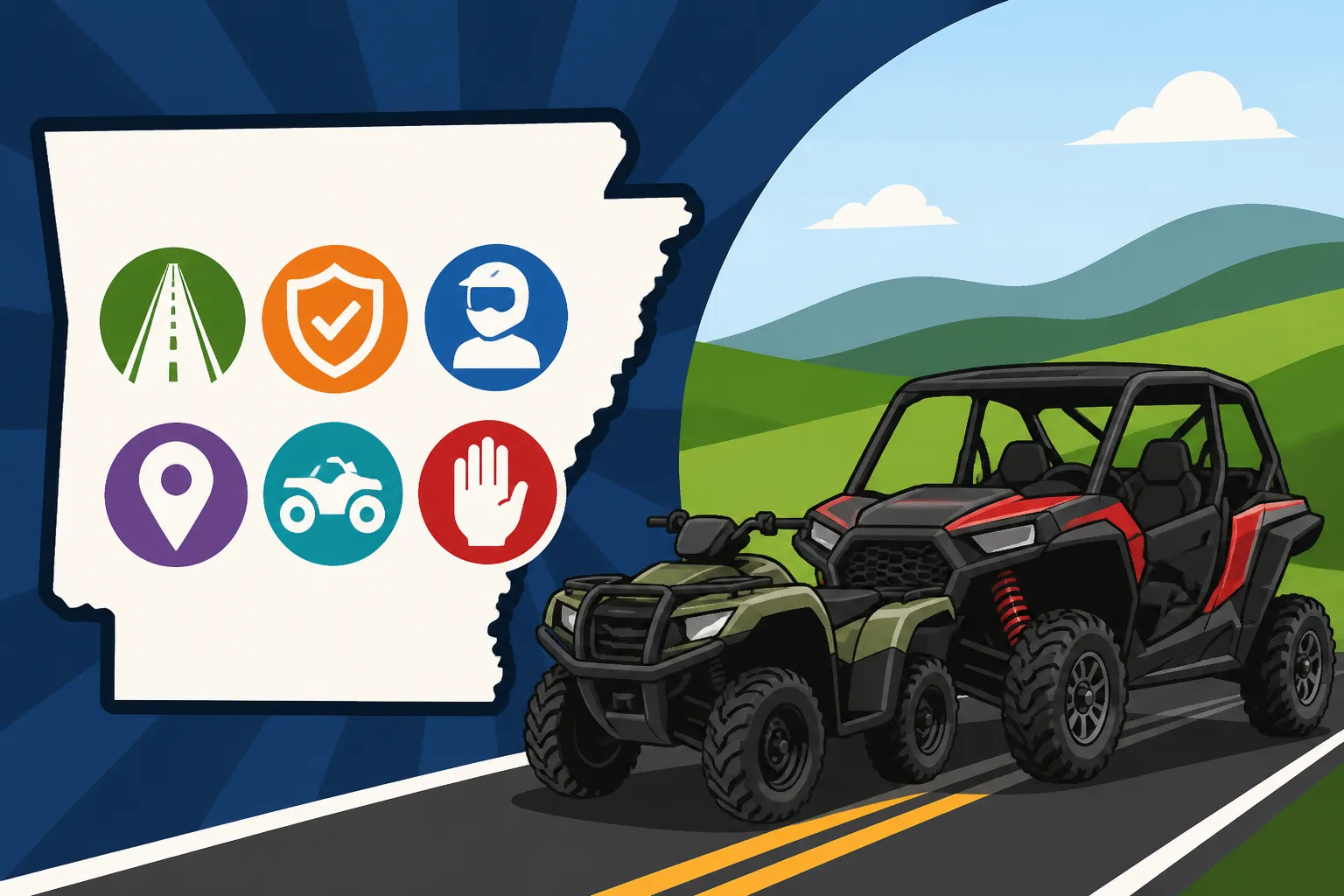
Arkansas’s Six Statutory Road Exceptions
Oh, the age-old question that plagues every ATV and UTV owner in the great state of Arkansas: "Can I actually ride this thing on the road?" It's a frustrating situation because, let's be honest, sometimes you just need to get from one field to another, or cross a highway to hit the next section of trail, and loading up on a trailer feels like a monumental task for a short distance. This guide is going to clear up that confusion by walking you through Arkansas's six statutory road exceptions that allow you to legally operate your off-road machine on public roads under very specific circumstances.
Understanding Arkansas's Default Stance on Off-Road Vehicles on Public Roads
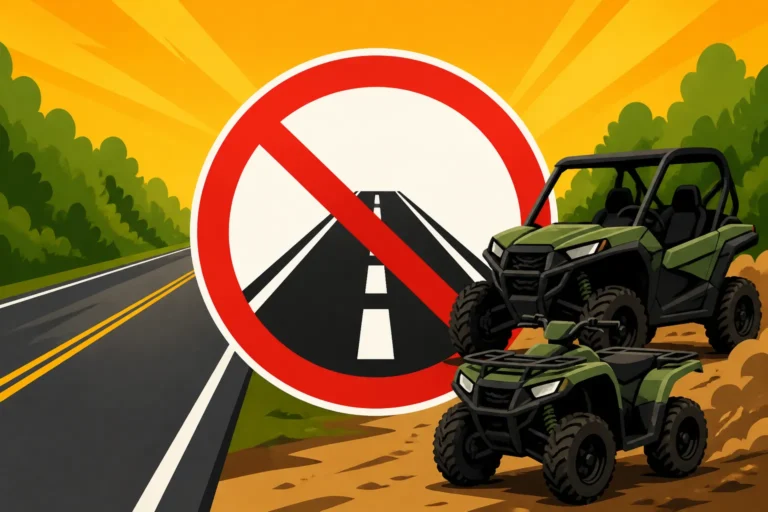
It’s easy to feel like the law is just trying to make things difficult, especially when your ATV or UTV is such a valuable tool for work and play. But when it comes to public roads, Arkansas, like many states, starts with a pretty firm "no" for off-highway vehicles. This isn't out of spite, but rather a blanket approach to public safety and traffic flow.
Why Roads Are Generally Off-Limits for ATVs and UTVs
The fundamental reason ATVs and UTVs are generally prohibited on public roads stems from their design. Unlike cars, trucks, or motorcycles, which are built and certified for highway use, off-road vehicles simply don't meet the same safety standards for paved roads, higher speeds, or interacting with traditional traffic. Think about it: they often lack proper turn signals, DOT-approved tires, windshields, or robust braking systems for road speeds. From a legal standpoint, they're considered recreational or utility vehicles meant for unpaved terrain, trails, or private property. This distinction is crucial in understanding why the law treats them differently than your daily driver. It’s not about judging your riding skills; it’s about the vehicle's inherent design limitations in a road environment.
This default prohibition can be incredibly inconvenient, especially for those who live in rural areas where the quickest path between two points might involve a short stretch of blacktop. You might just need to hop across a county road to get to your hunting lease, or perhaps you're working on a farm and need to move equipment from one pasture to another that's bisected by a public thoroughfare. The feeling of being constrained, having to load and unload a machine for mere yards, is something many riders lament. It just seems inefficient and sometimes downright unnecessary when you're being responsible.
The Importance of Knowing the Law and the Penalties for Ignorance
Navigating these rules can feel like deciphering a secret code, and many riders operate under assumptions or outdated information, which can lead to serious trouble. Ignorance of the law is never a valid defense, and a simple mistake could land you a hefty fine or worse. Imagine you're just trying to do the right thing, moving your ATV a short distance for what you think is a legal reason, only to be stopped by a deputy who sees things differently. Suddenly, your productive afternoon has turned into a costly citation.
The penalties for operating an unregistered or unauthorized off-road vehicle on a public road in Arkansas can range from monetary fines to potential impoundment of your machine, depending on the specifics of the infraction and the officer's discretion. These aren't small tickets, and they can certainly put a damper on your weekend plans or your work schedule. It’s also worth considering the liability aspect; if you’re involved in an accident while riding illegally on a public road, your insurance might not cover you, leading to even greater financial burdens. Understanding exactly where and when you're permitted to ride is your first line of defense against these potential headaches. For a deeper dive into the repercussions, check out [Arkansas Penalties for Illegal Road Riding].
The Six Key Exceptions: When You Can Ride on Arkansas Roads
Now that we've established the general rule, let's get to the good stuff: the specific situations where Arkansas law makes an exception. These aren't loopholes; they are carefully defined statutory allowances designed to accommodate legitimate needs. It's vital to understand each one precisely, because the devil is always in the details.
Farming Operations: Essential Agricultural Use
For many rural residents, ATVs and UTVs are not just toys; they are indispensable tools for daily farm life. Recognizing this, Arkansas law provides an exception for machines used as part of a bona fide farming operation. This means if you're actively engaged in agriculture, horticulture, or livestock production, you can often use your off-road vehicle on public roads to support these activities.
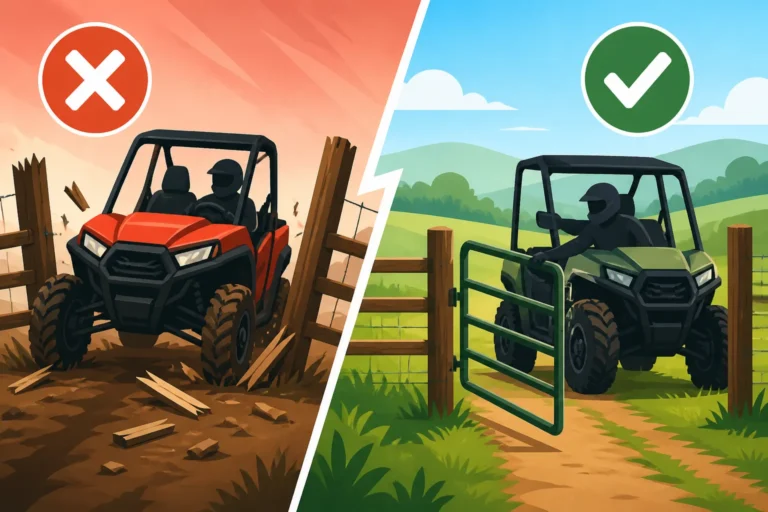
Think about moving between different fields to spread fertilizer or check crops. Perhaps you need to transport fencing materials from one section of your property to another, and the most direct route involves a short stretch of county road. Or maybe you're checking on your cattle in a distant pasture, and your UTV is the most efficient way to get there. This exception is designed for the practical necessities of farm work, not for casual rides after chores are done. The key is that the use must be directly related to and necessary for the farming operation. It's about functionality and utility, not recreation. If you’re riding on the road, be prepared to explain your purpose and demonstrate its connection to your farm. For more information, see [Arkansas Farming Operation Road Use].
Hunting Operations: Accessing Remote Hunting Lands
Arkansas is a paradise for hunters, and often, the best hunting spots are not easily accessible by traditional vehicles. That’s where the hunting operations exception comes in handy. This allowance permits the use of ATVs and UTVs on public roads when traveling to and from a hunting camp, accessing private hunting leases, or even for the retrieval of game.
This isn't a carte blanche to ride your machine to the store to pick up snacks while wearing your camo. Instead, it's specifically for the genuine needs of hunting. For instance, you might use your UTV to haul gear to your deer stand on a remote lease that's separated from your main property by a gravel county road. Or perhaps after a successful hunt, you need to use your quad to get your harvested animal back to your truck, and a brief road traverse is unavoidable. The intent here is to facilitate legitimate hunting activities, not to provide a general recreational opportunity on public roads. Always ensure your use aligns with the spirit of the law and be ready to articulate your purpose if questioned by law enforcement. Carrying your hunting license and proof of your hunting location can be helpful in these situations.
Crossing a Public Highway: The Ninety-Degree Rule
One of the most common and often misunderstood exceptions is the allowance for directly crossing a public highway. This exception is crucial for riders whose properties or trails are bisected by a road. The rule states that you can cross a public highway, but it must be done "at roughly ninety degrees" and after coming to a complete stop.
This is a critical distinction: you are permitted to cross over the road, not to ride along it. Imagine your favorite trail continues on the other side of a state highway, or you have a field on both sides of a county road. You can bring your machine to a complete stop, look both ways thoroughly, and then proceed directly across the road to the other side, making your path as perpendicular to the roadway as possible. You cannot merge into traffic and ride for any distance, even a short one. The emphasis is on minimizing your time and presence on the public road to the absolute necessity of crossing. Think of it like a pedestrian crossing the street – direct, purposeful, and with extreme caution. For detailed guidance on this, see [Arkansas Direct Crossing at Ninety Degrees] and [Arkansas Stop Before You Cross].
Disability Exception: For Those With Mobility Challenges
Arkansas law also includes an empathetic exception for individuals with a "serious walking disability." This provision allows persons with such a disability to operate an ATV or UTV on public roads if it is necessary for their mobility and transportation needs. This exception aims to provide accessibility for those who might otherwise struggle to traverse certain distances or terrains.
The intent here is clear: to ensure that individuals facing significant mobility challenges are not unduly restricted from accessing areas or performing tasks that would be impossible without their off-road vehicle. This isn't a catch-all for minor inconveniences; it requires a legitimate, documented walking disability. If you fall under this category, it’s wise to carry appropriate documentation, such as a doctor’s note or a disability placard, to avoid any misunderstandings. This helps law enforcement understand your specific situation and why you are utilizing this statutory exception.
Utility Company and Law Enforcement/EMS Use
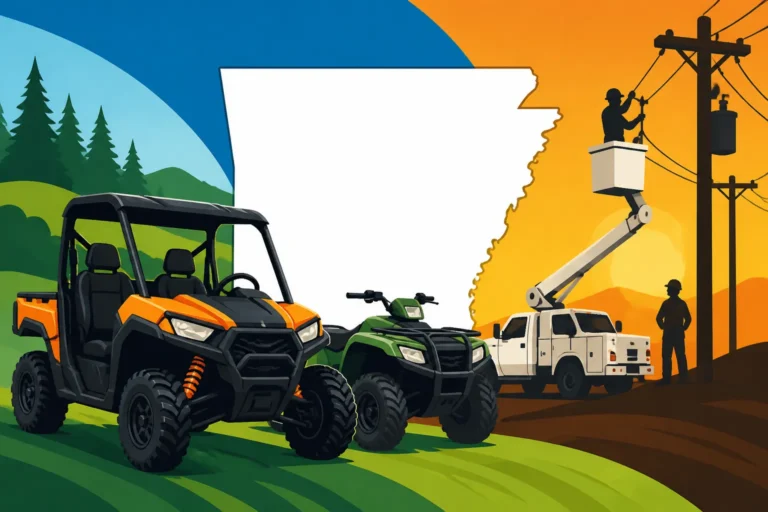
Certain professional entities are granted exceptions due to the critical nature of their work. Utility company employees, law enforcement officers, and emergency medical services (EMS) personnel can legally operate ATVs and UTVs on public roads while performing their official duties. This makes perfect sense when you consider the scope of their responsibilities.
Think about a power outage in a remote, wooded area after a storm. A traditional truck might not be able to reach the damaged lines, but a UTV, perhaps equipped with SuperATV's robust lift kits and heavy-duty axles, can navigate the rugged terrain to restore power. Similarly, law enforcement might use an ATV for patrol in remote areas, or EMS might deploy one for search and rescue operations where quick, off-road access is vital. These vehicles are tools for essential services, allowing these professionals to respond to emergencies, maintain infrastructure, and ensure public safety in environments where other vehicles simply cannot go. This exception is strictly limited to official capacity and duties. Further details can be found in [Arkansas Utility Company Crews on ATVs] and [Arkansas Law Enforcement and EMS Exceptions].
State Parks Employees: Official Duties Only
Just like utility workers and first responders, employees of Arkansas State Parks are also granted an exception to operate ATVs and UTVs on public roads when it's part of their official duties. State parks often encompass vast tracts of land with diverse terrain, requiring specialized vehicles for maintenance, patrol, and emergency response.
Park rangers might use a UTV to transport tools for trail upkeep, respond to a visitor in distress on a remote trail, or conduct routine patrols to ensure safety and compliance with park rules. These machines allow park staff to efficiently manage and protect our beautiful natural resources and ensure visitors have a safe and enjoyable experience. Again, this is not an invitation for personal recreational use by employees, but a vital provision for the operational needs of Arkansas's state park system. Their use is confined to performing their job functions within and sometimes between park boundaries, utilizing public roads as necessary for access. Learn more about this specific exception by reading [Arkansas State Parks Employees and Machines].
Nuances and Limitations of the Exceptions
While these six exceptions offer crucial allowances for ATV and UTV use on public roads, it's critical to understand that they come with their own set of nuances and limitations. These aren't blanket permissions, and knowing the fine print can save you a lot of grief.
Public Versus Private Land: Knowing the Boundaries
One of the most common misunderstandings revolves around the distinction between public and private land. The statutory exceptions we've discussed specifically pertain to public roads and public land (like state parks). However, the moment you transition onto private property, a different set of rules often applies. On your own land, or land for which you have explicit landowner permission, you generally have much more freedom to operate your ATV or UTV without specific road restrictions.
The confusion often arises when private land includes private roads or trails that look public. A gravel road leading through a large farm might feel like a public thoroughfare, but if it's privately owned and maintained, the rules shift. Always clarify property boundaries and ownership. If you're on land you don't own, even with the owner's permission, remember that any public roads crossing or bordering that land are still subject to state law. Getting caught riding illegally on a public road, even if you were just trying to get to a different part of a friend's expansive property, can still lead to a citation. When it comes to riding on someone else's property, remember that [Riding on Land You Do Not Own] requires proper consent.
Local Ordinances and the August 2025 Act
While the six exceptions are enshrined in state law, there's another layer of complexity to consider: local ordinances. Arkansas Act 922, effective August 5, 2025, introduced a significant change by granting cities the authority to pass ordinances allowing the operation of UTVs (but generally not ATVs) on certain local streets. This means that, in addition to the statewide exceptions, your specific city or town might have its own rules allowing UTVs on designated streets.
However, these local ordinances are usually very specific and come with their own set of conditions. They often restrict UTVs to streets with lower speed limits (e.g., under 55 mph), prohibit them on multi-lane or state highways (even within city limits), and may require special permits, annual fees, and specific safety equipment like turn signals, mirrors, and insurance. It's crucial to understand that these local rules are in addition to and distinct from the six statewide statutory exceptions. You can't assume that just because your city allows UTVs on some streets, you can ignore the statewide rules for crossing a highway or farming operations. Always check with your local city clerk's office to understand specific municipal ordinances, as these can vary dramatically from one town to the next. For context on this legislative change, refer to [How Arkansas Cities Got the Choice on UTVs] and [August 5, 2025 and What Changed].
Essential Safety Equipment and Responsible Riding
Even when you are legally permitted to operate your ATV or UTV on a public road under one of these exceptions, safety should always be your top priority. While Arkansas doesn't have a mandatory helmet law specifically for ATVs, unlike motorcycles where riders under 21 must wear one, wearing a helmet and eye protection is always a smart choice. [Arkansas Has No ATV Helmet Law] doesn't mean you should skip safety gear. Aftermarket accessories, like those from SuperATV, can significantly improve the safety and visibility of your machine on public roads, even if they aren't strictly required by law for these exceptions.
Consider adding reflective tape to your machine, ensuring your headlights and taillights are fully functional, and perhaps even installing a brightly colored flag for increased visibility, especially if you're operating on a county road during hunting or farming season. When using your machine for farming or hunting, traffic might not expect to see an ATV or UTV, so anything you can do to make yourself more visible and predictable is a huge plus. Always operate at a safe speed, be extra vigilant for other vehicles, and be prepared to yield. Remember, even with an exception, you're sharing the road with vehicles designed for much higher speeds and different operating characteristics.
Practical Advice for Navigating Arkansas Road Rules
Understanding the law is one thing, but practically applying it in real-world situations requires a bit of foresight and responsibility. Here’s some actionable advice to help you navigate Arkansas’s road rules for your ATV or UTV with confidence.
Documentation and Proof of Purpose
When you’re operating your ATV or UTV on a public road under one of the statutory exceptions, you should always be prepared to justify your presence to law enforcement. This means carrying documentation that supports your claim. If you’re using your machine for a farming operation, having a copy of your farm registration or even a simple document outlining your agricultural activities can be helpful. For hunting, your current hunting license and perhaps a map of your lease or property can serve as proof. If you’re crossing a highway, while documentation might be less direct, understanding the "ninety-degree rule" and being able to explain it clearly is key.
For the disability exception, carrying a doctor’s note or a state-issued placard that confirms your serious walking disability is paramount. Think of it as your "get out of jail free" card, but one that requires official backing. Even if it's not explicitly stated that you must carry these documents, having them on hand can de-escalate a situation quickly and clearly demonstrate that you are operating within the bounds of the law. It’s better to be over-prepared than to spend precious time trying to explain your situation without tangible evidence. For general advice on what to keep with you, consider [Carrying Proof on the Trail].
Understanding Which Roads Are Truly Exempt
While the statutory exceptions apply generally to "public roads," it’s crucial to understand the hierarchy of these roads and the practical implications. A county road, often unpaved or lightly trafficked, might feel safer and more appropriate for ATV use under an exception than a busy state highway. However, the law itself doesn't typically differentiate between these roads for the exceptions themselves; an exception that applies to a public road applies to all public roads.
The challenge lies in the safety and common sense aspect. Crossing a low-traffic county road is one thing; trying to cross a multi-lane, high-speed state highway, even if technically permitted under the "ninety-degree rule," presents a significantly higher risk. Always prioritize your safety and the safety of others. While the letter of the law might allow it, prudence dictates evaluating the specific road conditions, traffic volume, and visibility before making any moves. Never assume a road is "safe enough" just because the law allows an exception; always exercise extreme caution.
When in Doubt, Don't Ride It Out
The best advice for any potentially ambiguous situation is to err on the side of caution. If you are ever unsure whether your specific use case falls squarely within one of Arkansas's six statutory exceptions, or if a local ordinance truly applies to your situation, do not take the risk. A quick call to your local sheriff's office, the Arkansas State Police, or even your city clerk can provide clarity and potentially save you from a costly citation or, more importantly, a dangerous situation.
Do not rely on what a friend of a friend told you, or what you read on an unverified online forum. Laws can be complex, and interpretations can vary. Getting direct information from the authorities responsible for enforcing these laws is always the safest bet. It shows you are a responsible rider who respects the law and wants to comply. If after consulting the relevant authorities, you still have doubts, the safest course of action is to trailer your machine, or simply avoid that particular stretch of road. Your peace of mind and your wallet will thank you.
| Exception Category | Description | Key Limitations |
|---|---|---|
| Farming Operations | Use of ATV/UTV for activities directly related to agricultural, horticultural, or livestock production. | Must be bona fide farming use, not recreational. |
| Hunting Operations | Use of ATV/UTV for traveling to/from hunting camps, leases, or game retrieval. | Must be directly related to legitimate hunting activities, not general recreation. |
| Crossing a Public Highway | Direct crossing of a public highway after coming to a complete stop, at roughly a ninety-degree angle. | Only for crossing, not riding along the roadway. Must stop first and cross perpendicularly. |
| Disability Exception | Use by individuals with a serious walking disability for necessary mobility and transportation. | Requires documented serious walking disability. |
| Utility & Law Enforcement/EMS | Use by utility company employees, law enforcement, or EMS personnel for official duties. | Strictly limited to official job functions and emergency response. |
| State Parks Employees | Use by Arkansas State Parks employees for official duties within park management. | Strictly limited to official park duties. |
Disclaimer
This article is for general informational purposes only and does not constitute professional advice. Laws, prices and regulations vary by location and change over time. Consult a qualified professional for guidance on your specific situation.