Arkansas Hunting Operation Road Use
It's a classic Arkansas dilemma for anyone who loves the outdoors and relies on an ATV or UTV for their hunting adventures: you're out on your lease or private land, deep in the woods, and suddenly realize you need to cross a short stretch of public road to get to another part of your property, retrieve a downed animal, or bring in some vital gear. The general rule for ATVs and UTVs on Arkansas roads is a pretty firm "no," and that can leave you feeling frustrated, wondering if you're risking a ticket just to conduct a perfectly legitimate part of your hunting activity. This guide is here to untangle that very specific knot, diving deep into Arkansas's "hunting operation" exception for off-road vehicle road use, clarifying what it means, when you can use it, and how to stay on the right side of the law without fear.
The General Rule: Arkansas's Stance on ATV and UTV Road Use
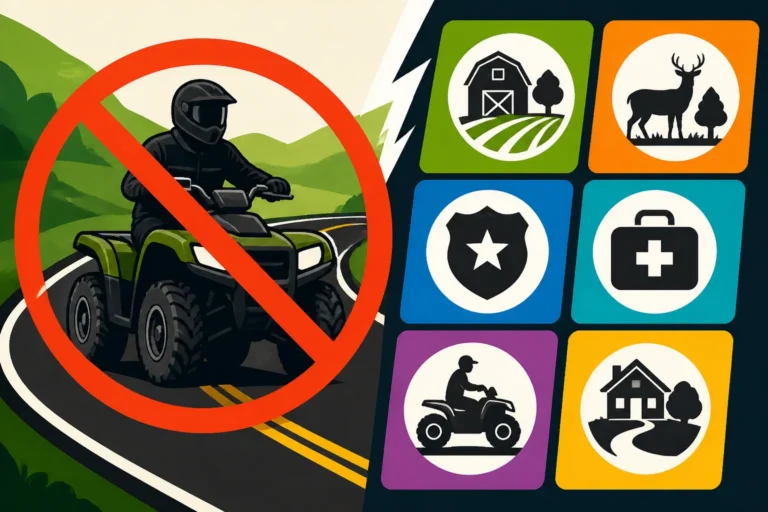
Let's be upfront about this: Arkansas law, much like in many other states, takes a pretty dim view of ATVs and UTVs cruising down public roads. It's a frustrating reality for many of us who rely on these versatile machines, but there are some very real reasons behind it. Understanding this general prohibition is the first step to truly appreciating the specific exceptions.
Why Roads Are Generally Off-Limits for ATVs
The core issue boils down to safety and vehicle design. ATVs and UTVs are purpose-built for off-road environments. They excel on uneven terrain, mud, rock, and loose dirt, but these very qualities often make them ill-suited for paved roads and high-speed traffic. Their suspension, tire design (often aggressive knobby treads), braking systems, and overall stability are simply not engineered for the same demands as a street-legal car or truck. You might feel perfectly capable behind the wheel of your UTV, but a quick stop or swerve on asphalt can behave very differently than on a dirt trail.
Beyond the design, there's the element of other traffic. Cars, trucks, and motorcycles travel at higher speeds, and an ATV or UTV, especially in low light conditions, can be much harder to see. There's also the matter of operator licensing and insurance, which differ significantly from street-legal vehicles. So, the law generally says "no" to protect both ATV/UTV riders and other motorists. The statute makes it clear: [Arkansas Makes Road Riding Unlawful by Default]. It's not a suggestion; it's a legal directive.
The Limited Statutory Exceptions
However, the state legislature recognized that a blanket ban might be overly restrictive for certain necessary activities. That's why Arkansas law carves out specific, narrow exceptions to the general prohibition. These aren't loopholes for joyriding; they are tightly defined scenarios where the use of an off-road vehicle on a public road is deemed necessary for a legitimate purpose. It's crucial to understand that these exceptions are exhaustive – if your situation doesn't fit one of these precise categories, then you're back to the general "no."
The primary categories for these exceptions generally include:
- Farming Operations: Moving equipment or animals as part of an active agricultural operation.
- Hunting Operations: This is our focus, involving direct activities related to hunting on private land.
- Disabled Individuals: For those with mobility impairments needing to access land.
- Law Enforcement/EMS: Official duties for emergency responders or police.
- Utility Workers: For accessing and maintaining infrastructure.
- Direct Crossings: Crossing a road at a ninety-degree angle to access property on the other side.
Each of these exceptions comes with its own set of unwritten boundaries and interpretations, but they all stem from a recognition of practical necessity. Understanding [Arkansas's Six Statutory Road Exceptions] is key to navigating the legal landscape.
Deciphering the "Hunting Operation" Exemption
Now, let's zoom in on the specific exception that's most relevant to many of us who pursue deer, turkey, or hogs in the Arkansas wilderness: the "hunting operation" exemption. This is where a lot of confusion, and potential tickets, can arise if you're not absolutely clear on what the law actually intends.
What "Hunting Operation" Truly Means in Arkansas Law
When the law talks about a "hunting operation," it's not simply giving you permission to drive your ATV or UTV on a public road just because you have a hunting license in your pocket or because you're going hunting. Instead, it refers to the active, direct, and necessary functions associated with conducting a hunt, typically on private property or within the immediate scope of a hunting lease. Think about it in terms of the practical, physical tasks involved in a hunt.
This might include:
- Accessing different parts of your private hunting land or lease: For instance, if your property is bisected by a county road, and you need to move from one side to the other to reach a stand, check trail cameras, or manage wildlife food plots.
- Transporting essential hunting equipment: This could be moving tree stands, blinds, feeders, or even scent control devices from one part of your land to another, requiring a brief road traverse.
- Retrieving harvested game: Arguably one of the most common and practical uses. After a successful hunt, using your UTV to retrieve a deer or hog from the field and transport it back to your camp or processing area, even if it means crossing a short public road, falls squarely within the spirit of a hunting operation.
The key here is "operation." It implies a structured activity on private land, where the road use is an integral and necessary part of achieving a hunting-related goal. It's about moving the tools and the spoils of the hunt. You can learn more about this specific allowance under Arkansas Hunting Operation Road Use.
The "Travel To and From" Nuance
The phrase "travel to and from" is often a sticking point. It's easy to interpret this broadly, but in the context of the hunting operation exception, it's quite specific. It doesn't mean "traveling from my home in Little Rock to my hunting lease in Mena," driving your UTV down Highway 270. That's a highway journey, not part of a localized "hunting operation" on or immediately adjacent to the land.
Instead, "travel to and from" typically refers to movement within the confines or immediate proximity of the hunting land. For example:
- From a hunting camp to a stand location: If your camp is on one side of a county road and your deer stand is just across it, driving your ATV directly to and from that stand site would fall under this nuance.
- Between distinct parcels of a larger hunting lease: Many leases are comprised of non-contiguous plots, and a short road segment might connect them.
- Bringing supplies directly into the operational area: If you need to pick up a bag of corn for a feeder from a nearby store and immediately return to the lease, the brief road use to enter the property might be considered part of the operation, particularly if there's no other practical access. However, using the opportunity to run other errands or make detours would likely void the exception.
The emphasis is on directness and necessity. It's about movement that is intrinsically tied to the ongoing function of the hunt on that specific parcel of land, not general errands or commuting. Remember, this isn't about giving you a free pass for a joyride; it's about practical access for the hunt itself.
Crossing Public Roads Under the Exemption
One of the most clear-cut aspects of the "hunting operation" exception, and indeed other statutory exceptions, involves crossing a public road. If your hunting property or lease is divided by a public road, the law generally allows you to cross it, provided you do so safely and directly.
Here are the key elements for a legal crossing:
- Ninety-Degree Angle: The crossing must be made at approximately a ninety-degree angle to the road. You can't turn onto the road and drive for any significant distance parallel to traffic, even for a short stretch. It's meant to minimize your time on the roadway and avoid becoming part of the traffic flow. [Arkansas Direct Crossing at Ninety Degrees] outlines this clearly.
- Complete Stop: Before entering the roadway, you must come to a complete stop and yield to all oncoming traffic. Treat it exactly as you would pulling out from a private driveway onto a main road. Safety is paramount here. The law expects you to [Arkansas Stop Before You Cross] and ensure the path is clear.
- Directness: The intent is to get from one side of your property to the other, not to cruise down the road. Minimize the distance traveled on the pavement.
This type of crossing is a recognized necessity for landowners and hunters whose properties are bisected by roads, acknowledging the practical realities of managing land and conducting hunts. It's a precise maneuver, not a flexible allowance for traveling along the road.
Practical Application and Common Misconceptions
Understanding the letter of the law is one thing, but applying it correctly in the real world, especially when you're bundled up in hunting gear, can be another challenge entirely. Many hunters unfortunately fall prey to common misconceptions about the scope of the "hunting operation" exception.
Scenario: From Camp to Deer Stand (and Back)
Let's paint a picture that many Arkansas hunters will recognize. Imagine you have a sprawling hunting lease in the Ouachita Mountains, and your primary camp is located on one side of a gravel county road. Your most productive deer stand, however, is a quarter-mile up the road, just across a small creek on the other side. This is precisely the kind of situation where the "hunting operation" exception comes into play.
You've got your gear loaded on your UTV, you're heading to your stand before dawn, or perhaps you're coming back after a successful morning hunt. In this scenario, driving your UTV the short distance on that county road, from your camp's access point to your stand's access point, would likely be considered a legitimate part of your hunting operation. You are actively engaged in accessing your hunting grounds. The key is that the movement is direct, necessary, and localized to the property where your hunting operation is taking place. This allowance directly addresses situations like [Arkansas Rules for Riding to a Deer Stand].
However, contrast this with deciding to drive your UTV five miles down that same county road to the nearest gas station for a bag of ice and some snacks, just because you're "hunting." While those items might ultimately support your time in camp, that extended journey on a public road for general errands moves beyond the scope of a direct "hunting operation." It quickly becomes general recreational use, which is strictly prohibited.
Carrying Equipment and Retrieving Game
The utility of ATVs and UTVs in hunting operations truly shines when it comes to transporting gear and, especially, retrieving harvested game. Hauling a large deer or a hefty hog out of dense woods without mechanical assistance can be an arduous, if not impossible, task for one person. The hunting operation exception recognizes this practical need.
- Equipment Transport: Moving heavy and bulky items like deer stands, ground blinds, large bags of corn for feeders, or even constructing new hunting infrastructure falls within the realm of a hunting operation. If moving these items requires a brief traverse on a public road between different sections of your private property, the exception is designed to cover it. Always ensure your load is secure and doesn't pose a hazard to other motorists. You might be carrying your rifle as well, and [Arkansas Rules for Carrying a Rifle] generally allow this on an ATV or UTV so long as it's unloaded, cased, or otherwise secured.
- Game Retrieval: This is perhaps the most common and widely accepted use of the exception. After you've successfully harvested an animal, getting it from the field back to your camp or vehicle is a critical part of the hunting process. Using your UTV to haul it, even if it involves a quick road crossing or a short drive on a county road to get to your vehicle, is almost universally understood as falling under the "hunting operation." Make sure the animal is properly secured and, if possible, covered. When you need to tow a trailer with your UTV to move larger game or equipment, the [Arkansas Rules for Towing With a UTV] still apply, and the overall operation must remain within the "hunting operation" definition.
The spirit of the law here is about enabling the actual work of hunting and land management on your private property, not recreational riding disguised as hunting access.
What Isn't a Hunting Operation on the Road
This is arguably the most important section for avoiding legal trouble. Just because you have a hunting license, are in hunting season, or have camouflage on, does not automatically mean any road use of your ATV or UTV is legal. There are many scenarios that people mistakenly believe are covered, but are not.
Here are common examples of what isn't generally considered a "hunting operation" on a public road:
- General Errands and Social Visits: Driving your UTV to the local convenience store for beer, snacks, or even non-hunting related supplies, or visiting a friend down the road, does not constitute a "hunting operation." Even if your hunting camp is just around the corner, these are personal errands.
- Extended Travel to Public Lands: While you might be hunting in a Wildlife Management Area (WMA) or National Forest, driving your ATV or UTV for miles down a public highway to get to that WMA entrance is not covered. The "hunting operation" exception is primarily for private land activities or direct crossings, not general access to public hunting lands via public roads. For public lands, you would typically need to trailer your machine.
- Recreational Riding: Simply taking your ATV or UTV for a spin on a county road because it's a nice day, even if you're on a hunting lease, is not a "hunting operation." The activity must be directly related to the functional aspects of the hunt itself.
- Commuting to and from a primary residence: Your ATV or UTV is not a commuter vehicle. Driving it from your home to your hunting land for an extended journey, no matter how remote your home is, falls outside the exception.
The key takeaway is that the "hunting operation" exception is not a pretext for general road riding. It's a narrowly defined allowance for specific, necessary movements related to the act of hunting on private land or an active lease. Law enforcement officers are well aware of the distinction, and claiming "I'm hunting!" when you're simply cruising down a public road won't hold water. Remember, [Arkansas Makes Road Riding Unlawful by Default], and the exceptions are very specific.
Staying Compliant and Avoiding Penalties
Even with a legitimate "hunting operation" on the go, there are still best practices and important considerations to keep in mind to ensure you stay on the right side of the law and, perhaps more importantly, stay safe. Law enforcement in Arkansas are vigilant about illegal ATV and UTV road use, and relying solely on an assumed exception without understanding its boundaries can lead to unwanted trouble.
Documentation and Proof of Ownership
While the "hunting operation" exception doesn't typically require your ATV or UTV to be registered for general public trail use or street-legal status, having your documentation handy is always a smart move. If a game warden or sheriff's deputy stops you while you're operating on a public road, even under a legitimate exception, they'll want to verify that the machine is yours and that it's not stolen.
Always carry:
- Proof of Ownership: This could be your bill of sale, the original Manufacturer's Statement of Origin (MSO), or registration papers if your machine is registered for public trail use (which is different from street legal). [Arkansas Proof of Ownership for Registration] is always good to have, even for machines used primarily on private land.
- Driver's License: You should always have a valid driver's license if you're operating any motor vehicle on a public roadway, even for a brief crossing.
- Hunting License/Permits: If you're claiming the "hunting operation" exception, having your current Arkansas hunting license and any necessary tags or permits will support your claim of legitimate hunting activity.
For machines used exclusively on private land, you might not have sought formal registration. However, if you ever intend to use an ATV on public lands like designated OHV trails, you would need to register it, which is a separate process. An ATV registered [Arkansas ATV Registration for Private Land Only Machines] specifically means it is not registered for public roads. This distinction is critical.
Equipment and Visibility for Road Crossings
Even though your ATV or UTV isn't street-legal and the "hunting operation" exception doesn't usually mandate specific street-legal equipment, exercising common sense safety is paramount when you're on any public road. Remember, you're sharing the road with vehicles that are much larger and faster.
Consider these safety enhancements for those brief road forays:
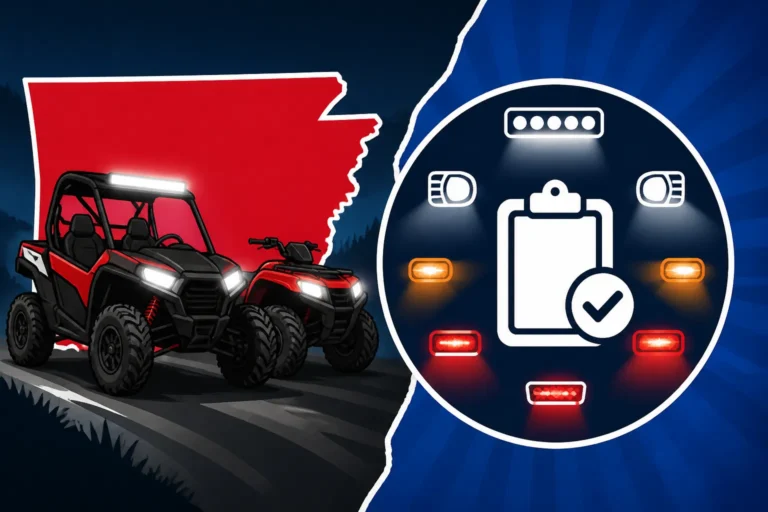
- Lights: Ensure your headlights and taillights are functional and on, especially if you're out during dawn or dusk, which are prime hunting times. Maximize your visibility.
- Reflective Tape: Adding reflective tape to the front, sides, and rear of your machine can drastically improve its visibility to other motorists, particularly in low light.
- Mirrors: While not typically required for an off-road machine, having mirrors, especially a rearview mirror, can be invaluable for monitoring traffic behind you before and during a road crossing. Companies like SuperATV offer a wide array of durable mirrors and lighting kits designed for UTVs that can significantly enhance safety and compliance for those quick road traverses. Their products are built to withstand tough off-road conditions but also provide excellent visibility for on-road situations.
- Safety Flag: A brightly colored orange or red flag mounted on a pole, extending above your machine, can also increase your visibility, especially in hilly terrain where sightlines might be limited.
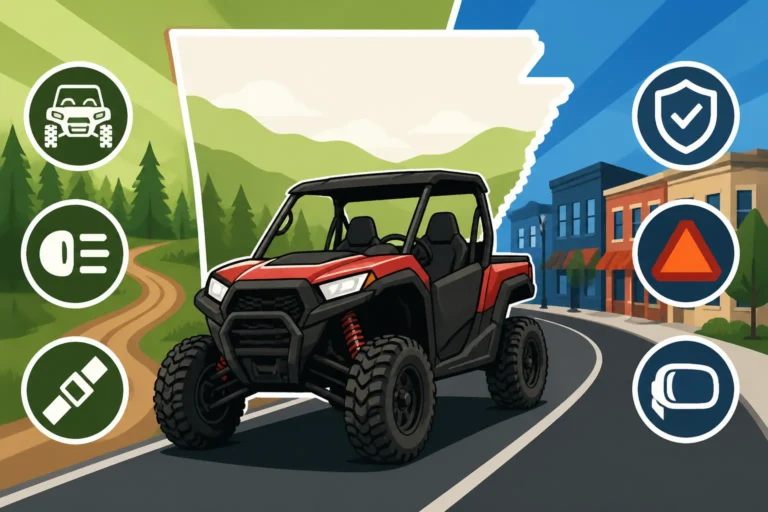
While not explicitly mandated by the hunting exception, these additions are simply good practice. They show responsibility and significantly reduce the risk of accidents. Think about what [Arkansas Equipment for a Street-Permitted Machine] might require, and try to replicate some of those essential safety features for your brief road interactions.
Penalties and Enforcement
Misunderstanding or misusing the hunting operation exception can lead to significant penalties. Arkansas law enforcement, including county sheriffs, city police, and Arkansas Game and Fish Commission (AGFC) officers, are authorized to enforce ATV/UTV road use laws. They are generally well-versed in the specific exceptions and can quickly discern between a legitimate hunting activity and recreational riding.
Potential penalties can include:
- Fines: Riding an unregistered or illegal vehicle on a public road can result in substantial fines. [Arkansas Ticket Cost for Road Riding] can add up quickly, especially when court costs are factored in.
- Court Costs: Beyond the fine, you'll likely incur court costs, which can sometimes exceed the fine itself.
- Impoundment: In some cases, especially for repeat offenses or egregious violations, your ATV or UTV could be impounded, leading to additional fees for recovery.
- Criminal Charges: While less common for a first offense, severe or reckless operation could lead to more serious charges.
It's important to remember that the "hunting operation" exception is narrowly interpreted. If an officer questions you, be polite, cooperative, and clearly explain your legitimate hunting activity. Be prepared to show your hunting license and proof that you are on or immediately accessing private land for hunting purposes. If your explanation or the circumstances suggest you're using the exception as an excuse for general road riding, you risk receiving a citation. Ignorance of the law is generally not a valid defense. [Arkansas Penalties for Riding Unregistered] apply to any machine used on a public way that is not properly authorized.
Enhancing Your Hunting Machine for Road Crossings
While the "hunting operation" exception permits brief road use, it doesn't suddenly transform your off-road vehicle into a street-legal machine. However, there are practical accessories and preparations you can make to enhance safety and make those legal road crossings smoother and safer for everyone involved. Investing a little in your machine's visibility and control can go a long way, especially when you consider the stakes of a road interaction.
Safety Accessories for Brief Road Use
Even if your UTV isn't designed for highway speeds, for those quick dashes across a county road or the short jaunt between two parcels of land, some key safety accessories can be incredibly beneficial. These aren't just about avoiding a ticket; they're about preventing accidents.
- Mirrors: We've mentioned them, but they bear repeating. Side mirrors and a rearview mirror give you vital awareness of traffic around you. This is crucial when you're preparing to enter a roadway or making a quick crossing. SuperATV offers heavy-duty mirrors specifically designed for UTVs, providing clear visibility and robust construction to handle both trail and road conditions. Having a wide-angle rearview mirror can make a huge difference in your confidence and safety.
- Turn Signals: While not typically mandated for the "hunting operation" exception, turn signals clearly communicate your intentions to other drivers. This is especially helpful if you're turning off a main road onto a property access or making a quick perpendicular crossing. Again, SuperATV provides easy-to-install, durable turn signal kits that integrate seamlessly with most UTV models, making your machine more predictable for other motorists.
- Horn: A horn is a simple, effective way to alert other drivers or pedestrians to your presence. It's a fundamental safety device for any vehicle interacting with traffic.
- Additional Lighting: Beyond standard headlights and taillights, consider adding auxiliary LED lights, especially to the rear. Amber or red flashing lights can dramatically increase your visibility, particularly in dusty conditions, fog, or during low-light hunting hours.
Think about the basic requirements for [Arkansas Equipment for a Street-Permitted Machine], and consider how you can reasonably incorporate similar features to your hunting UTV for better safety, even if it's not fully street legal. These accessories are investments in your safety and the safety of others on the road.
Proper Loading and Securement
When you're utilizing your ATV or UTV for a "hunting operation" on a public road, you're likely transporting gear, perhaps even a harvested animal. Proper loading and securement are not just about protecting your equipment; they're critical for road safety. Loose items can become projectiles, obscure your vision, or shift your machine's weight, leading to instability.
- Weight Distribution: Always load your ATV or UTV with weight distributed evenly. Overloading one side can make steering difficult and increase the risk of a rollover, especially on uneven shoulders or when turning.
- Secure Cargo: Use strong tie-down straps, bungee cords, or cargo nets to secure everything. Tree stands, coolers, fuel cans, and bags of feed should be strapped down tightly. Even a small item bouncing out could cause a hazard for another vehicle.
- Visibility Unimpeded: Ensure your load doesn't block your view of the road, mirrors, or obscure your lights. If you're hauling a large deer, for instance, try to position it so it doesn't completely block your rear visibility.
- Trailer Safety: If you're towing a small hunting trailer (for larger game or extensive gear), ensure it's properly hitched, the lights work (if equipped), and the load is balanced.
A well-secured load prevents accidents, avoids littering the roadway, and demonstrates responsible operation, which can be important if you're ever stopped by law enforcement.
Understanding Local Ordinances and State Law Intersection
It's vital not to confuse the state-level "hunting operation" exception with the potential for local UTV street legal ordinances. In Arkansas, [Arkansas Towns Can Open Their Streets to UTVs] through their own municipal ordinances. This is a separate legal framework.
- State Exception vs. Local Ordinance: The hunting operation exception is a state law that allows specific, necessary road use for a hunting activity. It does not require special city permits, insurance, or equipment beyond what's prudent for safety.
- Local Ordinances for General Street Use: Conversely, if your particular city or town has passed an ordinance allowing UTVs on certain city streets, those ordinances almost always come with their own strict requirements: special city permits, annual fees, specific safety equipment (like turn signals, horns, mirrors, windshields), minimum age for drivers, and often mandatory liability insurance. These local rules apply to general UTV street use within city limits, and they are distinct from the hunting operation exception.
The "hunting operation" exception allows you to briefly use public roads in the context of your hunt, often on county roads outside city limits, or for specific crossings. If you're traveling within a city that has its own UTV ordinance, you might need to comply with that ordinance's rules if your travel goes beyond the very narrow confines of the state's hunting exception. Always know the specific rules for the area you're in. This avoids the uncomfortable situation of thinking you're covered by one rule when another, more restrictive one, actually applies.
Disclaimer
This article is for general informational purposes only and does not constitute professional advice. Laws, prices and regulations vary by location and change over time. Consult a qualified professional for guidance on your specific situation.