Arkansas UTV Street Legal Rules by Town
Many folks assume that if a UTV is legal on the street in one Arkansas town, it's legal everywhere. The truth is, figuring out where you can legally ride your UTV on public roads in Arkansas can feel like navigating a maze, because the rules aren't statewide – they're decided by individual towns and cities. This guide will walk you through understanding these local ordinances, what to look for in your specific area, and how to ensure your UTV is street legal where you want to ride.
The Patchwork Quilt of Arkansas UTV Laws
Riding an ATV or UTV on public roads in Arkansas has long been restricted, with very few exceptions. For years, the default answer was a resounding "no," leaving many enthusiasts frustrated by their inability to easily get from their home to a trail, or even just cruise down a quiet neighborhood street to a friend's house. It was a common pain point for riders who felt their machines were perfectly capable of safe street travel, yet were legally confined to private land or designated off-road parks. The legislature heard these calls for change, recognizing that UTVs, particularly, are often built with safety features that make them more amenable to certain street uses than traditional ATVs.
However, instead of a blanket statewide legalization, Arkansas implemented a "local option" approach. This means the power to allow UTVs on city streets now rests with individual municipal governments. They, not the state, get to decide if and how UTVs can be operated on their local roads. This legislative decision was a significant step forward, offering flexibility that accounts for the diverse needs and concerns of different communities across the state. It allows towns to embrace UTVs for recreation or transportation, while others, perhaps with different traffic profiles or safety concerns, can maintain stricter bans. This nuanced approach avoids a one-size-fits-all solution that might not work for every corner of Arkansas.
The result of this local option is a varied landscape of rules from one town limit to the next. You might find that your buddy can legally drive his UTV to the grocery store in Bono, but cross the county line into Cotter, and he'd be breaking the law. This can be incredibly confusing and lead to accidental violations for riders who travel between communities. It highlights the critical need for every UTV owner to understand not just the general state framework, but the very specific regulations governing the town or city where they intend to ride. [Arkansas Towns Can Open Their Streets to UTVs] clearly outlines this foundational shift in state law. It's not enough to assume; you must verify the rules for your exact location.
Why Local Control Matters
This shift to local control wasn't accidental; it was a deliberate choice to empower communities. Each city or town in Arkansas has unique characteristics – different population densities, varying traffic volumes, diverse road infrastructures, and distinct community values regarding noise, safety, and recreation. What works perfectly for a small, rural town with wide-open spaces and minimal traffic might be entirely unsuitable for a bustling city center with complex intersections and heavy pedestrian flow.
Granting local governments the authority to create their own UTV ordinances allows them to tailor regulations that specifically address these local conditions. They can set speed limits, designate specific streets, implement curfews, or require certain safety equipment based on what makes sense for their residents. This localized decision-making process ensures that while UTV enthusiasts gain more opportunities to ride, the safety and well-being of all citizens, as well as the unique character of each community, remain a priority. [How Arkansas Cities Got the Choice on UTVs] delves deeper into the legislative reasoning behind this framework.
Furthermore, local control allows for community input to directly shape the rules. When a city council considers a UTV ordinance, residents, business owners, and UTV riders have the opportunity to voice their opinions, concerns, and suggestions. This democratic process can lead to more widely accepted and effective regulations, fostering a sense of ownership and understanding among those affected. It’s a reflection of the idea that local problems are often best solved with local solutions, and for UTV street legality in Arkansas, this principle is front and center.
What a Town Must Do to Allow UTVs on Streets
For a city to open its streets to UTVs, it's not as simple as a quick vote. There's a specific legal process and a set of minimum requirements that the local ordinance must adhere to, as outlined by state law. Cities can't just make up any rule they want; they have to operate within the framework established by the state legislature. This structure provides a baseline of safety and consistency, even within the local option model, preventing towns from enacting rules that might be dangerously lax or overly restrictive without cause.
Typically, this involves the city council formally passing an ordinance that specifically allows for UTV operation on public streets within its jurisdiction. This ordinance will define what constitutes a "UTV" for the purpose of the local law, specify which streets are open, and lay out all the conditions riders must meet. It’s a comprehensive legislative act, often preceded by public hearings and debates, reflecting the community’s engagement with the issue. Without such a specific ordinance on the books, UTVs remain unlawful on public roads, even if neighboring towns have embraced them. [What a Town Must Pass to Allow UTVs] is an essential read for understanding this process.
These local ordinances usually come with specific requirements that UTVs must meet to be street legal, even if they are already registered with the state for off-road use. These requirements often cover equipment, driver qualifications, and operational restrictions. It’s about transforming an off-road machine into something that can safely share the road with other vehicles, even if only on designated routes. For instance, many ordinances specify an 80-inch width cap, ensuring that UTVs don't become too cumbersome for standard street lanes or parking spaces, a feature that some custom or modified machines might exceed without careful consideration. [An 80-Inch Width Cap in Local Rules] is a common provision.
Essential Equipment Requirements
When a city passes an ordinance allowing UTVs on its streets, it almost always includes a list of mandatory equipment that your machine must have. This isn't just about making your UTV look like a car; it's about ensuring it has the basic safety and visibility features necessary for road use. Think about what a standard passenger vehicle has, and you'll get a good idea of what these ordinances aim for. These often go beyond the bare minimum for off-road riding, demanding additions that improve safety for both the UTV operator and other drivers on the road.
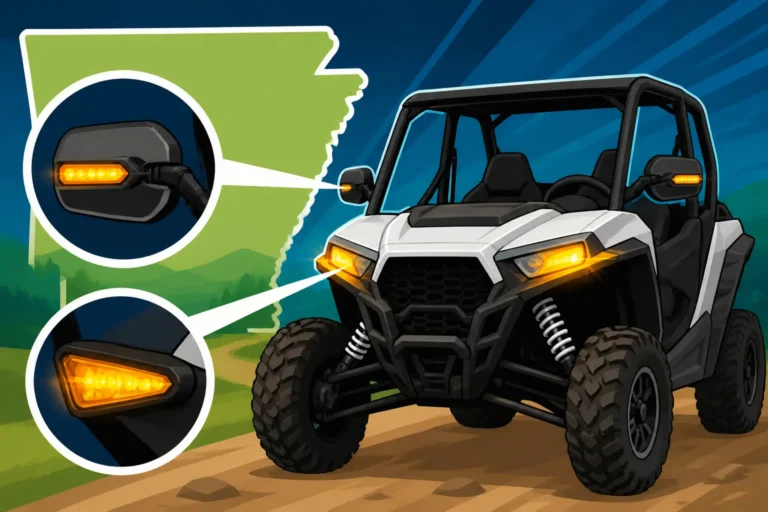
Common requirements often include things like headlamps, tail lamps, brake lights, and turn signals – just like a car. You'll also typically need a horn for signaling, and a rearview mirror or two to give you a full view of traffic behind you. Sometimes, even more specific items like a windshield and a functional speedometer are on the list. Many UTV owners turn to aftermarket suppliers like SuperATV for these kinds of accessories, as they offer robust, purpose-built kits that integrate seamlessly with various UTV models, ensuring compliance with local laws. It’s a lot easier to buy a complete turn signal kit designed for your specific UTV model than trying to piece one together.
It's absolutely critical to remember that these equipment lists can vary from one town's ordinance to another. One city might require only a single rearview mirror, while another demands two. One might specify a windshield, another might not. Always consult the exact text of the ordinance for the town where you plan to ride. Trying to guess, or relying on what a friend told you about a different town, is a recipe for a costly ticket. For example, [Arkansas Turn Signal Requirements for Street UTVs] highlights that such specific rules are always at the discretion of the local authority.
Driver Qualifications and Operational Restrictions
Beyond the machine itself, local UTV ordinances also set rules for the person operating the UTV and how it can be driven on public roads. These rules are put in place to ensure that drivers are competent and that UTVs are operated responsibly in a street environment, which can be very different from a trail or open field. This often mirrors many of the rules that apply to operating any other motor vehicle, acknowledging that street-legal UTVs are indeed sharing public infrastructure.
First and foremost, nearly all ordinances will require the UTV operator to possess a valid driver's license. This means a standard automobile driver's license, not just an off-road permit. This ensures that the driver has passed a basic driving test and understands road signs, traffic laws, and safe driving practices. There's also usually a minimum age requirement, typically 16 years old, aligning with the general age for licensed driving in Arkansas. [Arkansas Driver's License at 16 for Street UTVs] provides more context on this common stipulation.
Operational restrictions are also a big part of these local laws. Most ordinances will limit UTVs to streets with a posted speed limit under a certain threshold, often 35 mph or 55 mph, and explicitly prohibit them on state highways, interstates, and four-lane streets. They might also impose curfews or restrict UTV use during certain hours, such as late at night. The idea is to keep UTVs on slower, less-trafficked roads where their presence is less likely to disrupt the flow of faster vehicles or pose a heightened risk. Understanding [Arkansas Streets Under 55 mph for UTVs] and [Arkansas Four-Lane Streets Stay Closed] is crucial for any rider hoping to cruise around town.
Navigating Local UTV Ordinances: What to Look For
Given the varied landscape of UTV street legal rules across Arkansas, finding the specific information for your town can feel overwhelming. It's not like there's one central state database listing every town's UTV policy. You really have to do your homework for each individual municipality you plan to ride in. This due diligence is the most critical step, as ignorance of the law is never an excuse, especially when it comes to getting a citation or, worse, being involved in an accident where your vehicle isn't compliant.
The best place to start is always with the city clerk's office or the municipal government's official website for the town in question. Many towns will have their ordinances posted online, often in a section dedicated to municipal codes or city laws. You might need to search for terms like "UTV ordinance," "off-highway vehicle," or "side-by-side." Don't be shy about calling the city clerk directly; they are usually the best resource for clarifying local regulations and can often point you to the exact document you need to read. This direct approach eliminates guesswork and ensures you're getting information straight from the source.
Once you find the ordinance, read it thoroughly. Don't skim! Pay close attention to definitions, permitted streets, required equipment, driver age and license requirements, insurance mandates, and any permit fees or annual renewals. Create a checklist if it helps. This is where you'll find those hyper-specific details that make all the difference. For example, [Reading Your Town's Ordinance Before You Ride] cannot be stressed enough as the golden rule for UTV owners in Arkansas. It's not just about knowing if UTVs are allowed, but how they are allowed.
Permits and Fees
Even if a town allows UTVs on its streets, it's highly likely that you'll need a specific local permit to do so, in addition to any state registration for off-road use. This permit is typically issued by the city itself, often through the police department, city clerk's office, or even the local revenue office. These permits usually come with an annual fee, which helps the city cover administrative costs and potentially contribute to road maintenance or enforcement. The fee structure and renewal process will be explicitly detailed in the ordinance.
The permit often involves an inspection of your UTV to ensure it meets all the required safety equipment standards, such as functioning lights, mirrors, and turn signals. This inspection is the city's way of verifying that your machine is genuinely street-ready before you hit their roads. After passing inspection and paying the fee, you'll typically receive a decal or sticker that must be displayed prominently on your UTV, signifying that it's street-legal within that town's limits. For example, [Arkansas UTV Street Permit Cost in a City] shows that these fees are a common part of the equation.
Remember, this local permit is usually only valid within the issuing city's boundaries. It doesn't give you free rein to ride on the streets of a neighboring town that might have its own, different ordinance – or no ordinance at all. If you plan to ride in multiple towns, you might need to obtain a separate permit from each municipality. This can certainly add up in terms of cost and time, but it's the cost of compliance in Arkansas's local option system. Always verify the specific permit validity and display requirements outlined in the local ordinance.
Insurance and Penalties
Insurance is another critical component that many local UTV ordinances address. While Arkansas doesn't have a statewide mandatory ATV/UTV insurance law for off-road riding, cities allowing UTVs on their streets almost invariably require proof of liability insurance. This is standard practice for any vehicle operating on public roads, ensuring that there's financial protection in case of an accident involving property damage or personal injury. Without it, the risks for both the UTV owner and other road users are simply too high for municipalities to accept.
The required coverage limits will typically be specified in the ordinance and often mirror the state's minimum requirements for automobile liability insurance. You'll likely need to provide proof of this insurance when applying for your local UTV permit. It's a non-negotiable step to demonstrate responsibility. When you're considering modifying your UTV with robust parts from a brand like SuperATV, it's also a good idea to ensure your insurance policy adequately covers any added value or specialized components. Always check with your insurance provider to ensure your policy extends to street-legal UTV use and meets the local ordinance's demands. [Arkansas Insurance for a Street-Permitted UTV] is a vital consideration.
Finally, it's crucial to understand the penalties for non-compliance. Riding an unregistered or non-compliant UTV on city streets where an ordinance exists, or riding one on streets where no ordinance allows it, can result in significant fines, impoundment of your machine, and other legal repercussions. These penalties are designed to deter illegal riding and enforce safety. They can quickly turn a fun outing into a very expensive and frustrating experience. Always err on the side of caution: if you're unsure about the rules, don't ride on the street until you've confirmed your UTV and your actions are fully compliant.
Real-World Examples and What They Tell Us
To really understand how Arkansas's local option works, it helps to look at some real-world examples. While I can't give you the most current, up-to-the-minute details (always check with the local city clerk!), examining how towns like Bono and Cotter have approached UTV ordinances provides valuable insight into the range of possibilities you might encounter. These examples illustrate the diversity of rules and highlight why checking your specific location is so vital.
Bono, a small city in Craighead County, was one of the first towns in Arkansas to embrace UTVs on its streets, setting a precedent for other communities. Their ordinance allowed UTVs on most city streets, with specific limitations on speed and types of roads. This was a move welcomed by many residents, offering a convenient way to navigate the town for errands or recreation. The Bono ordinance likely included requirements for basic road-going equipment like lights, mirrors, and turn signals, along with the need for a valid driver's license and local permit. However, it's important to note that even in Bono, state highways running through town, like Highway 63, typically remain off-limits to UTVs. This nuance highlights that "street legal" in a town doesn't automatically mean "highway legal."
On the flip side, other towns have taken a more restrictive stance. Cotter, nestled in Baxter County, provides an example where, at one point, its city council explicitly banned ATVs from city streets. This decision reflected different community priorities or concerns about safety and traffic. While a specific UTV ordinance might differ from an ATV ban, it illustrates that not every town will follow Bono's lead. The key takeaway from these contrasting approaches is clear: never assume that the rules from one town apply to another. [Bono's Street Rules for UTVs in Arkansas] and [Cotter's Ordinance Banning ATVs in Arkansas] are excellent illustrations of this dichotomy.
Hypothetical Ordinance Comparison
To give you a clearer picture of how rules can differ, let's consider a hypothetical comparison between two fictional Arkansas towns, "Riverbend" and "Hilltop," both of which have passed UTV ordinances. This table helps to visualize the kinds of variations you might encounter in the real world.
| Feature | Riverbend UTV Ordinance | Hilltop UTV Ordinance |
|---|---|---|
| Max. Width | 72 inches (factory standard only) | 80 inches (allows some aftermarket modifications) |
| Speed Limit | Streets posted 35 mph or less | Streets posted 45 mph or less |
| Prohibited Roads | State highways, 4-lane streets, streets > 35 mph, downtown commercial district | State highways, 4-lane streets, streets > 45 mph |
| Required Equipment | Headlights, tail lights, brake lights, turn signals, horn, 1 rearview mirror, windshield, seat belts | Headlights, tail lights, brake lights, turn signals, horn, 2 rearview mirrors, seat belts, DOT-approved tires |
| Driver Age | 18+ with valid driver's license | 16+ with valid driver's license |
| Insurance | Minimum state liability coverage | Minimum state liability coverage + Uninsured Motorist |
| Permit Fee (Annual) | $50 | $75 |
| Hours of Operation | Sunrise to sunset only | 24 hours, but no excessive noise after 10 PM |
As you can see, even between two towns that allow UTVs, the specific details can vary significantly. Riverbend is more restrictive on width and speed, and has a curfew, while Hilltop is a bit more lenient on speed and allows for 24-hour operation (with noise caveats). Hilltop also has a slightly higher permit fee and requires two mirrors and DOT-approved tires, which Riverbend does not explicitly list. This reinforces the need to obtain and meticulously review the specific ordinance for your chosen riding location. Don't assume anything based on other towns. [Arkansas Rules That Changed in 2025] are crucial to understand as they laid the groundwork for these local decisions.
Checking Before You Ride
My biggest piece of advice, as someone who's seen a lot of changes in the ATV/UTV world, is this: always check before you ride on public roads. It's not just about avoiding a ticket; it's about being a responsible rider and respecting the local community. A quick phone call or visit to a city's website can save you a world of trouble and expense. You'll likely encounter a mix of welcoming communities and those that prefer to keep UTVs off their streets.
Think about it like this: if you're planning a weekend trip to a new town with your UTV, make that call to the city clerk part of your planning process, right alongside booking your cabin or checking trail conditions. Get the facts directly from the source. Verify the exact requirements, including permits, equipment, and any specific road closures. Some towns are incredibly open, others have very tight restrictions. Understanding this before you load up your SuperATV equipped rig will ensure your trip is all fun and no fines.
The landscape for UTVs on Arkansas streets is evolving, with more towns considering and passing ordinances. This means the situation is fluid. What was true last year might not be true this year. Therefore, even if you’ve ridden in a particular town before, it’s a good practice to do a quick check-in before your next trip. This proactive approach ensures you’re always in compliance, contributing positively to the perception of UTV riders, and most importantly, enjoying your time on the roads without unnecessary stress.
Disclaimer
This article is for general informational purposes only and does not constitute professional advice. Laws, prices and regulations vary by location and change over time. Consult a qualified professional for guidance on your specific situation.