Arkansas Disability Exception for Road Riding
It can be incredibly frustrating when you rely on an ATV or UTV for mobility due to a physical disability, only to find that Arkansas law generally restricts these machines from public roads. Many folks purchase these robust vehicles specifically because they offer a sense of independence and access to areas that might otherwise be impossible to reach, making the road restriction feel like a major roadblock. This guide is here to unravel the specific disability exception in Arkansas law, helping you understand when and how you might legally operate your off-road vehicle on public thoroughfares to maintain your independence.
The Foundation: Arkansas's General Ban on Road Riding
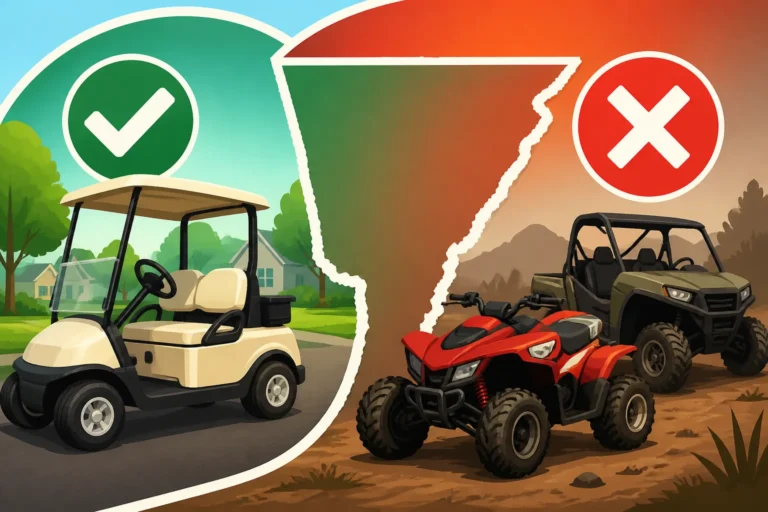
Let's start with the baseline, because it's important to understand the rule before we dive into the exceptions. For most riders in Arkansas, the general rule is quite clear: your ATV or UTV is not designed, nor is it legally permitted, for routine travel on public roads. This isn't a new concept, and it's certainly not unique to Arkansas. Many states operate under similar principles, primarily due to safety concerns and the distinct design differences between off-road vehicles and street-legal automobiles.
Why ATVs and UTVs Are Generally Excluded
The primary reason ATVs and UTVs are generally kept off public roads boils down to their engineering and safety features. Think about it: these machines are built for rugged terrain, tight turns, and low-speed maneuverability over obstacles. They often have high centers of gravity, knobby tires (sometimes called [Nonhighway Tires in the Legal Definition]), limited suspension for road speeds, and minimal protective enclosures compared to a typical car or truck. They also might lack crucial street-legal equipment such as turn signals, proper headlights, tail lights, and mirrors, making them less visible and predictable to other drivers.
When you take a machine designed for mud, rocks, and dirt trails and put it on asphalt alongside passenger cars and eighteen-wheelers, the risks multiply. Braking distances change dramatically on paved surfaces, steering response feels different, and the potential for a serious accident increases significantly. The legislature's intent here is truly about public safety – protecting not only the ATV/UTV operator but also everyone else sharing the road. This is why [What Arkansas Law Forbids on a Public Road] is so broad in its prohibition, making exceptions truly stand out.
The Importance of Designated Off-Road Trails
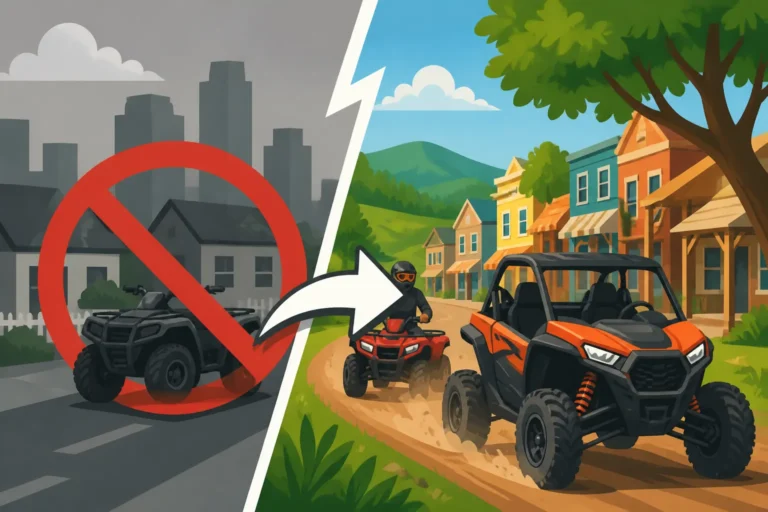
Given the general prohibition on road riding, Arkansas has (thankfully!) some fantastic options for enjoying your ATV or UTV in its natural habitat: off-road trails and parks. Places like Wolf Pen Gap or the Mill Creek OHV Trail System are specifically designed with these vehicles in mind, offering diverse terrain, challenging obstacles, and a safe environment away from highway traffic. These areas allow riders to experience the full capability of their machines without the inherent dangers of public roads.
When you compare a designated trail system to a bustling highway, the difference is stark. On a trail, you're expected to encounter other off-roaders, and the speeds are typically much lower. There are no sudden stops for traffic lights, no high-speed merging, and no large commercial vehicles. This distinction reinforces why the default is to keep ATVs and UTVs off roads and why any exception, particularly one for disability, is carefully carved out and limited in its scope. It’s about ensuring that everyone, regardless of their mobility needs, has a safe place to ride, whether that’s on a dedicated trail or, under specific circumstances, on a public road.
Unpacking the Disability Exception: What the Law Says
Now, let's get to the heart of the matter: the disability exception. Arkansas law, specifically within the state's Off-Road Vehicle Act, carves out a very particular allowance for individuals with certain physical limitations. This isn't a blanket pass to drive your side-by-side to the grocery store, but a targeted provision designed to aid those with genuine mobility challenges. It's one of [Arkansas's Six Statutory Road Exceptions] and it’s important to understand its nuances.
Who Qualifies Under the Statute
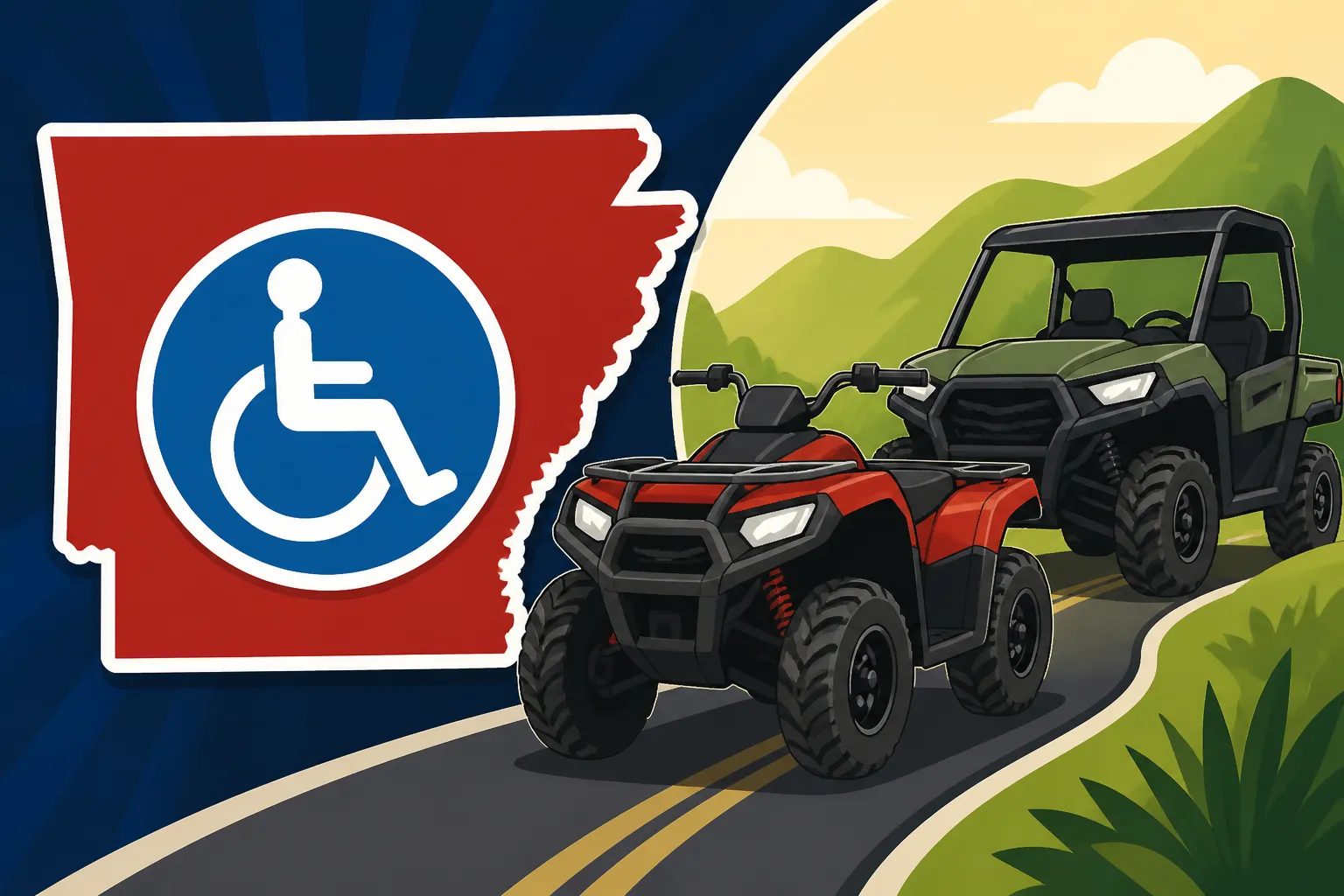
The Arkansas disability exception applies to "any person possessing a serious walking disability." This isn't just about having a bad knee or an occasional limp; it's intended for individuals whose ability to walk is significantly impaired, making it genuinely difficult or impossible to traverse distances without assistance. While the statute itself doesn't explicitly define "serious walking disability" with a checklist of medical conditions, it's generally understood to refer to conditions that severely restrict ambulation, such as using a wheelchair, crutches, or experiencing severe pain, weakness, or instability when walking.
Think of it this way: the spirit of the law is to provide a reasonable accommodation for necessary travel when a person's disability makes conventional means of travel or access impractical or impossible. It's not about convenience; it's about necessity. While you won't find a specific "Arkansas Disability ATV Permit" issued by the state, demonstrating your need, perhaps through a state-issued disabled parking placard or a doctor's note, would be crucial if ever questioned by law enforcement. The focus is on the functional limitation – the inability to walk adequately – rather than a specific diagnosis.
Permitted Uses and Restrictions
The exception for a serious walking disability allows for the operation of an ATV or UTV on a public road or highway "to provide transportation for agricultural, hunting, or other necessary purposes." This is a critical phrase. It tells us that the exception is not for recreational joyrides. Instead, it's tied to essential activities where the ATV/UTV serves as a vital mobility aid.
Let's break down those permitted uses:
- Agricultural Purposes: If you have a serious walking disability and you use your ATV or UTV to check fences, feed livestock, or get around your farm property that might involve crossing or briefly traveling on a public road, this exception would likely apply. This aligns with other agricultural exceptions in the law, such as [Arkansas Farming Operation Road Use].
- Hunting Purposes: Similarly, if your disability makes it impossible to walk long distances to access a hunting blind or retrieve game, using your ATV or UTV to travel along a public road (where otherwise prohibited) to facilitate your hunting activity would fall under this exception. This complements [Arkansas Hunting Operation Road Use] but specifically addresses the disability component.
- Other Necessary Purposes: This is the broader, more open-ended category, but it's still constrained by the word "necessary." It implies travel that is essential for daily living or specific tasks where your disability necessitates the use of the ATV/UTV. This could potentially include accessing a remote property, traveling short distances for medical appointments if no other reasonable transport is available, or perhaps even reaching a specific fishing spot that is only accessible via a short stretch of road. The key is necessity driven by the disability.
It's vital to remember that "necessary purposes" is not a loophole for general errands or recreational cruising. The travel must be a direct result of the serious walking disability and essential for the task at hand. The law does not specify speed limits or equipment requirements for this specific exception, but general safe operation rules always apply. This means driving at a speed appropriate for conditions, being highly visible, and yielding to all other traffic. A law enforcement officer would likely assess if the use truly aligns with the spirit and letter of this narrowly defined exception.
| Exemption Type | Primary Purpose | Typical User | Key Limitation/Conditions |
|---|---|---|---|
| Disability Exception | Necessary travel due to walking disability (Ag, Hunting, Other) | Individuals with serious walking disabilities | Travel must be for necessary purposes directly related to disability |
| Farming Operations | Accessing or moving between farm properties | Farmers, agricultural workers | Directly related to bona fide farming activities |
| Hunting Operations | Accessing hunting land or retrieving game | Hunters | Must be actively engaged in hunting activity |
| Direct Crossing | Crossing a highway | Any ATV/UTV operator | Must be at a ninety-degree angle, after a complete stop |
| Utility Crews | Performing utility maintenance | Utility company employees | While actively engaged in utility work |
| Parks Employees | Performing park duties | State park employees | While actively engaged in park maintenance or operations |
Practicalities for Exercising the Exception
Understanding the legal text is one thing, but knowing how to apply it in the real world is another. When you're operating an ATV or UTV on a public road under the disability exception, you're stepping into a gray area that requires both diligence and common sense. It's about being prepared and responsible, not just for your own safety, but for how you are perceived by others and by law enforcement.
Documenting Your Need and Carrying Proof
Since this exception is based on a personal physical condition, proving your eligibility on the spot is crucial. While the Arkansas ATV statute doesn't mandate a specific document for the disability exception, carrying clear proof of your serious walking disability is highly recommended. Imagine being stopped by a deputy who sees an off-road vehicle on a public road. Their first thought might be that you're breaking the law. Being able to calmly and clearly explain your situation, backed by documentation, can make a world of difference.
Here are some types of documentation that could be helpful:
- State-Issued Disabled Parking Placard or License Plate: If you have one, this is excellent proof from the state itself acknowledging your disability. While not specifically for ATVs, it's clear evidence of your "serious walking disability."
- Physician's Statement/Medical Card: A letter from your doctor outlining your specific walking disability and why it necessitates the use of an ATV/UTV for certain essential tasks. This doesn't need to be overly detailed, but should clearly state the nature of your impairment.
- VA Disability Card: For veterans, a VA disability card indicating a service-connected walking disability could serve as valid proof.
The key is to have something authoritative and easily accessible. Keep it in a waterproof bag on your machine, alongside your registration (if applicable) and any other important papers. Remember, [What a Deputy Can Ask to See] includes proof of your eligibility for any exceptions you're claiming. This proactive approach shows you understand the law and are operating within its bounds, even if your machine doesn't require [Arkansas ATV Registration: One Time, Never Renewed] because it's only used on private land.
Machine Requirements for Road Use Under the Exception
Unlike street-legal UTV ordinances that some towns might pass (like those discussed in [Arkansas UTV Street Legal Rules by Town]), the state's disability exception itself does not impose specific equipment requirements for the ATV or UTV being used. This means the law doesn't explicitly say you need turn signals, a horn, or a windshield just because you're invoking the disability exception. However, this lack of specific requirements should not be interpreted as an invitation to disregard safety.
Common sense and basic safety practices dictate that if you are going to be on a public road, even for a short, necessary distance, your machine should be as visible and predictable as possible. Consider adding:
- Bright Lights: Ensure your headlights and taillights are fully functional and bright. Consider adding auxiliary lights, especially if you might be out at dusk or dawn.
- Reflective Tape: Adding reflective tape to the front, rear, and sides of your machine can significantly increase your visibility to other drivers, particularly in low light conditions.
- Flag/Whip: A tall, brightly colored flag or whip can make your lower-profile ATV/UTV more noticeable over hills or around blind curves.
- Mirrors: While not mandated by the exception, mirrors are critical for situational awareness on public roads. Aftermarket solutions from companies like SuperATV can provide robust, trail-ready mirrors that also serve well on paved surfaces, giving you a better view of traffic approaching from behind.
- Appropriate Tires: While your knobby off-road tires are great for trails, they can handle very differently on pavement, especially wet pavement. Be mindful of reduced traction and increased braking distances.
Even without explicit legal requirements for this exception, operating a machine that is clearly visible and signals your intentions is paramount for your safety and the safety of others. You are sharing the road with vehicles that weigh significantly more and travel at much higher speeds. Your machine might be [Arkansas Machines Wider Than 50 Inches] or [Arkansas Machines Over 1,000cc], giving it some presence, but it's still no match for a car or truck. Prioritize visibility and safety features, even if the law doesn't specifically demand them for this particular allowance.
Navigating the Nuances and Potential Pitfalls
The disability exception is a valuable provision, but it's also one that requires careful understanding to avoid misunderstandings or legal trouble. It's a precise legal tool, not a broad one, and confusing it with other allowances or local rules could lead to problems.
Distinguishing the Disability Exception from Other Road Use Exemptions
Arkansas has several specific instances where ATVs and UTVs are allowed on public roads, but it’s crucial not to conflate them. Each exception has its own unique conditions and limitations. The disability exception, for example, is distinct from the allowances for [Arkansas Farming Operation Road Use] or [Arkansas Hunting Operation Road Use], even though "agricultural" and "hunting" are mentioned as possible purposes within the disability exception.
Here’s a quick breakdown of how they differ:
- Farming/Hunting Operations: These exceptions are tied to the activity itself, regardless of the operator's physical ability. A farmer without a walking disability can use their ATV for farm-related travel on a road.
- Direct Crossing: This allows any ATV/UTV operator to [Crossing a Highway on an ATV in Arkansas] at a ninety-degree angle after a complete stop, simply to get from one private property to another. It's about crossing, not traveling along, the road.
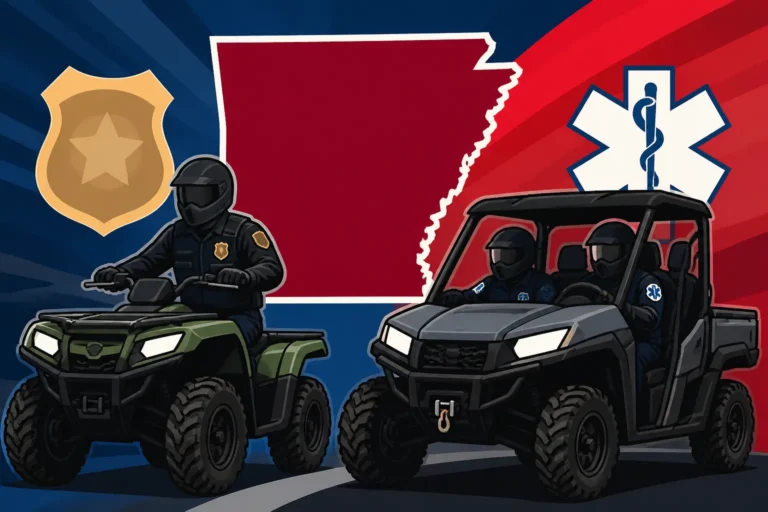
- Utility/Emergency Services: These are for specific professional duties, like utility workers or emergency responders, and don't apply to the general public.
The key takeaway is that the disability exception is personal to the operator's condition and the necessity of the travel. It's not about the machine's width, engine size, or whether it's registered. If you are operating under the disability exception, the justification rests squarely on your serious walking disability and the essential nature of your journey. Attempting to use this exception to cover recreational riding, even a short cruise, is a misuse and could lead to [Arkansas Penalties for Illegal Road Riding].
Local Ordinances and Their Impact
Another layer of complexity comes from local government. Since August 5, 2025 (when Act 922 became effective), Arkansas cities and towns have the option to pass ordinances allowing UTVs (and only UTVs, not ATVs) on certain public streets. This is a significant development, as discussed in [How Arkansas Cities Got the Choice on UTVs] and [Arkansas Towns Can Open Their Streets to UTVs].
However, it's vital to understand that a local UTV ordinance does not override or expand the state's disability exception for ATVs, nor does it change the definition of "necessary purposes" for UTVs under the disability exception.
Here's how they interact:
- State Disability Exception (ATV & UTV): This is a statewide law. If you meet the criteria for a serious walking disability and are using either an ATV or UTV for necessary purposes, you can do so on state, county, and local roads, even if the local town has no UTV ordinance.
- Local UTV Ordinance (UTV only): If a city or town passes an ordinance, it specifically allows UTVs (side-by-sides) to operate on certain designated local streets for general recreational or transportation purposes, provided the UTV meets specific equipment requirements (like turn signals, mirrors, etc.) and the operator pays any local permit fees. This ordinance doesn't apply to ATVs at all.
So, if you have a serious walking disability and drive your ATV for a necessary purpose, you are relying solely on the state's disability exception. If you have a UTV and a serious walking disability, you could potentially use it for necessary purposes under the state exception, OR you could use it for general transportation on designated streets in a town that has an ordinance, provided you meet the town's specific rules and permit requirements. They are distinct pathways. Always check your local city's rules for [Arkansas UTV Street Legal Rules by Town] to avoid any confusion, and remember that an ordinance allowing UTVs doesn't give you a free pass for an ATV.
Responsibility and Safety on the Road
Even when operating legally under the disability exception, the responsibility for safety rests heavily on the operator. Driving an ATV or UTV on a public road, regardless of the reason, carries inherent risks that demand a heightened level of awareness and caution. This is not a situation to take lightly.
Prioritizing Safety for All Road Users
When you're on a public road, you are part of a complex system of traffic, and your off-road machine behaves differently than a car or truck. Prioritizing safety means being extra vigilant and understanding the limitations of your vehicle on pavement.
Here are some key considerations:
- Visibility is King: We talked about lights and reflective tape, but also think about your clothing. Bright colors can make a huge difference, especially on winding backroads or during inclement weather. Make eye contact with drivers at intersections or before making turns.
- Predictable Driving: Avoid sudden swerves or rapid acceleration/deceleration. Use clear hand signals if your machine lacks turn signals, or install proper aftermarket turn signals. Indicate your intentions well in advance.
- Speed Management: Resist the urge to go fast. Even if the road's posted speed limit is higher, you should operate your ATV/UTV at a speed that is safe for your vehicle and your abilities on that specific road surface. Roads with gravel shoulders, potholes, or uneven pavement can be particularly challenging.
- Awareness of Surroundings: Be constantly aware of other vehicles, pedestrians, cyclists, and potential road hazards. Glance in your mirrors frequently (especially if you've added some sturdy aftermarket mirrors, perhaps from SuperATV) and anticipate what other drivers might do.
- Yield to Others: Always be prepared to yield to larger, faster-moving traffic. The goal is to integrate smoothly and safely, not to assert right-of-way aggressively.
Remember that [Arkansas Has No ATV Helmet Law], but wearing a helmet, eye protection, and other protective gear is always a wise choice, regardless of whether it's legally mandated. Your safety is paramount.
Potential Consequences of Misusing the Exception
Operating an ATV or UTV on a public road without meeting one of the statutory exceptions can lead to significant legal trouble. If you are found to be misusing the disability exception – for instance, by claiming it for recreational riding or without genuine proof of a serious walking disability – you could face serious penalties.
Common consequences for illegal road riding can include:
- Fines and Court Costs: You could receive a citation carrying a substantial fine, plus additional court costs. [Arkansas Ticket Cost for Road Riding] can add up quickly.
- Machine Impoundment: In some cases, law enforcement might impound your ATV or UTV, leading to towing and storage fees in addition to the fine.
- Legal Record: A citation for illegal road riding could go on your driving record, potentially affecting insurance rates or future legal standing.
- Loss of Credibility: Misusing an exception meant for those with genuine needs can undermine the legitimacy of the exception itself, making it harder for those who truly qualify.
It's critical to stick to the letter and spirit of the law. The disability exception is there to help those who genuinely need it for essential mobility. Respecting its boundaries ensures that this important provision remains available for its intended purpose. If you're unsure about whether a particular use case falls under the exception, it's always best to err on the side of caution or seek clarification from local authorities rather than risking a citation.
Disclaimer
This article is for general informational purposes only and does not constitute professional advice. Laws, prices and regulations vary by location and change over time. Consult a qualified professional for guidance on your specific situation.