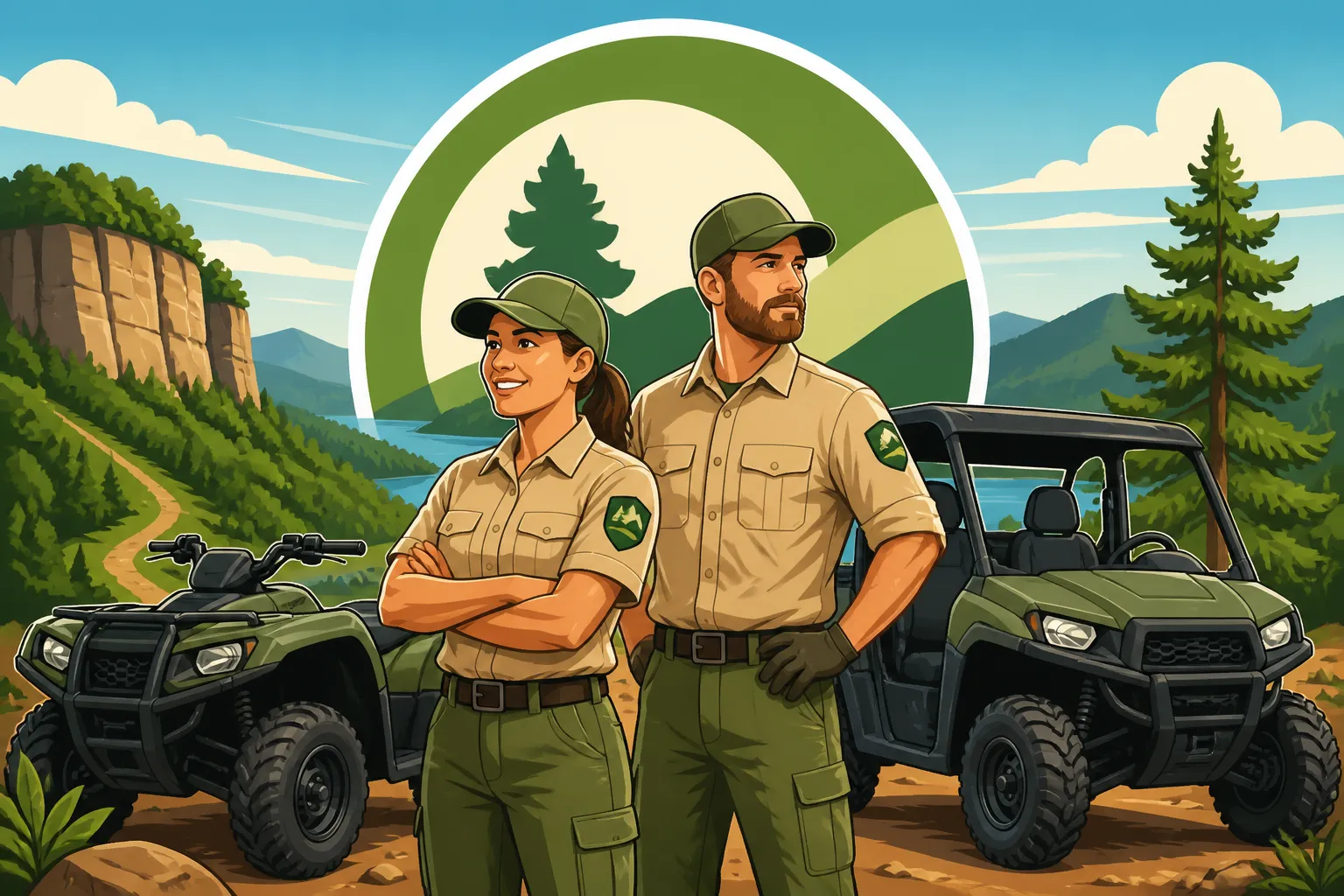
Arkansas State Parks Employees and Machines
It can be incredibly frustrating to see park rangers or other authorized personnel zipping around on ATVs and UTVs on public roads or trails that are otherwise off-limits to the general public. You're left wondering, "Why can they do that, but I can't?" This guide will clear up that confusion, explaining the specific legal exceptions that allow Arkansas State Parks employees to use these machines on roads as part of their official duties, and what that means for how they operate and how it differs from private ownership.
Understanding the General Prohibition on ATV/UTV Road Use in Arkansas
First, let's get one thing straight: for most of us, riding an ATV or UTV on a public road in Arkansas is simply not allowed. It’s a common point of confusion and a source of many citations. The state's default stance, enshrined in its statutes, is that these machines are designed for off-highway use. They lack the safety features, like turn signals, rearview mirrors, and often proper headlights, that are mandatory for vehicles sharing the pavement with cars and trucks.
Why Roads Are Generally Off-Limits for Private Riders
Imagine pulling out onto a busy highway with no brake lights, no turn signals, and a top speed that doesn't quite match the flow of traffic. It's a recipe for disaster, and that's precisely why Arkansas law is so restrictive for private riders. The state has a clear interest in keeping its roads safe for everyone. The unique characteristics of ATVs and UTVs—their open design, exposed wheels, and often aggressive tires—make them ill-suited for the asphalt environment. They handle differently, stopping distances can vary, and their visibility to other motorists can be significantly reduced, especially at dusk or dawn. This is why you'll find that riding an ATV on a public road, even a quiet county road, usually falls under the umbrella of unlawful operation unless a specific exception applies or a local ordinance has been passed. If you're curious about the specifics, you'd want to check [Arkansas ATV Road Rules: What 27-21-106 Says].
The Frustration of Mixed Messaging
It's completely understandable to feel a bit miffed when you're adhering to these strict rules, only to see someone in a state park uniform operating a side-by-side on what looks like a public road within the park boundaries. This perceived double standard can lead to a lot of head-scratching. "Are the rules different for them? Am I missing something?" you might ask. This feeling is valid because, on the surface, it looks like one set of rules for some and another for others. However, these aren't loopholes; they're very specific, carefully defined exceptions based on the nature of the work being performed. Understanding these exceptions is key to making sense of what you see.
The Specific Legal Exception for State Parks Employees
Arkansas law, specifically within its off-highway vehicle statutes, carves out a precise exception for employees of the Arkansas State Parks system. This isn't a blanket permission for joyriding; it's a narrowly defined allowance for official duties. It's one of the six statutory exceptions that permit certain individuals to operate ATVs or UTVs on public roads. This exemption is crucial for the efficient management and operation of our beautiful state parks.
What the Exception Allows and Why It Exists
The core of this exception is simple: Arkansas State Parks employees can operate ATVs and UTVs on public roads while in the performance of their official duties. This means they aren't using these machines for personal errands or leisure, but solely to carry out tasks directly related to their jobs.
Think about the vast and varied terrain of Arkansas's state parks. Many have miles of trails, rugged landscapes, remote campgrounds, and facilities spread across large areas. Maintaining these parks requires access to places that a standard pickup truck simply can't reach, or it might be inefficient to use a full-sized vehicle for short, frequent trips. This is where ATVs and UTVs become indispensable tools. Park rangers, maintenance crews, and other staff members utilize these machines for a variety of critical functions:
- Trail Maintenance: Hauling tools, materials, or even small debris for trail repairs.
- Patrol and Surveillance: Covering large areas quickly to monitor visitors, enforce rules, and ensure safety.
- Emergency Response: Reaching injured hikers, providing medical assistance, or responding to incidents in difficult-to-access locations.
- Wildlife Management: Surveying animal populations, relocating wildlife, or setting up monitoring equipment.
- Facility Upkeep: Transporting supplies for restroom cleaning, campsite maintenance, or minor repairs at remote park facilities.
Without this exception, state park operations would be severely hampered, making it much harder to keep these natural treasures safe, clean, and accessible for all visitors.
The "Official Duties" Distinction
It's critical to emphasize that "official duties" is not a loose term. It means directly engaging in tasks that are part of their job description as an employee of Arkansas State Parks. This isn't about using the machine to drive home after a shift, or to pick up groceries. It's about performing work directly related to the park's function.
For example, a park ranger might use a UTV to patrol a remote section of a hiking trail, transport a first-aid kit to an emergency site, or carry specialized equipment for repairing a culvert. A maintenance worker might use an ATV with a small trailer to haul bags of trash from trailside receptacles back to a central collection point. These are all legitimate official duties. This distinction is what separates their allowed use from the general public's restrictions. In essence, the machine is a tool for their work, not a recreational vehicle in that context. You can find more detail on this specific exemption under [Arkansas State Parks Employees and Machines].
Types of Machines Used by State Park Employees
While the general public might associate ATVs and UTVs purely with recreation, in the context of state park operations, these machines are workhorses. They are chosen for their versatility, off-road capability, and utility features that aid in various maintenance and patrol tasks.
Utility-Oriented ATVs and UTVs
Arkansas State Parks typically deploy machines specifically designed for utility and work. These aren't always the flashy, high-performance sport models you might see tearing up a private track. Instead, they often prioritize cargo capacity, towing capability, and durability.
- Utility ATVs: These quads usually feature robust racks on the front and rear, often capable of carrying hundreds of pounds of gear, tools, or supplies. Their smaller footprint makes them agile on narrow trails and through dense undergrowth, ideal for patrolling or quick access to remote areas.
- Utility UTVs (Side-by-Sides): Often called "workhorse" UTVs, these machines are built with truck-like beds, greater payload capacities, and sometimes even enclosed cabs for weather protection. They can transport multiple employees, heavier loads, and more specialized equipment, making them perfect for major trail work, hauling debris, or even light snow removal in colder months. Brands like Polaris Ranger, Can-Am Defender, or John Deere Gator are common examples of machines tailored for this kind of rigorous use. Many park systems even accessorize these machines with heavy-duty components from aftermarket suppliers like SuperATV, ensuring they can withstand the constant demands of park maintenance and operations.
Essential Equipment and Modifications
The machines used by state park employees are often far from stock. They frequently feature a range of modifications and accessories designed to enhance their utility and safety in a demanding work environment.
Here’s a look at some common additions:
- Winches: Absolutely essential for self-recovery or for moving fallen trees and heavy obstacles from trails. A good winch can be a lifesaver in remote areas.
- Storage and Cargo Solutions: Custom cargo boxes, tool racks, and additional storage compartments are vital for carrying everything from chainsaws and shovels to first-aid supplies and communication equipment.
- Lighting Upgrades: While some machines come with decent lighting, park operations often require enhanced illumination for early morning or late-night tasks. Auxiliary LED light bars are common for improved visibility.
- Protective Gear: Skid plates, brush guards, and heavy-duty bumpers protect the machine from impacts with rocks, trees, and other obstacles encountered during off-road work.
- Specialized Attachments: Depending on the task, machines might be fitted with small plows for clearing snow or dirt, sprayers for vegetation management, or even small trailers for towing larger loads of materials or equipment.
These modifications transform a recreational vehicle into a purpose-built tool, specifically adapted for the diverse and challenging work performed by Arkansas State Parks staff. It’s all about making sure the right tool is available for the job, allowing employees to perform their duties safely and effectively.
Contrasting State Park Employee Use with General Public Rules
It’s easy to get confused by the different rules, but understanding the stark contrast between how Arkansas State Parks employees can use ATVs and UTVs versus how the general public can use them is crucial. The fundamental difference lies in purpose and authority.
Who Can Ride Where: A Quick Comparison
Let's break down the general distinctions to clear up any lingering confusion.
| Feature | General Public | Arkansas State Parks Employees (Official Duties) |
|---|---|---|
| Road Use | Generally prohibited on public roads | Permitted on public roads within park boundaries |
| Purpose | Recreation, hunting, farm use (limited exceptions) | Official park duties, maintenance, patrol |
| Registration/Decal | Required for any public land use, no annual renewal | Required for the machine (often state-owned) |
| Equipment | Basic requirements for off-road | Often modified with utility & safety gear |
| Insurance | Recommended, may be required by lenders | Covered under state liability programs |
| Local Ordinances | May allow street use in specific towns (UTVs only) | Governed by state statute for park operations |
This table highlights that while both groups might be on the same land, their legal permissions and the reasons behind them are entirely different. For private citizens, understanding [Arkansas's Six Statutory Road Exceptions] can help clarify other specific situations where road use might be allowed, but park employees fall under a distinct category.
The "Public Road" Conundrum Within Parks
One of the biggest areas of misunderstanding revolves around what constitutes a "public road" within the confines of a state park. Many state parks encompass roads that are technically open to the general public, allowing vehicular access to campgrounds, trailheads, and scenic overlooks. When a park employee uses an ATV or UTV on one of these roads, it looks exactly like what a private citizen is forbidden from doing.
However, for the state park employee, that road is simply a segment of their workplace. They might be driving their UTV from the maintenance shop to a remote picnic area to empty trash cans, or a ranger might be responding to a call for assistance from a camper. These are official duties. The law provides this specific exemption because limiting these essential park operations to only street-legal vehicles would significantly hinder the park's ability to serve the public effectively and safely.
For example, if a park ranger needed to quickly get to an injured hiker on a remote trail accessible only by a gravel park road, using an ATV could be much faster and more efficient than a full-sized truck, especially if the terrain is challenging. The exemption prioritizes public safety and efficient park management over the general restriction for recreational users.
Implications for Private Riders and "No Exceptions"
For those of us who love to ride our ATVs and UTVs for pleasure, this specific exception for state park employees doesn't extend to us. You can't argue that because a ranger was on a park road, you should be allowed to be there too. Your use is recreational, their use is official.
This is why, if you plan to ride an ATV or UTV in Arkansas, it is paramount to know the rules for your machine. This often means focusing on designated off-road trails and private lands. If you're wondering about specific rules for public land, check out resources like [Arkansas ATV Trails: Where to Ride] for places that are explicitly sanctioned for off-highway vehicles. Trying to mimic the actions of a state park employee without the legal authority to do so can lead to citations, fines, and even impoundment of your machine. When in doubt, always assume public roads are off-limits unless you have verified otherwise through a local ordinance (which typically only applies to UTVs and specific cities) or one of the other narrow state exceptions, none of which generally apply to recreational riding on state park roads.
How to Interact with Park Employees Operating ATVs/UTVs
Encountering an Arkansas State Parks employee on an ATV or UTV while you're visiting a park is a fairly common occurrence. Knowing how to interact appropriately, and understanding their role, can make everyone's experience better.
Respecting Their Role and Machines
Remember, when you see a state park employee on an ATV or UTV, they are at work. These machines are tools, just like a maintenance truck or a lawnmower.
- Give Them Space: If you're on a trail or road and encounter an employee, give them ample room to pass. They may be carrying equipment, responding to an emergency, or transporting materials, and need clearance. Don't crowd them or try to engage them in lengthy conversation if they appear busy.
- Understand Their Authority: Park rangers and other authorized staff are responsible for maintaining order, enforcing park rules, and ensuring visitor safety. If they approach you, it's usually because they have a reason, whether it's to provide information, offer assistance, or address a rule violation. Treat them with courtesy and respect. Their use of an ATV or UTV doesn't diminish their authority; it's simply their mode of transport for official duties.
- Don't Misinterpret Their Presence: Seeing a park employee on a UTV within park boundaries doesn't give you license to take your own ATV onto restricted roads or areas. Their legal authorization is specific to their employment and official tasks.
Asking Questions Respectfully
It's natural to have questions, especially if you're new to the area or unsure about specific park rules. However, timing and approach matter.
- Choose the Right Moment: If you have a general question about ATV rules or specific trail access, it's usually best to ask at a visitor center, park office, or designated information point rather than flagging down a busy ranger on the move. They'll have more time and resources to provide you with accurate information there.
- Keep it Concise: If you must ask a question of a passing employee, make it quick and to the point. For example, "Excuse me, where's the nearest trailhead for the XYZ trail?" is much better than a long complaint about ATV access rules.
- Focus on Information, Not Confrontation: Avoid challenging their presence or complaining about restrictions. They are simply doing their job according to state law. Framing your questions around gaining information ("Can you tell me more about where ATVs are permitted here?") is far more productive than expressing frustration ("Why do you get to ride that here but I can't?").
Park employees are generally happy to help visitors, but their primary responsibility is the safe and efficient operation of the park. Respecting their time and the nature of their work ensures a positive interaction for everyone.
The Broader Context of Arkansas ATV/UTV Road Use Exceptions
While state park employees have a specific exemption, it's important to remember that there are other, albeit limited, scenarios where ATVs and UTVs can legally touch public roads in Arkansas. These are generally very narrow exceptions designed for specific circumstances, not general recreational riding.
Other Statutory Exemptions
Arkansas law lists a handful of specific situations where an off-highway vehicle can be legally operated on a public road, besides the one for state park employees. These are codified in the state's statutes to address particular needs:
- Farming Operations: An ATV or UTV can be used on a public road for tasks directly related to a farming operation, such as traveling between fields or accessing equipment. This is strictly for agricultural purposes.
- Hunting Operations: Similarly, a machine can be operated on a public road to and from a hunting camp or hunting lease, but only during open hunting seasons and for purposes directly related to hunting. This doesn't mean you can joyride; it's about practical access for legitimate hunting activities.
- Emergency Personnel: Law enforcement, fire, and emergency medical service (EMS) personnel are also permitted to use ATVs and UTVs on public roads while performing their official duties, similar to state park employees.
- Utility Workers: Employees of utility companies (electric, gas, water, telecom) can use these machines for construction, maintenance, or repair of utility lines and infrastructure.
- Direct Crossing: Any person can make a direct, perpendicular crossing of a public road if they come to a complete stop and yield to all traffic, essentially moving from one permitted off-road area to another. This is for crossing only, not riding on the road.
- Disability Exception: Individuals with a serious walking disability can sometimes obtain a permit to operate an ATV on public roads for specific purposes.
These exceptions, including the one for [Arkansas State Parks Employees and Machines], highlight that road use for ATVs and UTVs is almost always tied to a specific function, necessity, or authorized duty, rather than casual recreation.
Local Ordinances for UTVs
Beyond the statewide statutory exceptions, some Arkansas cities and towns have taken advantage of recent state legislation that allows them to pass their own ordinances permitting UTVs (but generally not ATVs) on certain local streets. This is a significant development, but it's crucial to understand its limitations:
- UTV-Specific: These ordinances almost exclusively apply to UTVs (side-by-sides), not traditional ATVs. This is often because UTVs can be more easily equipped with street-legal features like turn signals, mirrors, and seatbelts.
- City-Specific: An ordinance in one town, like Bono, Arkansas, does not apply to any other town. You must check the specific rules for the city you intend to ride in.
- Designated Streets: Typically, these ordinances restrict UTV use to streets with speed limits below a certain threshold (e.g., 35 mph or 55 mph) and often exclude major state highways or multi-lane roads.
- Permit Requirements: Cities usually require an annual permit, a valid driver's license, insurance, and specific equipment (like turn signals, mirrors, horn, and sometimes a windshield or seatbelts) to be street-legal within their jurisdiction. If you're considering this, check out [Arkansas UTV Street Legal Rules by Town].
This patchwork of local rules adds another layer of complexity. So, while you might see a UTV driving legally on a street in one Arkansas town, it doesn't mean the same is true even in the next town over, let alone for ATVs in a state park. Always verify the rules for your specific machine and location to avoid an unwelcome citation.
Disclaimer
This article is for general informational purposes only and does not constitute professional advice. Laws, prices and regulations vary by location and change over time. Consult a qualified professional for guidance on your specific situation.