Arkansas Direct Crossing at Ninety Degrees
It's a common frustration for ATV and UTV owners across Arkansas: you're out enjoying the beautiful trails or working on your property, and you hit a public road. Maybe it's just a short county road connecting two pieces of land you own, or perhaps a highway divides a massive national forest trail system. The question inevitably arises, "Can I just cross it?" While riding your ATV or UTV on public roads is generally against the law in the Natural State, there's a vital exception many riders need to understand: the direct crossing at ninety degrees. This guide is here to untangle the confusion and explain exactly when and how you can legally make that quick dash across the pavement without running afoul of Arkansas law.
The General Rule: Why Most ATVs Aren't Meant for Arkansas Roads
Navigating the legal landscape for ATVs and UTVs in Arkansas can feel like trying to ride through a thicket of thorns. The biggest pain point for many enthusiasts is the statewide prohibition on operating these off-highway vehicles (OHVs) on public streets, roads, and highways. It’s not just a suggestion; it’s a foundational piece of Arkansas law that dictates where you can and cannot ride your machine. This can be incredibly frustrating when you’re just trying to get from one part of your hunting lease to another, or connect to the next segment of an exciting trail system.
Understanding Arkansas's Default Stance on ATVs on Public Roads
The core of this prohibition is enshrined in Arkansas Code Annotated § 27-21-106, which very clearly outlines what is permitted and, more importantly, what is forbidden. This statute broadly defines off-highway vehicles and then explicitly states that they are not to be operated on public roads. For many riders, this blanket rule feels like an unnecessary restriction, especially when they see neighboring states with more lenient regulations. You bought your machine for freedom and exploration, but the law can make you feel tethered to private land or dedicated trail systems. Understanding [Arkansas ATV Road Rules: What 27-21-106 Says] is crucial for any owner, because it forms the baseline from which all exceptions are derived. Without a clear understanding of what [What Arkansas Law Forbids on a Public Road], you could inadvertently be putting yourself at risk of a citation.
The legislature's intent behind this law is primarily public safety. ATVs and UTVs are designed with features like high ground clearance, knobby tires, and suspension systems optimized for rugged terrain, not for interacting with conventional highway traffic. They often lack standard safety equipment required for road vehicles, such as turn signals, rearview mirrors, and proper headlamps and taillamps for road use. These differences create significant safety concerns when mixing OHVs with cars and trucks, which is why the default position in Arkansas is to keep them separated.
The Difference Between Off-Roading and Street-Legal Travel
It’s important to recognize that an ATV or UTV is fundamentally different from a street-legal vehicle like a car or even a motorcycle. While a UTV might look more like a small car, and you might even outfit it with some extra safety gear, it typically doesn’t meet the rigorous standards for street legality without significant, often costly, modifications and specific local ordinances allowing it. For true ATVs, the path to street legality is virtually nonexistent statewide. Off-roading is about tackling mud, rocks, hills, and uneven terrain; street travel demands smooth operation, clear signaling, and the ability to maintain consistent speeds with other traffic.
The design of an ATV or UTV prioritizes torque and traction over speed and road handling. Their tires, for example, are designed to dig into loose earth, not grip pavement efficiently, which can lead to unpredictable handling, especially at higher speeds or during emergency maneuvers. The absence of a differential in many ATV designs means that both rear wheels turn at the same speed, which can cause scrubbing and wear on pavement and make turns feel "pushy." While many riders invest in accessories to improve their machines, like sturdy winches or advanced suspension kits, these upgrades are usually aimed at enhancing off-road capability, not street performance. This inherent design difference is why the law makes such a clear distinction, aiming to keep these powerful machines in their intended environment.
Decoding the "Direct Crossing at Ninety Degrees" Exception
While the general rule prohibits ATVs and UTVs from public roads, Arkansas law does offer a few specific, narrowly defined exceptions. One of the most critical for landowners and trail riders is the allowance for a "direct crossing at ninety degrees." This isn't a loophole to ride down the road for a mile; it's a very specific, carefully regulated maneuver designed to allow essential movement when no other practical alternative exists. Understanding the precise language and intent behind this exception is paramount for staying on the right side of the law.
What "Direct Crossing" Truly Implies
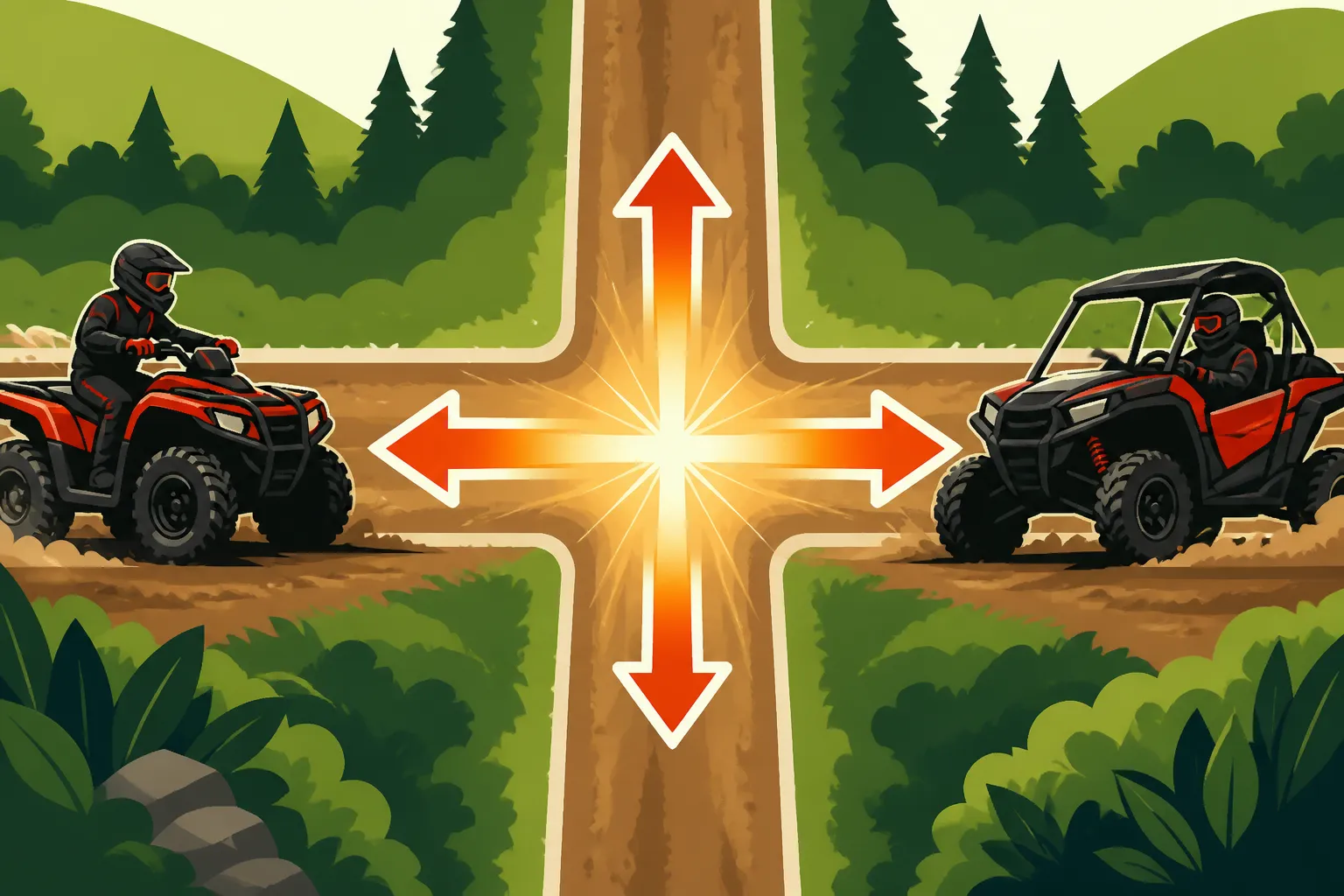
When the law talks about a "direct crossing," it means exactly that: traversing the road from one side to the other, minimizing any travel along the roadway. Think of it as drawing the shortest possible line across the road. This exception is not intended to permit you to ride parallel to the flow of traffic, even for a short distance, to reach a more convenient crossing point or to travel to a nearby store. It's strictly about getting from point A on one side of the road to point B directly opposite it on the other side.
For example, if you own land that is bisected by a county road, or if a multi-use trail system requires you to move from one section to another by crossing a public way, this exception can be invaluable. The key is intent and execution: your purpose must be to simply cross, and your action must reflect that by being as immediate and straight as possible. It's about bridging a gap, not creating a shortcut. Any deviation from this direct path, such as traveling down the shoulder or pulling a U-turn in the middle of the road, could be interpreted as illegal road use, negating the protection of this exception.
The Significance of the "Ninety Degrees" Requirement
The "ninety degrees" part of this exception is just as crucial as the "direct crossing." This means your approach to and departure from the road should be as perpendicular as possible to the flow of traffic. Imagine drawing a right angle from the edge of the pavement. This isn't just a suggestion for neatness; it's a critical safety measure. By crossing at a near 90-degree angle, you expose yourself and your machine to moving traffic for the shortest possible duration. This minimizes the risk of a collision by reducing the time you are broadside to oncoming vehicles or traveling in the same lane.
Consider the physics: if you cross diagonally, you spend more time in the traffic lane, and you also present a larger profile to oncoming cars. A 90-degree approach, as referenced in [Crossing at Roughly Ninety Degrees], means you enter and exit the roadway quickly and predictably. It helps drivers on the road understand your intention and gives them more time to react. This rule is designed to make your crossing as brief and as safe as possible, acknowledging that while these crossings are sometimes necessary, they always carry inherent risks due to the speed and mass difference between an ATV and a road vehicle. It's a precise stipulation that demands careful adherence.
The Mandatory "Stop Before You Cross" Precaution
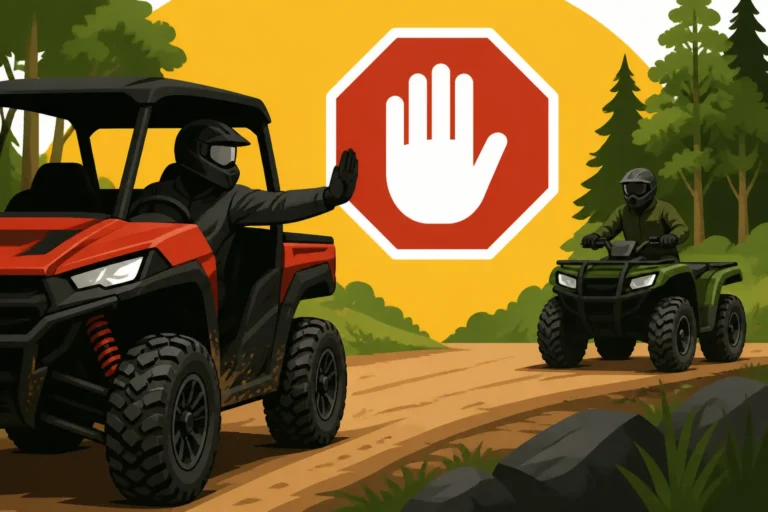
Before you even think about making that direct, ninety-degree crossing, there's another non-negotiable requirement: you must come to a complete stop. Just like at a stop sign or before entering a busy intersection in your car, you are legally obligated to halt your ATV or UTV at the edge of the roadway. This isn't a "California roll" or a slow crawl; it means all wheels must cease turning, and your machine must be stationary.
This mandatory stop serves several vital purposes. First and foremost, it allows you to fully assess the traffic conditions on the road. You need to look both ways, check for any blind spots, and judge the speed and distance of approaching vehicles. For machines that might have limited rearview mirrors or slower acceleration than a car, this visual check is absolutely critical. Secondly, it signals your intention to traffic. A vehicle stopped at the edge of a road is clearly preparing to do something, providing a visual cue to drivers that they should be aware. This legal requirement, often detailed alongside [Arkansas Stop Before You Cross], is a fundamental safety mechanism that puts the onus on the ATV rider to ensure the crossing can be made without hazard to themselves or others. Failing to stop is not only dangerous but a clear violation of the statute, regardless of how direct or perpendicular your crossing might be.
Practical Application and Safety for Legal Crossings
Knowing the law is one thing, but safely and legally executing a direct, ninety-degree crossing in the real world is another. It requires vigilance, good judgment, and an awareness of your surroundings. While the law outlines the what, practical application focuses on the how to ensure every crossing is as safe as possible for everyone involved.
Assessing Road Conditions and Traffic Before Crossing
Before you even approach the edge of the pavement, you need to be a hawk. Scan the road for traffic, paying close attention to both directions. A quiet gravel county road in the Ozarks at midday is a vastly different scenario than a busy state highway with blind curves near a town. You must consider the speed limit of the road, the visibility for both yourself and oncoming drivers, and any potential obstacles. Is there a hill crest just before your crossing point? A sharp turn? These factors dramatically impact how much time you have to react and how much time other drivers have to see you.
Think about a hypothetical: you're riding your ATV on your property, which abuts Highway 7 near Hot Springs. You need to cross to access another section of your land. This isn't a rural two-lane road; it's a major artery. In this instance, a moment of impatience could have severe consequences. You need to wait for a substantial gap in traffic, one that allows you to accelerate your machine across the lanes and completely clear the roadway before any fast-approaching vehicles become a threat. It's not enough to just see a car; you need to evaluate its speed and whether you can complete the crossing without forcing that driver to take evasive action. This diligent assessment is a core part of the requirement for [Arkansas Rules for Crossing a State Highway] and any public thoroughfare.
Equipping Your Machine for Brief Road Exposure
While ATVs are not designed for road travel, even for a brief crossing, maximizing your visibility and control is paramount. Many riders enhance their machines with accessories that, while not making them fully "street legal," certainly improve safety for quick transitions. Think about lights: even if it's daytime, having bright headlights and taillights on can significantly increase your presence to other drivers. Some riders even add a tall, brightly colored whip flag, especially if riding in dusty conditions or areas with limited sightlines, to make their machine more noticeable from a distance.
Products from reputable brands like SuperATV offer a range of lighting and accessory options that can boost visibility. While these won't change your ATV's legal status for general road riding, adding a good set of LED cube lights or a robust rear lighting system can be a smart move for improving safety during a legal crossing. Beyond lights, ensuring your tires are in good condition and have adequate pressure is important. While knobby tires aren't ideal for pavement, well-maintained ones will offer better grip during the brief moment you're on the road compared to worn-out or underinflated tires. Ultimately, any effort to make your machine more conspicuous and controllable, even for a few seconds, contributes significantly to a safer crossing.
Other Statutory Exceptions for Road Use (Brief Overview)
While the direct crossing at ninety degrees is a primary exception for many recreational and private land riders, it's important to know that Arkansas law recognizes a handful of other very specific situations where ATVs and UTVs might legally operate on public roads. These exceptions are just as narrowly defined and are typically tied to specific professional or operational needs, not general public use. Understanding these broader allowances, which constitute [Arkansas's Six Statutory Road Exceptions], provides a fuller picture of the state's nuanced approach to OHV road access.
When Farming and Hunting Operations Allow Road Use
One of the most recognized exceptions allows for the use of ATVs and UTVs on public roads when actively engaged in legitimate farming or hunting operations. This isn't a blank check to ride your machine to the corner store if you also happen to hunt; it's strictly for travel directly related to the operation itself. For example, a farmer might use their UTV to move tools, feed, or equipment from one field to another that's across a public road, or to check fence lines that run alongside a county road. Similarly, hunters might use an ATV to access different parts of their hunting lease, transport game, or retrieve stands, but only when directly en route to or from the hunting area.
The key here is the "operation." You must be actively engaged in farming or hunting, and your use of the ATV on the road must be a necessary part of that activity. The moment you detour for personal errands or recreational riding, you step outside the bounds of this exception. These specific rules, often outlined as [Arkansas Farming and Hunting Road Exceptions], are designed to support vital rural activities, acknowledging that for many in agriculture and wildlife management, ATVs and UTVs are indispensable tools.
Emergency, Utility, and State Park Personnel Exceptions
Arkansas law also makes allowances for certain professional entities to use ATVs and UTVs on public roads when performing their duties. This includes law enforcement officers, emergency medical service (EMS) personnel, fire department officials, and utility company employees. These individuals often rely on the versatility and off-road capability of ATVs and UTVs to reach remote areas, respond to emergencies, perform maintenance, or conduct search and rescue operations that would be inaccessible to standard road vehicles.
Similarly, employees of the Arkansas State Parks system are granted exceptions when operating OHVs within the scope of their employment. This might include trail maintenance, patrolling park grounds, or assisting visitors in areas where standard vehicles cannot go. These exceptions are about ensuring public safety, infrastructure maintenance, and land management can be carried out effectively. The allowances for [Arkansas Law Enforcement and EMS Exceptions] and [Arkansas State Parks Employees and Machines] are not for the general public, but for those serving specific, authorized functions where the unique capabilities of an ATV or UTV are essential for their work. It underscores that while the general rule is restrictive, the law recognizes practical necessities in specific, controlled circumstances.
Consequences of Misunderstanding Arkansas Road Rules
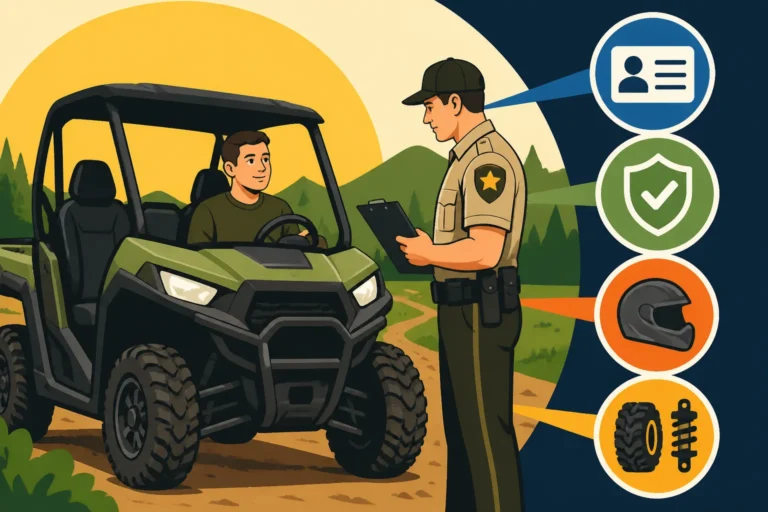
It's tempting to think that for just a short hop down a gravel road or a quick scoot to a neighbor's house, no one will notice or care. However, misunderstanding or ignoring Arkansas's ATV and UTV road rules can lead to significant consequences. Law enforcement officers are aware of the common misconceptions and are generally quite strict about enforcing these statutes, primarily due to safety concerns. Ignorance of the law is never an excuse, and a casual disregard can quickly turn an enjoyable ride into a costly headache.
Common Misconceptions Leading to Violations
Many riders operate under various mistaken beliefs that can land them in trouble. A prevalent one is assuming that gravel roads or unpaved county roads are automatically exempt from the "no public road" rule. This is simply not true; unless specifically designated for OHV use by a local ordinance (which is rare for ATVs, though becoming more common for UTVs in select towns), any public road, paved or unpaved, falls under the statewide prohibition. Another common misconception is that if you have modified your ATV with lights, mirrors, or even a horn, it somehow makes it street-legal, or at least acceptable for short trips. While these accessories improve safety, they do not confer street-legal status on an ATV in Arkansas.
Some riders also misinterpret the "90-degree crossing" exception as permission for brief travel along the shoulder or for seeking out a more convenient crossing point a short distance away. As discussed, this is explicitly forbidden; the crossing must be as direct as possible. Another common pitfall is the belief that if you're riding on land you own or lease, the adjacent public road somehow becomes part of your private domain. This is incorrect. The moment your tires touch public pavement or gravel, you are subject to public road laws. These misunderstandings often stem from what might be allowed in other states or from wishful thinking, but they don't hold up in an Arkansas court.
The Reality of Tickets and Penalties for Illegal Riding
Getting caught riding an ATV or UTV illegally on a public road in Arkansas can lead to more than just a stern warning. Law enforcement officers, whether from local sheriff's departments, city police, or the Arkansas State Police, are empowered to issue citations. The exact penalty can vary, but generally, operating an unregistered or illegal vehicle on a public roadway is a misdemeanor offense. This can result in fines, court costs, and potentially even impoundment of your machine. The financial hit can be substantial, easily running into hundreds of dollars once all fees are factored in.
Beyond the immediate monetary cost, there's the inconvenience and stress of dealing with court appearances and potential legal issues. A citation also creates a record, which might have implications for your insurance or future interactions with law enforcement. It's not a minor traffic ticket in the way a speeding ticket might be. The purpose of these penalties is to deter illegal road use and reinforce the safety regulations. Therefore, it's always best to err on the side of caution and ensure you are strictly adhering to the law, including the precise parameters of [Arkansas Penalties for Illegal Road Riding]. Never assume a deputy will look the other way; they are there to enforce the rules designed to keep everyone, riders and drivers alike, safe on Arkansas's roads.
| Aspect of Road Use | General Rules (Statewide) | Direct Crossing at 90 Degrees (Exception) |
|---|---|---|
| Purpose | Forbidden for general travel or recreation | To move from one parcel of land to another |
| Allowed Travel | None, unless a specific local ordinance exists (UTVs) | Straight across the road, not along it |
| Direction | Not applicable (as general travel is forbidden) | Perpendicular to the flow of traffic |
| Stop Required? | Not applicable | Yes, complete stop before entering roadway |
| Vehicle Type | ATVs/UTVs generally prohibited | ATVs/UTVs may make this specific maneuver |
| Penalty | Fines, court costs, potential impoundment | None, if executed legally |
| Safety Focus | Keeping OHVs off roads for traffic safety | Minimizing exposure to road traffic |
Disclaimer
This article is for general informational purposes only and does not constitute professional advice. Laws, prices and regulations vary by location and change over time. Consult a qualified professional for guidance on your specific situation.