Arkansas ATV Rules for Riding a County Road
Oh, the lure of the open road – or, more accurately, that county gravel road just beyond your property line! It's a common dream for many ATV and UTV owners in Arkansas: hop on your machine and just cruise down to a friend's house, a fishing spot, or even just to enjoy the scenery. But let's be real, the rules around riding off-highway vehicles (OHVs) on public roads in Arkansas can feel like a tangled mess of "can I?" and "can't I?", leaving you scratching your head and worried about a ticket. This guide is here to untangle that knot, walking you through exactly what Arkansas law says about ATVs and UTVs on county roads, so you can ride with confidence, or at least with full awareness of the risks.
The Default Rule: Why Most County Roads Are Off-Limits for ATVs
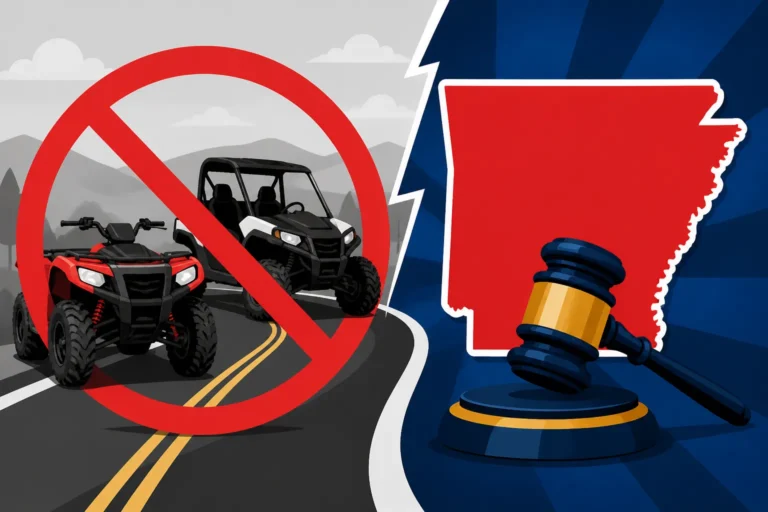
It’s a frustrating reality for many of us, but the general rule in Arkansas is pretty clear: ATVs and UTVs are primarily designed for off-road use, and that means public roads, including most county roads, are generally off-limits. This isn't just an arbitrary decision; it stems from how these machines are classified and the safety concerns associated with mixing them with conventional traffic.
Understanding Arkansas's Blanket Ban
The Arkansas Legislature has, for a long time, taken a broad approach to keeping off-highway vehicles off of paved and unpaved public roads alike. They don't typically have the same safety features as street-legal vehicles — things like turn signals, rearview mirrors, windshields, or even proper headlights and taillights for consistent road use. This lack of features, combined with their differing handling characteristics, is why the default position is a ban. You can dive deeper into the general prohibitions with [What Arkansas Law Forbids on a Public Road].
Think about it: an ATV is nimble and designed for rough terrain. Its tires are often knobby, meant to dig into dirt and mud, not grip asphalt or gravel effectively at higher speeds. When you put a machine built for trails onto a county road where cars, trucks, and even farm equipment might be traveling, you're introducing a significant safety mismatch. The law is trying to protect everyone on the road, including the ATV rider.
The Core Reason for Restrictions
The primary reason for these restrictions boils down to safety and vehicle classification. Arkansas defines ATVs (and often includes UTVs under similar regulations, though UTVs have a few more nuances, which we'll get to) as "off-highway vehicles." This designation means they aren't manufactured to meet federal motor vehicle safety standards for on-road use. They lack things like crumple zones, advanced braking systems for high speeds, or even basic seatbelts and airbags often found in street vehicles.
This isn't to say your machine isn't safe for its intended purpose! Many of us wouldn't trade our quad for anything on the trails. But the environment of a county road presents different hazards. Blind curves, dust kicked up by other vehicles, distracted drivers, and the sheer difference in speed and weight between an ATV and a pickup truck are all factors the law considers. It's tough to swallow when that county road is the quickest way to your deer stand, but the spirit of the law is genuinely about preventing accidents.
Specific Exceptions Where County Road Riding is Allowed
Now, before you lose all hope, Arkansas does make some very specific exceptions to its general ban on riding ATVs and UTVs on public roads. These exceptions are narrow, carefully defined, and often depend on the purpose of your ride or where you're riding. It's crucial to understand these nuances, as misinterpreting them could still lead to a citation. You can find a summary of the broader permissions in [Arkansas's Six Statutory Road Exceptions].
Agricultural and Hunting Operations
One of the most common exceptions people wonder about involves farming and hunting. Yes, if you're using your ATV or UTV as part of a legitimate agricultural or hunting operation, you might be allowed on certain public roads.
- Agricultural Operations: Picture this: you're a farmer, and you need to move your UTV loaded with tools, feed, or fencing from one field to another, or from your barn to a pasture that requires a short jaunt down a county road. Arkansas law recognizes this practical need. [Arkansas Farming Operation Road Use] elaborates on this. The key here is that the machine must be directly involved in the farming operation. This isn't a free pass to joyride; it's about facilitating necessary work. If you're using your ATV to check fences, transport small equipment, or tend to livestock, and that requires moving briefly on a county road, you're likely within this exception. It's not about going to town for groceries, but about getting the job done on the farm.
- Hunting Operations: Similarly, if you're using your ATV or UTV as part of a bona fide hunting operation, there are provisions. This typically means traveling to or from a hunting camp, or within the hunting area, where a county road segment is unavoidable. [Arkansas Hunting Operation Road Use] provides more detail. Imagine you're on a large hunting lease, and the only way to get from the main camp to a specific part of the property involves a short stretch of public gravel road. This exception aims to allow reasonable access for hunters. Again, it's not for recreational cruising; it's tied to the direct activity of hunting. This exception often applies to getting to your deer stand or retrieving game, especially on large tracts of private land that are bisected by public roads.
In both these scenarios, you're expected to operate your machine safely, yield to other traffic, and generally use common sense. These are not invitations to treat public roads as trails.
Direct Crossings and Emergency Use
There are also specific allowances for simply crossing a road and for emergency situations.
- Direct Crossing at Ninety Degrees: This is a big one for many riders. If you need to get from one private property to another, or from one part of a trail system to another, and a county road is in the way, you can typically cross it. However, there are strict conditions: you must come to a complete stop before entering the roadway, yield to all traffic, and cross the road at as close to a ninety-degree angle as possible. This minimizes your time on the road and makes your intentions clear to other drivers. You can find more information on this specific maneuver in [Arkansas Direct Crossing at Ninety Degrees]. This is not an excuse to ride down the road for any distance; it's strictly for traversing it.
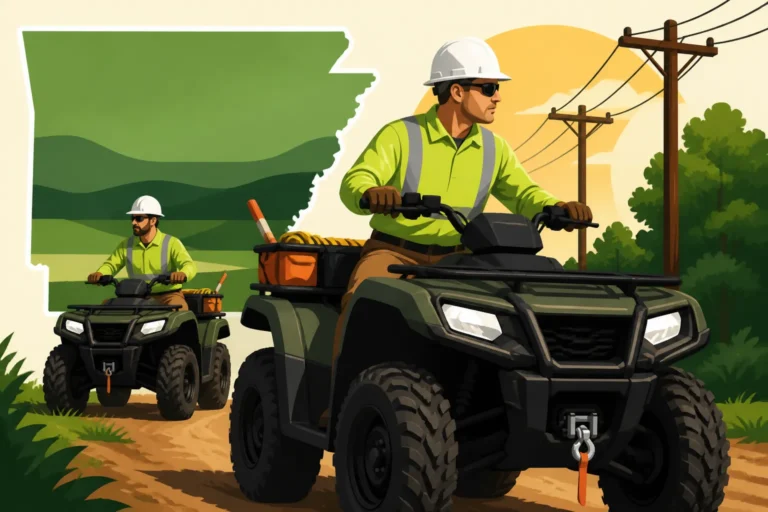
- Emergency Services and Utility Work: Unsurprisingly, law enforcement, emergency medical services, and utility company personnel are often exempt from these restrictions when operating ATVs or UTVs in the line of duty. If there's an emergency or essential infrastructure work that requires an OHV on a public road, these professionals are typically permitted. This is purely for official, necessary work and doesn't apply to the general public.
- Disabled Individuals: Arkansas also has an exception for individuals with a serious walking disability. This allows them to use an OHV on roads for necessary transportation if they meet specific criteria, which usually involves a medical certification.
The Local Ordinance Loophole for UTVs
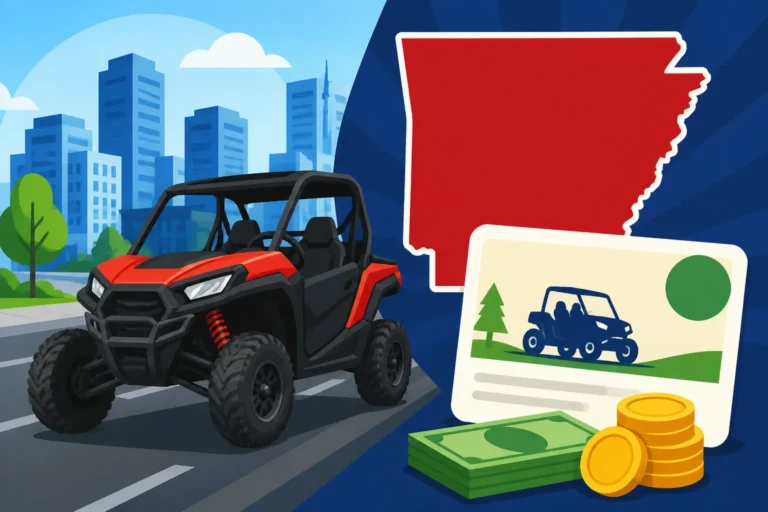
Here's where things get a bit more interesting, particularly for UTV owners. While ATVs generally remain restricted to the exceptions above, Arkansas law now allows cities and towns (but not counties directly) to pass ordinances permitting UTVs on certain public streets. This is a game-changer for many side-by-side enthusiasts!
- City-Specific Rules: An important distinction here is that this authority rests with cities and towns, not county governments. So, while you might find a town like Bono has passed an ordinance allowing UTVs on its streets, that doesn't automatically extend to the surrounding county roads outside of town limits. [Arkansas Towns Can Open Their Streets to UTVs] covers this in detail. Each city's ordinance can have different rules, including speed limits, times of day, equipment requirements (like turn signals or mirrors from brands like SuperATV), and even permit fees. It’s absolutely critical to check with the specific city clerk or police department to understand their unique rules.
- UTV vs. ATV: Remember, this local option primarily applies to UTVs (side-by-sides), not traditional ATVs (quads). The statute distinguishes between the two. Cities typically impose requirements like insurance, a valid driver's license (usually 16 years or older), and sometimes annual permits. You'll also often find restrictions on four-lane highways or streets with speed limits above 35 mph or 55 mph, depending on the local ordinance. For specific examples, check out [Arkansas UTV Street Legal Rules by Town] or [Arkansas UTV Permit Cost in a City].
- County Road vs. City Street: Even if a city allows UTVs, it applies only to the streets within its corporate limits. The moment you cross out of town into the unincorporated county, the general ban on OHVs on public roads likely kicks back in, unless you meet one of the specific statewide exceptions (like farming or hunting). This can be a real source of confusion, so always know where the city limits end.
Penalties and Risks of Illegal Road Riding
Alright, let's talk about the downside of not following the rules. It's easy to think "no one will see me" or "it's just a short distance," but the consequences of illegal road riding in Arkansas can be a real headache, hitting your wallet and potentially putting you in harm's way.
Citations, Fines, and Machine Impoundment
Getting caught riding an unregistered or unpermitted ATV/UTV on a public road can lead to a citation. This isn't just a slap on the wrist. [Arkansas Penalties for Illegal Road Riding] gives a good overview of what you might face.
- Fines and Court Costs: You're looking at a fine, which can vary depending on the county or judge, plus associated court costs. These can add up quickly, making that "shortcut" a very expensive endeavor. It's a lot more than you'd pay for a proper trail permit.
- Impoundment: In some cases, law enforcement has the authority to impound your machine. This means your ATV or UTV could be towed away and stored, and you'd have to pay towing and storage fees to get it back, in addition to any fines. Imagine having your prized side-by-side hauled off for a simple mistake!
- Criminal Charges: While less common for a first-time offense of merely riding on a county road, repeat offenses or egregious behavior (like reckless driving, or operating under the influence) can escalate to more serious charges. Remember, DUI laws apply to ATVs and UTVs just as they do to cars, even on private land or trails.
It's tempting to think deputies are only looking for speeders, but they are absolutely aware of ATV and UTV rules, especially in rural areas where these machines are common. They often know the difference between legitimate farm use and someone out for an unauthorized cruise.
Safety Concerns and Liability
Beyond the legal penalties, there are significant safety and liability risks that often get overlooked.
- Increased Accident Risk: As mentioned before, ATVs and UTVs are not designed for road conditions. They handle differently, have a higher center of gravity, and are less visible to other drivers, especially at dusk or dawn. Colliding with a car or truck can have devastating consequences for an OHV rider due to the lack of protection. Many accidents involving ATVs on roads result in serious injuries or fatalities. Even a minor swerve by another vehicle can put an ATV rider in a ditch or into oncoming traffic.
- Insurance Implications: Your standard ATV insurance policy is typically designed for off-road use. If you're involved in an accident on a public road where you shouldn't have been, your insurance company might deny coverage. This means you could be personally responsible for property damage to your machine, damage to other vehicles, and, most critically, medical bills for yourself and others involved. This financial burden can be crippling. For street-legal UTVs operating under a city ordinance, proof of insurance is almost always a requirement, and it’s usually a specific type of policy that covers on-road risks. If you want to know more about the broader insurance landscape, you can consult [Is Insurance Part of Arkansas ATV Registration?].
- Visibility and Road Hazards: County roads, especially gravel ones, can have their own set of hazards: potholes, loose gravel, washouts, and dust clouds. Plus, you're sharing the road with everything from bicycles to logging trucks. The dust you kick up or the lack of reflective gear can make you almost invisible, particularly if you're riding [Arkansas Rules for Riding After Dark]. Enhancing your machine with good lighting, reflective decals, and even a whip flag, though not legally required for typical county roads, can significantly improve your safety profile. Brands like SuperATV offer excellent lighting solutions that could make a difference in how visible you are, even if you’re just crossing a road or using an exception.
Practical Advice for Riding Safely and Legally
Navigating Arkansas ATV rules for county roads doesn't have to be a minefield. With a bit of preparation and understanding, you can ensure your rides are both enjoyable and compliant with the law. It’s all about being informed and making smart choices.
Verifying Local Ordinances
As we've discussed, the biggest wildcard for UTVs on roads is local city ordinances. If you're thinking about riding your side-by-side on city streets (which sometimes include connecting county roads within city limits), you must do your homework.
- Call the City Clerk or Police Department: This is your best resource. Don't rely on hearsay or what a friend of a friend told you. Call the city clerk's office or the local police department in the town you plan to ride in. Ask directly about their UTV ordinances:
- Are UTVs allowed on public streets?
- Which streets are allowed/forbidden (e.g., speed limits, specific highways)?
- What are the equipment requirements (turn signals, mirrors, horn, headlights)?
- Is a special permit required, and what's the annual fee?
- What are the age and driver's license requirements?
- Is insurance mandatory, and what kind?
- Read the Ordinance Itself: If they have one, ask for a copy or where to find it online. Reading the actual text of the ordinance will eliminate any ambiguity. Sometimes, towns have specific maps showing permitted routes. For instance, [How an Arkansas City Council Opens Streets to UTVs] outlines the process.
- Remember the County Line: Always be aware of where city limits end and unincorporated county areas begin. An ordinance allowing you to ride within city limits offers no protection once you cross that invisible line into the county, unless you meet one of the statewide exceptions for county roads. [Riding Between Two Towns] highlights this exact challenge.
Essential Gear and Practices
Whether you're taking advantage of an exception on a county road or you've secured a city permit for your UTV, certain gear and practices will make your ride safer and more responsible.
- Visibility is Key: County roads can be dusty, shaded, and have varying terrain. Make yourself as visible as possible.
- Lights: Even if not legally required for an exception, running your headlights and taillights during the day is a smart move. Consider adding auxiliary lights, especially if you find yourself out near dusk. Brands like SuperATV offer robust LED light bars and cubes that can dramatically improve your visibility.
- Reflective Gear: Wear bright clothing, and consider adding reflective tape to your helmet or machine.
- Whip Flags: Especially in dusty conditions or hilly terrain, a tall whip flag can help other drivers spot you over crests or around blind corners.
- Proper Safety Gear: While Arkansas doesn't have a mandatory ATV helmet law for adults on trails, it's absolutely crucial for road riding, even on county roads. [Arkansas ATV Helmet Requirements] covers this. A helmet can be the difference between a minor bump and a life-altering injury. Eye protection is also non-negotiable, especially on dusty gravel roads. Gloves and sturdy footwear are also highly recommended.
- Obey Traffic Laws: When you're legitimately on a county road, you are now part of traffic. This means:
- Speed Limits: Adhere to the posted speed limits. Even if your machine can go faster, resist the urge.
- Stop Signs and Yields: Treat them just as you would in a car.
- Hand Signals: Learn and use proper hand signals if your machine lacks turn signals, or even if it has them as an extra layer of communication.
- Stay Right: Keep to the right side of the road, giving ample room for other vehicles to pass safely.
- Carry Your Paperwork: Always have your proof of ownership, registration (if applicable, though Arkansas ATV registration doesn't renew annually, so it's a one-time thing for the decal), and any city permits or proof of insurance with you. Keep them in a waterproof bag on your machine. [Carrying Proof on the Trail] is good advice for any ride.
- Don't Assume: Just because you see someone else riding an ATV on a county road doesn't mean it's legal for you. They might be operating under a legitimate exception, or they might be breaking the law. Your safety and your wallet are your responsibility.
By understanding the default ban, knowing the specific exceptions, and doing your homework on local ordinances, you can navigate the complexities of Arkansas ATV rules on county roads with much more confidence. Ride smart, stay safe, and enjoy the beautiful Natural State!
Disclaimer
This article is for general informational purposes only and does not constitute professional advice. Laws, prices and regulations vary by location and change over time. Consult a qualified professional for guidance on your specific situation.