Arkansas Rules for Riding to a Deer Stand
There’s nothing quite like the crisp autumn air as you head out to your deer stand, especially when you can load up your ATV or UTV with gear and cover ground efficiently. However, the convenience of using your off-road vehicle often bumps right up against Arkansas’s sometimes confusing rules about where you can and can't ride. This guide will clarify the specific regulations and exceptions you need to understand to legally use your ATV or UTV for hunting operations, helping you avoid an unexpected ticket.
The General Rule: No Road Riding for ATVs (But UTVs Have Options)
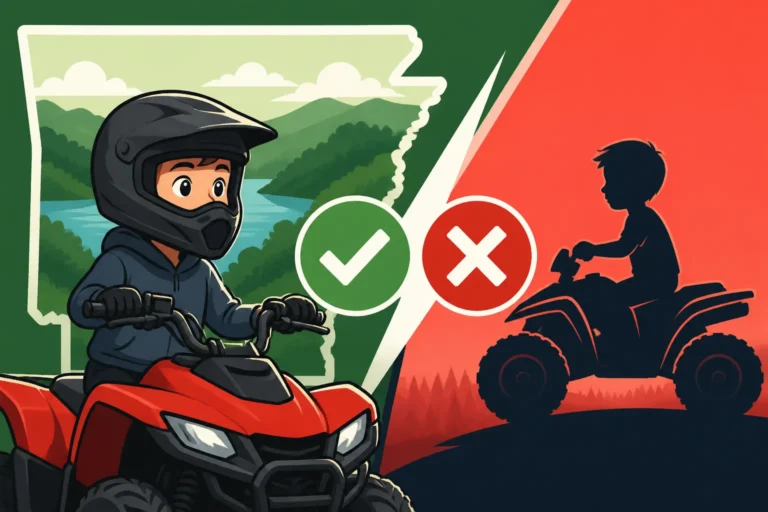
Let's get this out of the way upfront: Arkansas law is pretty clear that ATVs are generally not considered street legal for general public road use. It’s a common frustration for riders across the state, especially when your deer stand might be just a short jaunt down a county road. However, there are nuances, particularly for UTVs, and, most importantly for hunters, specific exceptions that can apply.
The Statewide Ban on ATVs on Public Roads
For the most part, traditional ATVs – those four-wheeled machines where you straddle the seat like a motorcycle – are prohibited from being operated on public streets, roads, and highways in Arkansas. The state statutes define these machines as "off-highway vehicles," and their design, tires, and lack of standard automotive safety features like turn signals and headlights (meeting D.O.T. standards) mean they don't fit the mold for on-road vehicles. This can be a real headache if your hunting property is split by a road or if your camp is a mile down a gravel county road from your stand. You might think, "It's just a dirt road, what's the big deal?" but legally, many of these are still considered public thoroughfares, and the general ban applies. This is why many riders trailer their ATVs even for short distances if any public road is involved. If you want a deeper dive into the general rules, check out [Can You Drive an ATV on the Road in Arkansas?].
How UTVs Are Different in Arkansas and Local Ordinances
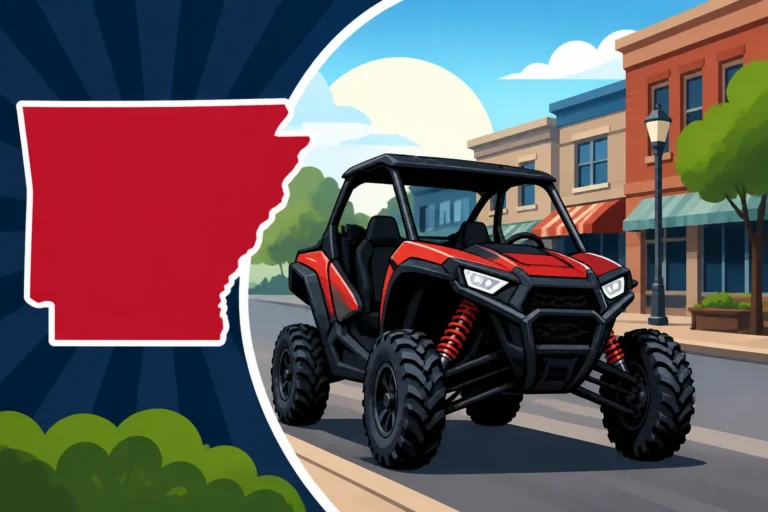
Now, UTVs, or side-by-sides, operate under a slightly different set of rules, which can sometimes lead to confusion. Historically, UTVs were lumped in with ATVs regarding public road use. However, Arkansas Act 922 brought about significant changes, giving local municipalities the option to allow UTVs (and only UTVs, not ATVs) on certain public streets within their city limits. This means that while there's no statewide "street legal" designation for UTVs, individual towns can pass ordinances to permit their use on streets posted 55 mph or less, provided the UTV meets certain equipment requirements like headlights, taillights, brake lights, seatbelts, a horn, and mirrors. Many owners install aftermarket accessories from brands like SuperATV to ensure their machines are compliant if their local town has adopted such an ordinance. While this local-option rule is fantastic for running errands or cruising around town, it's crucial to remember that it applies only within specific city limits that have enacted an ordinance. It doesn't magically make your UTV street legal on state highways or county roads outside those designated areas for general recreation. Understanding these city-specific rules is vital, and you can learn more about this by looking up [Arkansas Towns Can Open Their Streets to UTVs] and [Arkansas UTV Street Legal Rules by Town].
The Crucial "Hunting Operation" Exception
This is where things get really interesting and directly address the core of the matter for hunters. Arkansas law does provide a specific exception that allows the use of ATVs and UTVs on public roads when directly involved in a "hunting operation." This isn't a carte blanche to joyride with your bow in the back, but rather a targeted allowance for necessary tasks related to hunting.
What Qualifies as a Hunting Operation for Road Use
Arkansas Statute 27-21-106 outlines six specific exceptions to the general ban on off-highway vehicles on public roads. One of the most important for deer hunters is the "hunting operation" exception. This exception permits an ATV or UTV to be operated upon a public road or highway when "used in the conduct of a hunting operation." But what exactly does that mean? It means the vehicle's use must be directly and actively tied to the act of hunting, preparing for hunting, or dealing with the aftermath of a hunt.
Think of it this way: you can use your machine to travel from your hunting camp to your deer stand, especially if your stand is located a short distance down a county road. You can use it to transport hunting equipment like blinds, tree stands, feeders, or scent control gear to and from your hunting spot. Crucially, it also covers the vital task of retrieving harvested game. Hauling a heavy buck out of the woods and back to your processing area often necessitates using your ATV or UTV, and traversing a public road as part of that direct route falls under this exception. This exception acknowledges the practical realities of hunting in Arkansas, where these machines are indispensable tools. For more details on this specific allowance, refer to [Arkansas Hunting Operation Road Use].
Limitations and Conditions of the Hunting Exception
While the hunting operation exception is a lifesaver for many hunters, it's not without its limits. First and foremost, the use must be directly for the hunting operation. This means you shouldn't be taking a scenic detour or running into town for groceries under the guise of heading to your deer stand. The intent matters, and law enforcement can interpret "in the conduct of a hunting operation." Stick to the most direct and reasonable route.
Secondly, even with this exception, there are rules about how you interact with certain types of roads. When crossing a paved state highway or federal highway, you are generally required to come to a complete stop before proceeding. The law also often specifies that the crossing should be made "at roughly ninety degrees" to the highway. This is a safety measure, ensuring you're not lingering on high-speed roads. You can find more information about these safety protocols in [Arkansas Rules for Crossing a State Highway] and [Crossing at a Complete Stop]. It's always a good idea to have your hunting license and any relevant tags on you, along with proof of ownership for your ATV or UTV, in case you're stopped by a game warden or sheriff's deputy. While registration is a separate topic, being able to prove ownership and legal intent is key.
Navigating Public Lands, Private Property, and WMAs
The type of land you're hunting on significantly impacts what you can and cannot do with your ATV or UTV. Arkansas offers a mix of private lands, national forests, and Wildlife Management Areas, each with its own specific set of rules that overlay or supersede general road use exceptions.
Riding on Public Land and National Forests
Arkansas is blessed with vast tracts of national forests, particularly the Ouachita National Forest and the Ozark-St. Francis National Forests. While these offer incredible hunting opportunities, they also have strict regulations about where off-highway vehicles can be operated. Just because you have a hunting license and are engaged in a "hunting operation" doesn't mean you can create your own trails or ride anywhere you please. Forest Service land typically restricts ATV and UTV use to designated OHV trails and forest roads that are specifically marked for vehicle access.
Many of these trails and roads require a specific OHV permit from the Forest Service, separate from your hunting license. For instance, the Ouachita National Forest and the Ozark-St. Francis National Forests have their own permit systems, and often, a permit for one doesn't cover the other. These permits are crucial for legal riding, even when actively hunting. You can learn more about these requirements by reading [Arkansas OHV Permits: Two Forests, Two Prices] and [Arkansas National Forest Riding Explained]. Always consult maps from the local ranger district office or check their websites for current trail status and designated routes. Riding off-trail can lead to hefty fines and damage to natural resources, which no hunter wants to be responsible for. If you're looking for places to ride your ATV or UTV, explore resources like [Arkansas ATV Trails: Where to Ride] for legal riding areas.
Rules for Wildlife Management Areas (WMAs)
Arkansas's Wildlife Management Areas (WMAs), managed by the Arkansas Game and Fish Commission (AGFC), are another kettle of fish entirely. These areas are specifically managed for wildlife and hunting, and as such, their ATV and UTV rules are often very stringent and highly specific to each WMA. Many WMAs have severe restrictions on ATV and UTV use, often limiting them to designated "open access roads" and sometimes only for "travel to and from camp." Levees, food plots, and interior fire lanes are almost universally off-limits to ATVs and UTVs.
The AGFC’s regulations are designed to minimize disturbance to wildlife and habitat, especially during sensitive times like deer season. It's not uncommon for a WMA to ban ATVs and UTVs outright on certain days or in certain areas, even if you’re actively hunting. Before you even load your machine, it is absolutely critical to check the specific WMA regulations for the area you plan to hunt. These regulations can be found in the annual AGFC hunting guide or on their website. Never assume that general state laws or national forest rules apply to WMAs. For a detailed look at these regulations, see [Arkansas AGFC WMA Rules for Riders] and [Arkansas WMAs That Allow ATVs and Those That Do Not]. Failing to adhere to WMA rules can result in citations, fines, and even the loss of hunting privileges.
Private Property and Landowner Permission
When you're hunting on private land, whether it's your own, land you lease, or property owned by a friend or family member, the rules simplify considerably but still require diligence. On your own land, you generally have the freedom to operate your ATV or UTV as you see fit, including riding it directly to your deer stand, retrieving game, or performing property management tasks.
However, if you are hunting on someone else's private property, even with verbal permission, it is always, always best practice to obtain [Written Permission From an Arkansas Landowner]. This not only protects you legally if there's any dispute but also demonstrates respect for the landowner. This written permission should clearly state that you have permission to hunt and to use your ATV or UTV for hunting-related activities on their property. This becomes particularly important if you have to cross any public access points, even small ones, to get to your stand. Without explicit permission, you could be cited for trespassing or for illegal ATV use, depending on the circumstances. For more information on riding on leased land, consult [Arkansas Rules on Land You Lease]. Always be mindful of property boundaries, especially if adjacent to public roads or other private tracts, and ensure your riding doesn't infringe on neighboring properties.
Practical Considerations and Staying Legal
Beyond the letter of the law, there are practical steps and considerations that can help ensure your hunting trip is both successful and trouble-free. Being prepared can save you a lot of grief out in the woods.
Essential Gear and Machine Setup for Hunting
When using your ATV or UTV for hunting, having the right setup and gear is essential for both legality and efficiency. Many public lands, including national forests and some WMAs, require spark arrestors on off-highway vehicles. This is a critical safety measure to prevent wildfires, especially during dry conditions. Always ensure your machine is equipped with a functioning spark arrestor before heading out. [Arkansas Spark Arrestor Requirements] can give you more details.
Additionally, consider practical accessories. Heavy-duty racks or cargo boxes can make transporting treestands, feed, or harvested game much easier. SuperATV, for example, offers a wide range of accessories, from storage solutions to lighting upgrades, that can enhance your machine's utility for hunting purposes. If you’re riding at dawn or dusk, good lighting is paramount, not just for visibility but also for safety and to meet any local ordinance requirements if you're traversing a town with a UTV permit. Carrying a small toolkit, a tire repair kit, and a tow strap is also highly recommended, as breakdowns in remote areas can turn a great hunt into a major headache.
What a Deputy Can Ask to See
If you are stopped by a law enforcement officer or game warden while operating your ATV or UTV on a public road under the hunting operation exception, they will likely want to verify your legitimacy. You should be prepared to present:
- Proof of Ownership: This could be your bill of sale, title, or registration document.
- Identification: Your driver's license or state ID.
- Hunting License and Tags: To prove you are indeed engaged in a legal hunting operation.
- Forest Service Permit: If you are in a national forest area that requires one.
- Written Landowner Permission: If you are on private land not owned by you.
Having these documents readily accessible, perhaps in a waterproof bag on your machine, can make a stop quick and painless. Remember, cooperation and respect go a long way. If you want to know more about what officials might ask for, refer to [What a Deputy Can Ask to See]. Keep in mind that a citation for illegal road riding can be costly, so understanding the potential [Arkansas Penalties for Illegal Road Riding] underscores the importance of compliance.
Common Mistakes to Avoid
The woods and backroads of Arkansas are no place for guesswork when it comes to legal riding. Many hunters inadvertently make mistakes that can lead to fines or worse. Here are some common pitfalls to avoid:
- Assuming All Roads Are Fair Game: The hunting exception is for specific, direct travel. It's not an excuse for recreational riding on public roads or for using major state or federal highways beyond simple, direct crossings.
- Ignoring WMA Specific Rules: As mentioned, WMA rules often trump general state rules. Always, always check the specific WMA regulations. What's allowed in one WMA might be strictly forbidden in another.
- Lack of Landowner Permission: Even if you’ve hunted a property for years, having current, written permission is vital, especially if you're using a motorized vehicle.
- Riding Under the Influence: Arkansas's DUI laws apply to ATVs and UTVs just as they do to cars. Never operate your machine while impaired.
- Forgetting Permits on Public Lands: Don't overlook the need for specific Forest Service permits when riding on national forest lands, even if you're hunting.
- Misinterpreting "Hunting Operation": This isn't a general "I'm going hunting" free pass. It's for direct activities related to the hunt. Joyriding, taking long detours, or running personal errands don't fall under this exception.
By understanding these regulations and acting responsibly, you can enjoy the convenience and utility of your ATV or UTV to enhance your hunting experience in Arkansas without running afoul of the law. For a broader perspective on various riding mistakes, consider checking out [Common Arkansas Registration Mistakes], as many of the principles of compliance apply universally.
Here’s a quick overview of when you can and can't use your ATV or UTV to get to your deer stand:
| Scenario | ATV Use Generally Allowed? | UTV Use Generally Allowed? | Key Conditions/Considerations |
|---|---|---|---|
| On Your Own Private Land | Yes | Yes | No specific state restrictions, but local noise ordinances may apply. |
| On Leased/Friend's Private Land | Yes | Yes | Must have written permission from the landowner explicitly allowing ATV/UTV use. |
| On Public County/Gravel Roads | Yes | Yes | Only if directly part of a "hunting operation" (e.g., traveling to stand, retrieving game). Not for recreational use. |
| Crossing a State/Federal Highway | Yes | Yes | Must come to a complete stop and cross as directly as possible (roughly 90 degrees). Only if part of a "hunting operation." |
| On Paved City Streets (in some towns) | No | Yes | Only if the specific city has passed an ordinance allowing UTVs, and the UTV meets equipment requirements. Not applicable for ATVs. |
| In National Forests | Yes | Yes | Only on designated OHV trails/forest roads. Requires a specific Forest Service permit (e.g., Ouachita or Ozark-St. Francis permit). Must still be for a "hunting operation" on forest roads. |
| In Wildlife Management Areas (WMAs) | Highly Restricted | Highly Restricted | Varies greatly by WMA. Often limited to specific "open access roads" for travel to/from camp only. Always check specific WMA rules before riding. Many areas are entirely off-limits. |
| For General Recreation (not hunting) | No | No | Not allowed on public roads for general recreational riding. City UTV ordinances are for specific city streets, not state/county roads. |
Disclaimer
This article is for general informational purposes only and does not constitute professional advice. Laws, prices and regulations vary by location and change over time. Consult a qualified professional for guidance on your specific situation.