Arkansas Towns Can Open Their Streets to UTVs
Trying to figure out where you can legally drive your UTV on public streets in Arkansas can feel like navigating a maze blindfolded. One minute you hear it's completely illegal, the next you see someone cruising down a main street in a side-by-side. This confusion is real, and it stems from a crucial change in state law that now gives local towns the power to create their own rules. This guide will thoroughly break down the state statutes, the recent legal shifts, and the practical steps cities are taking to allow UTVs on their streets, helping you understand exactly where and how you can ride.
The State Law Foundation: Why UTVs are Generally Banned on Arkansas Roads
For a long time, the answer to "Can I drive my UTV on the road in Arkansas?" was a resounding "No," with very few exceptions. Arkansas, like many states, designed its traffic laws primarily for vehicles built for public highways, which ATVs and UTVs traditionally are not. They lack many of the safety features and registration requirements of cars, trucks, and even motorcycles, making them generally unsuitable and unlawful for mixing with regular traffic. This blanket prohibition was put in place to ensure public safety and maintain the integrity of our road systems. It's a fundamental principle that off-highway vehicles belong off-highway, a point that has always been crystal clear in the statute books.
The Core Prohibition 27-21-106
The bedrock of Arkansas's stance on off-highway vehicles on public roads is codified in Arkansas Code Annotated § 27-21-106. This statute clearly states that an "off-highway vehicle shall not be operated on any public street or highway of this state." That's a pretty straightforward ban, isn't it? For years, this meant that if your wheels touched asphalt on a state or county road, you were likely breaking the law, unless you fit into a very specific, narrow set of exemptions. This created a lot of frustration for riders who just wanted to get from their house to a trail, or even across town for a bite to eat. The law, in its broad stroke, considered your side-by-side as something akin to a dirt bike or an ATV – a recreational machine for dirt, not pavement.
Imagine trying to explain to a deputy that you were just trying to get to your hunting camp a mile down the county road, and receiving a ticket because your "off-highway vehicle" was technically on a "public street." This scenario played out for many riders across the state, even those who felt they were being responsible and safe. The statute didn't differentiate much between a short hop down a gravel road and a full-on highway cruise; the prohibition was nearly absolute. It painted all off-highway vehicles with the same brush, regardless of their size, safety features, or how responsibly they were being operated. This rigid interpretation often felt out of step with the evolving capabilities and common uses of modern UTVs, leading to a strong desire for legislative change.
Limited Exceptions to the General Ban
Now, while the primary statute was restrictive, there were always a handful of very specific, narrowly defined exceptions where ATVs and UTVs could legally touch public roads. These exceptions weren't for general recreational use but were designed for essential functions. For instance, you could typically cross a public road at roughly a ninety-degree angle, provided you came to a complete stop first and yielded to traffic. This was practical for moving between fields or connecting private property segments. [Arkansas Direct Crossing at Ninety Degrees] outlines this specific maneuver.
Other exceptions generally revolved around specific operational needs. Farmers, for example, often had allowances to use their machines on public roads for agricultural purposes, transporting equipment or livestock for short distances. Similarly, law enforcement, emergency medical services, utility companies, and state parks employees were granted exemptions to perform their official duties. [Arkansas Farming Operation Road Use] and [Arkansas Utility Company Crews on ATVs] provide more context on these. These exceptions were never intended to open up roads for general UTV use but rather to prevent the law from hindering critical services and industries. If you weren't actively engaged in one of these exempted activities, your UTV was still confined to off-road environments.
These traditional exceptions also included provisions for hunting operations, allowing riders to travel to and from hunting camps during certain seasons, again, usually on the most direct routes and often on unimproved roads. There was even an exception for individuals with a serious walking disability. However, it's crucial to understand that even with these exceptions, the spirit of the law was still to keep these machines off regular traffic ways as much as possible. They weren't an open invitation; they were more like carefully drawn lines around very specific circumstances, and anything outside those lines remained strictly prohibited, creating a very limited landscape for UTV owners.
Act 922 of 2025: The Game Changer for Arkansas Towns
The landscape for UTV owners in Arkansas shifted dramatically with the passage of Act 922. This legislation represented a significant departure from the previous, highly restrictive state-wide ban, acknowledging the growing popularity and utility of side-by-sides. For years, communities had seen their residents invest heavily in these machines, using them for recreation, property maintenance, and even short-distance transportation within rural areas. The old state law often felt like an outdated restriction, leading to calls for more localized control. Act 922 was the legislative answer to this sentiment, recognizing that what works in a bustling city might not make sense in a small, rural town.
What Act 922 Empowered Local Municipalities To Do
Act 922, [How a Bill Became Arkansas Act 922], fundamentally changed the game by granting local municipalities the authority to create their own ordinances regarding UTV use on their public streets. Before this act, towns and cities had virtually no say in the matter; state law was supreme, and the ban stood. Now, a city council, after careful consideration and public input, can pass an ordinance that permits the operation of UTVs on designated public streets within their corporate limits. This is a massive shift, moving the decision-making power from a blanket state mandate to a hyper-local level, where individual communities can weigh the pros and cons for their specific context.
This new power means that instead of a statewide "no," the answer has become "it depends on the town." This legislative move acknowledges that small towns, often built around agricultural or recreational industries, have different needs and traffic patterns than larger urban centers. It allows a town like Bono, which was quick to pass an ordinance, to cater to its residents and visitors who might use UTVs to access local businesses or reach nearby trailheads. The beauty of Act 922 is its flexibility, enabling each community to tailor rules that best fit its unique character and safety concerns, rather than being shackled by a one-size-fits-all approach. It essentially decentralized the regulation of UTV street access.
However, it's not a free-for-all. Act 922 didn't just hand over the keys without any guidelines. While it empowered local control, it also implicitly required municipalities to establish clear rules and regulations within their ordinances. This includes setting speed limits, specifying required equipment, determining permissible streets, and outlining rider qualifications. The intent was to allow UTVs responsibly, not to create chaos. So, while a town can open its streets, it must do so thoughtfully, with safety and community well-being at the forefront of its decision-making process. The power comes with a significant responsibility to create a safe and sensible framework.
Effective Date and Its Significance
Act 922 of 2025 became effective on August 5, 2025. This date is crucial because it's the moment the legal landscape officially changed and municipalities gained the authority to act. Before this date, any local ordinance attempting to permit UTVs on public streets would have been in direct conflict with state law and therefore unenforceable. [August 5, 2025 and What Changed] offers further details on the specific date and its implications. It provided a clear demarcation, signaling to both riders and local governments that a new era had begun, and the rules of the road, at least for UTVs, were now subject to local discretion.
The significance of this effective date cannot be overstated for anyone interested in UTV street legality in Arkansas. It meant that cities and towns across the state could begin the process of drafting, debating, and ultimately passing their own ordinances. It triggered a wave of local legislative activity as communities considered what UTV access would mean for their local economies, tourism, and resident convenience. For riders, it meant they finally had a path to legal street use in some areas, shifting the conversation from a blanket ban to a nuanced discussion about local options. This date marked the pivot point from broad state control to localized governance for these machines.
This phased approach, waiting for a specific effective date, also allowed for a period of adjustment. State agencies, local law enforcement, and city planners had time to prepare for the changes. They could study what other states had done, anticipate potential challenges, and develop best practices for implementation. It wasn't an overnight switch, but a carefully legislated transition that gave all stakeholders time to understand the new framework. This deliberate timing underscored the importance of the change and the need for thoughtful, rather than rushed, local implementation to ensure both safety and successful integration of UTVs onto city streets.
How an Arkansas City Council Opens Streets to UTVs
So, how does a town actually go about taking advantage of Act 922? It's not as simple as the mayor just saying "Go for it!" There's a formal process involved, rooted in local governance and community input. A city council can't just wave a magic wand; they have to follow established legal procedures to enact any new ordinance, especially one that impacts public safety and traffic flow. This process is designed to ensure transparency, allow for public discourse, and result in well-considered regulations that reflect the community's needs and concerns.
The Ordinance Process: Public Hearings and Votes
For an Arkansas town to open its streets to UTVs, the local city council must pass an ordinance. This typically begins with a proposal or a draft ordinance, often initiated by a council member, a concerned citizens' group, or even the mayor's office. This draft then goes through a legislative process, which almost always includes public hearings. These hearings are incredibly important, providing a forum for residents to voice their opinions, concerns, and support for the proposed changes. Imagine a town hall meeting where local business owners share how UTV access could boost tourism, while other residents raise concerns about noise or safety on neighborhood streets.
Following public input, the ordinance may be revised based on feedback. The council members then debate the merits and specifics of the proposal. Multiple readings of the ordinance are often required, spread out over several council meetings, to ensure ample time for deliberation and for the public to stay informed. Finally, a vote is held. For the ordinance to pass, it generally requires a majority vote of the city council members. If it passes, it's officially adopted into local law, effectively opening up the designated streets to UTVs under the stipulated conditions. This democratic process ensures that the decision reflects the will of the local community. [How an Arkansas City Council Opens Streets to UTVs] further details this process.
This process, while seemingly bureaucratic, is vital for a few reasons. First, it ensures that all stakeholders, from UTV enthusiasts to concerned homeowners, have a chance to be heard. Second, it allows the city council to craft an ordinance that is truly tailored to the unique circumstances of their town, rather than just copying another city's rules. For example, a town with a strong tourism draw for outdoor recreation might have different priorities than a quiet residential community. Third, the public nature of the process builds community buy-in and understanding, which is crucial for successful implementation and compliance with the new rules. Without this careful consideration, any new ordinance risks being divisive and difficult to enforce.
Key Elements a Local Ordinance Must Address
When a city council drafts an ordinance to allow UTVs on its streets, there are several key elements it must address to create a clear, enforceable, and safe framework. Simply saying "UTVs are allowed" is not enough; the details matter immensely. These elements ensure that the new rules are comprehensive and leave little room for ambiguity, protecting both riders and the general public. Without clear guidelines, confusion would reign, and the purpose of the ordinance would be undermined.
First and foremost, the ordinance needs to specify which streets are open to UTVs and which are not. Many towns limit access to streets with posted speed limits below a certain threshold, often 35 mph or 55 mph, and typically prohibit UTVs on four-lane state highways or federal routes passing through town. [Arkansas Streets Under 55 mph for UTVs] and [Arkansas Four-Lane Streets Stay Closed] cover these limitations. It's not uncommon for specific roads or sections, such as those near schools or hospitals, to remain off-limits for safety reasons. This designation often appears on official city maps or is clearly listed in the ordinance text itself.
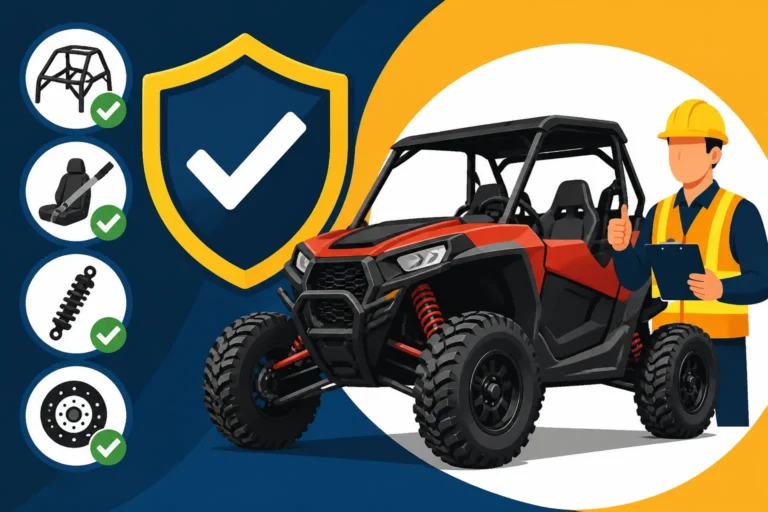
Secondly, the ordinance must outline the required safety equipment for UTVs operating on public streets. This ensures that these off-highway machines are adequately equipped to share the road safely with other vehicles. Common requirements include working headlights, taillights, brake lights, turn signals, and mirrors. [Arkansas Turn Signal Requirements for Street UTVs] provides a good example of specific equipment mandates. Other towns might require a windshield, a horn, or even a specific type of tire. These requirements are essential for visibility and communication, allowing UTV drivers to signal their intentions and be seen by other motorists, which is paramount for preventing accidents. Many riders might look to aftermarket parts from companies like SuperATV to ensure their machines meet these new street-legal specifications.
Finally, a comprehensive ordinance will also address driver qualifications, insurance requirements, and any local permitting or fee structures. Who can drive? What age do they need to be? Do they need a valid driver's license? What kind of insurance is required? Many ordinances stipulate that drivers must be at least 16 years old and hold a valid driver's license. [Arkansas Driver's License at 16 for Street UTVs] clarifies this. Furthermore, many towns require UTV owners to obtain a special local permit, often with an annual renewal fee, and may mandate proof of liability insurance. These permits typically include a decal that must be displayed on the UTV, making it easy for law enforcement to identify compliant vehicles. These administrative details are critical for ensuring accountability and funding local enforcement efforts.
Common Regulations in Arkansas UTV Ordinances
Once a town decides to open its streets, it doesn't just throw open the gates without rules. Local ordinances are crafted with safety and community integration in mind, meaning they come with a specific set of regulations that UTV owners must follow. These regulations often mirror those for other types of vehicles, but with special considerations for the unique nature of UTVs. Navigating these rules is crucial for any rider hoping to take their side-by-side onto town streets legally. Without adherence, the privilege of street access could be revoked, or riders could face citations.
Speed Limits and Road Types
One of the most universal restrictions you'll find in Arkansas UTV ordinances concerns speed limits and the types of roads permitted for use. Most cities establish a maximum speed limit for UTVs that is often lower than the posted limit for cars, or they restrict UTVs to streets where the posted limit is already low. A common cap is 35 mph, but some ordinances might allow up to 55 mph on certain roads. [Arkansas Streets Under 55 mph for UTVs] explicitly addresses this. This is designed to ensure that UTVs, which may handle differently than cars at higher speeds, operate safely within the traffic flow.
Equally important are the restrictions on which roads UTVs can use. It's extremely common for ordinances to prohibit UTVs on multi-lane state highways or federal routes that pass through town, even if the speed limit on those sections is within the UTV's allowable range. [Arkansas Four-Lane Streets Stay Closed] explains this rationale. These roads often have higher traffic volumes, greater speeds, and are generally deemed unsuitable for UTV operation due to the increased risk. Therefore, while you might be able to use your UTV to run errands on residential streets or quieter county roads, don't expect to hop on a major highway. Riders must pay close attention to signs and the ordinance's specific list of excluded roads. For instance, in Bono, Highway 63 is explicitly excluded from UTV access, even though it runs right through town. [Why Highway 63 Stays Off Limits in Bono] highlights this specific exclusion.
This careful demarcation of speed and road types is a fundamental safety measure. It ensures that UTVs primarily operate in environments where their unique characteristics are less likely to pose a hazard. Imagine a scenario where a UTV, designed for off-road ruggedness, attempts to keep pace with highway traffic; it's a recipe for danger. By limiting them to slower-speed, lower-traffic roads, cities are trying to integrate them into the community responsibly. Riders should always carry a copy of their local ordinance, or at least be intimately familiar with it, to avoid inadvertently breaking these crucial rules, especially when exploring a new town.
Equipment Requirements for Street-Permitted UTVs
For a UTV to be considered street-legal under a local Arkansas ordinance, it almost always needs to be outfitted with specific safety equipment. These aren't just suggestions; they are mandates designed to make the machine visible and capable of communicating with other vehicles on the road, much like a standard car or truck. Without these essential components, your UTV will not meet the requirements for street use, regardless of whether a permit is issued. Many manufacturers, and aftermarket suppliers like SuperATV, offer street-legal kits to help owners comply.
The most common equipment requirements include working headlights and taillights, essential for visibility, especially during dawn, dusk, or inclement weather. Brake lights are also universally required, signaling to drivers behind you when you're slowing down. Beyond basic lighting, turn signals are critical for indicating turns and lane changes. [Arkansas Turn Signal Requirements for Street UTVs] notes this. Many UTVs don't come factory-equipped with turn signals, so this is often an aftermarket addition. Similarly, a rearview mirror and often side mirrors are necessary to give the driver a full view of traffic around them, just like any other road vehicle. A horn, for signaling warnings, is another standard requirement.
In some ordinances, additional items like a windshield, windshield wipers, seat belts for all occupants, and even non-highway tires might be specified. While seat belts are standard on most UTVs, ensuring they are functional and used by all passengers is usually part of the ordinance. The idea is to bring the UTV as close as possible to the safety and visibility standards of other vehicles sharing the street. Before you even think about applying for a permit, a thorough inspection of your machine's current equipment against your town's specific ordinance requirements is absolutely necessary. Failure to meet these criteria will mean your UTV cannot legally operate on city streets. [Arkansas Equipment for a Street-Permitted Machine] provides further context for these requirements.
Permitting, Fees, and Annual Renewals
To operate a UTV on a town's streets under an ordinance, you'll almost certainly need to obtain a special local permit. This isn't the same as state registration (which is for off-road use) but a specific authorization from the municipality. This permitting process serves several purposes for the city: it allows them to track the number of UTVs on their streets, ensures owners are aware of and comply with the rules, and often generates revenue to cover the administrative costs of the program and potentially fund road maintenance or safety initiatives.
The process typically involves an application to the city clerk or police department, along with payment of a fee. [Arkansas UTV Street Permits and Annual Fees] highlights the existence of these local permits and their associated costs. These fees can vary significantly from one town to another; some might charge a nominal annual fee, while others might have a more substantial initial or renewal cost. For example, a town might charge an annual fee for a UTV street permit, similar to how a vehicle tag is renewed each year. This permit often comes in the form of a sticker or decal that must be prominently displayed on your UTV, usually on the windshield or a visible part of the body, allowing law enforcement to quickly verify compliance.
It's also crucial to understand that these local permits are almost always subject to annual renewal. This means that once you get your permit, you can't just forget about it. You'll need to reapply and pay the fee each year to maintain your street-legal status. This annual renewal process ensures that the city has up-to-date records and that UTV owners are regularly reminded of their responsibilities and any changes to the ordinance. Missing a renewal could mean riding illegally and facing fines. Always confirm the validity period and renewal process with your local city hall to avoid any lapses in your street-legal status. [Arkansas Street UTV Annual Renewal] is a good resource for understanding these ongoing requirements.
Rider Requirements and Responsibilities
Beyond the machine itself, the person operating the UTV on public streets also has significant requirements and responsibilities. Just like driving a car, operating a street-legal UTV comes with legal obligations regarding age, licensing, insurance, and overall conduct. These are not merely suggestions; they are fundamental components of safe and legal operation, ensuring that individuals behind the wheel are qualified and accountable. Ignoring these responsibilities can lead to serious legal consequences, not just for the rider, but potentially for the community at large.
Age and Licensing for Street-Legal UTV Drivers
One of the most critical aspects of any UTV street ordinance is the requirement for drivers to be of a certain age and possess a valid driver's license. This is a common-sense safety measure. UTVs, even when properly equipped, are still powerful machines that require mature and experienced operators to navigate public streets safely alongside cars, trucks, and pedestrians. They are not toys for unsupervised minors.
Most Arkansas cities that have passed UTV ordinances specify that a driver must be at least 16 years old and hold a valid, unexpired driver's license. [Arkansas Driver's License at 16 for Street UTVs] makes this clear. This aligns with the minimum age for obtaining a standard driver's license in Arkansas, ensuring that UTV drivers have undergone driver training and passed the necessary tests to demonstrate their competency and understanding of traffic laws. You won't be able to just let your 14-year-old take the UTV for a spin on city streets, even if they're perfectly capable of driving it on private land.
This requirement also means that any suspension or revocation of your standard driver's license would also prevent you from legally operating a street-permitted UTV. The UTV, in this context, is treated much like any other motor vehicle on the road. So, if you're pulled over for a traffic infraction while driving your UTV on a city street, the same rules and penalties regarding licensing apply as if you were driving your car. It underscores the fact that once you bring your UTV onto public roads, you assume the full responsibilities of a licensed driver.
Insurance and Liability Considerations
Another non-negotiable requirement for street-legal UTV operation in most Arkansas towns is proof of liability insurance. Just like cars, accidents can happen, and if you're involved in a collision while driving your UTV on a public street, you need to be financially responsible for any damages or injuries you might cause. This protects other motorists, pedestrians, and the city itself from uninsured losses.
Local ordinances typically mandate that UTVs operating on city streets carry a minimum amount of liability insurance. [Arkansas Insurance for a Street-Permitted UTV] touches on this. This insurance coverage is designed to protect third parties from bodily injury and property damage, ensuring that if you're at fault in an accident, there's a mechanism to cover the costs. It's not uncommon for cities to require proof of this insurance during the permitting process and for drivers to carry proof of insurance with them while operating the UTV.
It's absolutely critical for UTV owners to check with their insurance provider to ensure their policy covers street operation. Standard off-road ATV/UTV policies might not extend coverage to public street use. You might need a specific endorsement or a separate policy to be fully compliant and protected. Relying on an off-road-only policy for street use could leave you in a devastating financial situation if an accident occurs. Always confirm with your insurance agent that your UTV is fully covered for street operation in your specific municipality, as navigating liability without adequate insurance can be a nightmare.
Displaying Permits and Proof of Compliance
Once you've gone through the process of getting your UTV properly equipped, permitted, and insured, your responsibility doesn't end there. You also have an obligation to display the required permits and carry proof of compliance whenever you're operating the UTV on city streets. This makes it easy for law enforcement to quickly verify that your machine and your operation are legal, allowing them to focus on true rule-breakers.
Most ordinances that require a local permit will issue a physical decal or sticker that must be affixed to a visible part of your UTV, such as the windshield, dashboard, or front fender. [Displaying a City UTV Permit Sticker on Your Windshield] covers this. This visual identifier is essentially your "street pass" for that specific municipality. Without it, even if you have a valid permit in your wallet, an officer might assume your UTV is operating illegally, leading to a stop and potential citation. The purpose is instant verification.
In addition to the visible decal, you should always carry your physical driver's license, proof of insurance, and potentially a copy of your UTV permit and even the local ordinance itself. If you're stopped by an officer, being able to readily provide all required documentation demonstrates your compliance and responsibility. Think of it like driving your car: you wouldn't leave home without your license and insurance card. The same diligent approach applies to your street-legal UTV. Being prepared can save you time, hassle, and potential fines during a roadside check. [What a Deputy Can Ask to See] provides general context for what officers might check.
Navigating Different Local Ordinances: A Patchwork of Rules
With Act 922 empowering individual towns, Arkansas is developing a patchwork of UTV street rules. What's legal in one town might be strictly prohibited just a few miles down the road. This localized approach, while beneficial for tailored solutions, creates a complex landscape for riders to navigate. It's a reality that demands careful attention and research, as there's no longer a simple statewide answer to UTV street legality. You can't assume that because your neighbor in another town can ride on their streets, you can ride on yours.
Why Rules Vary So Much from Town to Town
The primary reason rules vary so significantly is the very nature of Act 922: it grants local option. Each city council evaluates the unique characteristics of its community when drafting an ordinance. A small, rural town in the Ouachita Mountains might embrace UTVs as part of its outdoor tourism strategy, allowing them on many streets to access local businesses, trails, or even deer leases. [Arkansas Towns Can Open Their Streets to UTVs] reinforces this local control. They might see UTVs as a way to boost their economy and cater to a specific demographic.
Conversely, a more suburban or densely populated town might have greater concerns about noise, traffic congestion, or pedestrian safety. This could lead them to adopt a much more restrictive ordinance, perhaps limiting UTVs to a very small subset of residential streets or banning them entirely. For example, [Cotter's Ordinance Banning ATVs in Arkansas] shows that not all towns will choose to allow UTVs. The physical layout of the town, the presence of major highways, the local population's demographics, and even the preferences of the city council members can all play a role in shaping the final regulations. There's no mandate for uniformity, leading to diverse outcomes.
Consider the example of Bono, which was one of the first towns to pass an ordinance. [Bono and the First Arkansas UTV Ordinance] highlights its proactive approach. Their rules reflect their specific community needs and concerns. Another town might have different types of roads, more schools, or more elderly residents, leading to stricter speed limits or more limited access. The local context is king, and it dictates everything from permissible streets to required equipment and operating hours. This individuality means that assuming universal rules across Arkansas is a recipe for trouble.
Checking Your Specific City's Ordinance
Given the varied landscape, the single most important piece of advice for any UTV owner wanting to ride on city streets is this: always check the specific ordinance for the town you intend to ride in. Do not rely on hearsay, social media, or what a friend says is allowed in a different town. What's legal in one place might get you a hefty fine in another. [Reading Your Town's Ordinance Before You Ride] underscores this critical step.
The best way to do this is to contact the city clerk's office or the local police department of the municipality in question. Many cities will have their ordinances published online on their official website, making them easily accessible. Look for sections specifically referencing "Off-Highway Vehicles," "UTVs," "Side-by-Sides," or "Golf Carts" (though [Arkansas Golf Cart Ordinances Under 14-54-1410] are a different category). You need to read the full text of the ordinance to understand all the nuances: which streets are open, what equipment is required, what speed limits apply, what the permitting process entails, and any operating hour restrictions.
Imagine you're planning a weekend trip to a new area with your UTV. Before you even load it onto the trailer, make a quick call to the city hall of the town where you'll be staying or riding. Ask them directly about their UTV ordinance. This proactive step can save you immense frustration, potential legal trouble, and ensure your trip is enjoyable and compliant. A few minutes of research can prevent a costly misunderstanding on the road.
Riding Between Towns with Differing Rules
This is where the "patchwork" really gets complicated. What happens if you want to ride your UTV from a town that allows street use to an adjacent town that doesn't, or vice versa? Or perhaps you're riding through two towns, both of which allow UTVs, but with wildly different rules? This scenario is a genuine challenge for UTV enthusiasts in Arkansas.
The fundamental rule here is that you are subject to the laws and ordinances of the jurisdiction you are currently in. If you leave a town that allows UTVs on its streets and enter a town that does not, or one where UTVs are explicitly banned from public roads, you immediately become an illegal operator once you cross that municipal boundary. There's no "grandfathering in" or grace period based on where you started your ride. This applies even if you're just crossing a street that happens to be the municipal dividing line.
This means riders need to be acutely aware of municipal boundaries and the ordinances of all towns they plan to traverse. For longer rides, this might involve carefully mapping out your route to ensure you only use streets within jurisdictions that permit UTVs under their respective ordinances. In practical terms, this might mean trailering your UTV through certain areas or sticking strictly to off-road trails if you cannot confirm street legality for your entire route. [Riding Between Two Towns] is a crucial consideration. Unfortunately, until more widespread and harmonized ordinances exist, moving between towns often means exercising caution and knowing exactly where you stand legally at all times.
Benefits and Challenges of Local UTV Street Access
The decision for Arkansas towns to open their streets to UTVs is not made in a vacuum. It comes with a mix of potential benefits, particularly for local economies and recreation, but also distinct challenges, especially regarding safety and community acceptance. City councils weigh these factors carefully during the ordinance drafting process, trying to strike a balance that serves the community well. Understanding both sides of this coin is essential for appreciating the local approach.
Economic and Recreational Advantages for Communities
For many towns, especially those in areas rich with outdoor recreation like the Ozarks and Ouachitas, allowing UTVs on streets can provide a significant economic boost. When riders can legally access local businesses from their machines, it encourages them to spend money in town. Imagine a group of riders finishing a day on trails, then easily driving their UTVs to a local restaurant for dinner, a general store for supplies, or a gas station for fuel, all without having to re-trailer their machines. This direct access can be a game-changer for small businesses.
This increased accessibility can also position a town as a more attractive destination for UTV tourism. Riders are often looking for places where they can fully enjoy their hobby, and if a town offers both great trails and the convenience of street access to amenities, it becomes a prime spot. This can lead to more visitors staying in local hotels, cabins, or campgrounds, further injecting revenue into the local economy. [Arkansas ATV Camping With Trail Access] is often a draw for these visitors. The presence of UTV-friendly policies can draw riders from across Arkansas and even neighboring states, expanding the local customer base beyond just residents.
Beyond tourism, street access can also improve the quality of life for local UTV owners. It allows them to use their machines for practical purposes, such as quick trips to the store, commuting to a nearby job on a permissible street, or easily moving between different parts of their property. This convenience can make UTVs even more valuable to residents, fostering a sense of community pride and local recreational opportunity. In essence, it integrates UTVs more fully into the fabric of the community, turning them into versatile tools for both leisure and practical errands.
Safety Concerns and Community Feedback
However, the decision to allow UTVs on city streets is not without its concerns, with safety often being at the forefront. UTVs are generally lower, less visible, and handle differently than cars, which can raise legitimate worries about their interaction with other vehicles, pedestrians, and cyclists. Residents might express fears about increased traffic accidents, especially if UTV drivers are inexperienced or irresponsible. The speed differential between a UTV and a car, even on slower streets, can sometimes be a point of concern.
Noise is another common challenge. While UTVs have become quieter over the years, they can still be louder than passenger cars, especially if they have aftermarket exhausts. An influx of UTVs on residential streets, particularly late at night or early in the morning, can lead to complaints from residents about noise pollution disturbing the peace. [Arkansas Noise Complaints About Quads] reflects this common issue. City councils must balance the economic benefits with the quality of life concerns of all residents, not just UTV owners.
Public feedback during the ordinance process often highlights these concerns, and city councils must address them through careful regulation. This is why ordinances include specific equipment requirements (like turn signals and mirrors), speed limits, and designated streets. [Arkansas Safety Concerns] are a primary reason for these rules. The goal is to mitigate risks and ensure that UTVs can operate safely and respectfully within the community. Ignoring these concerns can lead to a backlash from residents, potentially resulting in stricter rules or even the repeal of an ordinance if problems persist. Finding the sweet spot between access and safety is a delicate act.
The Future of UTV Street Access in Arkansas
Looking ahead, the landscape of UTV street access in Arkansas is likely to continue evolving. As more towns consider and pass their own ordinances, a clearer picture of best practices will emerge. We might see some standardization of rules across neighboring municipalities, or at least a better understanding of what works and what doesn't in various community types. The experiences of early adopters, like Bono, will serve as case studies for other towns contemplating similar measures.
One potential future development could be efforts to harmonize regulations. As riders increasingly travel between towns, the current patchwork of rules can be confusing and frustrating. There might be a push for regional agreements or even further state-level legislation to provide a more consistent framework, while still allowing for local nuances. This could involve, for example, a standard set of equipment requirements that all street-legal UTVs must meet statewide, leaving specific road access up to local control.
Ultimately, the future of UTV street access in Arkansas hinges on responsible riding and effective local governance. If UTV operators demonstrate respect for the rules, other road users, and their communities, the ordinances are more likely to be successful and expand. Conversely, widespread non-compliance or a rise in safety incidents could lead to stricter enforcement, limitations, or even the revocation of street access. The success of Act 922 rests heavily on the partnership between local governments and the UTV riding community to ensure safe, responsible, and enjoyable integration of these machines onto Arkansas streets.
| Requirement Category | Typical Arkansas Ordinance Requirements | Notes for Riders |
|---|---|---|
| Driver | – Valid Driver's License | Must be 16+ years old. |
| – Minimum Age (e.g., 16) | Carried at all times. | |
| Machine | – Headlights (low & high beam) | Functional & visible. |
| – Taillights | Functional & visible. | |
| – Brake Lights | Functional & visible. | |
| – Turn Signals (front & rear) | Often aftermarket addition. | |
| – Rearview Mirror | Required, often with side mirrors. | |
| – Horn | Audible from 200 ft. | |
| – Windshield | Some ordinances require. | |
| – Seat Belts for all occupants | Must be worn. | |
| – Spark Arrestor | Good practice, sometimes implied. | |
| Operation | – Local Permit/Decal | Displayed visibly on UTV. |
| – Proof of Liability Insurance | Carried in UTV. | |
| – Speed Limits (e.g., 35-55 mph) | Adhere strictly to posted limits. | |
| – Designated Streets Only | Check specific city ordinance map. | |
| – Operating Hours | Some ordinances restrict night riding. |
Disclaimer
This article is for general informational purposes only and does not constitute professional advice. Laws, prices and regulations vary by location and change over time. Consult a qualified professional for guidance on your specific situation.