Arkansas Rules for a Visiting Oklahoma Rider
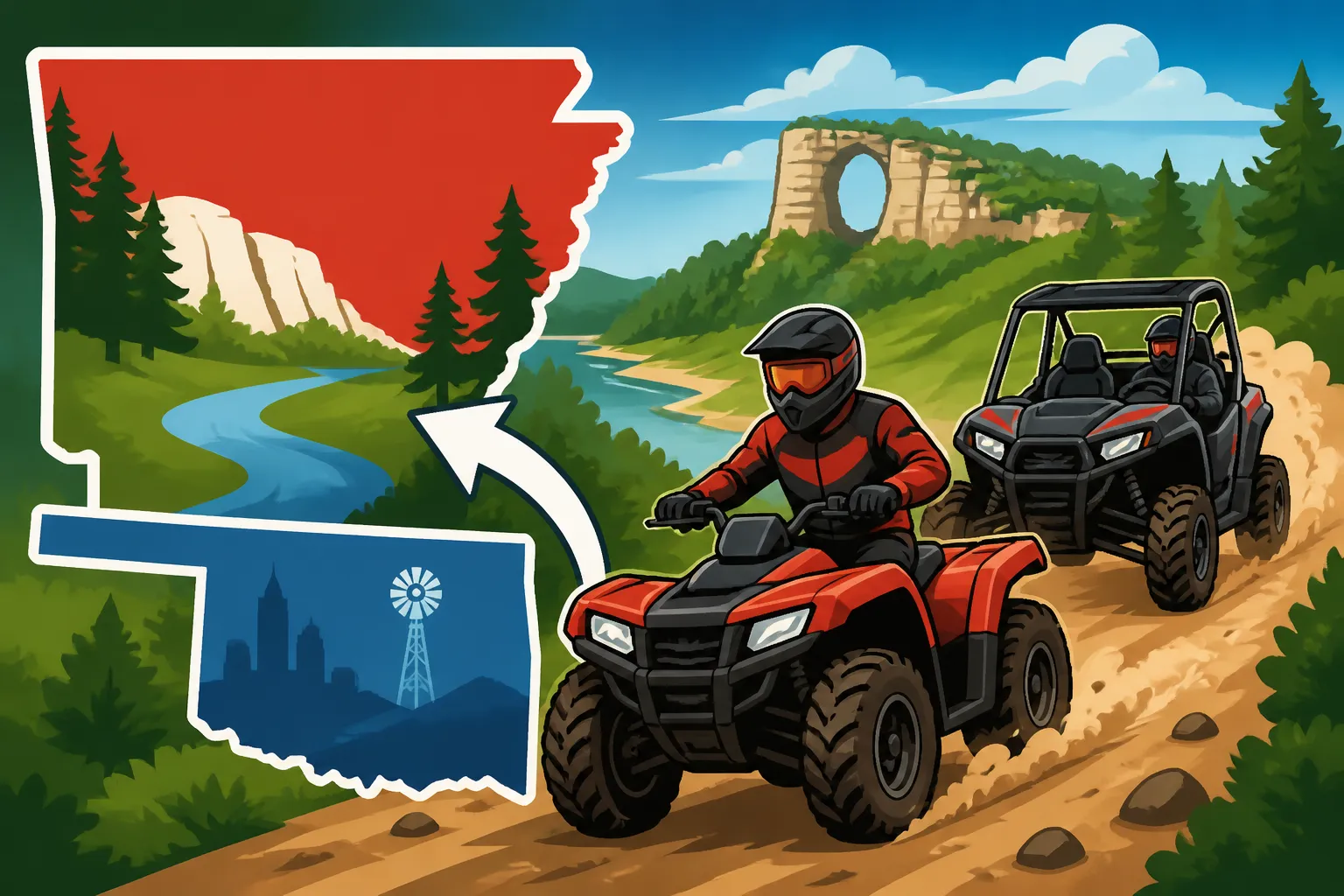
Planning a trip to Arkansas with your ATV or UTV can be super exciting, but it often brings a heap of questions, especially about differing state laws. You've got your machine registered and ready to roll in Oklahoma, but how does that translate when you cross the border into the Natural State? It can feel like navigating a legal maze, with worries about registration, road rules, and trail access. This guide aims to clear up that confusion, specifically for our Oklahoma neighbors, so you can enjoy Arkansas's incredible riding opportunities without a hitch.
Navigating Arkansas Registration for Out-ofState Riders
One of the first things Oklahoma riders often wonder about is registration. In Arkansas, the state's ATV and UTV registration system is designed primarily for its own residents and permanent residents, establishing a one-time registration and issuing a decal. This means if you're just visiting from Oklahoma, the rules can be a bit different from what a resident would experience.
What Arkansas Requires from Non-Residents
Generally speaking, if your ATV or UTV is legally registered and has current plates or decals in your home state of Oklahoma, Arkansas usually recognizes that registration for temporary recreational use. You typically aren't required to get a separate Arkansas registration decal just to visit and ride trails, especially if you're not planning to stay long-term or use the machine for activities that would constitute permanent residency. The state's intent with its one-time registration is largely to track ownership for tax purposes and to ensure machines used by residents have a unique identifier. This means the worry of double-registering is usually off the table for visitors. However, it's always smart to carry proof of your Oklahoma registration and insurance with you while riding.
It's a common misconception that because Arkansas has a unique one-time, non-renewing registration system, every machine in the state needs an Arkansas decal. For visitors, this isn't usually the case for basic ownership purposes. Arkansas's system is very different from many states, which might have annual renewals or specific non-resident permits for their state registration. Our system is designed more like a permanent record for the life of the machine in the hands of an Arkansas resident. You can learn more about this by checking out [Arkansas Registration and Nonresident Riders].
When an Arkansas Decal Might Still Apply
While you might not need to register your ATV or UTV in Arkansas as an Oklahoma visitor, there can be nuances. For example, specific private riding parks or certain long-term activities might have their own requirements or strongly recommend it for ease of identification within their system. Always check with the specific park or area you plan to visit. If you were to, for instance, move to Arkansas permanently, then yes, you would go through the process to get an Arkansas decal. But for a weekend trip or a week-long vacation, your valid Oklahoma registration should generally suffice for proving ownership and legal status. Just remember that proving ownership is crucial; ensure you have your title or [Arkansas Proof of Ownership for Registration] handy, especially if you get stopped or have an issue.
It’s worth noting that an Arkansas registration decal, once issued, is permanent for the life of the machine in the state, and there's no annual renewal process to worry about. This is a big difference from many other states that have yearly tag renewals. For more on this, check out [Arkansas ATV Registration Has No Annual Renewal].
Understanding Arkansas's Strict Road Riding Rules for Visitors
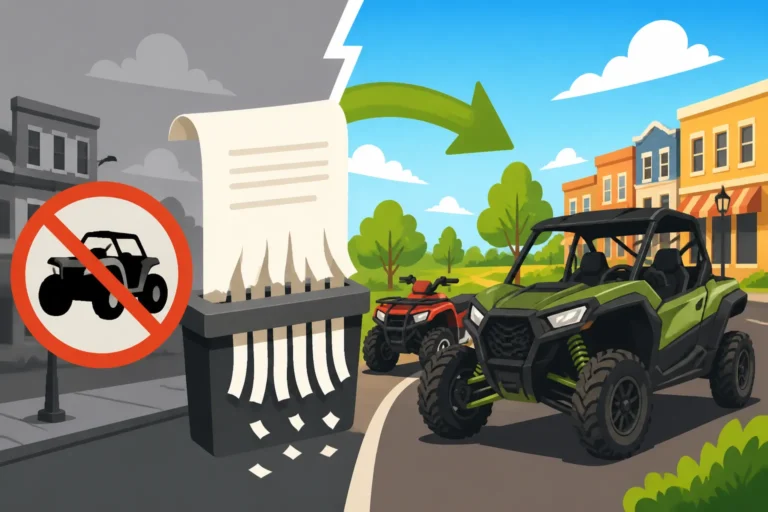
This is where many out-of-state riders, including those from Oklahoma, often run into the biggest surprises and potential issues. Arkansas has some of the most restrictive laws regarding ATV and UTV use on public roads in the entire country. Unlike some states that have more lenient rules or blanket allowances, Arkansas operates under a general prohibition with very specific exceptions. Your Oklahoma "street legal" status for a UTV, or even just the ability to ride an ATV on certain county roads back home, does not automatically transfer to Arkansas.
The General Prohibition: What You Need to Know
Arkansas state law, specifically Arkansas Statute 27-21-106, makes it clear: it's generally unlawful to operate an ATV or UTV on public streets, roads, or highways. This means county roads, state highways, and even city streets are typically off-limits. This is the default position for all ATVs and UTVs in Arkansas, regardless of whether you're a resident or a visitor. Many Oklahomans are accustomed to more open road access for their machines, especially UTVs, and this strict stance can be a real shock. Ignoring this can lead to citations, fines, and potentially having your machine impounded.
There are a handful of statutory exceptions to this rule, but they are very narrowly defined. These include things like directly crossing a highway at a ninety-degree angle after coming to a complete stop, or using the machine for specific farming or hunting operations. Even these exceptions come with their own set of rules, such as having a valid driver's license if you're on a public road, even for a brief crossing. You can dive deeper into these exceptions by reading [Arkansas's Six Statutory Road Exceptions] and [What Arkansas Law Forbids on a Public Road]. These rules apply equally to visiting Oklahoma riders as they do to Arkansas residents.
Local Ordinances and UTV Street Legality
Now, here's a glimmer of hope, but with a lot of caveats: Arkansas Act 922, which went into effect in 2025, allows individual cities and towns to pass their own ordinances to permit UTVs (but generally not ATVs) on certain public streets within their municipal limits. This is a game-changer for some areas, but it's entirely dependent on each city's decision. If a town passes such an ordinance, they will typically specify which streets are open (usually those under 55 mph, often excluding four-lane highways), what equipment is required (like turn signals, mirrors, windshields, headlights, brake lights, and seat belts), and often mandate a local permit and proof of insurance.
What does this mean for you as an Oklahoma rider? It means you must research the specific town you plan to visit if you intend to ride your UTV on their streets. Just because a town an hour away allows it doesn't mean your destination does. Furthermore, your UTV, even if street-legal in Oklahoma, must still meet the specific equipment requirements of that Arkansas town's ordinance. Adding accessories like turn signals, upgraded lighting, or a full windshield, perhaps from a reputable aftermarket company like SuperATV, might be necessary to comply with local rules. You can find more detailed information on this topic in [Arkansas Towns Can Open Their Streets to UTVs] and [Arkansas UTV Street Legal Rules by Town].
Permits and Rules for Hitting Arkansas's Famous Trails
While road riding can be a headache, Arkansas truly shines with its incredible off-road trail systems, particularly within its national forests and private parks. This is likely why you're visiting in the first place, and thankfully, the rules for trail access are much clearer and apply fairly uniformly to everyone, visitors and residents alike.
National Forest OHV Permits
If you plan to ride on designated Off-Highway Vehicle (OHV) trails within the Ouachita National Forest (home to popular spots like Wolf Pen Gap) or the Ozark-St. Francis National Forest (which includes the Mill Creek OHV Trail System), you will need to purchase an OHV permit for that specific forest. Your Oklahoma registration does not cover these federal lands. These permits are crucial for maintaining the trails and ensuring a safe riding experience. They can typically be purchased online via Recreation.gov or at self-service fee stations located at some trailheads.
It's important to understand that the Ouachita and Ozark-St. Francis National Forests operate as two separate entities, each with its own permit system and fee structure. A permit for Wolf Pen Gap in the Ouachita won't get you access to Mill Creek in the Ozark-St. Francis, and vice-versa. Fees can vary for day passes versus annual passes, and there have been fee escalations over time to help fund trail maintenance. Always check the current rates and purchase your permit before you arrive, especially if you're heading to an area with limited cell service. For an in-depth look at these costs and where to get them, refer to [Arkansas OHV Permits: Two Forests, Two Prices].
Private Off-Road Parks and Their Regulations
Beyond the national forests, Arkansas boasts a growing number of fantastic private off-road parks. Places like Hot Springs Off-Road Park or Byrd's Adventure Center offer diverse terrain, amenities, and their own unique set of rules. For these parks, you'll pay an entrance fee, which could be per machine or per person, and you'll almost certainly need to sign a liability waiver.
Each private park will have its own specific guidelines regarding things like age limits for riders, helmet requirements (even though Arkansas has [Arkansas Has No ATV Helmet Law], many private parks do require them), passenger rules, and acceptable machine types. It's always best practice to check the park's website or call ahead to understand their specific regulations before you tow your machine all the way from Oklahoma. They're usually very accommodating and happy to answer questions, ensuring you have a fun and safe visit. Information on common private park requirements can be found in [Arkansas Private Park Waivers and Rules].
Table: Essential Checklist for Oklahoma Riders in Arkansas
Here's a quick checklist to help you prepare for your Arkansas ATV/UTV adventure:
| Item | Purpose | Important Notes for Oklahoma Riders |
|---|---|---|
| Oklahoma Registration/Title | Proof of Ownership & Legal Status in Home State | Carry physical proof. Arkansas generally recognizes valid out-of-state registration for temporary visits. |
| Valid Driver's License | Required for Road Use (even legal crossings or permitted city streets) | Absolutely essential if you plan any road travel. |
| National Forest OHV Permit | Required for designated trails in Ouachita (e.g., Wolf Pen Gap) or Ozark-St. Francis (e.g., Mill Creek) | Mandatory for these public lands. Purchase online via Recreation.gov or at trailhead kiosks. Your Oklahoma registration does not cover this. |
| Private Park Fees/Waivers | Required for entry to private riding areas | Each park has its own fees and rules. Check their website before you go. |
| Spark Arrestor | Required on all public lands to prevent wildfires | Mandatory for trail riding on national forest lands. Ensure your exhaust system is equipped with one. Find more details in [Arkansas Spark Arrestor Requirements]. |
| Appropriate Safety Gear | Helmet, eye protection, gloves, sturdy boots, long pants/sleeves | Highly recommended, even though Arkansas has no mandatory helmet law for ATVs. Many private parks require helmets. |
| Tool Kit & Recovery Gear | For minor repairs and getting unstuck | Essentials like a tire repair kit, small air compressor, tow strap, and basic tools can save your trip on remote trails. |
| Navigation Aids | Maps, GPS, fully charged phone with trail apps | Cell service can be spotty in remote areas. Always have a backup, like a paper map of [Wolf Pen Gap: Arkansas's Best Known OHV Complex] or the area you are riding. |
| Emergency Supplies | First-aid kit, water, snacks, flashlight | Always be prepared for unexpected delays or situations on the trail, especially if riding solo or far from the trailhead. |
| Proof of Insurance | For your machine and, if applicable, for road use (e.g., in towns with UTV ordinances) | Always a good idea to carry. Some cities allowing UTV street use require proof of liability insurance. |
| Local City UTV Permit | If riding a UTV on approved city streets within specific towns | Required in cities that have passed an ordinance. Your Oklahoma street-legal status does not mean you automatically comply. Check with the specific city clerk. Your machine might also need specific accessories like mirrors, turn signals, and a windshield to meet local standards – upgrades from SuperATV can help meet these. |
Essential Gear and Safety Tips for Your Arkansas ATV Adventure
Beyond the legalities, making sure you have the right gear and knowledge before you hit the trails or attempt any road-legal riding is paramount for a fun and safe trip to Arkansas. The terrain can be challenging, and conditions can change quickly.
Safety Equipment for All Riders
While Arkansas doesn't have a statewide mandatory helmet law for ATVs or UTVs, every responsible rider, especially those from out-of-state, should prioritize safety. Helmets, eye protection (goggles or a face shield), sturdy gloves, and appropriate riding apparel (long pants, long-sleeved shirts, and over-the-ankle boots) are non-negotiable for serious off-road riding. This gear protects you from branches, dust, debris, and potential impacts. Many private parks will require helmets, so it's a good habit to always wear one. For riders under twelve, direct adult supervision is mandatory in Arkansas, regardless of whether a helmet is required by law.
Beyond personal protective equipment, consider what your machine needs. As mentioned, a spark arrestor is a must for public lands. Checking your tires, brakes, and fluid levels before each ride is also crucial. For those tackling more rugged terrain, investing in aftermarket protection like skid plates, A-arm guards, or rock sliders can prevent costly damage to your machine. Companies like SuperATV offer a wide range of these protective accessories designed to keep your machine safe on rocky, challenging trails often found in the Ozark and Ouachita mountains.
Respecting the Land and Other Users
Arkansas's natural beauty is a huge draw for off-road enthusiasts. As a visitor, it's vital to practice responsible riding and respect the environment and other users. "Tread Lightly!" principles are always a good guide: stay on marked trails, never litter, respect private property boundaries (marked or unmarked), and be mindful of noise levels, especially near residential areas or campgrounds. If you encounter hikers, mountain bikers, or equestrians on multi-use trails, slow down, be courteous, and yield the right-of-way.
Be aware of seasonal closures, especially for trails in national forests. Some trails might close during wet periods to prevent erosion or during certain wildlife seasons. Always check the current status of the trails you plan to ride before heading out. Understanding and adhering to these guidelines helps ensure that Arkansas remains an incredible destination for all types of outdoor recreation, and that visiting riders continue to be welcome.
Disclaimer
This article is for general informational purposes only and does not constitute professional advice. Laws, prices and regulations vary by location and change over time. Consult a qualified professional for guidance on your specific situation.