Arkansas Rules for a Visiting Missouri Rider
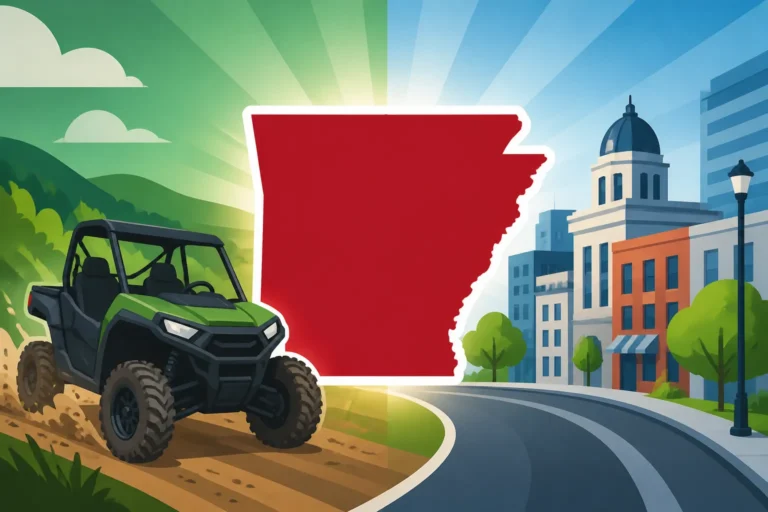
Venturing across state lines with your ATV or UTV for some incredible trail riding or even just for a visit can be exciting, but it also brings a whole new set of rules and regulations to contend with. If you're a Missouri rider planning to explore the Natural State, it's easy to feel lost trying to figure out what applies to you. This guide will walk you through the essential Arkansas ATV and UTV laws you need to know, specifically tailored for out-of-state visitors, so you can ride confidently and stay on the right side of the law.
Understanding Arkansas's ATV & UTV Registration for Out-of-State Riders
One of the first things a Missouri rider often wonders about is whether their machine needs to be registered in Arkansas. It's a valid question, especially since registration laws can vary wildly from state to state. Arkansas has its own unique system, and understanding it is crucial before you unload your rig.
Does Your Missouri-Registered Machine Need an Arkansas Decal?
Here's a piece of good news for most visiting riders: Arkansas does not require out-of-state registered ATVs or UTVs to obtain an Arkansas registration decal if you're just visiting. If your machine is properly registered and titled in Missouri (or whatever your home state might be), you are generally good to go for trail riding and other off-highway uses. The spirit of the law here is to ensure machines are legally owned and accounted for, and your home state's registration typically covers that.
However, this doesn't mean you're exempt from all Arkansas rules. While you won't need an Arkansas decal for basic trail use, there are specific scenarios where Arkansas's unique rules about registration might still touch you, especially if you plan to move here or stay for an extended period. For instance, if you were to move to Arkansas permanently, you would then be subject to [Arkansas ATV Registration for a New Resident].
What About Arkansas's One-Time Registration?
Arkansas has a peculiar, but often appreciated, system for its residents: a one-time ATV registration. Unlike many states where you renew annually, once an Arkansas machine is registered, it's done for good. This is a common point of confusion for out-of-state riders who are used to yearly renewals. You might hear locals talking about "never having to renew," and while that's true for them, it doesn't mean you need to get one if you're just visiting with your Missouri-registered machine. Just carry your Missouri registration and proof of ownership with you, as you would in your home state, especially when riding on public lands or if interacting with law enforcement. Understanding that Arkansas's system is [Arkansas ATV Registration Has No Annual Renewal] can help clarify why locals might seem to have different rules.
Proof of Ownership and Documents to Carry
Even though you don't need an Arkansas decal, it's absolutely essential to have certain documents on hand when riding in Arkansas. Law enforcement or forest rangers may ask to see proof that you legitimately own the machine you're operating. This typically includes:
- Your home state's registration card: This proves your machine is legally registered in Missouri.
- Proof of ownership: This could be your title, a bill of sale, or a manufacturer's statement of origin (MSO). A photograph of these documents on your phone is usually sufficient, but having a physical copy in a waterproof bag is even better, just in case.
- Personal identification: Your driver's license or state ID.
Imagine a scenario where you're out exploring the trails near Mena, perhaps at Wolf Pen Gap. A forest ranger approaches, asking to see your documentation. If you can quickly present your Missouri registration and ID, you'll be on your way without a hitch. Having your paperwork in order shows you're a responsible rider and respect the local regulations, even as a visitor. For a deeper dive into what paperwork is needed for registration in Arkansas, consider reading [Arkansas Registration Paperwork Checklist].
Navigating Arkansas Road Riding Rules as a Visitor
This is where things can get a little tricky, and it's often the biggest source of frustration for out-of-state riders. Many states have vastly different approaches to ATV and UTV road legality, and Arkansas is no exception. What might be perfectly fine in Missouri could land you a ticket in Arkansas.
Arkansas's Default Ban on Public Roads
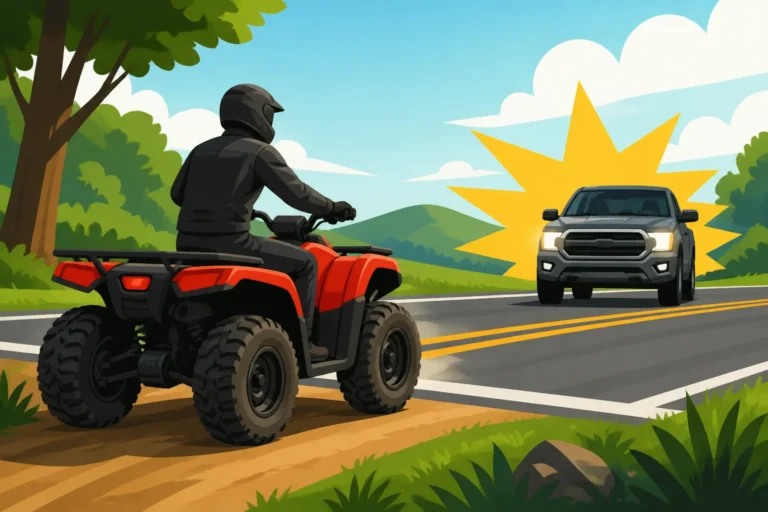
The fundamental rule in Arkansas is that ATVs and UTVs are not street legal on public roads, streets, or highways. This includes state highways, county roads, and city streets. It's a blanket ban, and you should always assume it applies unless you specifically know otherwise. This can be a shock for riders from states with more permissive road access, but it's crucial to acknowledge this starting point. The state statute, Arkansas Code Ann. § 27-21-106, is pretty clear on this.
"But I saw a side-by-side driving down a county road!" you might exclaim. There are indeed exceptions, but they are very specific and often depend on the type of road, the purpose of the travel, or the local ordinance in a particular town. It's not a free-for-all, and those exceptions often come with strict conditions. To understand the general prohibition, check out [Can You Drive an ATV on the Road in Arkansas?].
Statutory Exceptions to the Road Ban
Arkansas law does provide six specific exceptions where ATVs and UTVs can be legally operated on public roads. These exceptions are generally tied to specific activities and are not an invitation for recreational road riding. As a visiting rider, these are the most likely scenarios you might encounter or need to consider:
- Farming Operations: If you are actively engaged in a farming operation, you might be able to use your ATV/UTV on a highway to travel between fields or properties that are part of that operation. This is very specific and not for general farm-related errands.
- Hunting Operations: Similar to farming, if you're using the machine for direct hunting-related activities, such as retrieving game, you might qualify for this exception. This doesn't mean joyriding to your deer stand from town, but rather specific, limited travel directly related to the hunt.
- Direct Crossing: You can cross a street or highway at approximately a ninety-degree angle, but you must come to a complete stop before entering the roadway and yield to all traffic. This is for getting from one off-road area to another, not for traveling along the road.
- Disabled Individuals: Individuals with certain disabilities might qualify for an exception, often requiring specific permits or conditions.
- Emergency and Utility Personnel: Law enforcement, EMS, and utility company employees have exemptions for official duties.
- State Parks/Forest Employees: Staff working for these entities might use ATVs/UTVs for official business.
For most visiting Missouri riders, the "direct crossing" exception is the most relevant. Remember, crossing means literally going straight across, not riding a few hundred feet down the road to get to the next trail section. A deputy can issue a ticket for riding along a road, even for a short distance, if it doesn't fit a clear exception. Understanding [Arkansas's Six Statutory Road Exceptions] is key.
Local Ordinances and Street-Legal UTVs
Here's another wrinkle: since August 5, 2025, Arkansas Act 922 allows individual cities and towns to pass ordinances that permit UTVs (but generally not ATVs) on certain public streets. This is a game-changer for many communities, but it creates a patchwork of rules across the state.
If you're planning to ride a UTV on city streets in Arkansas, you must check with the specific town you plan to visit. Do not assume that because one town allows it, all do. Each city's ordinance will lay out specific requirements, which often include:
- Speed limits: UTVs are typically limited to streets with posted speed limits under 55 mph. Four-lane highways are usually excluded.
- Permit requirements: Many cities require an annual permit and may charge a fee. You'll need to display this permit.
- Equipment: The UTV might need specific equipment like turn signals, rearview mirrors, headlights, taillights, and a windshield. You might want to explore aftermarket options from companies like SuperATV if you're looking to equip your machine for potential street-legal use in a permitted town.
- Insurance: Proof of liability insurance is usually mandatory.
- Driver's license: The operator must hold a valid driver's license (typically age 16 or older).
For example, a town like Bono has passed an ordinance allowing UTVs on most of its streets, but Cotter has specifically banned ATVs. This means you need to do your homework. Contact the city clerk's office in the town you're visiting to inquire about their specific UTV ordinance. For more details on this, look into [Arkansas UTV Street Legal Rules by Town].
Where to Ride: Trails, WMAs, and Private Land for Visitors
Now for the fun part: where can you ride your ATV or UTV in Arkansas? The state offers a fantastic variety of terrain, from the rugged Ouachita Mountains to the rolling Ozarks, and knowing the legal places to ride is paramount for a smooth trip.
Designated OHV Trail Systems
Arkansas boasts some incredible designated Off-Highway Vehicle (OHV) trail systems, many managed by the U.S. Forest Service within the Ouachita and Ozark-St. Francis National Forests. These are generally the safest and most recommended places for recreational riding.
- Wolf Pen Gap: Located near Mena in the Ouachita National Forest, this is probably the most famous trail system in Arkansas. It offers miles of challenging and scenic loops.
- Mill Creek OHV Trail System: Situated near Ozark in the Ozark-St. Francis National Forest, Mill Creek provides another excellent option for riders.
- Private Off-Road Parks: Beyond the national forests, Arkansas has private parks like Hot Springs Off-Road Park or Byrd's Adventure Center. These parks typically have their own set of rules, including waivers, potential age limits, and sometimes even specific equipment requirements.
When riding on national forest trails, you will need to purchase an OHV permit. These permits are separate for the Ouachita and Ozark-St. Francis forests, meaning if you plan to ride in both, you'll need two different passes. This is a common point of confusion. Remember, your Missouri registration doesn't negate the need for an Arkansas forest riding permit. Learn more about this by checking out [Arkansas OHV Permits: Two Forests, Two Prices] and [Wolf Pen Gap: Arkansas's Best Known OHV Complex].
Arkansas Game and Fish Commission (AGFC) Wildlife Management Areas (WMAs)
Riding on AGFC-managed WMAs comes with very strict rules, especially for ATVs and UTVs. While some WMAs may allow limited ATV/UTV use, it's generally restricted to specific roads during certain hunting seasons, usually for ingress and egress to hunting camps or for game retrieval. Recreational riding is almost universally prohibited.
The key takeaway for a visiting rider is to assume ATVs and UTVs are not allowed for recreational riding on WMAs unless you have thoroughly researched the specific WMA's regulations and found a clear exception for your intended activity. Penalties for violating WMA rules can be significant. It's always best to consult the current AGFC regulations before heading out. [Arkansas WMA Rules for Riders] provides a good starting point for understanding these complexities.
Private Land Riding
This is often the simplest and most straightforward option: riding on private land with the owner's explicit permission. If you're visiting friends or family who own land in Arkansas, and they give you permission, you're generally free to ride their property without worrying about state registration or road-riding laws (as long as you don't take your machine onto public roads without meeting the exceptions).
However, even on private land, common sense and safety rules still apply. Respect the landowner's property, avoid damaging the environment, and always ride safely. Ensure you have clear, preferably written, permission from the landowner, especially if you're not riding with them directly.
Key Differences: Arkansas vs. Missouri ATV & UTV Laws
To help crystallize some of the unique aspects of riding in Arkansas compared to what you might be used to in Missouri, let's look at a few key differences. This table summarizes some of the most common points of comparison for visiting riders.
| Feature | Arkansas (General Rule) | Missouri (General Rule) |
|---|---|---|
| State Registration | One-time registration for residents; not required for visitors with valid out-of-state reg. | Annual renewal for residents; generally not required for visitors with valid out-of-state reg. |
| State OHV Trail Permits | Required for designated US Forest Service trails (Ouachita, Ozark-St. Francis). | Required for designated state-managed OHV parks/trails (e.g., St. Joe State Park). |
| Public Road Use (ATV) | Generally prohibited, with very narrow exceptions (farming, hunting, direct crossing). | Generally prohibited on state highways; some county roads and municipal streets may allow, with varying local rules. |
| Public Road Use (UTV) | Generally prohibited, but cities can pass ordinances to allow on specific streets with conditions. | Generally prohibited on state highways; some county roads and municipal streets may allow, with varying local rules. |
| Helmet Law | No mandatory helmet law for ATVs/UTVs of any age. | Required for riders under 18 on public lands/roads. |
| Insurance | Not required for off-road use; often required for street-permitted UTVs in cities. | Not required for off-road use; generally required for street-legal ATV/UTV use. |
Note: This table provides general rules and should not replace checking specific laws for your intended riding area or activities. Missouri laws can also vary by county and municipality.
One significant difference is the helmet law. While Missouri requires helmets for riders under 18 on public lands or roads, Arkansas has no mandatory helmet law for ATVs or UTVs, regardless of age. That being said, wearing a helmet is always a smart choice for safety, and many private parks in Arkansas do require them. Eye protection is another often-overlooked safety item that's highly recommended, regardless of state law.
Another aspect is the specific nature of trail permits. Both states require permits for their respective public trail systems, but the specific process, cost, and validity can differ. Always buy your Arkansas forest permit online or at a local vendor before you arrive at the trailhead, as cell service can be spotty in many riding areas.
In summary, a Missouri rider coming to Arkansas for some off-road adventure can enjoy the state's beautiful trails without needing to re-register their machine with the state. However, strict road-riding laws and the requirement for specific forest permits mean you'll need to be prepared and informed. Always prioritize safety, respect the land, and know the rules of where you're riding, and you'll have an unforgettable trip in Arkansas.
Disclaimer
This article is for general informational purposes only and does not constitute professional advice. Laws, prices and regulations vary by location and change over time. Consult a qualified professional for guidance on your specific situation.