Streets Posted Under 55 mph
Riding your UTV around town seems like a dream for many folks in Arkansas – a quick trip to the store, dropping the kids off at a friend's house, or just cruising on a nice evening. But the reality is, making your UTV truly street legal in Arkansas is a puzzle with many pieces, and one of the most critical, yet often misunderstood, is the local street speed limit. This guide aims to clear up the confusion surrounding what "streets posted under 55 mph" really means for UTV owners hoping to legally navigate their communities.
Understanding Arkansas's Default Road Ban for ATVs and UTVs
Let's just get this out there upfront: by default, Arkansas law prohibits ATVs and UTVs from being operated on public streets and highways. This isn't just a suggestion; it's a hard rule designed for safety, considering these machines weren't built with the same crash-worthiness or road-going features as a typical car. Many people get frustrated by this, feeling like their expensive machine should be able to go wherever they want, but the state has its reasons. It’s a common hurdle across many states, and Arkansas is no exception. This blanket ban means that unless a specific exception is made, you simply can't take your quad or side-by-side on the asphalt.
The General Prohibition: Why You Can't Just Ride Anywhere
Imagine you've just bought a brand-new side-by-side, maybe a nice SuperATV with all the bells and whistles, and you're itching to take it for a spin. You see others riding golf carts or even sometimes smaller UTVs in certain towns, and you wonder, "Why can't I just take mine down the county road?" The core issue is that ATVs and UTVs are primarily designed for off-road use. They lack many of the safety features mandated for on-road vehicles, such as robust crumple zones, advanced airbag systems, and even proper turn signal placement that's visible to all traffic.
The state's general prohibition, as outlined in Arkansas Code Ann. § 27-21-106, is a broad stroke that says, "No off-highway vehicles on public roads." This applies to virtually all state highways, county roads, and city streets unless specific allowances are made. This general rule is designed to protect both the riders and other motorists who aren't expecting these types of vehicles in traffic. It's a significant point of frustration for many, especially those who live in rural areas where the nearest trail might be a short hop down a paved road. It means that while your UTV might feel perfectly capable, the law sees it differently.
The Role of Local Ordinances: How Some Towns Create Exceptions
Now, here's where things get a little more hopeful for UTV enthusiasts. While the state law sets a strong default, Arkansas Act 922, effective August 5, 2025, introduced a significant change by allowing local municipalities – your cities and towns – to pass their own ordinances to permit the operation of UTVs on certain public streets. This was a game-changer for many communities that recognized the recreational and utility value of these machines. It means that the legality of riding your UTV on a given street can literally change from one town limit sign to the next.
This local-option approach acknowledges that what works for a bustling metropolitan area might not make sense for a quiet, rural town where UTVs are a part of daily life. So, while you can't just assume your UTV is street legal everywhere, the door is open for communities to create specific rules that fit their unique needs. This is why you might see a friend in one town legally cruising their side-by-side, while just a few miles down the road in a different municipality, doing the same thing could land you a ticket. This patchwork of regulations is exactly why understanding the nuances of laws like [Arkansas Streets Under 55 mph for UTVs] is so important.
The Significance of the "Under 55 mph" Rule for UTVs
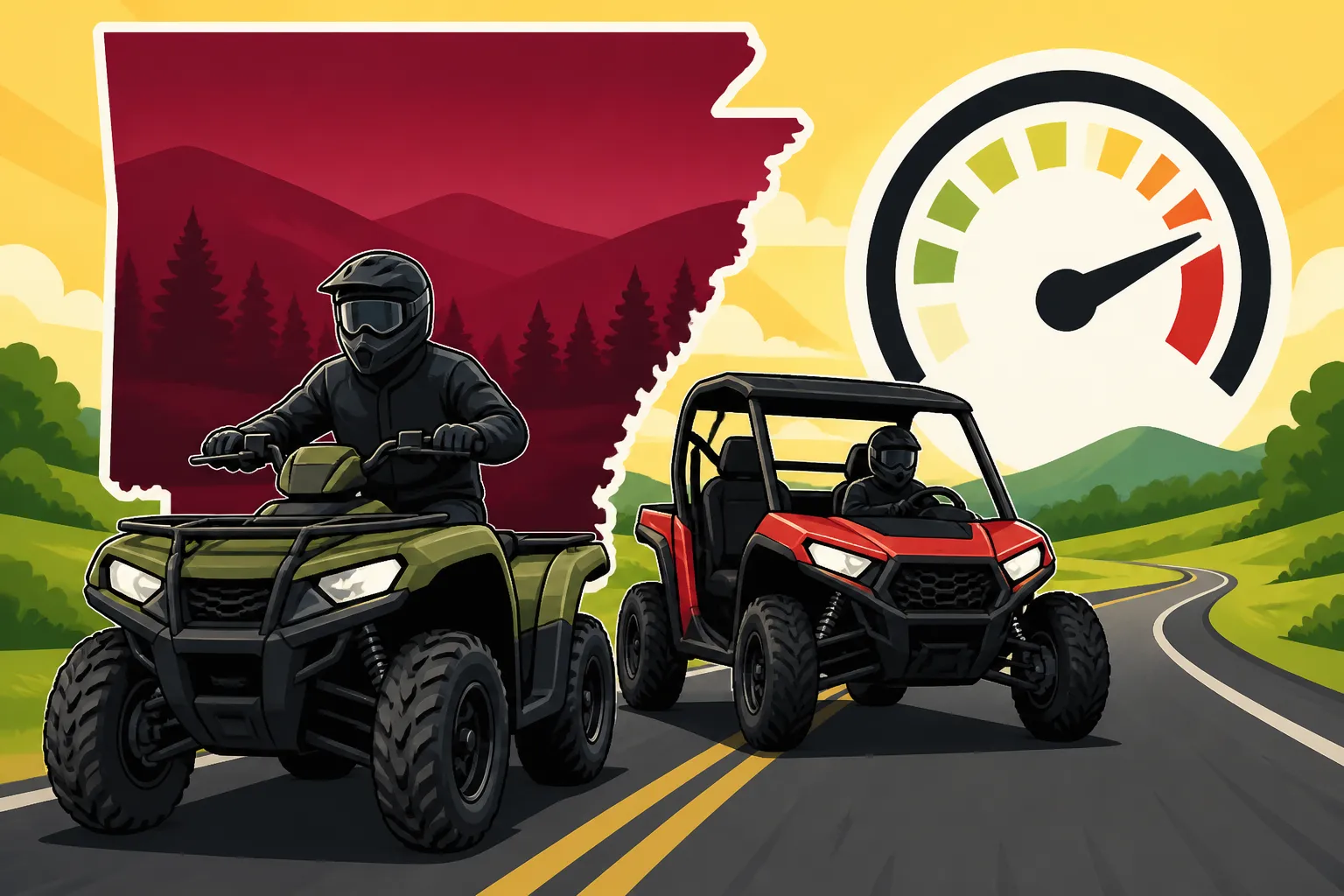
This is the big one, the core of our discussion today, and a detail that can make or break your UTV's street legality in many Arkansas towns. When a city or town decides to pass an ordinance allowing UTVs on its streets, there's a major stipulation almost always attached: the UTVs are only permitted on streets with a posted speed limit under 55 miles per hour. This isn't an arbitrary number; it's a safety threshold designed to keep slower-moving UTVs off high-speed thoroughfares where they could become a hazard.
How Speed Limits Dictate UTV Access: Connecting Posted Limits to Legal Riding
Think about it this way: a UTV, even one accessorized for street use, generally isn't designed to maintain highway speeds comfortably or safely for extended periods. When you're driving a vehicle that tops out around 40-50 mph, putting it on a road where traffic is flowing at 60 or 70 mph creates a significant speed differential, which is a major factor in accidents. The "under 55 mph" rule acts as a buffer, ensuring that UTVs primarily operate on residential streets, collector roads, and other lower-speed local routes where they can blend more safely with traffic.
This means you need to be eagle-eyed when you're considering your route. Even if your town has an ordinance, a street that has no speed limit sign, or one that’s clearly part of a state highway that generally exceeds 55 mph, is likely off-limits. It's not about how fast your UTV can go; it's about the posted limit for that section of road. If you're planning a trip across town, you'll need to map out a route that strictly adheres to these lower-speed streets. This often means taking a longer, more circuitous path, but it's the price of legal street riding. Remember, a common rule set by many towns is that [Arkansas Streets Under 55 mph for UTVs] are the only ones permitted for UTV travel.
What About Four-Lane Streets? Addressing Common Misconceptions About Wider Roads
Another crucial aspect of this "under 55 mph" rule, which often comes with local UTV ordinances, is the specific exclusion of four-lane streets. Even if a four-lane street technically has a posted speed limit under 55 mph, many local ordinances explicitly forbid UTVs on them. This might seem counterintuitive at first – more lanes, more space, right? Not necessarily.
Four-lane streets, especially those with turn lanes or medians, are often designed for higher traffic volumes and faster flow. They frequently serve as main arteries through towns, connecting commercial areas or acting as bypasses. The increased complexity of multiple lanes, merging traffic, and higher overall vehicle density can make UTV operation more hazardous, even at slightly lower speeds. Drivers in these situations are often less alert to slower-moving, smaller vehicles like UTVs.
This is why, for instance, the city of Bono, which was one of the first towns to embrace UTV ordinances, specifically excludes UTVs from certain major four-lane roads, even those below the 55 mph threshold. It's an additional layer of safety, and it's vital for riders to understand that [Arkansas Four-Lane Streets Stay Closed] to UTVs in many, if not most, cases, even if other conditions are met. Always check the exact wording of your local ordinance; it will define these restrictions clearly.
Essential Requirements for Street-Permitted UTVs in Arkansas Towns
Getting a UTV street-legal in an Arkansas town isn't just about finding the right speed-limit signs. It's also about equipping your machine properly and making sure you, the driver, meet all the necessary qualifications. This can feel like a lot of hoops to jump through, but it's all part of ensuring safety on public roads. You can't just throw a license plate on your UTV and hit the road; there's a whole checklist to consider.
Equipping Your UTV for Street Use: Lights, Mirrors, and Safety Gear
If your local town does allow UTVs on certain streets, your machine will need to meet specific equipment standards to be considered safe for public road use. These aren't suggestions; they are mandates designed to make your UTV more visible and controllable in traffic. Generally, you'll need:
- Headlights and Taillights: Essential for visibility, especially during dawn, dusk, or inclement weather. Many UTVs come with these, but they must be fully functional.
- Brake Lights: Crucial for signaling to traffic behind you when you're slowing down or stopping.
- Turn Signals: You absolutely need functional front and rear turn signals to indicate your intentions to other drivers. This is often an aftermarket addition, but companies like SuperATV offer conversion kits that make this process much easier, providing integrated solutions for street legal compliance.
- Rear-View Mirrors: At least one, but often two (one on each side), are required to give you adequate visibility of traffic behind you.
- Windshield: While not always explicitly required for all ATVs, most UTV ordinances will mandate a windshield for street use to protect occupants from debris and wind.
- Horn: A working horn is necessary to alert other drivers or pedestrians to your presence.
- Seat Belts: All occupants must be properly restrained, and functional seat belts for all seating positions are a must.
- Reflectors: Additional reflectors on the sides and rear can enhance visibility, particularly at night.
Failure to have these items can result in a citation, even if you're on a legally permitted street. It’s important to invest in quality components that will stand up to road vibrations and weather. For more details on what your machine needs, check out [Arkansas Equipment for a Street-Permitted Machine].
Local Permits, Insurance, and Driver Licensing: The Bureaucratic Side of Street Legality
Beyond the physical modifications to your UTV, there are administrative requirements you'll need to fulfill. This is where you actually get the official "permission" to ride.
Here's a breakdown:
- Local UTV Permit: If your town has an ordinance, it will almost certainly require you to obtain a local permit. This usually involves an application process, an inspection of your UTV to ensure it meets the equipment requirements, and an annual fee. This permit typically comes with a sticker or decal that you must display on your UTV, signifying that it's authorized for street use within that municipality. These permits are specific to the town that issues them and are not transferable to other towns. You can learn more about this by reading [Arkansas UTV Street Permits and Annual Fees].
- Proof of Insurance: Just like with any other motor vehicle, you'll need to carry proof of liability insurance for your UTV. This ensures that if you're involved in an accident, there's coverage for damages or injuries you might cause. The minimum coverage requirements will usually mirror those for passenger vehicles in Arkansas. Make sure your insurance provider is aware you intend to operate your UTV on public roads, as some off-road policies may not cover street use. Having [Arkansas Insurance for a Street-Permitted UTV] is not just a good idea, it's often a legal necessity.
- Valid Driver's License: The driver of a street-permitted UTV must possess a valid driver's license, typically a Class D (standard operator's) license. The minimum age for driving a street-legal UTV will align with the state's driving age, which means drivers are generally required to be 16 years old. This is clearly outlined in rules like [Arkansas Driver's License at 16 for Street UTVs]. Minor drivers will also be subject to graduated licensing restrictions if they are under 18. This requirement ensures that anyone operating a UTV on public roads has demonstrated basic driving competence.
| Requirement | Description | Example |
|---|---|---|
| Local Permit | Annual permit issued by the city/town allowing UTV street use on approved roads. | A City of Hot Springs permit sticker displayed on your UTV. |
| Insurance | Valid liability insurance covering your UTV for operation on public roads. | Your UTV's insurance card, showing at least state minimum liability coverage. |
| Driver's License | A current, valid Arkansas Class D (or higher) driver's license. | Your standard driver's license, proving you are 16+ and legally able to drive. |
| Equipment | Functional headlights, taillights, brake lights, turn signals, mirrors, horn, and seat belts. | An aftermarket turn signal kit and side mirrors from SuperATV. |
| Road Type | Restricted to streets with posted speed limits under 55 mph; typically excludes four-lane roads. | Riding on a residential street with a 25 mph limit, not a main four-lane highway. |
Navigating Local Ordinances and Staying Informed
Given the localized nature of UTV street legality in Arkansas, staying informed about the specific rules in your area (and any areas you plan to visit) is paramount. What's legal in Hot Springs might not be legal in Fort Smith or Mena. This isn't a "one-size-fits-all" situation, and assuming you're good to go based on what you saw in a neighboring town can lead to trouble.
Researching Your Specific Town's Rules: Importance of Due Diligence
The absolute best advice anyone can give you is to do your homework. Before you even think about taking your UTV on a public street, contact the city clerk's office or the local police department in the town where you intend to ride. Ask directly about their UTV ordinance. Many towns now have these ordinances available on their official websites. You need to look for specific details like:
- Are UTVs allowed at all? (Some towns specifically ban them, even with the new state law allowing them to permit it.)
- Which streets are allowed? (They will explicitly list street names, types of streets, and, of course, the [Arkansas Streets Under 55 mph for UTVs] stipulation.)
- Are four-lane streets prohibited? (As discussed, this is a common exclusion.)
- What are the equipment requirements? (Confirming signals, mirrors, etc.)
- What is the permit application process and cost?
- Are there any other local rules? (Such as quiet hours, parking restrictions, or passenger limits.)
This diligent research, which really means [Reading Your Town's Ordinance Before You Ride], prevents misunderstandings and ensures you're fully compliant. Don't rely on hearsay from a buddy or what you've seen others do, because their UTV might be a golf cart, or they might be breaking the law themselves.
Penalties for Non-Compliance: What Happens If You Get It Wrong
Ignoring these rules or simply hoping you won't get caught can lead to some significant consequences. Operating a UTV on a public street in Arkansas where it's not permitted, or without the proper equipment and permits, can result in:
- Fines: You'll likely receive a traffic citation with a fine amount that can vary. These aren't usually cheap.
- Court Costs: In addition to the fine, you'll often have to pay court costs, which can add a substantial amount to the total.
- Towing and Impoundment: Your UTV could be towed and impounded, meaning you'll face additional costs for towing and daily storage fees to get it back.
- Insurance Implications: If you're involved in an accident while riding illegally, your insurance coverage could be denied, leaving you personally responsible for all damages and medical expenses.
- Criminal Charges (in severe cases): While less common for simple non-compliance, reckless operation or repeated offenses could lead to more serious charges.
No one wants to deal with these headaches, especially when a little bit of research and compliance can prevent them entirely. Understanding [Arkansas Penalties for Illegal Road Riding] is a strong motivator to ensure you're always riding within the law. The goal is to enjoy your UTV safely and legally, and that means respecting the rules of the road and the local ordinances that govern them.
Disclaimer
This article is for general informational purposes only and does not constitute professional advice. Laws, prices and regulations vary by location and change over time. Consult a qualified professional for guidance on your specific situation.