Four-Lane Streets and Why They Stay Closed
It can be incredibly frustrating to see cities in Arkansas starting to open their streets to UTVs, only to discover that the main thoroughfares—those wide, often busy four-lane streets—remain stubbornly off-limits. You might have just spent a good chunk of change on a new side-by-side, maybe even added some fantastic accessories like a sturdy windshield or a SuperATV light bar, dreaming of cruising through town to grab groceries or meet friends. Then you find out that the very roads you’d most like to use are still a no-go. This guide aims to pull back the curtain on why Arkansas law, and subsequent local ordinances, typically keep your UTV off four-lane streets, even as other roads become accessible.
The Core Rule: Arkansas's Default Ban on Public Road Riding
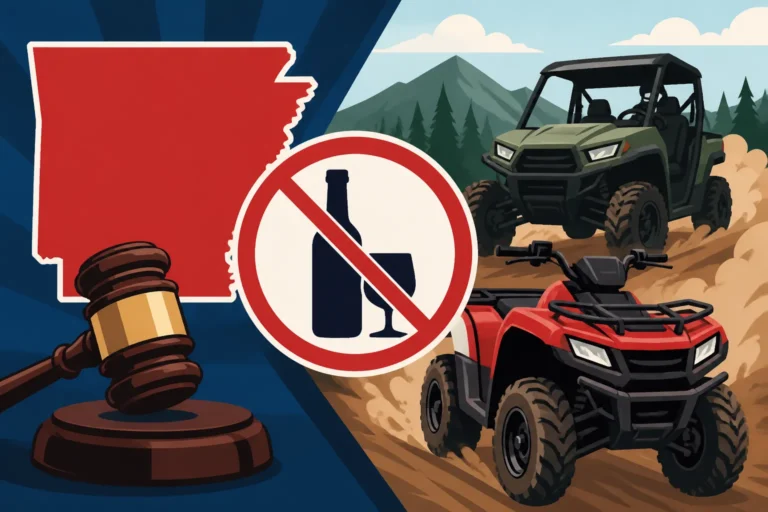
Let's start with the foundational truth in Arkansas: off-highway vehicles like ATVs and UTVs are generally not permitted on public roads. For years, this was the steadfast rule, creating a clear line between trail riding and street driving. The idea was that these machines are built for dirt, rocks, and mud, not for sharing pavement with cars and trucks going 60 miles an hour. It's a matter of safety and fitting into the established traffic system. Most riders understand this general principle, even if they don't always agree with it. It means that without specific permission, you're pretty much confined to private land or designated off-road parks.
This default prohibition isn't just a suggestion; it's written into state law. It means that if you're caught riding your ATV or UTV on a public road where it's not explicitly allowed, you could face penalties. It's not a fun conversation to have with a local deputy when you're just trying to get from point A to point B. This blanket ban is what makes any exception, like the recent changes for UTVs, such a big deal, and why the specific limits on those exceptions are so important to understand. You can learn more about the base rules in [Arkansas Makes Road Riding Unlawful by Default].
The UTV Ordinance Change and Its Limitations
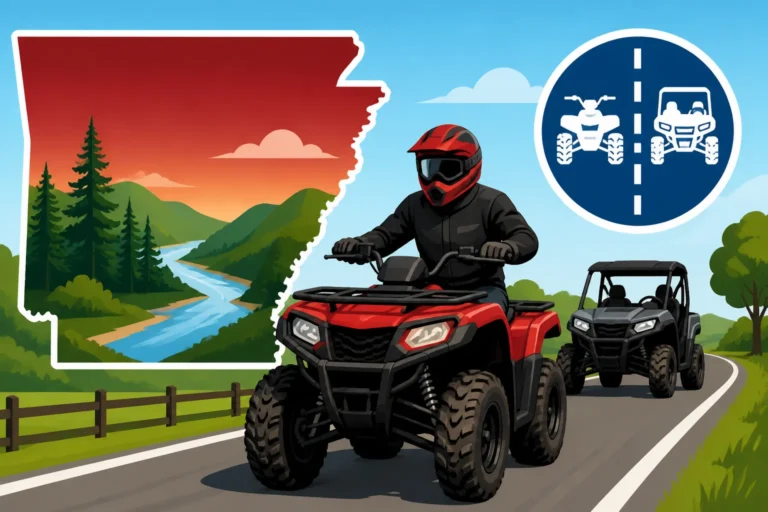
Recently, there's been a significant shift in Arkansas law that has created a buzz among UTV owners. A legislative change was enacted that empowers individual cities and towns across the state to pass their own ordinances, deciding whether to open certain public streets to UTVs. This was a game-changer for many communities, offering a pathway for residents to enjoy their side-by-sides for local errands or just a leisurely cruise through town. It felt like a breath of fresh air for many who had been hoping for more flexibility.
However, this new flexibility came with a very important caveat: it wasn't a free-for-all. The state law provided a framework, but it also imposed certain restrictions on what cities could allow. It specifically limited the types of streets that could be opened. For instance, cities were typically authorized to open streets with speed limits below a certain threshold—often 55 mph. This immediately ruled out major highways and many of the faster, higher-volume roads that cut through towns. It's crucial to understand that while cities got the option to allow UTVs, they didn't get a blank check to open all roads. This is a critical distinction that often catches people off guard. For more on this, check out [How Arkansas Cities Got the Choice on UTVs] and [August 5, 2025 and What Changed].
Why Four-Lane Streets Are Typically Excluded
So, why do these wider, seemingly more capable four-lane streets remain closed when smaller, sometimes narrower two-lane roads might be fair game? It boils down to a combination of safety, traffic management, and legal jurisdiction.
Safety Concerns and Speed Differentials
One of the biggest reasons four-lane streets stay off-limits is the sheer difference in speed and vehicle dynamics. UTVs, while powerful, generally aren't designed to maintain highway speeds for extended periods or accelerate as quickly as passenger cars. Think about trying to merge onto a busy four-lane road where traffic is moving at 45-55 mph in a machine that tops out around 40-45 mph. The speed differential creates a significant hazard, making it difficult for UTV drivers to safely enter traffic, change lanes, or even keep up with the flow. This isn't just an inconvenience; it's a recipe for rear-end collisions and other serious accidents.
Furthermore, consider the level of protection. While modern UTVs are much safer than their early counterparts, even with roll cages and seatbelts, they don't offer the same crumple zones, airbags, or overall mass that a typical car or truck does. An impact with a larger, faster vehicle on a four-lane street could have devastating consequences for UTV occupants. Even if you've invested in extra safety gear or better tires from a brand like SuperATV, the fundamental design differences between a UTV and a highway vehicle remain. These roads are designed for vehicles that can handle those higher speeds and traffic dynamics safely.
Traffic Volume and Congestion
Four-lane streets, by their very nature, are often the arterial roads of a city or town. They're designed to handle higher volumes of traffic, moving people and goods efficiently through populated areas. Introducing slower-moving UTVs onto these roads could significantly impede traffic flow, leading to congestion, driver frustration, and an increased risk of accidents. Imagine rush hour traffic on a four-lane street, already slow, now having to navigate around even slower UTVs. It just doesn't work from a traffic engineering perspective.
These roads are often critical for emergency services, commercial trucking, and daily commuting. Any element that slows down or disrupts this flow can have ripple effects throughout the local transportation network. City planners and law enforcement agencies are keenly aware of these dynamics and typically prioritize smooth, safe traffic movement on these key corridors. Allowing UTVs could undermine the very purpose of having a four-lane road designed for higher capacity.
State Highway Jurisdiction
Another major factor is jurisdiction. Many of the four-lane streets that run through Arkansas towns and cities are actually designated state highways, even if they look like local roads. When a road is part of the state highway system, it falls under the purview of the Arkansas Department of Transportation (ARDOT) rather than purely local control. This means that a city's ordinance, which allows UTVs on its municipal streets, often cannot supersede state law regarding state highways.
Even if a city wants to open a state highway to UTVs, they typically lack the legal authority to do so without specific state approval or legislative change at a higher level. This is a common point of confusion for riders. You might see a "City Limits" sign, assume all roads within are city-controlled, and then get surprised when you're cited on what turns out to be a state-administered route. This is why you might hear about specific highways, like Highway 63 in Bono, remaining closed to UTVs even after a local ordinance passes. This specific example is covered in [Why Highway 63 Stays Off Limits in Bono].
Infrastructure Design and Road Width
While UTVs can be quite wide, fitting into a lane is not the only consideration for road safety. Four-lane streets are designed with specific lane widths, shoulder widths, and sight lines that accommodate higher speeds and larger vehicles. The subtle design elements, from curve radii to merge lanes, are all calibrated for traditional vehicles. UTVs, even with their robust construction, don't always interact with these design features in the same predictable way.
For instance, the shoulders on a four-lane road might not be suitable for a UTV to pull over safely in an emergency, or the sight lines needed for a fast-moving vehicle to spot a slower UTV might be compromised. The entire infrastructure is geared towards specific types of traffic, and UTVs simply fall outside that design envelope for these faster, higher-volume roadways. Adding accessories like wider fender flares or larger tires (perhaps from SuperATV) doesn't change the fundamental design difference between your machine and a sedan on a highway.
Understanding Local Ordinances and Their Specifics
Given all these restrictions, the absolute best piece of advice for any UTV owner in Arkansas is to become intimately familiar with your specific city or town's ordinance. The state law provides the framework, but each city makes its own detailed rules. Just because one town has opened its streets to UTVs doesn't mean the town next door has done the same, or that they have the same rules.
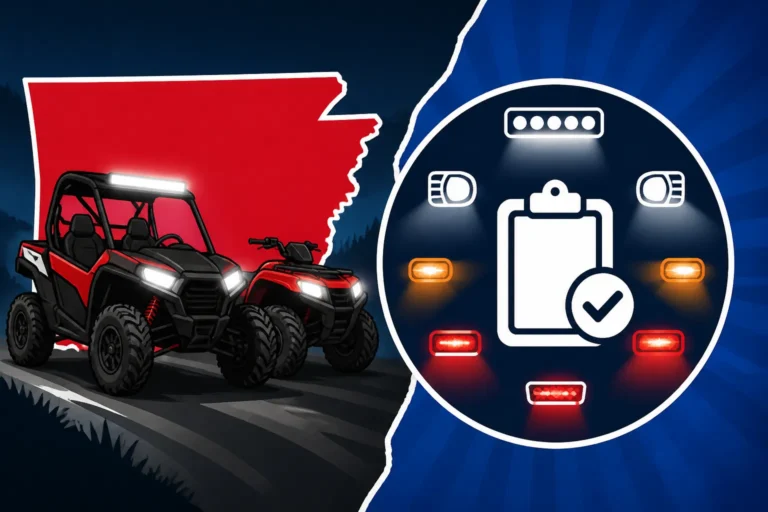
These local ordinances will spell out exactly which streets are open, which are closed (and four-lane streets are almost always explicitly on the closed list), the hours of operation, required safety equipment, age restrictions for drivers, and any permit fees or annual renewals. You might find that a city allows UTVs on roads posted 35 mph or less, but explicitly bans them on anything above that. Or, they might list specific streets by name that are off-limits. You need to know these details to avoid an unwelcome surprise. [Reading Your Town's Ordinance Before You Ride] is non-negotiable, and it’s wise to also look into [Arkansas UTV Street Legal Rules by Town] and [Arkansas Towns Weighing a UTV Ordinance] for context. Remember, a city clerk can be your best friend when trying to navigate these specific rules for your area.
Here's a quick overview of how street types and UTV access typically compare:
| Feature/Road Type | Residential/Two-Lane (Permitted) | Four-Lane Streets (Typically Restricted) |
|---|---|---|
| Speed Limit | Usually 35 mph or less | Often 45 mph, 55 mph, or higher |
| Traffic Volume | Low to moderate | High |
| Jurisdiction | Primarily municipal | Often state highway (ARDOT) |
| Primary Purpose | Local access, neighborhood travel | Through traffic, major arteries |
| Vehicle Speed Match | UTVs can keep pace with traffic | UTVs often much slower than traffic |
| Safety Risk | Lower due to slower speeds | Significantly higher due to speed diff. |
| Congestion Impact | Minimal | High |
| Common Allowance | Yes, by local ordinance | No, almost universally restricted |
In essence, while the landscape for UTV use on public roads in Arkansas is evolving, the four-lane streets remain largely protected for traditional, faster-moving traffic. It's a pragmatic decision rooted in safety and traffic management, even if it sometimes feels like an inconvenience for UTV enthusiasts. Always do your homework, understand your local rules, and ride responsibly.
Disclaimer
This article is for general informational purposes only and does not constitute professional advice. Laws, prices and regulations vary by location and change over time. Consult a qualified professional for guidance on your specific situation.