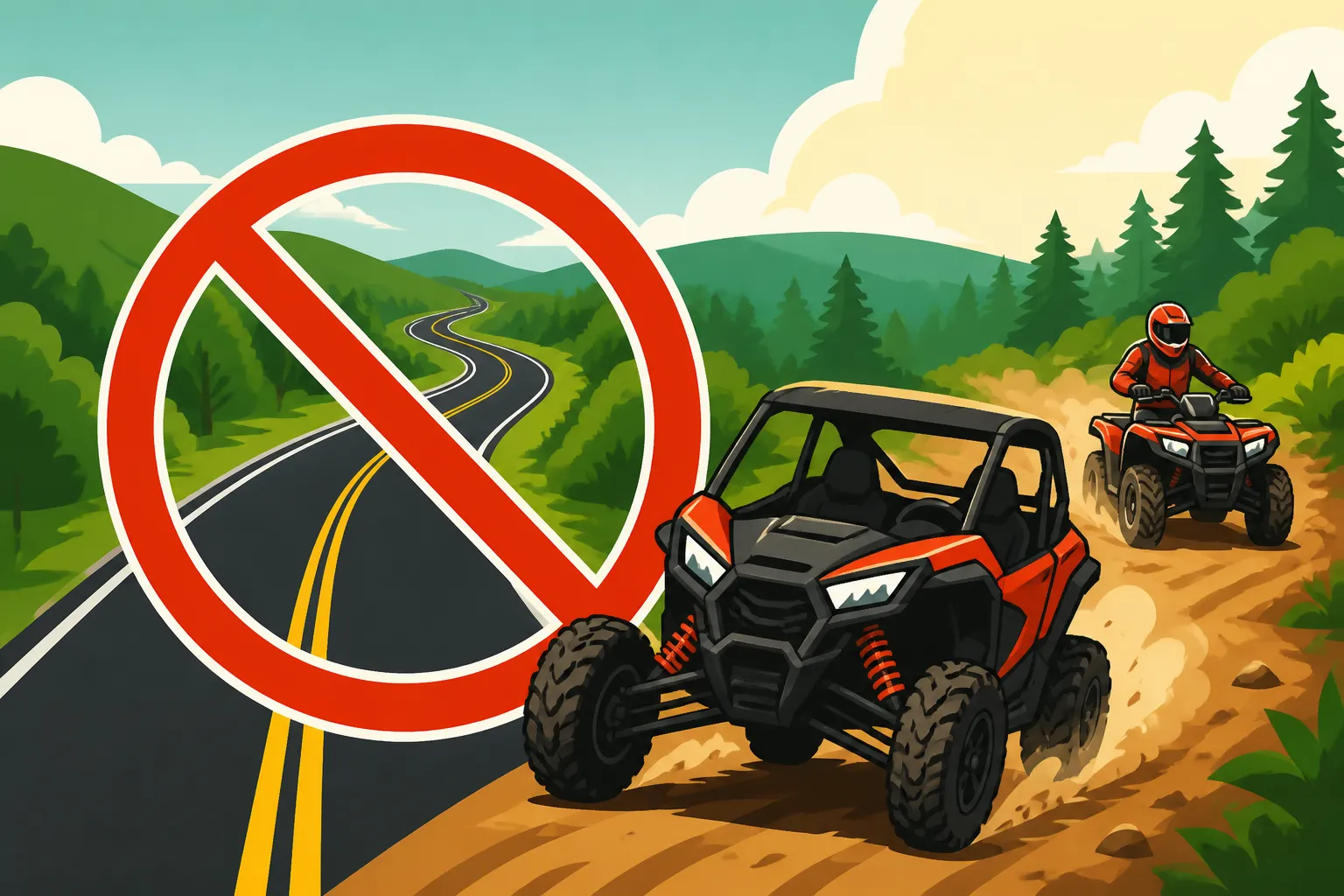
One Highway Excluded in Bono
Riding your UTV on the street in Arkansas can feel like navigating a maze, especially with all the different rules and local ordinances popping up. It's frustrating to think you've got everything figured out, only to find a specific road in a particular town that's still off-limits. This guide will walk you through the general state laws regarding UTVs on public roads, dive into how towns like Bono have created their own street-legal rules, and specifically explain why certain highways, like Highway 63 in Bono, remain excluded, helping you ride confidently and legally.
The General Rule: Arkansas's Ban on Road Riding for ATVs and UTVs
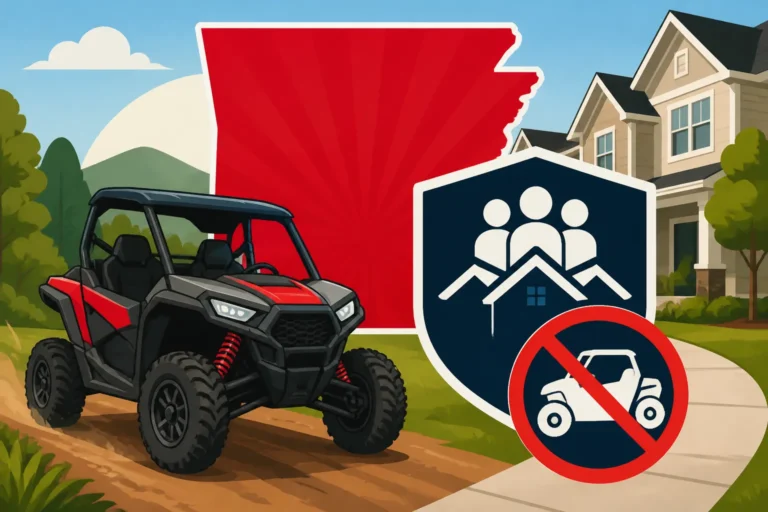
For years, anyone who owned an ATV or UTV in Arkansas knew the drill: these machines were for off-road fun and work only. The state's default stance, enshrined in law, has always been to keep ATVs and UTVs off public roadways. This isn't because the state wants to dampen your spirit; it's rooted in safety concerns. These machines aren't designed with the same safety features as conventional vehicles, lack standard road safety equipment like crumple zones or specific lighting configurations for traffic, and can be unpredictable in a mixed traffic environment. So, when you're looking at a shiny new side-by-side and dreaming of cruising down a county road, remember that the state law, [Arkansas Makes Road Riding Unlawful by Default], generally says "no."
This blanket prohibition often catches new riders or those from other states by surprise. They might see people riding casually in rural areas and assume it's universally permitted, only to face a hefty ticket if a deputy pulls them over. The statute defines what constitutes an ATV and explicitly restricts their use on public streets, roads, and highways. This primary rule is the foundation upon which all other exceptions and local ordinances are built. It means that unless a specific exception applies, or a local jurisdiction has passed an ordinance allowing it, your ATV or UTV should stick to private land or designated off-road trails.
The Six Exceptions to Arkansas's Ban on Road Riding
While the general rule is strict, Arkansas law does carve out specific, limited situations where ATVs and UTVs can legally operate on public roads. These aren't loopholes for joyriding but rather practical allowances for necessary tasks or crossings. Understanding these exceptions is crucial, as they represent the only ways to legally use your machine on a public thoroughfare without a local ordinance.
First, farming operations are often granted an exception. If you're a farmer needing to move your UTV a short distance on a public road to get from one field to another, or to access equipment, the law generally allows it. This isn't for running into town for groceries, but specifically for agricultural purposes as part of your active farming work.
Second, hunting operations also have an exception. This permits you to use your ATV or UTV to access a hunting area or retrieve game, especially when a public road forms a necessary part of that short journey. Again, this is about practical access for the specific activity, not general recreational riding on the road. You might be allowed to cross a highway to get to your deer lease, but not to cruise around the neighborhood looking for new hunting spots.
Third, individuals with a serious walking disability may be permitted to use an ATV or UTV on a public road, provided it's necessary for their mobility and transport. This is a compassionate provision for those who rely on these machines for essential movement where other options aren't feasible.
Fourth, you can perform a direct crossing of a highway, road, or street. This means coming to a complete stop, looking both ways, and crossing at roughly a ninety-degree angle to get to another piece of private land or a trail. You cannot travel along the road, even for a short distance; it's strictly a crossing. [Crossing a Highway on an ATV in Arkansas] outlines this more specifically.
Fifth, utility company crews are exempt when using ATVs or UTVs in the course of their work, such as maintaining power lines or pipelines. These machines are often essential tools for reaching remote areas where traditional vehicles cannot go.
Finally, Arkansas State Parks employees can use ATVs or UTVs within state park boundaries for official duties, like trail maintenance or park patrol. These six scenarios are the foundational exceptions to the statewide ban, and they are interpreted narrowly. If your situation doesn't fit neatly into one of these, you're likely still subject to the general prohibition.
How Arkansas Cities Got the Choice on UTVs
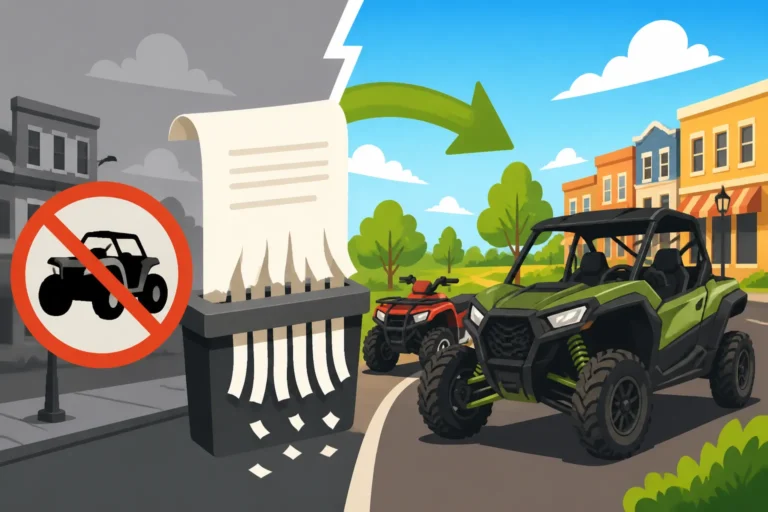
The landscape of UTV street legality in Arkansas shifted significantly thanks to legislative changes, most notably Act 922. Before this, the state's prohibition was nearly absolute, leaving cities and towns little room to accommodate UTV owners who desired to use their machines on local streets. This created a lot of frustration for residents who saw UTVs as practical, low-speed vehicles perfect for getting around small towns, running errands, or simply enjoying their community. Imagine having a capable side-by-side like a Polaris Ranger or a Can-Am Defender, perfect for chores or a quick trip to the general store, but being legally confined to your property.
Act 922 recognized this growing demand and the potential for UTVs to integrate safely into the slower traffic patterns of smaller communities. It empowered cities and towns to pass their own ordinances, allowing UTVs on certain municipal streets. This "local option" was a game-changer, decentralizing the decision-making and allowing each community to weigh its unique traffic patterns, safety concerns, and resident desires. However, it came with clear stipulations. Towns can't just throw open all their roads; there are usually speed limits, equipment requirements, and specific exclusions. This legislation opened the door for places like Bono to explore what UTV integration could look like for their community. [Arkansas Towns Can Open Their Streets to UTVs] goes into more detail about how this process works.
Bono's UTV Ordinance: Opening Local Streets (Mostly)
Bono, Arkansas, like many smaller towns across the state, understood the appeal of allowing UTVs on its local streets. For many residents, a UTV is more than just a recreational vehicle; it's a practical means of transportation for short trips, community events, or just enjoying the local scenery. Recognizing this, Bono passed its own ordinance, taking advantage of the state's local option law. This ordinance generally permits UTVs to be operated on city streets, bringing a wave of convenience and enjoyment to its UTV-owning residents.
However, "generally permits" is the key phrase. No local ordinance completely overrides state law, especially concerning major highways that often traverse these towns. Bono's ordinance, while a welcome change for many, comes with its own set of rules and limitations, designed to balance rider freedom with public safety. These rules typically define which roads are accessible, during what hours, and what safety equipment the UTV must possess. It's a localized solution, crafted to fit the specific needs and infrastructure of Bono, offering a glimpse into how communities can embrace UTV use responsibly.
Streets Posted Under 55 mph and UTV Access
One of the most common and crucial stipulations in almost every city ordinance allowing UTVs on local streets, including Bono's, is the speed limit restriction. Typically, UTVs are only permitted on streets with a posted speed limit under a certain threshold, most commonly 55 miles per hour. This isn't an arbitrary number; it's a critical safety measure. UTVs are designed for off-road performance, not high-speed highway travel. Their handling characteristics, braking distances, and overall stability are simply not comparable to passenger cars at higher speeds.
In Bono, this means you'll generally find UTVs legally cruising on residential streets, collector roads, and other smaller thoroughfares where traffic moves at a more leisurely pace. These are the kinds of roads where children might be playing, where you're more likely to see pedestrians or bicycles, and where the presence of a UTV integrates more smoothly into the existing traffic flow. It's on these slower streets that UTVs truly shine as convenient, versatile vehicles for local travel. You can pick up groceries, visit a neighbor, or head to a local park without the hassle of trailering your machine. Just remember that even on these slower streets, you're expected to abide by all traffic laws, including speed limits, stop signs, and signals.
What Bono Requires for Street-Permitted UTVs
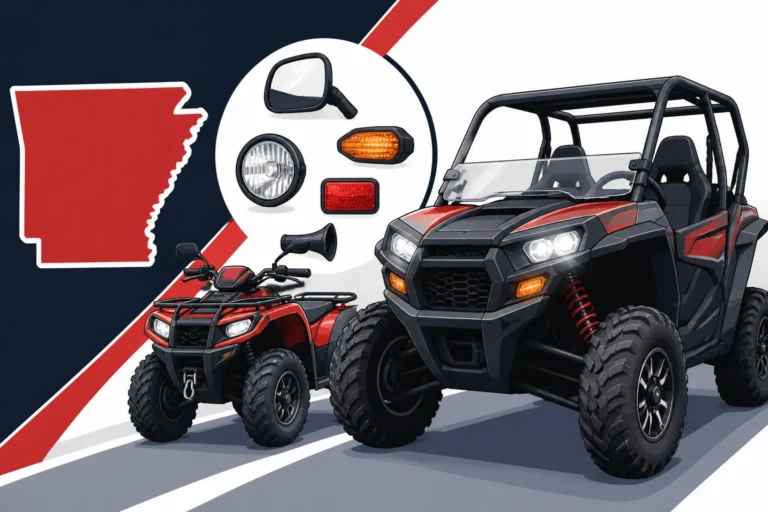
If you're planning to ride your UTV on the streets of Bono, it's not as simple as just rolling out of your driveway. The city's ordinance, in line with state guidelines for local permissions, requires certain safety and operational standards to be met. These requirements are in place to ensure that UTVs, while on public roads, are as visible and predictable as other vehicles, enhancing safety for everyone. Getting your UTV "street legal" often involves adding aftermarket accessories that bring it up to par. Many riders turn to companies like SuperATV for these components, as they offer a wide range of compliant parts.
Here’s a general rundown of what you might need:
- Headlights and Taillights: These are non-negotiable for visibility, especially during dusk, dawn, or bad weather. They need to be fully functional, and often, an ordinance will specify they must be on at all times while operating on public streets.
- Brake Lights: Essential for signaling your deceleration or stop to drivers behind you. These must activate when the brakes are applied.
- Turn Signals: Just like a car, you need to clearly indicate your intentions to turn or change lanes. Many UTVs don't come with factory turn signals, so this is a common aftermarket addition. [Arkansas Turn Signal Requirements for Street UTVs] highlights their importance.
- Mirrors: You'll typically need at least one rearview mirror, and often side mirrors, to give you adequate visibility of traffic around you. Good quality mirrors, perhaps from SuperATV, make a huge difference in situational awareness.
- Horn: A working horn is necessary to alert pedestrians or other drivers to your presence when needed.
- Seat Belts: For all occupants, and they must be worn. This is a fundamental safety feature for any vehicle designed to carry passengers.
- Windshield: While not always explicitly required for all ATVs/UTVs, it's often a common sense addition for comfort and protection from debris on paved roads.
- Proof of Insurance: You must carry valid liability insurance, just like any other vehicle on the road. [Arkansas Insurance for a Street-Permitted UTV] explains this further.
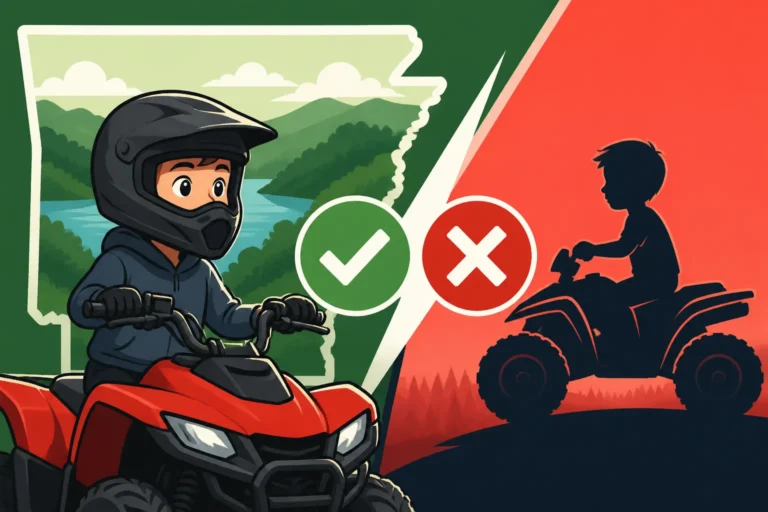
- Driver's License: The operator must possess a valid driver's license. Typically, this means being at least 16 years old. [Arkansas Driver's License at 16 for Street UTVs] clarifies this age requirement.
- Permit/Decal: Many cities, including Bono, will require you to obtain a special permit or display a decal, usually for an annual fee, to prove your UTV is registered and compliant with the local ordinance. This often involves an inspection to ensure all required equipment is installed correctly.
Failing to meet these requirements can result in fines and the revocation of your street-legal privileges. It's always best to check the exact wording of Bono's current ordinance before you hit the pavement.
The Highway 63 Exclusion in Bono: A Key Limitation
Even with Bono's progressive stance on UTV street legality, there are limits, and Highway 63 stands as a prime example of a major arterial road that remains off-limits to UTVs. This exclusion isn't unique to Bono; it's a pattern seen in many other towns and cities across Arkansas where state highways cut through municipal limits. The reason for this specific exclusion lies in the fundamental differences between local authority and state jurisdiction, as well as the inherent design and safety characteristics of UTVs compared to the demands of higher-speed, higher-traffic state highways.
For residents in Bono who enjoy their street-legal UTVs, this exclusion can feel like a major inconvenience, forcing them to find alternative routes or trailer their machines across this vital thoroughfare. It underscores the importance of thoroughly understanding the local ordinances and not assuming all roads are open just because a town has passed a "street legal" rule. That stretch of Highway 63 is likely a state-maintained route, meaning it falls under the purview of the Arkansas Department of Transportation (ARDOT) rather than purely municipal control. ARDOT's regulations and safety standards for state highways are much different and often override local city ordinances when it comes to vehicle types.
Why Certain Roads Remain Off-Limits
The exclusion of roads like Highway 63 from UTV access isn't arbitrary; it's rooted in several practical and legal considerations. Primarily, state highways are designed for faster, higher-volume traffic. They often have multiple lanes, higher speed limits, and are intended for vehicles capable of safely operating in such conditions. UTVs, even with all their street-legal modifications, are inherently slower, have different acceleration and braking capabilities, and a narrower profile compared to conventional automobiles. Mixing these distinct vehicle types on high-speed state highways creates significant safety risks, increasing the potential for accidents.
Furthermore, the jurisdiction often plays a major role. State highways are managed and maintained by the state, and state law generally prohibits ATVs and UTVs on these roads. While Act 922 allows cities to permit UTVs on their streets, it typically does not grant them the authority to override state law on state-controlled highways that simply pass through their town limits. This means the default state ban on UTVs applies to these specific roads, regardless of what a city ordinance allows on local, municipal streets. It’s a clear example of state authority taking precedence for reasons of public safety and consistent traffic regulation across a broader network. This is also why [Arkansas Four-Lane Streets Stay Closed] to UTVs in many ordinances.
Navigating Bono With a Street-Legal UTV
So, if you have a street-legal UTV in Bono, how do you manage your rides and avoid issues, especially with Highway 63 off-limits? The key is careful planning and awareness. It requires you to ride defensively and understand your limitations.
First, route planning is crucial. Before you head out, especially if you're exploring new parts of Bono, take a look at a map. Identify Highway 63 and plan your journey around it. Look for alternative local roads that allow UTV access. Many mapping apps can help you visualize your route, and you can often find local maps at the city hall or online that highlight UTV-friendly streets.
Second, pay close attention to signage. City streets will typically be clearly marked with speed limits, and often, signs might indicate UTV access or restrictions. Always assume a major highway is off-limits unless explicitly stated otherwise by very clear local signage.
Third, be a responsible rider. Even on legal streets, operate your UTV with caution. Maintain appropriate speeds, use your turn signals (perhaps a set from SuperATV you installed), and be aware of pedestrians, cyclists, and other vehicles. Your visibility might be different from a car, so assume others might not see you.
Fourth, know the ordinance. Don't just assume what you hear is correct. Get a copy of Bono's UTV ordinance from the city clerk's office and read it thoroughly. This will clarify which roads are open, what equipment is required, and any other specific rules like hours of operation or passenger limits. This knowledge is your best defense against accidental violations.
Finally, if you need to cross or access something on the other side of Highway 63, you'll need to trailer your UTV. It might be an inconvenience, but it's far better than facing fines or, worse, an accident due to riding where it's not permitted. Respecting these boundaries not only keeps you legal but also contributes to the positive perception of UTV riders in the community.
Here's a quick comparison of the general Arkansas road rules versus Bono's UTV ordinance:
| Feature | General Arkansas State Law (Act 922) | Bono City UTV Ordinance (Example) |
|---|---|---|
| Default Road Status | Unlawful on public roads unless specific exceptions apply. | Generally lawful on most city streets, with conditions. |
| Major Highways | Unlawful. Applies to state-maintained highways. | Unlawful, specifically for roads like Highway 63 due to state jurisdiction. |
| Speed Limit | Not applicable, as general road use is prohibited. | Typically restricted to streets with posted speed limits under 55 mph. |
| Required Equipment | Not applicable for road use, as it's generally prohibited. | Must meet specific safety equipment standards (lights, signals, horn, mirrors). |
| Driver's License | Not applicable for road use. | Valid driver's license required for operator. |
| Insurance | Not applicable for road use. | Proof of liability insurance required. |
| Permit/Decal | Not applicable. | Often requires an annual city permit/decal. |
| Exceptions | Six narrow exceptions (farming, hunting, crossing, etc.). | Ordinance itself is an exception for specific local roads, overrides state law on those. |
Disclaimer
This article is for general informational purposes only and does not constitute professional advice. Laws, prices and regulations vary by location and change over time. Consult a qualified professional for guidance on your specific situation.