Where Arkansas Cities Get Their Cart Authority
Navigating the rules for riding golf carts, or even your side-by-side, on city streets in Arkansas can feel like trying to solve a puzzle with missing pieces. It's incredibly frustrating when you see neighbors cruising around in their communities, but you're not sure if it's legal in your town, or what hoops you'd have to jump through. This guide is going to clear up that confusion by diving deep into the specific legal authority that allows Arkansas cities and towns to permit golf carts on their public roads.
The Foundation: Arkansas State Law and Local Control
It’s easy to assume that if you own an off-road vehicle like a golf cart or a UTV, you can just drive it anywhere. However, that’s almost never the case, especially when it comes to public roads. Arkansas, like most states, has a foundational legal stance that generally restricts such vehicles from street use. This isn't about being overly restrictive; it's rooted in long-standing laws designed for public safety and traffic flow, recognizing that these machines aren't typically designed or equipped for highway speeds and mixed traffic.
The initial frustration for many riders stems from this default "no." You bought your golf cart or UTV for convenience or recreation, and then you discover that taking it from your house to the local store, or even just around the block, might be against the law. This blanket prohibition is the starting point from which any exceptions or local permissions must be carved out.
The General Prohibition on Public Roads
The default position in Arkansas law is that off-road vehicles, including golf carts, ATVs, and UTVs, are generally prohibited from operating on public streets and highways. This isn't some arbitrary rule; it's a measure meant to ensure that only vehicles meeting specific safety and registration standards are sharing the road with cars and trucks. When the state legislature drafted these rules, they were thinking about turn signals, headlights, braking distances, and the overall structural integrity required for highway travel. Most off-road vehicles simply aren't built to those standards from the factory.
This general prohibition is why you often see signs forbidding off-road vehicles on certain roads, or why a local law enforcement officer might stop you if you're cruising down Main Street in your golf cart without proper authorization. There are some very limited state-level exceptions, such as those related to [Arkansas Farming Operation Road Use] or [Arkansas Hunting Operation Road Use], but these are quite specific and rarely apply to a golf cart being used for general transportation within a town. Understanding this baseline is crucial because it highlights that any permission to ride on city streets must come from a specific, legal allowance.
Act 922 and the Shift for UTVs
For years, the situation for UTVs on city streets was even murkier than for golf carts, with many towns simply banning them outright. That began to change with Act 922 of 2025, a significant piece of legislation that specifically addressed how cities could manage side-by-sides. This act was a game-changer because it explicitly granted cities and incorporated towns the option to pass ordinances allowing UTVs on certain municipal streets. Before this, the authority was less defined, leaving many local governments hesitant to permit UTVs even if their residents wanted it.
Act 922 didn't force any city to allow UTVs, but it created a clear pathway for them to do so. This legislative move recognized the growing popularity of UTVs and the desire of communities to use them for local transportation, recreation, and economic development. It effectively delegated the power to regulate these vehicles from the state to the local level, provided certain conditions were met. This means that if you own a UTV and want to drive it on city streets, you first need to check if your city has passed such an ordinance, and then understand [How Arkansas Cities Got the Choice on UTVs] and what rules they've put in place. It's a testament to local control, but it also means the rules can vary wildly from one town to the next.
Specific Golf Cart Ordinances: Beyond Act 922
While Act 922 primarily focused on UTVs, the authority for cities to regulate golf carts on their streets has a slightly different, though equally important, legal foundation. This distinction is vital because it means cities have separate, sometimes overlapping, powers to address these different types of off-highway vehicles. It's not a one-size-fits-all approach, and understanding the nuances can save you a lot of headaches, and potential fines.
For many years, even before the buzz around UTV street legality, communities were grappling with how to handle golf carts, especially in retirement communities, resort towns, or areas with large golf courses. The state recognized this need and provided a specific framework for local control, which cities have embraced to varying degrees.
Chapter 14, Article 54, Section 1410: The Golf Cart Specifics
The primary legal authority for Arkansas cities to permit golf carts on their streets comes from Arkansas Code Annotated § 14-54-1410. This specific statute is the bedrock upon which most municipal golf cart ordinances are built. It grants cities the power to regulate the operation of golf carts on public streets within their corporate limits where the posted speed limit is 25 miles per hour or less. This is a critical detail: if a street has a higher speed limit, a city generally cannot authorize golf cart use on it under this statute.
This legal framework isn't a free pass for golf carts, however. The statute allows cities to impose various conditions to ensure safety and order. These often include requirements for valid driver's licenses (typically meaning you must be at least 16, as stated in [Arkansas Driver's License at 16 for Street UTVs]), proof of insurance, and specific safety equipment like headlights, taillights, brake lights, turn signals, and mirrors. Cities also have the authority to establish permit systems, requiring residents to register their golf carts annually and pay a fee. It's all about balancing community convenience with public safety, and [Arkansas Golf Cart Ordinances Under 14-54-1410] outlines the specific powers cities have under this code.
How a City Adopts an Ordinance
So, how does a city actually get this authority, and what does it look like in practice? It's not a state mandate; rather, it's a local decision. A city or town must actively pass its own ordinance, a piece of local legislation, to permit golf carts on its streets. This process typically involves several steps, starting with discussions at city council meetings, often spurred by resident requests or observed community needs. There might be public hearings where citizens can voice their opinions, concerns, and suggestions.
Once a draft ordinance is prepared, it goes through a formal voting process by the city council. If passed, it becomes local law. This is why [Reading Your Town's Ordinance Before You Ride] is so incredibly important; you can't just assume what applies in one town will apply in yours. These ordinances will detail everything from the specific streets where golf carts are allowed, to required [Arkansas Insurance for a Street-Permitted UTV] (which often applies to golf carts too), permit fees, and the minimum age of the driver. Some ordinances might even specify hours of operation or particular types of golf carts that are permitted. This local adoption process is vital for the authority to truly exist.
Practical Implications for Riders and Cities
The existence of state statutes like Chapter 14, Article 54, Section 1410, and more recently, Act 922, creates a dynamic landscape for riders and cities across Arkansas. It means that what's perfectly legal and encouraged in one community might be strictly prohibited in a neighboring town. This patchwork of rules can be confusing, but it also reflects the unique needs and desires of different communities.
For riders, this means diligence is key. For cities, it means weighing various factors—from public safety to tourism—before enacting or amending their ordinances. There’s a constant push and pull between allowing residents more freedom to enjoy their machines and ensuring that all road users remain safe.
Why Cities Choose to Regulate Golf Carts (and UTVs)
You might wonder why a city would go through the trouble of creating an ordinance to allow golf carts and UTVs on its streets. There are several compelling reasons. For many communities, especially those with an aging population or tourist attractions, golf carts offer a convenient and leisurely way to get around, reducing short car trips and easing parking congestion. In some resort towns or lake communities, allowing these vehicles can enhance the vacation experience and contribute to local charm. This is why you often see places that heavily cater to tourism or have large residential areas near golf courses being the first to adopt such rules.
Economically, issuing permits can generate a small revenue stream for the city, which can then be used for enforcement or maintaining local infrastructure. It also signals to residents that the city council is responsive to their desires and willing to adapt to modern recreational and transportation trends. However, this isn't a decision taken lightly; city councils must also consider potential public safety concerns, traffic impacts, and the need for clear enforcement. They often rely on guidance from law enforcement on how best to integrate these vehicles safely into the existing traffic patterns.
Key Differences: Golf Cart vs. UTV Ordinances
While both golf carts and UTVs can now potentially be street-legal in Arkansas cities, it's crucial to understand that the legal authority for each is distinct, and thus, the resulting ordinances might differ significantly. As discussed, golf cart authority primarily comes from Arkansas Code Annotated § 14-54-1410, allowing them on streets under 25 mph. UTV authority stems from Act 922, which also allows cities to set speed and road type restrictions, but generally for roads posted under 55 mph. This means a city might have one set of rules for golf carts and an entirely different, perhaps more stringent, set for UTVs, or vice versa.
For example, a city might require specific lighting packages, turn signals, and mirrors for UTVs, while only basic reflectors for golf carts, simply because UTVs are capable of higher speeds and are often heavier. A UTV owner might need to invest in a full street-legal kit from a company like SuperATV to meet all the requirements, whereas a golf cart might only need a few additions. It's also possible for a city to permit golf carts but entirely ban UTVs if they deem the latter too powerful or unsafe for their specific street layout. This is why researching [Arkansas UTV Street Legal Rules by Town] is paramount; you cannot assume parity between the two vehicle types, even if they seem similar.
Here's a quick look at how common ordinance elements might compare:
| Feature | Typical Golf Cart Ordinance | Typical UTV Ordinance (Post-Act 922) |
|---|---|---|
| Enabling Law | AR Code Ann. § 14-54-1410 | Arkansas Act 922 of 2025 |
| Speed Limit | Streets posted 25 mph or less | Streets posted 55 mph or less (often excludes 4-lane roads) |
| Driver Age | 16 with valid driver's license | 16 with valid driver's license |
| Insurance | Often required (liability) | Almost always required (liability, sometimes higher limits) |
| Headlights | Required (often 1 or 2) | Required (2) |
| Taillights | Required (often 1 or 2, with brake lights) | Required (2, with brake lights) |
| Turn Signals | Often required | Almost always required |
| Mirrors | Often required (side and/or rearview) | Required (side and rearview) |
| Windshield | Often recommended, sometimes required | Required |
| Seatbelts | If equipped, must be used | Required for all occupants |
| Permit | Annual city permit & fee common | Annual city permit & fee common (e.g., [Arkansas UTV Street Permits and Annual Fees]) |
| State Registration | Not required for street use under this authority | Not required for street use under this authority |
| State Decal | Not required for street use | Not required for street use |
Navigating Local Rules: What You Need to Do
With the diverse legal landscape across Arkansas, the most critical step for any golf cart or UTV owner is to understand the specific rules in their local community. Assuming you know the rules or relying on what you've heard from a friend can lead to citations, fines, and a lot of unnecessary hassle. This isn't a situation where "ignorance is bliss"; it's a situation where "knowledge is power" and keeps you out of trouble.
The responsibility ultimately falls on the rider to ensure their machine is compliant and that they are operating it legally. This requires a proactive approach and a willingness to do a bit of research, which, frankly, is a small price to pay for the freedom to cruise your community.
Researching Your Specific City's Rules
The absolute first thing you must do before even thinking about taking your golf cart or UTV onto city streets is to contact your local city hall or police department. Do not rely on information from social media groups, internet forums, or even well-meaning neighbors, as ordinances can change, and interpretations vary. Call or visit the city clerk’s office and specifically ask about ordinances related to golf cart and/or UTV use on public streets. Be prepared to ask direct questions, such as:
- "Does our city have an ordinance allowing golf carts/UTVs on public streets?"
- "What are the specific requirements for equipment (lights, signals, mirrors, etc.)?"
- "What are the age and licensing requirements for drivers?"
- "Is a special permit required, and what is the annual fee?"
- "Are there specific streets or areas where they are prohibited, or times of day they cannot be operated?"
Often, the city clerk can provide you with a copy of the actual ordinance or direct you to where it can be found online. This step is absolutely non-negotiable, as cities like Bono have adopted specific rules, as mentioned in [Bono's Street Rules for UTVs in Arkansas], while others, like Cotter, have taken different approaches or even explicit bans, as seen in [Cotter's Ordinance Banning ATVs in Arkansas]. Every town is different, and your safety and legal standing depend on knowing your town's specific rules.
Equipment and Compliance
Once you've confirmed that your city does allow golf carts or UTVs on its streets, and you've obtained a copy of the ordinance, your next step is to ensure your machine is fully compliant with all specified equipment requirements. This often means more than just having headlights. Most ordinances require a suite of safety features to bring the vehicle closer to typical street-legal standards.
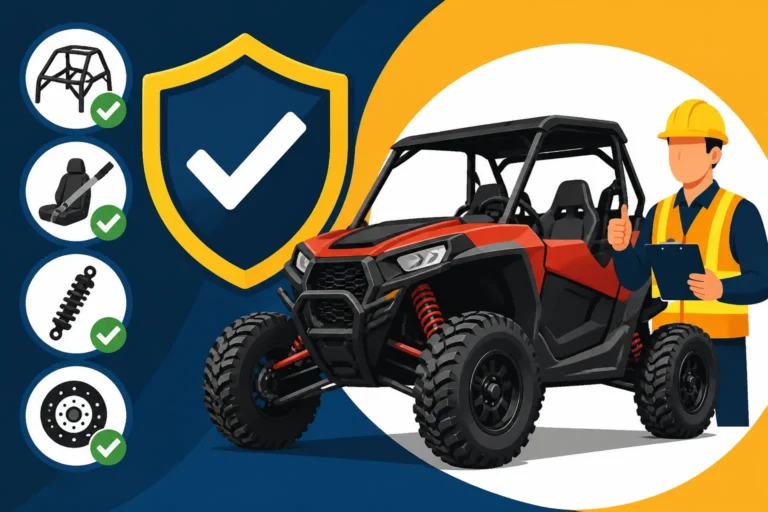
Common requirements include proper headlights and taillights, brake lights, turn signals for both front and rear, and a rearview mirror (or often, side mirrors too). A windshield is usually a must, and many ordinances will specify the need for seatbelts for all occupants. If your golf cart or UTV doesn't have these features from the factory, you'll need to install them. Companies like SuperATV offer a wide range of aftermarket parts and kits designed to make your machine compliant with street-legal regulations, from full turn signal kits to mirrors and horn systems. It's an investment, but it's essential for legal and safe operation. Additionally, be sure to carry proof of [Arkansas Insurance for a Street-Permitted UTV] (if required) and your valid driver's license with you at all times when operating on public roads, as law enforcement will be checking for these.
Disclaimer
This article is for general informational purposes only and does not constitute professional advice. Laws, prices and regulations vary by location and change over time. Consult a qualified professional for guidance on your specific situation.