Arkansas Rules for an Out-of-State UTV
Thinking about bringing your beloved UTV from out of state to enjoy the amazing trails and scenery Arkansas has to offer? It's a fantastic idea, but let's be real: navigating another state's road rules for off-highway vehicles can feel like trying to solve a Rubik's Cube blindfolded. Many riders assume their home state's registration automatically makes them street legal everywhere, only to find themselves scratching their heads, or worse, facing a ticket. This guide will cut through the confusion and explain exactly what an out-of-state UTV owner needs to know to ride legally and safely on Arkansas's diverse roads and trails.
The Core Question: Can You Ride Your Out-of-State UTV on Arkansas Roads?
It's a question we hear all the time, especially from folks visiting from states where UTVs might have broader street legal status. You've got your machine registered and ready to roll back home, so why would Arkansas be any different? Unfortunately, when it comes to riding your UTV on public roads in the Natural State, your out-of-state registration generally doesn't grant you any special privileges. Arkansas has its own distinct set of rules, and they apply to everyone, resident or visitor alike.
Arkansas's Default Stance on Public Road Use
Let's start with the baseline: Arkansas state law generally prohibits the operation of ATVs and UTVs on public roads. This isn't unique to Arkansas; many states adopt this default position due to safety concerns and the non-highway design of these vehicles. When we talk about "public roads," we're referring to everything from state highways and federal routes to county roads and city streets. The law is written to keep off-highway vehicles, well, off the highway.
This can be a real point of frustration for visitors, particularly if you're coming from a neighboring state like Oklahoma, Missouri, or Texas, where UTV street legality might be more common or easier to achieve. You might be accustomed to hopping on your side-by-side to run to the corner store or to connect trails, and then suddenly find yourself in Arkansas where that's explicitly forbidden. It feels like a hurdle, and it definitely requires a shift in mindset and a bit of planning before you hit the pavement.
The "Nonresident" Angle: Does My Home State Registration Matter?
So, you have a shiny street legal license plate and registration from your home state. Does Arkansas offer reciprocity, recognizing your vehicle's status from where you came? For most everyday passenger vehicles, yes, states have agreements that honor each other's registrations and driver's licenses. However, for off-highway vehicles like UTVs, that reciprocity often hits a wall when it comes to road use.
Arkansas has its own specific definition of what constitutes an "all-terrain vehicle" or "off-highway vehicle" for regulatory purposes, and its own rules about where those vehicles can and cannot operate. Unless your UTV specifically meets one of Arkansas's limited exceptions for road use (which we'll dive into shortly) or a local city ordinance allows it, your out-of-state street legal status doesn't automatically carry over. It's not about disrespecting your home state's laws; it's simply that Arkansas's regulations are designed to govern what happens within its own borders. Think of it less as a slight and more as a different regulatory landscape you need to navigate.
Understanding Arkansas's UTV Road Rules for Everyone (Even Visitors)
Alright, so the default is "no" for UTVs on public roads. But like many laws, there are exceptions. Arkansas does provide specific situations where an ATV or UTV, regardless of where it's registered, can legally be on a public road. These aren't loopholes for joyriding; they're very clearly defined scenarios intended for practical, often utilitarian, purposes. Understanding these is crucial for any rider, but especially for out-of-state visitors who might not be familiar with the nuances.
The Six Statutory Exceptions to the Road Ban
Arkansas law carves out six very specific scenarios where an ATV or UTV can be operated on a public road. It's important to remember that these are strict exceptions, not broad permissions. If you don't fit squarely into one of these, you're likely in violation of the law.
- Farming Operations: If you're actively engaged in farming operations, you can use your UTV on public roads. This means you're using it to travel between fields, haul tools, or perform other tasks directly related to the farm. It’s not an excuse to ride to town for groceries. For more on this, check out [Arkansas Farming Operation Road Use].
- Hunting Operations: Similarly, if you're involved in a legitimate hunting operation, you can use your UTV on public roads. This often applies to traveling to and from hunting leases or managing land for hunting purposes. [Arkansas Hunting Operation Road Use] provides more context.
- Disability Exception: Individuals with a serious walking disability can operate an ATV or UTV on public roads. This exception is specifically designed to aid those with mobility challenges.
- Law Enforcement and Emergency Medical Services (EMS): These professionals can, of course, use ATVs and UTVs in the performance of their official duties.
- Utility Company Crews: Employees of utility companies (electric, water, gas, telecom) are permitted to use ATVs and UTVs on public roads while performing their jobs.
- State Park Employees: Those working for Arkansas State Parks can use these machines on public roads as part of their official duties.
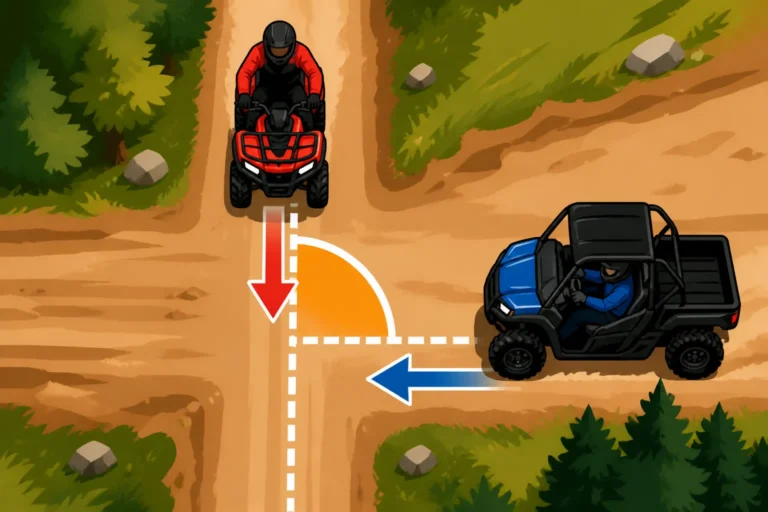
Beyond these specific uses, there are also rules about how you can cross a public road. You can perform a direct crossing of a highway or street at roughly a ninety-degree angle, but you must come to a complete stop first. This means you can't just cruise across; it's a stop, look, and then proceed directly across the pavement. You can read more about this in [Arkansas Direct Crossing at Ninety Degrees] and [Arkansas Stop Before You Cross]. These are all very limited and specific.
What Arkansas's ATV Definition Covers (and Excludes)
Arkansas law, specifically Arkansas Code Ann. § 27-21-102, defines what an "all-terrain vehicle" (ATV) is. This definition is crucial because it dictates which vehicles are subject to these road restrictions and which ones might be treated differently. Generally, an ATV (which includes most UTVs for this purpose) is a motor vehicle designed for off-highway use, having:
- A width of 50 inches or less (though many UTVs are wider, they often still fall under the spirit of the OHV law when discussing road use).
- A dry weight of 1,000 pounds or less.
- Four low-pressure tires.
- Handlebars for steering (this is where UTVs typically differ, having a steering wheel, but are still lumped in with OHVs for road restriction purposes).
It also includes "similar vehicles" like side-by-sides (UTVs) that have more than 50 inches in width and engines over 1,000cc, which are quite common. The key is their design for off-highway use and the nonhighway tires they typically come with. Most UTVs, whether they're two-seaters for trail riding or larger four-seaters designed for work, fall under this general umbrella of off-highway vehicles that are restricted from public roads. If your machine is significantly wider or heavier, it might technically fall outside the ATV definition but still be subject to similar road bans as an unregistered, uninsured vehicle not designed for highway travel. For a deeper dive into these specifics, you can refer to [Arkansas's 50-Inch, 1,000cc ATV Definition] and [Nonhighway Tires in the Legal Definition].
Local Ordinances: The Game Changer for Out-of-State Riders
While statewide law paints a fairly restrictive picture for UTVs on public roads, there's a significant nuance that out-of-state riders absolutely need to be aware of: local ordinances. Arkansas empowers its cities and towns to make their own rules about UTVs on local streets. This means that while you might be prohibited from riding on a state highway, a specific town you're visiting could have an ordinance that makes street riding perfectly legal within its municipal limits.
The Power of Arkansas Cities and Towns to Open Streets
A few years ago, Arkansas enacted legislation that specifically gave cities and towns the ability to pass ordinances allowing the operation of "all-terrain vehicles" (which includes most UTVs) on certain city streets. This was a game-changer for many communities, allowing them to adapt to the growing popularity of UTVs for recreation and local transportation. However, this also created a patchwork of rules across the state, which can be incredibly confusing for anyone, let alone an out-of-state visitor. You might be able to ride legally in Bono, but not in Cotter, which is just a short drive away. This inconsistency is a common frustration, and it's why doing your homework for your specific destination is paramount. For more on how this power came to be, check out [How Arkansas Cities Got the Choice on UTVs] and [Arkansas Towns Can Open Their Streets to UTVs].
What a City Ordinance Typically Requires for UTVs
When a city or town decides to allow UTVs on its streets, they don't just throw the doors wide open. These ordinances come with specific requirements that you, as an out-of-state rider, must adhere to. These requirements are usually designed to ensure safety and integrate UTVs somewhat smoothly into the existing traffic flow. Common requirements include:
- Annual Permit/Fee: Many cities require an annual permit or sticker that must be displayed on your UTV. There's usually a fee associated with this.
- Insurance: Proof of liability insurance is almost universally required. This protects you and others in case of an accident. You'll need to make sure your out-of-state insurance policy covers UTV street use in Arkansas, or be prepared to get a temporary policy if necessary.
- Driver's License: The operator typically needs a valid driver's license, and there's often an age minimum, usually 16 years old.
- Equipment: This is a big one. To make a UTV street-legal under a city ordinance, it almost always needs additional equipment. This can include:
- Headlights and taillights
- Brake lights
- Turn signals
- A horn
- Rearview mirrors (often one on each side, or a central one if sufficient visibility)
- Seat belts for all occupants
- A windshield
- A maximum width limit, often 80 inches.
Companies like SuperATV offer a wide range of aftermarket accessories specifically designed to help UTV owners meet these kinds of street-legal requirements, from turn signal kits to mirrors and horns. It's often a smart investment if you plan on riding in areas that allow street use.
- Speed Limits and Road Restrictions: Ordinances typically restrict UTVs to streets with posted speed limits under a certain threshold, often 35 mph or 55 mph. They almost always prohibit UTVs on state highways, federal routes, or multi-lane roads (like four-lane streets).
You'll definitely want to review specific details for your chosen destination. For example, if you're heading to the Mena area, which is popular for riding, you should research [Bono's Street Rules for UTVs in Arkansas]. On the other hand, you might find that [Cotter's Ordinance Banning ATVs in Arkansas] means you'll need to trailer your machine if you're going through that town. These rules are non-negotiable for riding within those city limits, regardless of your home state's regulations. More broadly, you can get a sense of what to expect in [Arkansas UTV Street Permits and Annual Fees], [Arkansas Insurance for a Street-Permitted UTV], [Arkansas Driver's License at 16 for Street UTVs], and [Arkansas Equipment for a Street-Permitted Machine].
How to Find Out About a Specific Town's Rules
This is the most critical step for any out-of-state UTV owner planning to hit Arkansas streets. Since the rules vary so much, you can't assume.
- Contact the City Clerk's Office: This is your absolute best resource. Call the city clerk for the specific town you plan to ride in. They can provide you with a copy of the ordinance or direct you to where it's published. Don't rely on second-hand information from online forums or social media.
- Check the City's Official Website: Many cities will post their ordinances online. Look for sections related to "municipal code," "ordinances," or "city government." Use keywords like "UTV," "side-by-side," or "off-highway vehicle."
- Don't Rely Solely on General Online Searches: While a Google search might give you some ideas, local ordinances can change, and outdated information is rampant. What was true last year might not be true this year. Always go straight to the source.
As you can see, the situation for [Arkansas Towns Weighing a UTV Ordinance] is fluid. Some towns embrace UTV tourism, others are more cautious, and some simply haven't addressed it yet. Always verify the rules for where you intend to ride.
Practical Considerations and What to Carry
Once you've done your homework and understand the rules for your specific Arkansas destination, there are a few practical considerations to ensure your trip is smooth and worry-free. Being prepared is half the battle, especially when you're far from home.
Documents to Keep on Hand
No matter where you're riding—whether on trails, private land, or on city streets under a valid ordinance—you should always carry essential documents. Law enforcement, forest rangers, or city officials may ask to see them.
- Proof of Ownership: This could be your vehicle's title, registration from your home state, or a bill of sale. It proves the UTV belongs to you (or that you have permission to use it). For more details, see [Carrying Proof on the Trail].
- Proof of Insurance: Even if the specific riding scenario doesn't legally require insurance (e.g., on some private land), it's always wise to have liability coverage. If you're riding on city streets, it will absolutely be a requirement of the local ordinance. Your out-of-state policy should ideally cover you in Arkansas. Be sure to check with your insurance provider before you travel.
- Your Driver's License: If you're operating your UTV on any public road (even under an exception or local ordinance), you should have your valid driver's license with you. City ordinances permitting UTVs on streets nearly always require the driver to be licensed, usually at least 16 years old.
- Copy of the Local Ordinance: If you're riding on city streets, having a printed or digital copy of the specific city ordinance on hand can save you a lot of hassle. If there's any confusion with a local officer, being able to present the exact text of the law can be incredibly helpful.
Essential Equipment for Safe and Legal Riding (Even for Visitors)
Beyond the legal requirements, there's a range of equipment that's just smart to have, especially when exploring new territory in Arkansas.
- Spark Arrestor: If you plan on riding on any national forest land (like Wolf Pen Gap or Mill Creek), a UTV equipped with a U.S. Forest Service-approved spark arrestor is a mandatory requirement. This prevents sparks from escaping your exhaust and potentially starting a wildfire.
- Appropriate Tires: While Arkansas's state road rules mention "nonhighway tires" as part of the ATV definition, if you're using your UTV primarily on trails, make sure your tires are suited for the terrain. Arkansas's trails can range from smooth gravel to rocky climbs and muddy creek crossings. If you're considering riding on local streets, ensure your tires are in good condition and suitable for the speeds allowed by the ordinance. SuperATV is known for offering a variety of tire options suitable for different terrains, allowing riders to customize their UTVs for maximum performance and safety.
- Safety Gear: While Arkansas famously has no mandatory ATV helmet law for adults, wearing a helmet is always a good idea, especially on unfamiliar trails or if you're riding aggressively. Eye protection, however, is a non-negotiable for comfort and safety against dust, bugs, and debris. Even a simple pair of riding goggles can make a world of difference. For more information on this, check out [Arkansas Has No ATV Helmet Law] and [Eye Protection Worth Wearing].
- Trail Permits: Don't confuse street legality with trail legality! If you plan to ride on designated OHV trails in Arkansas's national forests, you'll need to purchase a separate trail permit. These are required for all users, including out-of-state visitors, and the fees go towards trail maintenance. Different forests (Ouachita and Ozark-St. Francis) may have different permit requirements. You can learn more about this in [Arkansas National Forest Riding Explained] and [Arkansas OHV Permits: Two Forests, Two Prices]. A popular spot like [Wolf Pen Gap: Arkansas's Best Known OHV Complex] will require a permit.
| Feature | Arkansas State Law (Default for OHVs) | Local City/Town Ordinance (If Passed) |
|---|---|---|
| Road Access | Generally prohibited, with six specific exceptions (e.g., farming, crossing). | May permit UTVs on designated streets, often under 55 mph, no four-lane highways. |
| Registration | Not typically required for out-of-state UTVs for state-level road use (only for OHV trails). | Some ordinances may require a city-specific annual permit/sticker. |
| Driver's License | Not directly stipulated for the six exceptions (but common sense for any driving). | Typically requires a valid driver's license (often age 16+). |
| Insurance | Not required for the six exceptions. | Often required (liability insurance). |
| Equipment | No specific road equipment mandates for the six exceptions. | May require turn signals, mirrors, horn, headlights, tail lights, seat belts. |
| Speed Limits | Not specified for exceptions, but safe operation expected. | Restricted to streets posted under a certain speed (e.g., 35 mph, 55 mph). |
| Applicability | Applies statewide unless a local ordinance overrides for street use. | Only applies within the specific city or town's corporate limits. |
Navigating Arkansas with your out-of-state UTV requires a bit of upfront research and preparation, but it's absolutely doable. The key is understanding that your home state's rules don't automatically transfer, and that you'll need to pay close attention to both statewide exceptions and specific local ordinances. With a little planning, your UTV adventure in the Natural State will be a memorable one! Consider adding an upgraded bumper or a robust winch from SuperATV for those tougher trail conditions, ensuring you're prepared for anything the Arkansas landscape throws at you.
Disclaimer
This article is for general informational purposes only and does not constitute professional advice. Laws, prices and regulations vary by location and change over time. Consult a qualified professional for guidance on your specific situation.