Reflective Tape Worth Adding
There’s nothing quite like the freedom of exploring Arkansas’s beautiful landscapes on your ATV or UTV. But let's be honest, sharing the road, even briefly, with larger vehicles can be nerve-wracking. That feeling of vulnerability when you're just trying to cross a highway or get to your hunting lease is real. This guide is all about boosting your visibility, especially when your machine needs to interact with public roads, by showing you why and how to effectively use reflective tape to make sure you're seen.
Why Reflective Tape Isn't Just for Night Riding in Arkansas
Many riders think about reflective tape only for those late-night excursions or when they absolutely have to ride after dark. But in Arkansas, where our off-road vehicles often skirt or even briefly use public thoroughfares under specific exceptions, visibility isn't just a nighttime concern. It's about being seen at all times of day, in various weather conditions, and by drivers who might not be expecting an ATV or UTV.
Beyond Headlights: The Need for Passive Visibility
While your ATV or UTV comes equipped with headlights and taillights, these are primarily designed for active illumination, meaning they project light forward or backward. They're fantastic for you to see where you're going and for others to know you're approaching or receding. However, they don't do much for passive visibility from the sides, or even the rear when your brake lights aren't engaged. Imagine a pickup truck approaching a blind curve on a county road, and you're just about to pull out from a side trail, using a [Arkansas Farming and Hunting Road Exceptions] permit to access your property. Your headlights might be visible head-on, but your sides, which present a much larger profile to a cross-traffic driver, remain dark.
This is where reflective tape truly shines – literally. It works by bouncing ambient light, like sunlight, vehicle headlights, or streetlights, directly back to the source. This means that even in broad daylight, if a car’s headlights are on (as many drivers do for safety or by habit), or if the sun is at a certain angle, that tape will stand out, making your machine more noticeable from angles where your active lights aren't effective. It’s an extra layer of protection, a silent guardian that constantly says, "Hey, I'm here!" to other road users, significantly reducing the chances of you being overlooked.
Arkansas's Road Rules and the Gaps in Equipment Requirements
Arkansas's laws regarding ATV and UTV use on public roads can be a bit of a maze. Generally, these machines are considered "off-highway vehicles" and are [Arkansas Makes Road Riding Unlawful by Default]. However, there are specific, limited exceptions, such as direct ninety-degree crossings, farming or hunting operations, or if your local municipality has passed an ordinance allowing UTVs on certain streets under [Arkansas Local Permits for Street UTVs]. When operating under these exceptions, you're interacting with vehicles that travel at much higher speeds and drivers who aren't accustomed to seeing ATVs.
While some city ordinances for street-legal UTVs might specify additional equipment like turn signals or mirrors, the state's baseline for ATVs used under exceptions doesn't always mandate robust passive visibility aids beyond basic lighting. This creates a critical safety gap. Even if your machine is technically legal for a quick road crossing, being seen is paramount. Adding reflective tape goes beyond simply meeting the minimum legal requirements; it's about proactively enhancing your safety and that of others around you. It's a small, inexpensive step that can make a monumental difference in preventing an accident, especially when navigating those quick, sometimes stressful moments, like when you're [Crossing a Highway on an ATV in Arkansas].
Choosing the Right Reflective Tape for Your Arkansas Machine
When you decide to add reflective tape to your ATV or UTV, you might be surprised by the variety available. It’s not just about picking a color; the type and grade of tape significantly impact its effectiveness and durability, especially when you consider the harsh conditions our Arkansas machines often endure—mud, dust, water, and sun.
Understanding Tape Types: Conspicuity, Engineer Grade, and Diamond Grade
Not all reflective tape is created equal. Understanding the different types will help you choose the best product for your needs:
- Engineer Grade: This is a good starting point. Engineer grade tape uses glass bead technology for retro-reflection. It’s reasonably priced and provides decent visibility, especially in low-light conditions. It's typically rated for a few years of outdoor use and is a solid choice for general enhancement on areas that aren't constantly exposed to heavy abrasion.
- High-Intensity Prismatic (HIP) / Type III: Moving up, HIP tape uses micro-prismatic technology, which offers significantly brighter reflection than engineer grade tape. It's more durable, often rated for 7-10 years, and maintains better reflectivity when viewed at wider angles. This is excellent for machines that see regular road interaction or need to be seen from a distance.
- Diamond Grade / Type IV+: This is the top tier. Diamond grade tape, sometimes referred to as conspicuity tape, offers the brightest and most durable reflection. It's designed for heavy-duty applications, like semi-trucks, and provides exceptional visibility from very wide angles and long distances. If you want the absolute best visibility and longest lifespan, this is the way to go, although it comes at a higher price. Brands like 3M are known for their high-quality Diamond Grade tapes. For riders who want to ensure their machine is impossible to miss, particularly those who regularly use machines for chores on large properties that involve crossing public roads or driving on county roads, investing in high-quality tape is a no-brainer. Aftermarket accessory providers, like SuperATV, also offer various lighting and visibility solutions that pair well with high-grade reflective tape, ensuring you're comprehensively equipped for safety.
The durability of the tape is also crucial. Our machines get dirty, wet, and often scraped. Look for tapes that are designed for outdoor vehicle use, with strong adhesives and weather-resistant properties. Some tapes are specifically designed to withstand pressure washing and harsh cleaners, which is a huge plus for off-road enthusiasts.
| Tape Grade | Reflectivity Level | Durability (Years) | Best Use Case | Key Feature |
|---|---|---|---|---|
| Engineer Grade | Good | 3-5 | General visibility, light road use | Cost-effective, standard reflection |
| High-Intensity Prismatic | Better | 7-10 | Frequent road interaction, moderate distances | Brighter, wider angle visibility |
| Diamond Grade (Conspicuity) | Best | 10+ | Heavy road use, long distances, critical visibility | Highest brightness, widest angle, extreme durability |
Strategic Placement for Maximum Impact
Simply sticking tape anywhere won't give you the best results. Strategic placement is key to maximizing your machine's visibility. Think about the angles from which other drivers, pedestrians, or even other riders might approach you, especially when you're navigating areas where you might encounter traffic, such as [Arkansas Rules for Riding a County Road].
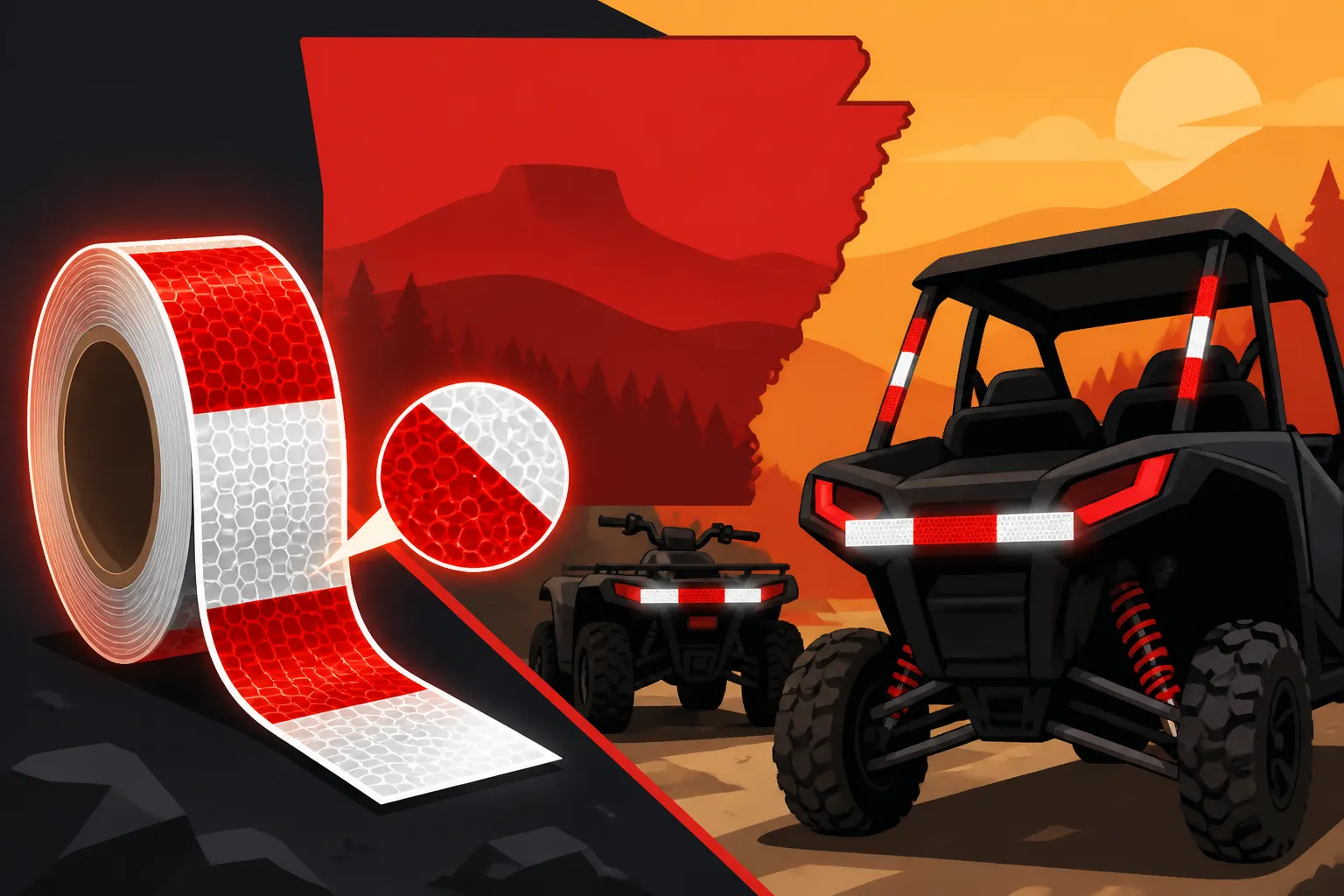
- Sides: This is perhaps the most critical area. Apply reflective tape along the length of your machine's side panels, fenders, and even the trailing edges of the footwells. Consider creating a stripe or a chevron pattern that follows the contours of your machine. This makes you much more visible to cross-traffic, whether you're at an intersection or just moving parallel to a road. For wider machines, like many UTVs or [Arkansas Machines Wider Than 50 Inches], side visibility is incredibly important.
- Rear: While your taillights and brake lights cover active rear visibility, tape provides an always-on passive element. Place strips horizontally on the rear bumper, tailgate (if applicable), and vertically on the outer edges of the roll cage or cargo racks. This is especially helpful if you're pulling a small trailer or using your UTV for [Arkansas Rules for Towing With a UTV]. Make sure the tape doesn't interfere with your existing lights.
- Front: Even though you have headlights, adding reflective accents to the front fenders, bumper, and perhaps the leading edges of the hood can help define your machine's profile. This is beneficial in low-light conditions or when a driver might be looking for a specific type of vehicle. Think about the inverse effect; you want to make your machine immediately recognizable as a distinct object.
- Roll Cage: For UTVs, the roll cage offers excellent vertical surfaces for tape. Wrapping sections of the cage, particularly the rear uprights, can create a tall, visible profile that catches attention from a distance.
- Wheels/Tires: Some riders even apply reflective rim tape to their wheels. This adds a dynamic element of visibility as the wheels rotate, making your machine stand out even more.
Avoid placing tape in areas that are constantly caked in mud or will be quickly scraped off by branches. While you can't avoid all trail grime, focus on higher, less-abused sections. Remember, reflective tape isn't a substitute for [Arkansas Equipment for a Street-Permitted Machine] like proper headlights and taillights, but it's a powerful enhancement that works in concert with them to drastically improve your overall conspicuity.
Application and Maintenance for Lasting Visibility
So you've chosen your high-quality reflective tape, perhaps even from a reputable brand like SuperATV for its known durability in the off-road world, and you're ready to make your machine shine. The application process might seem straightforward, but taking a few extra steps can ensure the tape adheres properly and stays put, providing you with long-lasting visibility. Just like your [Arkansas ATV Decal Replacement If It Peels Off] or any other decal, proper prep is key.
Prepping Your Machine for Tape Adhesion
The success of your reflective tape application hinges on how well you prepare the surface. You can have the best tape in the world, but if it's applied to a dirty or greasy surface, it won't stick, and you'll quickly be re-applying it.
First, clean the area thoroughly. Use a good degreaser or automotive cleaner to remove all dirt, mud, oil, wax, and grime. Pay special attention to the nooks and crannies where residue loves to hide. After cleaning, rinse the area completely and allow it to dry.
Next, use rubbing alcohol. This step is crucial. Wipe down the entire application area with isopropyl alcohol to remove any remaining oils or cleaners that could interfere with adhesion. Let the alcohol evaporate fully – it dries quickly, so this won't take long. Avoid touching the cleaned surface with your bare hands after this step, as the oils from your skin can compromise adhesion.
Finally, consider the temperature. Reflective tape adhesives work best when applied in moderate temperatures, typically between 60°F and 80°F (15°C and 27°C). If it's too cold, the adhesive won't bond properly. If it's too hot, the tape might become too pliable and difficult to handle, and the adhesive could cure too quickly. If you're working in extreme temperatures, try to move your machine into a garage or shaded area that's closer to the ideal range. Applying firm, even pressure across the entire surface of the tape as you lay it down will help squeeze out any air bubbles and ensure a strong, uniform bond with the machine's surface.
Keeping Your Reflective Tape Bright and Effective
Once applied, reflective tape is fairly low maintenance, but off-road conditions in Arkansas can be tough on anything stuck to your machine. Regular care will ensure your investment in safety continues to pay off.
The biggest enemy of reflective tape's effectiveness is dirt and mud. When the reflective surface is covered, it can't bounce light back. After a muddy ride, make sure to clean your tape along with the rest of your machine. Use mild soap and water, and a soft cloth or sponge. Avoid harsh abrasives or high-pressure washers directly on the edges of the tape, as this can lift the adhesive over time. If you do use a pressure washer, keep a safe distance and angle the spray away from the tape's edges.
Inspect your tape regularly. During your routine maintenance checks, take a moment to look at your reflective tape. Are there any peeling edges? Are there significant scratches or tears? If the tape is damaged, its reflectivity will be compromised. Just as you'd address a fading or peeling [Arkansas ATV Decal on the Left Front], promptly replace any damaged sections of tape. Keeping a spare roll handy can make quick repairs easy. Over time, UV exposure can also cause some tapes to fade or degrade, especially lower-quality ones. This is another reason why investing in durable, high-grade tape from the start is a good idea. By keeping your tape clean and intact, you ensure that your machine remains as visible as possible, whether you’re crossing a paved highway or just riding on a dusty [Arkansas Rules for Riding a Gravel Road] on your way to a fishing spot.
Beyond Tape: Other Ways to Boost ATV/UTV Visibility in Arkansas
While reflective tape is a fantastic, cost-effective way to boost passive visibility, it’s just one piece of the puzzle. For comprehensive safety, especially when operating in low light, adverse weather, or any situation where you might encounter other vehicles, combining multiple visibility strategies is always the best approach.
Auxiliary Lighting and Flags
Your ATV or UTV comes with factory lighting, but often, it's just the bare minimum. Adding auxiliary lighting can dramatically increase your machine's presence, particularly during [Arkansas Rules for Riding After Dark] or in foggy or rainy conditions common in the Ozarks or Ouachitas.
- LED Light Bars: These are incredibly popular for a reason. Mounted on the front of your machine or roll cage, an LED light bar can cast a much wider and brighter beam than your stock headlights, not only helping you see obstacles but also making your machine impossible to miss from head-on. Just be mindful of local regulations and courtesy to other riders on trails – dim or turn them off when approaching others.
- Whip Lights: These tall, flexible, often LED-illuminated poles are fantastic for making your vertical profile stand out. They're commonly seen in desert riding but are also highly effective in wooded areas or on trails where your machine might be obscured by terrain. Many whip lights come with various colors and patterns, adding a distinct visual marker.
- Additional Brake Lights/Running Lights: For UTVs especially, adding extra brake lights or even illuminated accent strips to the rear can provide additional warning to following traffic. Some aftermarket accessories from companies like SuperATV offer integrated lighting solutions that fit seamlessly into your machine's design, enhancing both aesthetics and safety.
- Safety Flags: While not a lighting solution, a brightly colored safety flag, often mounted on a whip pole, can add significant visibility, especially when cresting hills or riding in tall grass where your machine might otherwise be hidden. These are especially useful in multi-use areas or during busy riding seasons.
These additional lighting elements, combined with reflective tape, create a multi-faceted visibility system. They work together to ensure your machine is seen from all angles, day or night, and under various environmental conditions.
Rider Apparel and Machine Color Choices
While the focus has been on the machine itself, don't forget that you are also a critical part of the visibility equation. What you wear can make a difference, particularly if you find yourself off the machine or if your machine is partially obscured.
- High-Visibility Apparel: Wearing bright, fluorescent colors like neon green, orange, or yellow is a simple yet effective way to stand out. Many riding jackets, helmets, and even gloves come in high-visibility options, often incorporating their own reflective elements. This is especially important during hunting season when you might be sharing land with hunters, even if you’re just riding to your deer stand.
- Machine Color: While you might love that stealthy matte black finish, a brightly colored machine is inherently more visible. If you're in the market for a new ATV or UTV and visibility is a top concern, consider choosing a model in a vibrant color. Of course, many of us already own our machines, and painting isn't always an option. This is where reflective tape becomes even more valuable, allowing you to add high-contrast, attention-grabbing elements to any machine, regardless of its base color.
Ultimately, the goal is to make your ATV or UTV, and you, as visible as possible to everyone around you. By layering solutions—high-quality reflective tape, auxiliary lighting, and smart apparel choices—you're creating a robust safety profile that drastically reduces your risk, whether you're navigating backcountry trails or making a permitted crossing on a busy Arkansas road. Think of it as investing in peace of mind; knowing you've done everything you can to be seen is a powerful feeling.
Disclaimer
This article is for general informational purposes only and does not constitute professional advice. Laws, prices and regulations vary by location and change over time. Consult a qualified professional for guidance on your specific situation.