Mud Pits at Arkansas Off-Road Parks
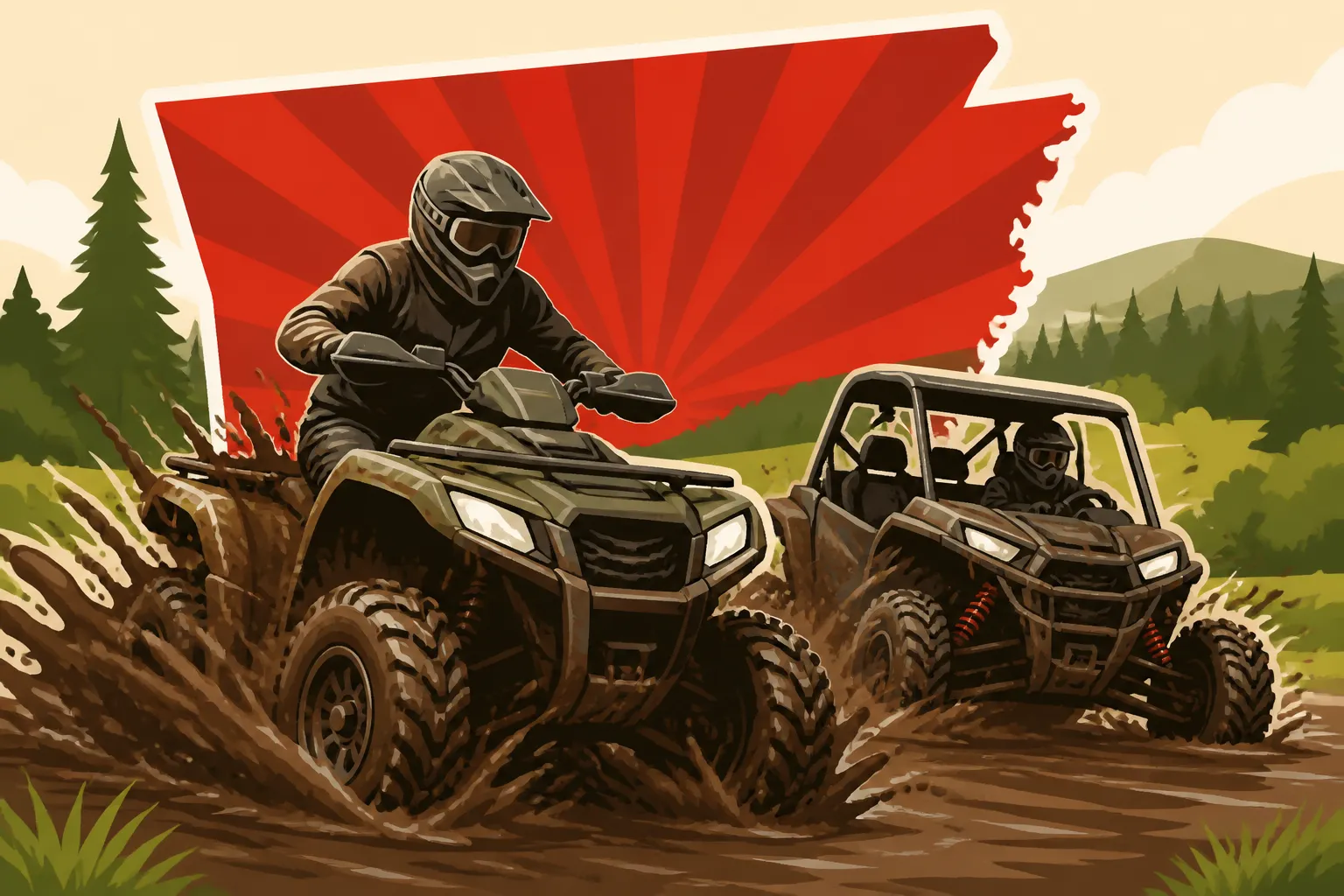
Mud pits can be a fun part of an Arkansas off-road day, but the muddy stretch that looks manageable from the parking area can quickly turn into a recovery job. This guide explains how to find and approach designated mud areas, prepare your ATV or UTV, and ride with less risk of getting stuck, damaging your machine, or ignoring a park’s rules.
What to Know About Mud Pits at Arkansas Off-Road Parks
A mud pit is not the same as a muddy trail
A designated mud pit is an area where riders can choose to get into deeper, churned-up mud. A wet trail is different: it may be a normal route made slick or soft by rain, with rocks, slopes, roots, and drainage crossings hidden beneath the surface. The distinction matters because riding through a pit is usually a deliberate choice, while trail conditions may change unexpectedly as you go.
At an off-road park, don’t assume every mud hole is intended for play. A low spot on a trail might be there to carry runoff, and riding around it could widen the trail or damage the surrounding ground. Look for signs, maps, marked riding areas, or staff guidance before entering a muddy section. If you’re unsure, stop somewhere safe and ask rather than following another rider into an area you can’t identify.
Conditions can shift during a single outing. A shallow-looking patch may have a deep rut hidden under brown water; a firm entry may lead to soft ground in the middle. After a strong rain, even a route you’ve ridden before can behave differently. For broader trip planning, Arkansas Trail Conditions Before You Tow is a useful related topic to explore.
Check the park’s rules and conditions before unloading
Arkansas has a mix of public riding areas and private off-road parks, and their rules are not interchangeable. A park may designate certain areas for mud riding, restrict access after heavy rain, or ask riders to avoid particular sections to limit erosion. Rules may also cover speed, passengers, vehicle width, recovery activity, and where machines can be washed. Confirm what applies at the specific place you plan to ride.
Hot Springs Off-Road Park and Byrd’s Adventure Center are two well-known private riding destinations in the state, but the facilities, routes, and riding conditions at any park can change. Don’t treat a mention of a park as confirmation that it currently has an open mud pit or that a particular area is suitable for your machine. Contact the park or check its official information before you leave home, especially if mud riding is the main reason for your visit.
Digital trail maps can help you understand how a ride fits together, but they are not a substitute for current access information. Riders may use onX Offroad to review mapped routes and orient themselves, then compare what they see with the park’s own rules and directions. If you’re visiting a forest riding area rather than a private park, read Arkansas National Forest Riding Explained and check which permits and access rules apply. A route appearing on a map does not, by itself, mean it is open or appropriate for mud riding.
Choose a Mud Ride That Matches Your Machine and Skill
Judge the obstacle before you commit
Pause at a safe spot and look at the entry, the exit, and the ground around the mud. Check whether water hides deep ruts, rocks, branches, or abrupt drop-offs. Notice how wide the usable line is and whether there’s room to turn around or recover a machine without putting other riders in danger. If you can’t see enough to make a reasonable judgment, don’t drive in just to find out.
Think about the machine as well as the obstacle. A lighter ATV and a large side-by-side can behave very differently in the same patch of mud. Tire tread, ground clearance, weight, vehicle width, and the rider’s experience all affect how easily a machine moves through soft ground. A vehicle that fits comfortably on a wide trail may still be a poor match for a narrow, deeply rutted pit.
It helps to agree on a simple plan before anyone enters: who goes first, where the next rider waits, and what everyone will do if the lead machine stops moving. Keep enough distance that a rider behind you can stop without entering the same trouble spot. If you want to compare the general layout and challenge level of different places, Arkansas Private Off-Road Parks Compared can help you think through what to ask each operator.
Know when to skip the pit
Turning around is a sound riding decision, not a failure. Skip a mud pit if the water is too deep to judge, the exit looks blocked, there are no clear recovery options, or the ground is already badly churned. It’s also sensible to sit one out if you’re riding alone, don’t have recovery equipment, or aren’t comfortable judging the obstacle. A group’s enthusiasm can make a risky line seem easier than it is.
Weather can make a familiar area harder, not just wetter. Rain may soften the base beneath the surface, increase water depth, and make a slope difficult to climb on the way out. After a storm, ask park staff whether the route is open and whether conditions have changed. For general wet-weather trail considerations, see [Arkansas Trail Riding After Heavy Rain].
A good day doesn’t require every rider to tackle every obstacle. One person may choose a bypass or wait on firm ground while others take a designated pit. Make that choice before the group enters, and agree on a place to meet afterward. If the park offers routes that differ in width or difficulty, Arkansas ATV Trails With Width Limits can help you understand why it’s important to match a route to your machine rather than relying on a general trail label.
Prepare Your ATV or UTV for Mud
Focus on basic checks and practical recovery gear
Before riding, check that the machine is in good operating condition. Inspect tires for visible damage, confirm that the brakes and lights work, and look over the steering and controls. Secure loose cargo and make sure anything mounted to the machine is firmly attached. Mud can hide a developing problem until you’re well away from the staging area, so a quick check at the start is worthwhile.
Recovery equipment should fit the machine and the kind of riding you plan to do. A properly rated tow strap and suitable recovery points are more useful than improvised ropes or attaching a line to a weak part of the vehicle. If you carry a winch, know how to operate it safely before you need it. Keep bystanders clear of tensioned lines, and follow the manufacturer’s instructions for recovery equipment.
Think about heat and debris, too. Mud, grass, and leaves can collect around parts of a machine and reduce airflow. Stop periodically to check for packed debris, particularly if you’ve been riding through wet vegetation. Don’t reach near hot or moving components, and follow the owner’s manual for safe inspection and cleaning. For rocky routes that may be part of the same trip, [Radiator Screens for Ozark Leaf Litter] and [Skid Plates for Rocky Trails] cover related protection considerations.
| Before riding | Why it matters | Practical action |
|---|---|---|
| Check the route and park rules | A muddy area may be closed or unsuitable | Confirm access with the park and follow posted directions |
| Inspect tires, brakes, and steering | Mud can make a small fault more consequential | Do a walk-around before unloading |
| Secure cargo and recovery gear | Loose items can shift or snag | Stow gear firmly and keep recovery straps accessible |
| Agree on group spacing and signals | Visibility and traction can change quickly | Keep a safe gap and decide where riders will wait |
| Plan for cleanup | Mud can carry grit into moving parts | Use designated wash areas and follow park instructions |
Ride smoothly and protect the machine
In mud, abrupt steering and sudden throttle changes can make it harder to stay in control. Use deliberate inputs and avoid charging into an obstacle just because another rider made it through. The machine, tires, and ground conditions are different for every attempt. If the tires stop gaining traction, adding more throttle may only dig deeper ruts and make recovery more difficult.
Avoid entering water when you can’t judge its depth or what lies beneath it. Water can conceal holes, debris, and uneven footing. It can also reach components that are not designed to be submerged. There is no universal safe depth for every ATV or UTV; the machine’s design and the specific crossing matter. Consult the owner’s manual for your vehicle’s limits and choose a dry route if you’re uncertain.
After a muddy section, watch for changes in how the machine feels or sounds. Mud and grit can affect brakes, steering, cooling areas, and other components. When you reach a suitable stopping place, inspect the machine safely and clear only what you can reach without putting yourself near hot or moving parts. For cleanup guidance, see [Washing Grit Off After a Ride]. Don’t wash a machine wherever it’s convenient: use the park’s designated facilities and follow its instructions for runoff and waste.
Stay Safe, Respect the Park, and Finish the Day Well
Keep recovery calm and controlled
If a machine becomes stuck, stop spinning the tires and take a moment to assess the situation. More throttle can dig the vehicle deeper, damage the trail, and make recovery harder. Keep other riders out of the immediate area, especially if a strap or winch may be used. Before attaching recovery gear, check the vehicle’s recovery points and make sure everyone understands the plan.
A recovery should not turn into a crowd gathering around a loaded strap. Keep people clear of the line and avoid standing where a moving vehicle could slide or roll. If the machine is at an awkward angle, the ground is unstable, or the group does not have appropriate equipment, get help from park staff rather than improvising. For a longer ride, [Carrying a Tow Strap in the Hills] offers useful context on why recovery planning matters before a vehicle is stuck.
Don’t attempt a recovery that exceeds your experience or equipment. A strap attached to an unsuitable point can damage the machine or cause injury. Winches and other recovery tools also require care; follow their instructions and use only appropriate anchors. A slow, safe recovery is better than turning one stuck vehicle into a damaged machine or an injured rider.
Leave the riding area in good shape
Mud riding can be hard on trails, especially when riders make repeated passes through soft ground or create new lines around a pit. Stay within designated areas, don’t widen a route to avoid a rut, and respect any closures. If staff have closed a section after rain, don’t treat the closure as optional because the route looks passable from the entrance.
Be thoughtful around other visitors. Wait for a clear opening before entering a busy area, don’t splash or crowd riders who are stopped, and keep speed appropriate to visibility and traffic. If your group is riding unfamiliar ground, one person can help keep track of who has entered and exited the muddy section. For more on shared riding habits, read Arkansas Trail Etiquette Locals Expect.
A final walk-around helps catch problems before you load up. Look for packed mud around the tires and body, loose gear, and visible damage. Clean the machine in the area the park provides, and secure it properly for the drive home. If a decal or other required identification is covered in mud, clean it enough to remain visible where applicable. Carrying Proof on the Trail is also worth reviewing so you know what documentation to keep accessible during a ride.
Mud pits can be a memorable part of riding in Arkansas when you treat them as obstacles to assess, not challenges you have to conquer. Check the park’s current directions, choose a line that fits your experience and machine, carry appropriate recovery gear, and be willing to turn around. That approach leaves more room to enjoy the ride—and a much better chance of ending the day with everyone and every machine in good shape.
Disclaimer
This article is for general informational purposes only and does not constitute professional advice. Laws, prices and regulations vary by location and change over time. Consult a qualified professional for guidance on your specific situation.