Byrd’s Camping Rates Per Person
Camping at Byrd’s Adventure Center can make an Arkansas riding weekend much easier, but “per person” pricing is not always the full amount you’ll pay. Your total may depend on the camping setup, party size, and any extras you need. This guide explains how to compare the options, what to ask before booking, and how to plan a stay near the Mulberry River.
How to Understand Byrd’s Camping Rates
Per-person rates are only one part of the total
A per-person rate gives you a useful starting point, but it may not tell you what your whole group will owe. Before comparing camping options, check whether the quoted amount covers the campsite itself or only the people staying there. Also ask whether children are counted differently, whether all members of a group need to be included in the reservation, and whether the price changes with the type of site.
For example, a couple staying one night might pay differently from a family or a group of riders sharing a site, even if everyone chooses the same camping area. A per-person charge can also feel less straightforward when someone arrives late, leaves early, or joins the group for only part of the stay. Ask how the property calculates the charge in those situations rather than assuming the rate is automatically divided by the number of nights.
The important number to plan around is the full reservation total, not just the advertised rate. Ask whether taxes, reservation charges, or optional amenities are added separately, and whether any amount is due when you book. Providers can change their rates and policies, so check Byrd’s own booking information or contact the center directly for current figures.
Camping, RV sites, and cabins may be priced differently
A basic campsite, an RV site, and a cabin are different kinds of stays, so a single “camping rate” may not describe all of them. If you are bringing a tent, ask which areas are suitable for tent camping and whether the rate is per person, per site, or a combination. If you are arriving in an RV, confirm what the quoted rate includes and whether your particular vehicle and setup can be accommodated.
A cabin may be listed separately from traditional camping, with a different pricing basis and different occupancy rules. Don’t assume a cabin price includes every person in your party, bedding, or other items you might need. Ask what is supplied, what you should bring, and whether the reservation has a minimum stay or other booking conditions. For a closer look at lodging choices, see Arkansas Off-Road Parks With Cabins and Arkansas Off-Road Parks With RV Hookups.
| Stay option | What to clarify before booking | Why it affects your budget |
|---|---|---|
| Tent camping | Whether charges are per person, per site, or both | A group may have a site charge in addition to individual charges |
| RV camping | Site suitability, included services, and occupancy rules | The cost and setup may differ from a tent site |
| Cabin stay | Occupancy limit, included items, and booking conditions | A cabin may be priced differently from a campsite |
| Extra guest or partial stay | How late arrivals, early departures, and visitors are counted | The final bill may not match a simple nightly estimate |
| Optional amenities | Whether each amenity is included or charged separately | Small add-ons can change the reservation total |
Use the table as a call checklist, not as a statement of Byrd’s current policies. The property’s booking details are the place to confirm what applies to your dates and group.
Questions to Ask Before You Reserve
Confirm the price basis and party rules
When asking about a reservation, explain your actual group rather than asking only for a general camping rate. Give the number of adults and children, the number of nights, and whether everyone will arrive and leave together. If you are traveling with another family or riding group, ask whether you should book together or make separate reservations.
Then ask for a full estimate for the specific stay you want. A useful question is: “Can you tell me the total for our group, including any required fees or charges, and explain which parts are per person and which are per site?” This makes it easier to spot a fee that might otherwise appear only during checkout or after you arrive.
Also clarify how the property handles changes. If one rider cancels, someone joins at the last minute, or weather changes your plans, you’ll want to know whether the reservation can be adjusted and what the relevant rules are. Don’t rely on a verbal estimate alone if the reservation page or confirmation gives different terms; ask the staff to explain the written booking details before you pay.
Check what your camping setup requires
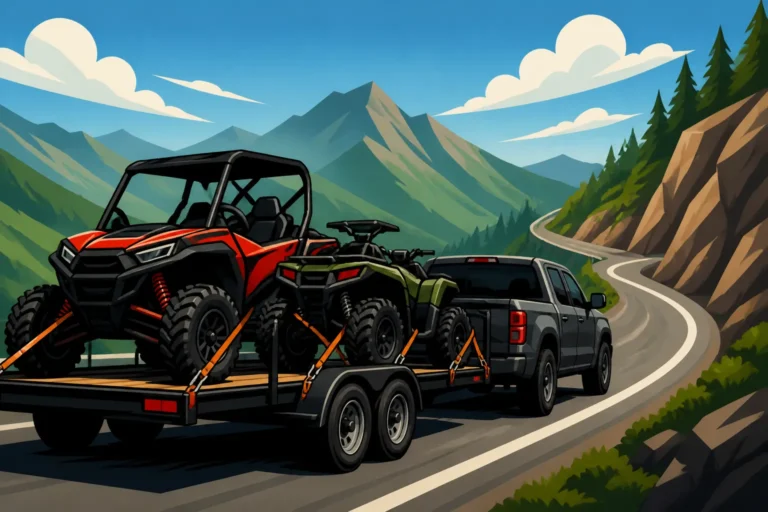
A stay at a riding destination involves more than choosing a place to sleep. Tell the staff what you are bringing: a tent, an RV, a trailer, or several machines. Ask whether there are site-size restrictions, where trailers can be parked, and whether the camping area is suitable for your vehicle. These details matter especially when your group is hauling multiple machines and needs room to unload safely.
If you are bringing an RV, ask which services are available at the particular site you are considering. Avoid assuming that every site has the same connections or amenities. For tent camping, confirm whether you need to bring all your own gear and whether there are any property-specific rules about cooking, fires, quiet hours, or pets.
A quick confirmation can prevent a familiar travel-day headache: arriving after a long tow only to discover that your vehicle or equipment does not fit the site you expected. For more trip-planning context, Arkansas ATV Camping With Trail Access and Arkansas Trailheads With Trailer Parking cover related considerations.
Planning a Riding Stay at Byrd’s
Match your lodging choice to the shape of your trip
Think about how much time your group will actually spend at the campsite. If you expect to ride most of the day and mainly need a place to sleep, basic camping may suit your plans. If you are traveling with people who want more indoor comfort, or if the weather forecast makes tent camping less appealing, compare the available RV and cabin options as well.
A lower-looking nightly estimate is not automatically the best value if it requires extra equipment, a longer drive, or a less convenient setup for your group. On the other hand, a more comfortable option may be unnecessary for a short trip when you already own camping gear and are happy using it. Compare the full cost alongside convenience, not as a price figure in isolation.
Consider your riding schedule, too. If you plan to arrive late, leave early, or stay multiple nights, ask how check-in and check-out timing works and whether it affects your booking. For an overview of the destination itself, see Byrd’s Adventure Center on the Mulberry River and Byrd’s 800 Acres in Arkansas. The details that matter most for your trip are the current lodging options, applicable rates, and rules confirmed directly with the center.
Build a realistic group budget
Start by listing every traveler and every night, then add the camping or lodging amount the property provides for your exact party. Keep separate notes for optional charges, meals, fuel, trail-related expenses, and any supplies you need to buy or rent. Separating these categories helps your group avoid treating a lodging estimate as the full cost of the weekend.
For a group ride, agree in advance on how shared expenses will be split. One person may reserve the site while another brings the cooking gear, for example. Decide how you’ll handle a late cancellation or an extra guest, too. These conversations can feel overly practical when everyone is excited to ride, but they help prevent awkward money discussions at the campground.
If you are coordinating more than one vehicle, check the area’s access and trail plan before you finalize lodging. onX Offroad can help riders review mapped routes and plan around an intended riding area, but it should be used as a planning aid rather than a substitute for checking current access rules, closures, or property guidance. For route context, see Arkansas Riding on the Mulberry River. If you use onX Offroad, download or prepare the information you need before leaving reliable service, and confirm important details with the land manager or property staff.
A Practical Booking Checklist
Get the important details in writing
Before you submit a reservation, make sure you have the dates, party size, lodging type, and total estimate in front of you. Check the confirmation for the cancellation policy, payment schedule, arrival instructions, and any site or occupancy requirements. If something you discussed by phone is important—such as whether a trailer can fit—ask for confirmation in writing.
Keep the confirmation somewhere you can find it while traveling. Save the property’s contact details and the address or directions before you leave. Cell service can be unreliable in rural areas, and searching for booking information at the last minute is an easy way to add stress to an otherwise enjoyable trip.
If you are booking during a popular riding period or arranging a group weekend, ask whether advance reservations are recommended and whether the property can accommodate your full setup. Availability and booking procedures can vary, so do not assume a site will be available simply because you have visited before. Arkansas Riding Areas That Take Reservations offers more context on planning ahead for a riding-area stay.
Prepare for the destination, not just the campsite
Pack with the actual campsite and ride in mind. Bring the items your group will need for sleeping, meals, weather, and basic cleanup, and check whether the property supplies anything before relying on it. If you are towing, inspect tie-downs and trailer equipment before departure. If multiple riders are traveling together, share the itinerary and agree on a meeting point in case someone gets separated.
Navigation planning deserves a little attention, too. onX Offroad may be useful for organizing a route and understanding nearby mapped features, but a screen map cannot confirm that a road is open or that you have permission to use it. Check current trail and access information, follow posted signs, and ask staff about any local guidance that affects your plans. A second navigation option, such as an offline map or written directions, is sensible when your route passes through areas with limited reception.
Finally, leave room in your schedule for the ordinary parts of a weekend: unloading, setting up camp, eating, and packing up. When those tasks are rushed, even a well-planned trip can start to feel like work. A clear reservation, realistic budget, and confirmed setup make it easier to focus on the reason you came—to enjoy a few days outdoors near the Mulberry River.
Disclaimer
This article is for general informational purposes only and does not constitute professional advice. Laws, prices and regulations vary by location and change over time. Consult a qualified professional for guidance on your specific situation.