What Arkansas Deputies Check at a Stop
It's an experience many ATV and UTV riders in Arkansas hope to avoid: seeing those flashing lights in your rearview mirror while you're out enjoying a ride. Whether you're on a county road, crossing a highway, or even just on a rural byway, understanding what a deputy or state trooper is looking for can save you a lot of headache, and potentially a hefty fine. This guide will walk you through the common checks and questions you can expect if an Arkansas law enforcement officer pulls you over while you're on your machine.
The Initial Encounter: Why You Might Be Stopped
Nobody wants to be pulled over, especially when you're just trying to enjoy a ride. But deputies and troopers in Arkansas are tasked with enforcing the state's rules regarding off-highway vehicles (OHVs), and sometimes that means making a stop. It's not always because you've done something wrong; sometimes it's simply a check to ensure everyone is riding safely and legally.
Common Reasons for an ATV/UTV Stop
There are several scenarios that might prompt a law enforcement officer to pull you over. The most common, of course, is being observed riding on a public road or highway without a clear understanding of the law. Arkansas law generally prohibits ATVs and UTVs from public roads, with very specific exceptions. If you're seen cruising down a main thoroughfare, it's a pretty sure bet you'll attract attention.
Beyond that, deputies might initiate a stop if they observe what appears to be a safety violation. This could include excessive speed, reckless operation, or carrying too many passengers for the machine's design. Sometimes, it's something as simple as a machine lacking visible registration decals or appearing to be in disrepair, which could suggest it's not safe for operation. They're looking out for public safety, and sometimes that means investigating a machine that seems out of place or operating outside of established norms. They're also often on the lookout for machines that might be stolen, especially in rural areas where theft can be an issue.
How Deputies Identify Potential Violations
Officers are trained observers. They're looking for telltale signs that an ATV or UTV might be in violation of state or local statutes. For instance, if your UTV is on a city street, they'll immediately be checking for the equipment required by that city's ordinance, such as turn signals, mirrors, or proper lighting. If these aren't present, it’s a red flag. They'll also note if a machine appears to be operated by someone who looks too young to legally drive it on a public way, even if the city has an ordinance.
Another common identifier is the location of the ride itself. Are you on a state highway? A county road? A designated OHV trail? The context matters greatly. While some county roads might be permissible for certain activities like farming or hunting operations, recreational cruising is almost universally restricted. An officer seeing an ATV with mud tires and no visible registration in an urban setting, for example, would likely investigate. They'll also be paying attention to noise levels, as some modified exhausts can draw unwanted attention, especially in residential areas. [Arkansas ATV Road Rules: What 27-21-106 Says] lays out the general framework for what's allowed and what's not.
Documentation You'll Need to Provide
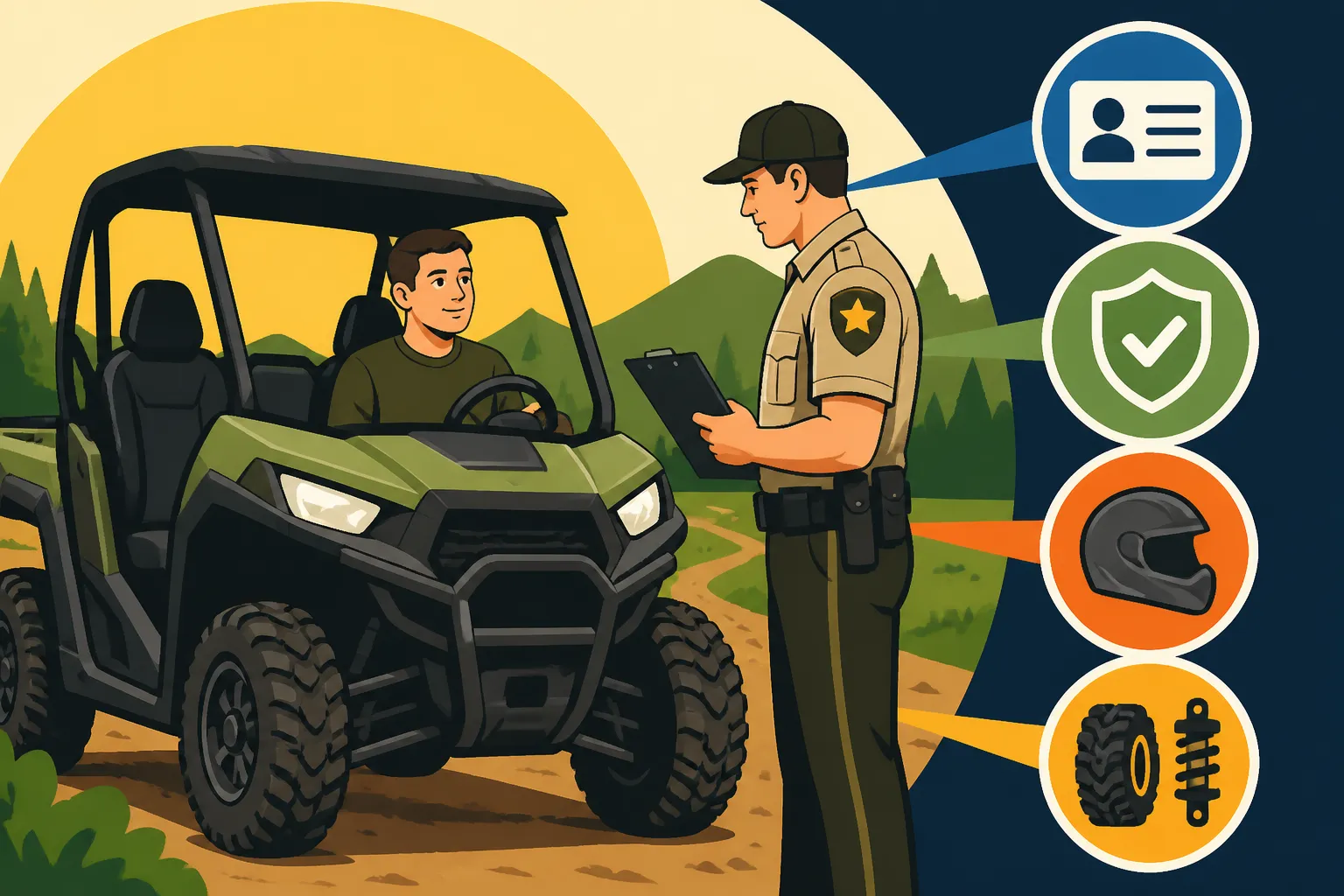
Just like driving a car, operating an ATV or UTV, especially in situations where you might encounter public roads, means you need to have your paperwork in order. This is one of the first things an officer will ask for during a stop. Having everything readily accessible can make the interaction much smoother.
Proof of Ownership and Registration
This is foundational. Every ATV and UTV operated on designated trails or in situations where it might cross or briefly use public roads in Arkansas needs to be registered. This isn't like car registration that renews annually; Arkansas ATV registration is a one-time process. Once it's done, it's done forever for that machine, unless ownership transfers. The officer will typically ask for proof of this registration, which usually comes in the form of a registration card and a visible decal. [Arkansas ATV Registration Has No Annual Renewal] explains this unique system.
You'll need to show your registration card, which serves as your proof of ownership. This card should list you as the owner and match the machine's VIN. If you've just purchased the machine, you might have a temporary registration or a bill of sale that serves as interim proof until your official card arrives. It’s always a good idea to have your [Carrying Proof on the Trail] readily available, perhaps laminated or in a waterproof pouch, just in case. They'll cross-reference the VIN on your machine with the VIN on your documents, and they'll check the visible decal to ensure it matches the registration.
Driver's License and Age Verification
If you're operating an ATV or UTV in any situation that might lead to a stop by law enforcement, particularly on or near public roadways, you generally need to possess a valid driver's license. For UTVs operating under a city street-legal ordinance, this is almost always a requirement. [Arkansas Driver's License at 16 for Street UTVs] outlines the age requirements for operating a street-legal UTV. For ATVs, the rules can be a bit more nuanced, especially regarding age and supervision on private land, but on public land or roads, a license is often expected.
Deputies will ask for your driver's license to verify your identity and confirm you're of legal age to operate the machine in that specific context. They're looking to see if you meet any age restrictions imposed by local ordinances or state statutes for road use. If you're a younger rider and operating on permitted roads, they'll confirm you meet the minimum age, which is usually 16 with a valid driver's license for UTVs on city streets. If you're riding with children, they might also inquire about their age and whether they are under direct adult supervision, depending on the riding location and any specific rules that apply.
Insurance and Permit Details (if applicable)
While Arkansas doesn't mandate liability insurance for ATVs or UTVs used strictly off-road or on private property, it becomes a crucial requirement if you're operating a UTV on public streets under a local ordinance. Many cities that allow street-legal UTVs specifically require proof of insurance, similar to an automobile. [Arkansas Insurance for a Street-Permitted UTV] is a common requirement for these municipal permits.
Additionally, if you're riding your UTV on a street-legal permit, the deputy will expect to see the physical permit or sticker issued by the city. These permits often have specific display requirements, such as being affixed to the windshield or dashboard. They also come with an annual renewal, so the officer will be checking the expiration date. If you're in an area where local ordinances apply, be ready to show these specific documents. For forest trails, separate permits might be required, but those are generally checked by forest service personnel rather than local deputies on roads.
Equipment and Machine Compliance Checks
Beyond your paperwork, deputies will also be inspecting your machine itself. This is where the physical aspects of your ATV or UTV come into play, especially if you're operating it in a context that requires specific modifications or safety features.
Street Legal Equipment for Permitted UTVs
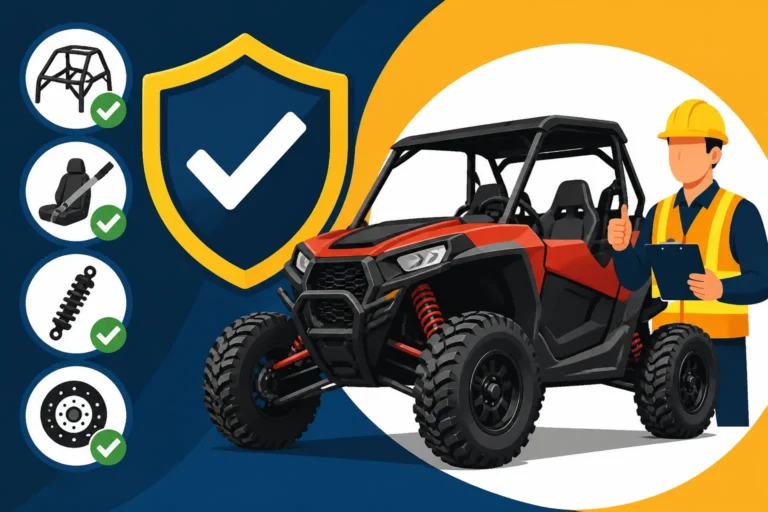
If you're riding a UTV on city streets where an ordinance permits it, deputies will perform a thorough inspection of your vehicle's equipment. These ordinances often mirror, in part, state requirements for other vehicles. They’ll be looking for:
- Headlights and Taillights: Operational, properly aimed, and visible from required distances.
- Brake Lights: Functioning correctly when the brake is applied.
- Turn Signals: Both front and rear, indicating direction effectively. [Arkansas Turn Signal Requirements for Street UTVs] are critical for road legality.
- Mirrors: Typically one driver's side mirror and/or a rearview mirror to provide adequate visibility to the rear.
- Horn: A functioning audible warning device.
- Windshield: Often required, made of safety glass or an approved material.
- Seat Belts: For all occupants, in good working order.
- Non-Highway Tires: This can be a tricky one. While most off-road machines have non-highway tires, if you're truly making it street-legal, some ordinances might specify requirements for DOT-approved tires, though this is less common for UTVs in Arkansas than other states. It's something to verify with your specific city's ordinance.
If your UTV lacks any of the required equipment for street legality, you could face a citation. Many riders turn to aftermarket companies like SuperATV for their street-legal conversion kits and accessories, which can help ensure compliance with these regulations.
General Safety Equipment and Condition
Even if you're not riding on a street-permitted UTV, officers will look at the general safety of your machine. This includes:
- Brakes: Do they work? Are they responsive?
- Tires: Are they dangerously worn or damaged?
- Exhaust System: Is it excessively loud, or has it been illegally modified? This is less about legality and more about public nuisance and safety.
- Spark Arrestor: Especially on forest service trails, a spark arrestor is a mandatory safety device to prevent wildfires. While a deputy on a public road might not always check this, it's good practice to have one, especially if you plan to venture onto public lands.
- Lights: Even for off-road use, having working headlights and taillights is crucial for visibility, especially around dusk or dawn.
- Overall Condition: Is the machine missing parts? Are there obvious hazards that make it unsafe to operate? A deputy will consider the overall roadworthiness, even if it's technically an off-road machine being used in an exception to the road ban.
They're not necessarily looking to nitpick every little thing, but gross safety deficiencies can lead to a stop and potential citation.
VIN and Machine Identification
The Vehicle Identification Number (VIN) is a critical piece of identification for any motor vehicle, including ATVs and UTVs. Officers will often check the VIN on your machine and compare it to your registration documents. This is a standard procedure in any vehicle stop, primarily to deter theft and ensure the machine is properly registered to its current owner. [Arkansas Stolen Machine Checks] are part of routine stops.
The VIN is usually located on the frame of the ATV or UTV, often on the left front frame rail or sometimes near the footwell or under the seat. If the VIN is obscured, damaged, or appears tampered with, it can lead to further investigation. Having a clear, readable VIN that matches your paperwork is essential.
Understanding Road Rules and Consequences
The primary reason most ATVs and UTVs are stopped by law enforcement on public roads in Arkansas boils down to the state's strict rules about where these machines can and cannot be operated. Understanding these rules is your best defense against a citation.
Arkansas's General Prohibition on Road Riding
Let's be clear: Arkansas law generally prohibits the operation of ATVs and UTVs on public streets, roads, and highways. This is the default rule. The state views these machines as off-highway vehicles, designed for trails, private land, and specific off-road parks. Riding recreationally on a paved road, a gravel county road, or especially a state highway, without a specific legal exception or a valid local ordinance, is against the law. [What Arkansas's ATV Statute Covers] makes this quite explicit.
This general prohibition is in place for safety reasons, as ATVs and UTVs typically lack the safety features, visibility, and handling characteristics of street-legal vehicles. Deputies are enforcing this law to protect both the riders and other motorists.
Navigating the Six Statutory Exceptions
Arkansas law does provide six specific, narrow exceptions where ATVs and UTVs can be legally operated on public roads. If you're stopped, a deputy will be looking to see if your operation falls squarely within one of these. These exceptions include:
- Farming Operations: Riding to and from a farm or between fields. [Arkansas Farming Operation Road Use] outlines this.
- Hunting Operations: Riding to and from a hunting lease or stand, often for carrying gear. [Arkansas Hunting Operation Road Use] provides more detail.
- Direct Crossing: Crossing a public road at roughly a ninety-degree angle after coming to a complete stop.
- Disabled Individuals: For individuals with a physical disability that impairs their mobility.
- Emergency/Utility Workers: For law enforcement, emergency medical services, and utility company employees performing official duties.
- State Parks Employees: For employees of state parks performing official duties.
It's important to stress that these exceptions are not loopholes for recreational riding. For example, the farming exception doesn't mean you can joyride on county roads just because you own farmland down the way. You must genuinely be engaged in a farming activity. A deputy will ask questions to determine if your specific situation truly fits one of these exceptions. If you can't articulate how your ride falls within one of these, you're likely facing a citation. [Arkansas's Six Statutory Road Exceptions] goes into this in more depth.
Local Ordinances and Their Specifics
A significant change in Arkansas law now allows individual cities and towns to pass ordinances permitting UTVs (but generally not ATVs) on certain public streets within their municipal limits. This is a game-changer for many UTV owners, but it comes with a lot of caveats. [Arkansas Towns Can Open Their Streets to UTVs] has made local rules incredibly important.
If you're riding a UTV on city streets, a deputy will first confirm that the city you're in actually has such an ordinance. Not all do. If it does, they'll then verify that your UTV meets all the specific requirements outlined in that ordinance. This includes all the street-legal equipment mentioned earlier, as well as proof of a city-issued permit and potentially specific insurance requirements. They'll also check for any restrictions, such as speed limits on city streets, time-of-day restrictions, or prohibitions on four-lane streets. Ignorance of the local ordinance is not a defense, so if you plan to ride your UTV on city streets, you absolutely must research and understand the rules for that specific municipality. [Arkansas UTV Street Permits and Annual Fees] will often be part of these local regulations.
Potential Penalties and What to Expect
If a deputy determines that you are operating your ATV or UTV in violation of Arkansas law or a local ordinance, you can expect a citation. The specific penalties can vary widely depending on the nature of the violation and whether it's a first offense. These can range from monetary fines to potential impoundment of your machine in severe cases of reckless operation or repeated violations. [Arkansas Penalties for Illegal Road Riding] can be significant, so understanding the rules is paramount.
When stopped, always be respectful, provide the requested documents promptly, and answer questions honestly. Arguing with an officer at the roadside is rarely productive. If you believe you were unjustly cited, the proper place to contest it is in court. Your best bet for avoiding these situations altogether is to be fully informed about Arkansas's ATV and UTV laws and to ride responsibly within those guidelines.
Common Checks by Arkansas Deputies
To summarize, here's a quick reference table of what an Arkansas deputy will commonly check during an ATV or UTV stop:
| Category | Specific Items Checked | Applicable Scenarios |
|---|---|---|
| Operator | Valid Driver's License | Essential for all road-permitted UTVs, and generally expected on public roads even under exceptions. Age verification. |
| Signs of Impairment (DUI/DWI) | Any situation where an officer suspects impaired driving. Arkansas's DUI laws apply to OHVs. | |
| Documentation | ATV/UTV Registration Card | Required for all ATVs/UTVs operated on designated trails or public lands, or crossing public roads. [Arkansas Registration Paperwork Checklist] is useful here. |
| City Street Permit (UTV) | Mandatory if operating a UTV on public streets in a city with an ordinance. | |
| Proof of Insurance (UTV) | Required for UTVs operating under city street-legal ordinances. | |
| Proof of Ownership (Bill of Sale/Title/MCO) | Especially if registration is new or questionable, or to verify VIN. | |
| Machine ID | Visible Arkansas Decal | Mandatory for all registered ATVs/UTVs. |
| Vehicle Identification Number (VIN) | Checked against registration documents for all machines; crucial for [Arkansas Stolen Machine Checks]. | |
| Equipment | For Street-Legal UTVs: Headlights, Taillights, Brake Lights, Turn Signals, Mirrors, Horn, Windshield, Seat Belts | All mandatory for UTVs operating under local street ordinances. Ensure these are functional and compliant. Many turn to SuperATV for reliable accessories. |
| General Safety: Brakes, Tires, Exhaust System, Spark Arrestor (if applicable), Overall Safe Condition | Evaluated for all machines, regardless of specific road legality, to ensure safe operation. | |
| Compliance | Location of Operation | Is the machine on a prohibited public road? Is it within one of [Arkansas's Six Statutory Road Exceptions]? Is it on private land or a designated trail? |
| Adherence to Local Ordinances | If in a city with a UTV ordinance, are all the city's specific rules (speed, street types, hours) being followed? |
Disclaimer
This article is for general informational purposes only and does not constitute professional advice. Laws, prices and regulations vary by location and change over time. Consult a qualified professional for guidance on your specific situation.