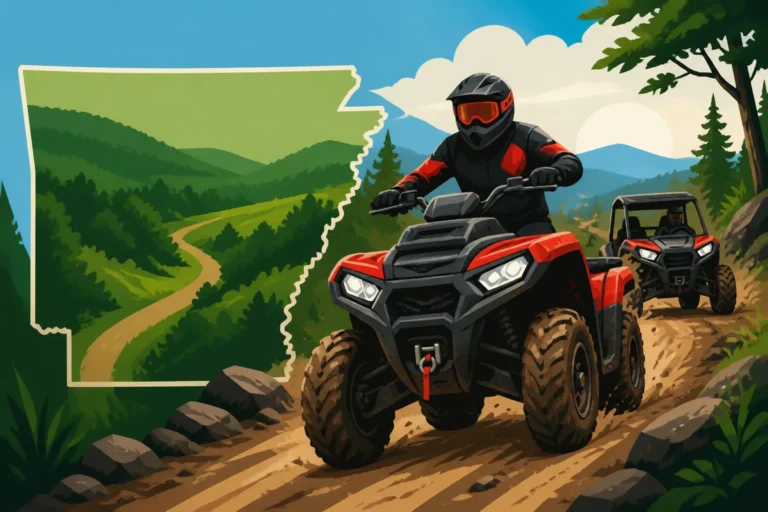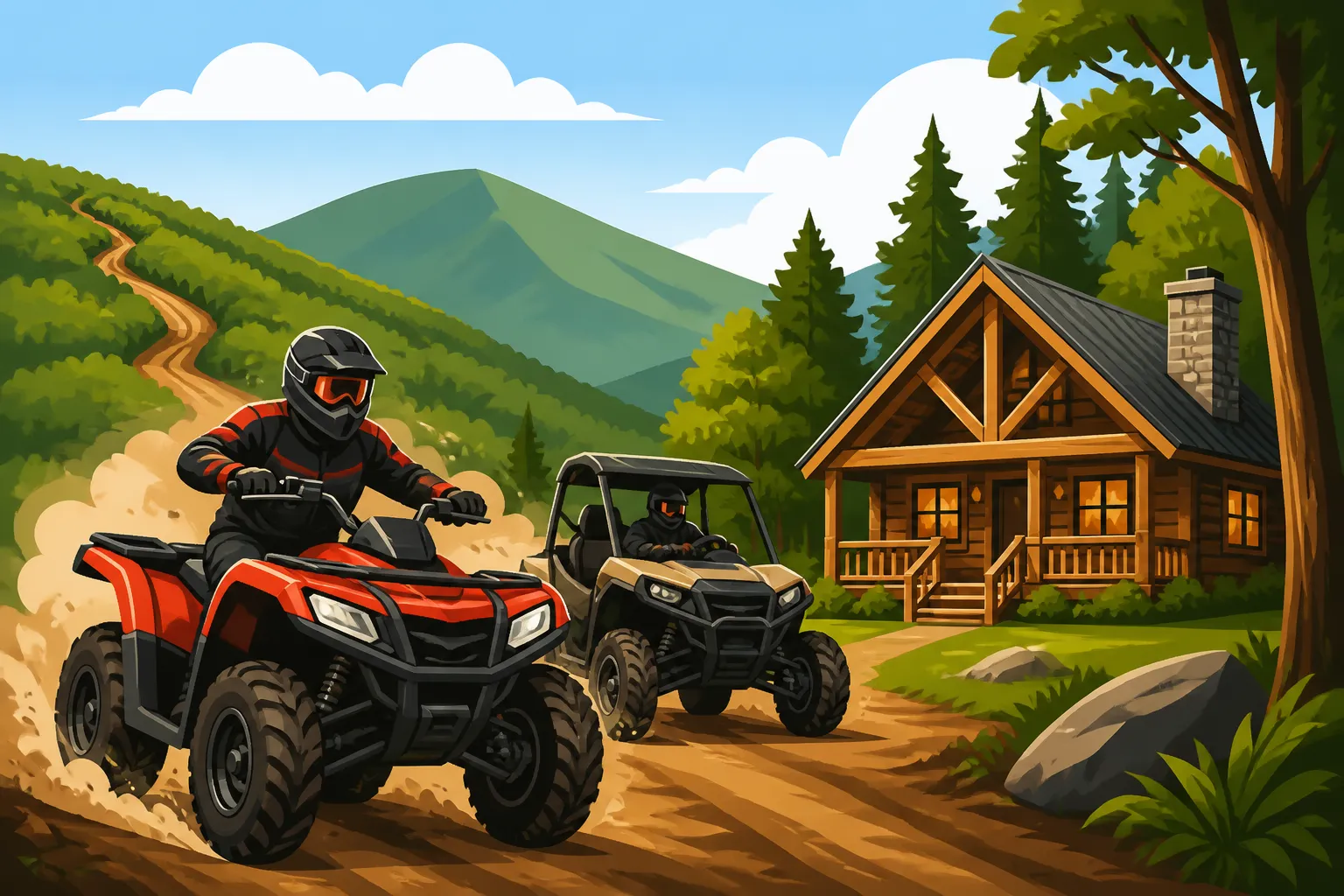
Arkansas Cabins Near a Riding Area
Finding a cabin near an Arkansas riding area can be trickier than the map makes it look. A lodging listing may be close to a trailhead by road but have no legal trail connection, room for a trailer, or place to wash muddy gear. This guide explains where to look, what “near the trails” really means, and what to confirm before booking.
Choose a riding area before you choose a cabin
Arkansas has a mix of public-land trail systems and private off-road parks, and they create different lodging plans. With a public trail system, you may stay in a nearby town and haul your machine to the trailhead. At a private park, lodging may be closer to the riding, but access rules and available amenities depend on that property.
Start by choosing the trails you want to ride, then look for lodging that fits your group and machines. It is tempting to book the prettiest cabin first and sort out logistics later. That can leave you with a scenic stay and a long trailer trip each morning.
Mena and Wolf Pen Gap
Mena is a common base for riders heading to Wolf Pen Gap in the Ouachita Mountains. The area gives you a town to return to for groceries, fuel, and meals, while trail access is outside town. Do not assume that a cabin advertised as being near Mena is beside a trail entrance. Check the driving route to the specific trailhead you plan to use, and ask whether a trailer can be parked at the cabin overnight.
Wolf Pen Gap has a reputation as one of Arkansas’s best-known OHV areas, but proximity alone does not tell you whether your machine can use a particular route. Width restrictions, trail conditions, and seasonal or temporary closures can affect the day’s plan. Read Wolf Pen Gap: Arkansas’s Best Known OHV Complex and Arkansas Riding Near Mena while narrowing down the area, then verify access conditions before you leave.
A cabin can be especially useful here if your group wants a place to dry clothes, make breakfast, and rest between riding days. Ask whether the property allows muddy equipment on the porch or in a designated area. If you are arriving with a trailer, confirm the driveway angle and turning space. A narrow gravel drive that works for a car may be awkward with a long trailer behind a truck.
Ozark and Mill Creek
Mill Creek OHV Trail System is near Ozark, making Ozark and nearby communities useful starting points for a cabin search. The practical question is not only how many miles separate your lodging from the trailhead. It is whether the route is manageable with a loaded trailer and whether you can park securely once you arrive.
Some groups prefer staying in a town because it makes supplies and meals easier. Others want a quieter cabin away from town, even if that means driving farther each day. Either can work; the right choice depends on whether your priority is convenience after riding or minimizing the morning trip. For area planning, see Mill Creek OHV Trail System in Arkansas and Arkansas Trailheads With Trailer Parking.
Before reserving, check how the cabin handles wet, dusty gear. Ask about outdoor water access, a hose, covered storage, and any restrictions on washing machines or equipment. Do not assume that a cabin provides a wash station just because it is marketed to outdoor visitors. If cleaning facilities matter, compare the lodging’s arrangements with nearby riding-area amenities and keep Arkansas Riding Areas With Wash Stations in mind.
Hot Springs and private riding parks
For a trip centered on Hot Springs Off-Road Park, look at lodging in the Hot Springs area and confirm how you will get from the cabin to the park entrance. Private parks can make a riding getaway feel straightforward, but a nearby cabin is not necessarily part of the park or covered by the same rules. Ask the lodging host and park staff separately about access, parking, and any machine-hauling arrangements.
Some riders want to stay close enough to return to the cabin for lunch or a break. Others are content to drive in each morning and spend the evening in Hot Springs. Compare those options using actual road routes, not just a straight-line map measurement. The overview at Hot Springs Off-Road Park in Arkansas can help you assess whether that park suits your trip.
Byrd’s Adventure Center on the Mulberry River is another option to consider if you want a destination-style stay with outdoor activities nearby. Check directly with the property about which lodging choices are available, what they include, and how riding access works for your dates. A cabin or other accommodation associated with a recreation property may simplify your plans, but you still need to confirm machine rules, parking, and the route you are allowed to ride.
Compare cabin locations and logistics
Once you know your riding area, compare cabins by the details that affect a real riding weekend. A listing can look ideal in photos and still be a poor fit if the trailer cannot turn around, the group exceeds the sleeping capacity, or there is nowhere to store wet gear.
Use this table as a starting point. These are planning considerations, not guarantees about individual properties. Amenities, access, and rules vary by host and can change, so confirm them before booking.
| Riding area | Nearby search areas to consider | Main lodging question | Trailer and machine question |
|---|---|---|---|
| Wolf Pen Gap | Mena and surrounding communities | How long is the drive to your intended trailhead? | Is there room to park and turn around with a trailer? |
| Mill Creek OHV Trail System | Ozark and nearby communities | Do you want town conveniences or a quieter rural stay? | Can you leave the trailer securely at the cabin? |
| Hot Springs Off-Road Park | Hot Springs and nearby communities | Is the lodging independent or connected to the park? | Are there specific parking or machine rules? |
| Byrd’s Adventure Center | Mulberry River area | What lodging and recreation options are available directly from the property? | What riding access and vehicle arrangements are permitted? |
Measure the trip by road, not by map distance
A cabin that looks close to a trail on a map may be separated from it by winding roads, limited access points, or a route that is inconvenient with a trailer. Check the drive from the lodging to the exact place where you plan to unload, not simply to the named riding area. If more than one trailhead is possible, compare routes to each one.
A navigation app such as onX Offroad can be useful as one planning tool for reviewing the riding area and organizing your route. Still, do not treat a map line as proof that a road is open, that a trail is legal for your machine, or that you can ride from the cabin to the system. Confirm routes and restrictions with the land manager, park, or local authority responsible for the area.
Give yourself a realistic buffer for unloading and getting ready. For example, a family that wants to be riding early may be happier with a cabin that is farther from town but easier to reach with a trailer. A group that wants dinner out after riding may prefer a town stay, even if it adds a morning drive.
Confirm trailer parking and access in writing
Ask the host how many vehicles and trailers the property can accommodate. “Parking available” may mean a space for a passenger vehicle, not room for a truck and trailer. If your group is bringing multiple machines, share the trailer’s approximate length and ask about driveway width, slope, turning room, and whether parking is on gravel, pavement, or grass.
Also ask whether the machines can be unloaded at the property. Some cabins may not allow riding on the surrounding land or may prohibit loading and unloading in certain areas. A stay near a forest or trail does not automatically include permission to ride across private property. If you need a direct trail connection, get clear confirmation of the route and the rules; otherwise, plan to trailer to an authorized trailhead.
The same goes for storage. Ask where helmets, boots, tools, and muddy riding clothes can be kept. A covered porch, utility area, or outdoor rack can make a big difference after a rainy ride. If the host cannot accommodate dirty equipment, bring storage bins and a tarp rather than assuming the cabin’s living room is a suitable staging area.
Match the cabin to your group
Sleeping capacity is only one part of a comfortable stay. Think about how many people need separate beds, whether children need a quieter room, and whether the group will cook most meals or eat out. If you are traveling with another family, check the bed layout rather than relying on the maximum occupancy number.
Consider the less glamorous details, too: a place to dry wet gear, enough bathroom space for everyone to get ready, and a kitchen or dining area that suits your group. After a full day on rocky or muddy trails, a cramped cabin can feel much smaller than it did when you booked it. For a multi-day trip, laundry access or a way to hang wet clothing may matter more than a decorative feature.
If you are bringing pets, ask about the cabin’s pet policy, outdoor boundaries, and cleaning expectations. If you are traveling with children, confirm that the sleeping setup and property layout work for your family. A host’s written response is more useful than interpreting a listing photo or assuming a general policy covers your specific situation.
Book with trail access and riding rules in mind
The words “near an ATV trail” can describe several different situations: a cabin close to a trailhead, a property near a riding area but requiring a drive, or lodging at a private recreation destination. Those distinctions matter. Before paying, make sure you understand where the trail begins, how your machine gets there, and whether your planned riding is permitted.
Separate lodging access from riding access
A cabin reservation provides lodging, not necessarily access to nearby land. A trail can cross public land while the shortest route from the cabin crosses private property. Do not cut across a field, use a forest road, or follow an unmarked path simply because it appears to connect two places on your map.
When access is unclear, contact the cabin host and the relevant riding-area manager. Ask which trailhead to use, whether you need to transport your machine there, and whether there are any access restrictions for your vehicle. Keep the distinction clear: a host can explain the property’s rules, while the land manager or park operator is the better source for trail access and riding regulations.
Using onX Offroad to review your planned area may help you organize your trip, but it should not replace checking posted signs and official access information. Routes can be closed, redirected, or unsuitable for a particular machine. Review Arkansas Trail Conditions Before You Tow before leaving home, especially if rain or storms may have affected the area.
Confirm trail fees, permits, and machine fit
Some public riding areas require a permit or pass, and one area’s requirements may not apply to another. Private parks have their own admission, machine, and conduct rules. Check the requirements for the exact place you plan to ride, including whether each machine needs a separate permit and whether the permit must be displayed or carried.
Machine fit matters as much as the lodging location. A side-by-side may be too wide for a particular gate or trail, even when an ATV can use it. Before booking a cabin for a mixed group, compare each machine’s dimensions with the riding area’s rules. The broader guide Arkansas ATV Trails That Allow Side-by-Sides is helpful when the group includes both quads and UTVs.
Do not plan the trip around a trail being open simply because it was open on a previous visit. Weather, maintenance, land management, and seasonal rules can affect access. Check before departure and again near the trip if conditions may have changed. If a route closes, having a second riding option or a flexible lodging plan can save the weekend.
Make the cabin stay work for a full riding weekend
A good cabin can make an Arkansas riding trip more relaxed, but the small preparations are what keep the trip from becoming a series of avoidable hassles. Plan for muddy equipment, changing weather, limited cell service, and the possibility that your first-choice trail plan may need to shift.
Pack for dirt, rain, and downtime
Bring a separate place for dirty boots, gloves, and riding clothes. Heavy-duty bags or lidded bins help keep grit out of bedding and vehicle interiors. A small towel, extra socks, and a change of clothes for the drive home are also useful, particularly if the group expects wet or muddy conditions.
If you are counting on cooking, confirm what the cabin actually supplies. Bring groceries and basic items that your group may need rather than assuming every kitchen is stocked the same way. For evenings, a simple plan can help: charge devices, dry clothing, check the next day’s route, and set aside the gear everyone will need before going to bed.
onX Offroad can be part of your route-planning routine, but save or prepare the information you need before heading into an area where service may be limited. Carry a backup plan, such as written directions to the trailhead and the cabin address. Tell someone outside the riding group where you expect to be, especially if the group is traveling into a remote area.
Ask the host these questions before reserving
Before booking, send a concise message with the details that affect your stay. Explain how many people are coming, how many vehicles and trailers you have, and what machines you plan to bring. Ask about the exact parking arrangement rather than relying on general wording in the listing.
A useful checklist includes:
- How far is the cabin by road from the trailhead you recommend?
- Is trailer parking available, and what are the driveway and turnaround conditions?
- Can machines be unloaded at the property, and are there restrictions on storing them?
- Is there outdoor space for wet gear, muddy boots, or basic cleanup?
- Are there rules about noise, pets, campfires, or late arrivals?
- Is cell service reliable at the property, and what directions should guests use?
- What is the cancellation or rescheduling policy if trail access changes?
If you are comparing several lodging options, Arkansas ATV Camping With Trail Access and Arkansas Off-Road Parks With Cabins can help you think through the difference between staying near a trail system and staying at or close to a recreation property. For a trip built around Byrd’s, check directly with the property about its lodging and riding arrangements rather than assuming that every cabin option works the same way.
A little time spent confirming these details can prevent the most common frustrations: an unexpectedly long drive, a trailer that will not fit, muddy gear with nowhere to go, or a cabin that is near the trails but not connected to them. Choose the riding area first, verify access and machine rules, then book lodging that suits the group’s actual needs.
Disclaimer
This article is for general informational purposes only and does not constitute professional advice. Laws, prices and regulations vary by location and change over time. Consult a qualified professional for guidance on your specific situation.