Arkansas WMA Riding on a Food Plot
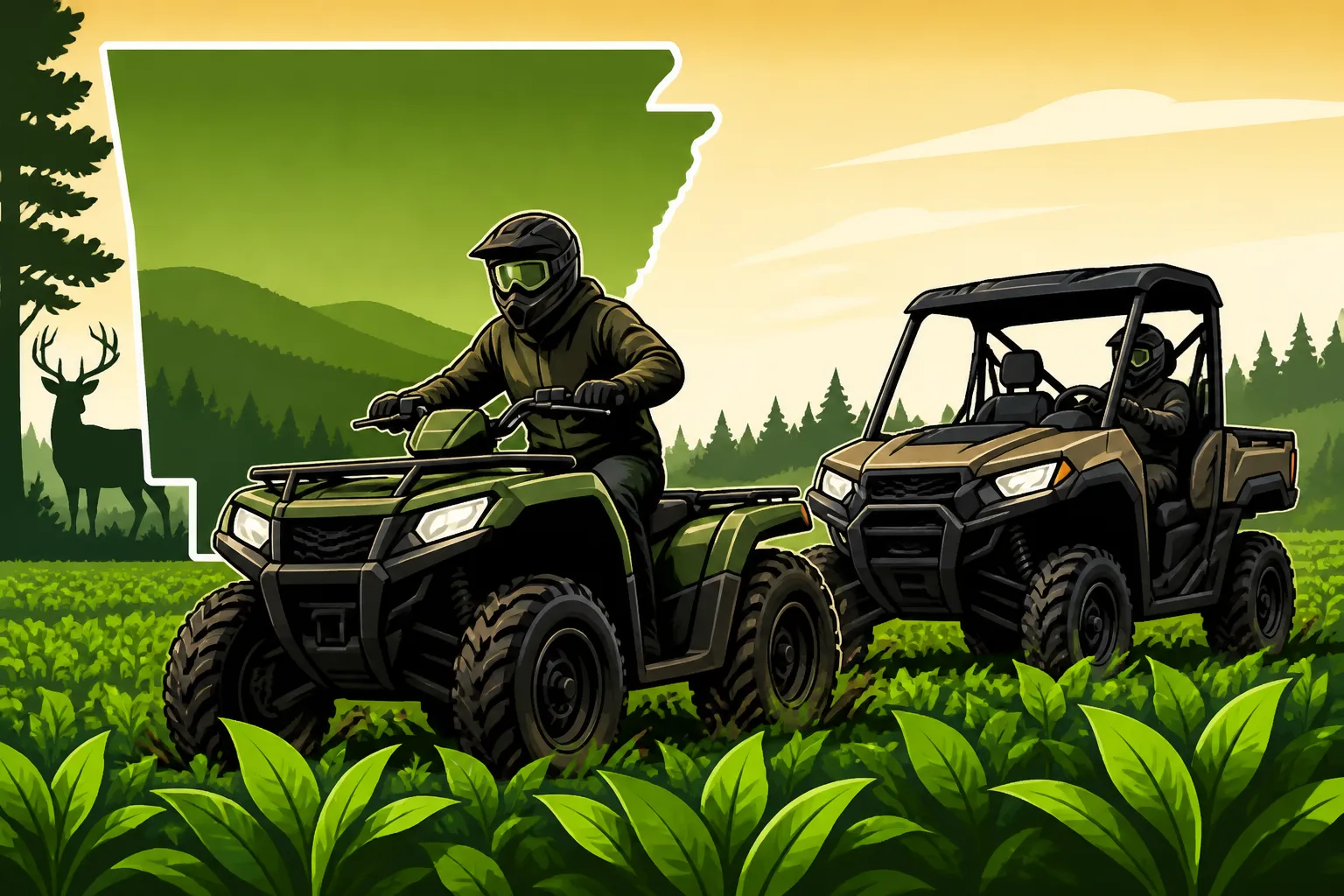
A food plot can look like a convenient shortcut when you’re riding on an Arkansas Wildlife Management Area, but it is wildlife habitat, not an ATV trail. The practical rule is to stay off planted openings and use only roads or routes explicitly open to vehicles. Because WMA rules vary, check the specific area’s current regulations before unloading.
Why food plots are off-limits to riding
Food plots and similar wildlife openings are managed to provide forage and cover. They may be planted, disked, seeded, or maintained for wildlife use. Even when a plot looks bare, driving across it can damage the ground or plants, disturb habitat, and create ruts that are difficult to repair.
A food plot is not a road just because it is flat, familiar, or connected to a road. Nor does its appearance tell you whether riding is allowed. The same caution applies to wildlife openings, fields, fire lanes, and other managed areas. For background on how these openings fit into area rules, see Wildlife Openings and Why They Are Closed.
| What you see on a WMA | How to treat it while riding |
|---|---|
| Planted or disked food plot | Stay out; do not use it as a shortcut or turnaround |
| Wildlife opening or field | Do not assume vehicle access is allowed |
| Established road with no closure | Check the WMA-specific rules and signs before using it |
| Road behind a gate or barrier | Treat it as closed unless the area’s rules clearly say otherwise |
| A route shown as open on current official information | Follow any limits, seasonal restrictions, and posted directions |
A tire track through a plot is not proof that the route is authorized. Tracks may be from management work, a permitted activity, or an earlier violation. If it is unclear whether a route is open, do not ride it until you can confirm.
This is different from riding on an authorized road that passes beside a plot. Stay on the road surface and avoid widening the route to go around a muddy section. If a road is too wet or blocked, turn around where it is safe rather than cutting through the opening.
Where you can ride instead
On a WMA, permission to enter the area does not automatically mean permission to ride every road or open space. Vehicle access is controlled by the rules for that particular area, and those rules may identify which roads are open, which are closed, and whether seasonal or activity-based restrictions apply. Check the specific area information before your trip, then pay attention to signs and barriers when you arrive.
A useful starting point is Arkansas WMA Vehicle Rules in Plain English. You can also review Arkansas WMA Roads Open to Vehicles and Arkansas WMA Gated and Cabled Barriers to understand why a visible road or trail is not necessarily an authorized riding route. A gate, cable, berm, or sign should be treated as a clear warning, not an obstacle to ride around.
Before unloading, confirm:
- The exact WMA you plan to visit and whether it allows the kind of vehicle you are bringing.
- Which roads are open to vehicles, including any seasonal or time-specific limits.
- Whether the WMA has special restrictions for hunters, other visitors, or certain vehicle types.
- Where parking and unloading are allowed.
- Whether the route you intend to use is still open; closures can change after weather, maintenance, or management work.
Use current official information for the WMA, not only a general map or a map app. A map can help you navigate, but it may not show a recent closure or explain whether a particular road is open to ATVs or UTVs. If posted signs and online information appear to conflict, stop and confirm with the managing agency rather than guessing.
Some WMAs have named exceptions or special access provisions. Those exceptions are narrow: they do not turn a food plot into a route, and they do not necessarily authorize general recreational riding. For examples of why area-specific rules matter, see Arkansas WMAs Named in the Exception List and Arkansas WMA Access for a Quad.
Permits, registration, and out-of-state riders
It helps to separate three questions: whether your machine is registered, whether you have the required access permission, and whether the route is open to riding. A decal or registration document addresses only the requirements it is issued for. It does not, by itself, grant permission to ride across a WMA food plot or onto a closed road.
Arkansas ATV registration and public-land access rules are separate issues. If you are unsure what registration applies to your machine, Do You Need to Register an ATV in Arkansas? covers the state registration question. Out-of-state riders should also check Do Out-of-State Riders Need an Arkansas Registration Decal?. Do not assume that a registration decal from another state, or an Arkansas registration decal, replaces any area-specific permit or authorizes access to a closed route.
Likewise, permits for a national forest trail system do not automatically apply to a WMA. The areas may have different managers and different access rules. If you are combining destinations on one trip, check the rules for each place separately. The distinction is explained in Two Forests and Two Separate Passes, but a forest pass should not be treated as WMA authorization.
If your visit is connected to hunting, read the rules for the activity and the area rather than relying on a general idea that hunters may use machines. Some rules may allow limited vehicle travel for a specific purpose, while still prohibiting recreational riding or travel across food plots. Arkansas Hunters Riding During Open Season and Travel To and From a Hunting Camp provide useful context. A hunting-related allowance, where applicable, is not a blanket permission to ride anywhere on the WMA.
When checking permit requirements, confirm the current details with the official source for the area. Requirements may depend on the activity, the season, the road, and the type of vehicle. If you cannot confirm that your planned ride is authorized, choose a designated riding area instead.
A practical check before you ride
A few minutes of preparation can prevent a wrong turn from becoming habitat damage, a citation, or a trip cut short. Use this process before riding:
- Identify the exact WMA. Do not rely on a broad region name. Find the specific area boundary and any rules published for that WMA.
- Check the current vehicle rules. Look for roads open to vehicles, seasonal closures, and restrictions on ATVs or UTVs.
- Check the intended route. Make sure the road is open for your vehicle and purpose. If the route ends at a food plot, do not continue across the plot.
- Review signs at the site. Follow posted closures and barriers. If something is unclear, stop and verify before proceeding.
- Carry any required proof. Keep applicable registration or permit information accessible, but remember that paperwork does not override a closure.
- Have a turnaround plan. If a road is blocked, muddy, or uncertain, turn back on the authorized route instead of making a new path through an opening.
When riding, stay on the road surface. Avoid cutting corners, using a field to turn around, or riding along the edge of a plot where tires can damage planted ground. Give wildlife and other visitors space, and do not disturb management equipment or signs.
If you see another vehicle crossing a food plot, do not assume it has permission. There may be a management or enforcement reason you cannot see, but that does not authorize other riders to follow. If you are uncertain about a route, the safest choice is to pause and get an answer from the appropriate area office or choose a route that is clearly open.
The simplest way to remember the rule is: a WMA food plot is habitat, not a riding route. Ride only where the specific WMA allows vehicles, and verify current area rules before you go. That approach protects the opening and helps keep your trip within the rules.
Disclaimer
This article is for general informational purposes only and does not constitute professional advice. Laws, prices and regulations vary by location and change over time. Consult a qualified professional for guidance on your specific situation.