Direct Supervision of a Young Child
A young child may be eager to ride, but the supervision rule changes with the place you ride. Arkansas state law and National Forest rules do not set the same age threshold for riding without an adult. The safest approach is to check which authority manages the riding area, keep an adult actively involved, and treat permits and route rules as separate questions.
What “direct supervision” means for an Arkansas ATV ride
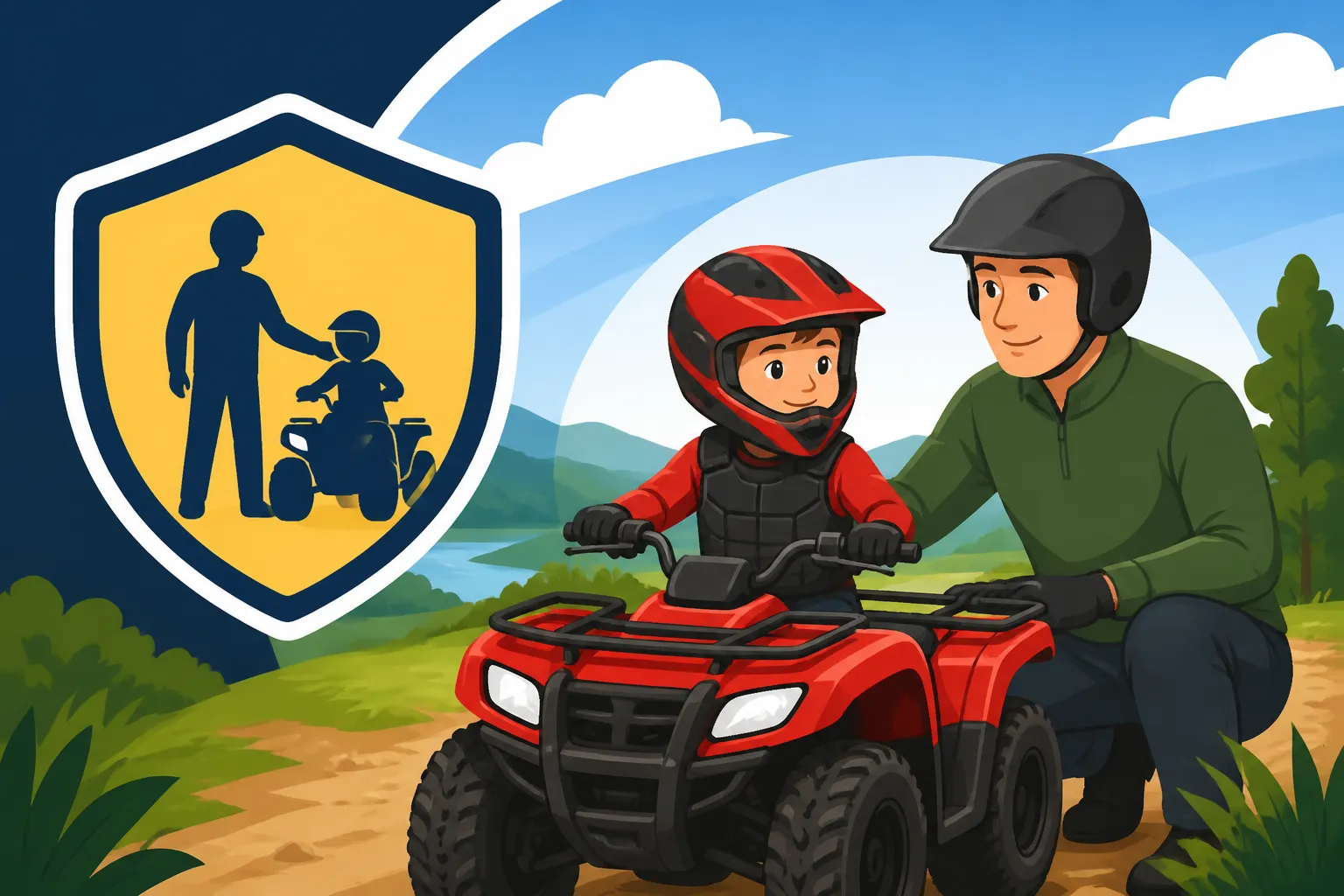
In everyday terms, direct supervision means an adult stays close enough to see what the child is doing, intervene promptly, and help before a risky situation gets worse. It is different from letting a child ride out of sight while an adult waits at the parking area or camp.
That practical meaning is useful, but it should not be mistaken for a complete legal definition. The information available here gives the age thresholds for riding without supervision; it does not spell out a universal distance, line-of-sight test, or detailed definition of “direct.” If an agency or riding property has a more specific rule, follow that rule.
The key state threshold is age 12. According to the Arkansas General Assembly, a person must be at least 12 years old to operate an ATV without adult supervision. That means a younger child should not be treated as an unsupervised rider under the state rule. For a broader look at the age rule, see Arkansas Rules for Riders Under Twelve and Adult Supervision Rules for Arkansas Riders Under 12.
National Forest land adds a stricter threshold. According to the USDA Forest Service, operators on federal public lands such as Arkansas National Forests must be at least 16 years old to ride without constant adult supervision. A rider who is old enough to ride without adult supervision under the state threshold may still need constant adult supervision on National Forest land.
| Where the ATV is being ridden | Rule to keep in mind | Practical takeaway |
|---|---|---|
| In a place governed by Arkansas state law | According to the Arkansas General Assembly, an operator must be at least 12 to ride without adult supervision. | A younger child needs adult supervision. |
| On federal public land such as a National Forest | According to the USDA Forest Service, an operator must be at least 16 to ride without constant adult supervision. | Keep constant adult supervision in place for younger riders, even if the state threshold would otherwise allow less supervision. |
| On a private riding property or another managed area | The property or land manager may set its own rules. | Check that location’s requirements before unloading. |
The important point is that “Arkansas ATV rules” are not always the only rules that apply. A ride may involve state law, federal land regulations, and the operating rules of a particular trail system or private park. The stricter applicable rule is the one to plan around.
This is especially relevant when a family travels between locations. A child who rides under one set of conditions at home may be subject to a different supervision requirement on a forest trail. Before heading out, identify the land manager and ask what it requires for young operators and the adults accompanying them.
How to supervise a young rider in practice
Following the legal minimum is only part of the job. A young rider can be supervised and still be overwhelmed by terrain, speed, other machines, or a sudden change in trail conditions. Keep the ride suited to the child’s ability, and do not assume that an adult’s presence automatically makes a difficult route appropriate.
A practical supervision plan can include:
- Stay close and attentive. Keep the child in view and be ready to stop the ride if the child loses control, becomes tired, or seems unsure.
- Choose terrain within the child’s ability. Avoid routes where the child would need to handle obstacles or conditions they have not practiced on.
- Set clear stop and regroup instructions. Agree on what the child should do if separated, if the machine stalls, or if the route becomes difficult.
- Keep communication simple. Use clear signals or short instructions that the child can follow while riding.
- Watch for fatigue and distraction. A rider who starts out confident may become less attentive as the ride goes on.
- Do not let other adults create confusion. Make sure the child knows which adult is supervising and who has authority to end the ride.
These steps are safety practices, not additional legal thresholds. They are a way to make supervision meaningful instead of treating it as a box to check. A supervising adult should also be prepared to adjust the plan: turn around, choose an easier route, or stop riding when the child is no longer comfortable.
Before a first ride, explain the basics while the machine is stopped. The child should know how to follow instructions, when to stop, and why riding away from the group is not acceptable. An adult can also demonstrate how to approach a trail junction or wait for the group. Keep the briefing short enough for the child to remember, then reinforce it during the ride.
Protective gear needs to fit the rider and be appropriate for the activity. If you are shopping for youth-sized gear, Amazon is one place to compare options, but do not rely on a product listing alone: check the manufacturer’s sizing and instructions, and make sure the gear fits the child properly before riding. Gear does not replace supervision or make a route suitable for a beginner.
The machine matters too. A child’s ability to reach and operate the controls is a practical consideration, but the information here does not set a machine-size formula for young riders. If you are unsure whether a particular machine is appropriate, ask a qualified dealer or the riding-area manager rather than guessing based on the child’s age alone.
National Forests, permits, and other land rules
On a National Forest trail, supervision is only one part of the requirements. Riders also need to follow the land manager’s route, equipment, and access rules. According to the USDA Forest Service, most general riding on designated routes in Arkansas national forests does not require a special OHV permit, but specific trail systems such as Mill Creek and Moccasin Gap require a day-use fee or permit. The status of a permit does not change the supervision requirement.
This distinction helps prevent a common mix-up: state registration, a trail permit, and adult supervision are separate matters. A registration decal does not automatically grant access to every trail, and a trail permit does not waive an age or supervision rule. For the broader permit picture, see Arkansas Riders Need Two Different Forest Passes, Mill Creek OHV Permits in Arkansas, and Arkansas OHV Permits: Two Forests, Two Prices.
Non-residents should also check the rules for the exact area they plan to visit. According to the USDA Forest Service, non-residents generally do not need separate Arkansas state OHV registration or a trail permit to ride on federal public lands when they stay on designated routes, but specific rules and entry permits can apply on lands managed by another agency. Wildlife management areas, for example, can have their own requirements. See Do Out-of-State Riders Need an Arkansas Registration Decal? for the distinction between state registration and access rules.
Do not assume that a trail follows National Forest rules just because it is near a forest. The National Park Service oversees regulations within the boundaries of the Buffalo National River. A route on land managed by a different agency may have different restrictions from a Forest Service trail. Check the land manager before riding, especially if the route crosses between types of public land.
The same caution applies to private riding areas. A park or rental operation can have its own rules for minors, supervision, machine use, waivers, and equipment. Those requirements can be more restrictive than the general state threshold. Ask the operator directly before making the trip, and get the current rules for the specific location rather than relying on what applies at another park.
For rules that apply beyond supervision, Arkansas ATV Trails: Where to Ride and [Arkansas Private Park Age Minimums] can help you narrow down what to verify. Confirm trail access and operating conditions with the organization that manages the land, particularly when riding with a child.
A before-you-ride check for families
Use a simple check before loading the machine. It helps separate the legal question—whether the child may ride without an adult—from the practical question of whether the ride is appropriate for that child.
- Identify the land manager. Find out whether the route is on private property, National Forest land, land managed by another federal agency, or a state-managed area.
- Apply the rule for that location. According to the Arkansas General Assembly, the state threshold for operating an ATV without adult supervision is 12. According to the USDA Forest Service, the threshold for riding without constant adult supervision on federal public lands such as National Forests is 16.
- Ask what the area means by supervision. If the posted rules do not explain it, contact the manager and ask where the adult must be and whether the adult must remain with the child throughout the ride.
- Check permits and route access separately. Verify whether the specific trail requires a day-use fee, permit, registration, or other authorization. Do not treat one document as a substitute for another.
- Match the route and machine to the child. Consider the child’s ability to follow directions, manage the controls, and handle the terrain. If any part of the plan feels beyond the child’s ability, choose an easier option.
- Agree on a stopping point. Make clear that the supervising adult can end the ride at any time, without the child needing to prove they can continue.
If you are taking a child to a forest trail for the first time, check the route and supervision rules before leaving home. Trail access, fees, and closures can vary by area, and the adult’s legal responsibility does not end once the group reaches the trailhead. What a Forest Ranger Checks on an Arkansas Trailhead can help explain why it is worth having the right information ready.
The shortest reliable answer is this: a child below the state threshold must ride with adult supervision, and National Forest land requires constant adult supervision until the rider reaches the federal threshold. Keep the adult actively involved, follow the strictest rule that applies to the location, and verify separate trail-access requirements before riding.
Sources
- National Park Service — Buffalo National River (checked November 2, 2026)
- Arkansas General Assembly / United States Department of Agriculture Forest Service — Arkansas Code § 27-21-107 / Off-highway Vehicle Touring (checked November 2, 2026)
Disclaimer
This article is for general informational purposes only and does not constitute professional advice. Laws, prices and regulations vary by location and change over time. Consult a qualified professional for guidance on your specific situation.