Primitive Sites Versus RV Sites
Choosing between a primitive campsite and an RV site can change the whole feel of an Arkansas riding weekend. One may mean more quiet and a simpler setup; the other may offer easier access to power, water, and a comfortable place to recharge after a dusty loop. This guide explains what to compare before booking and how to match a site to your machine, group, and plans.
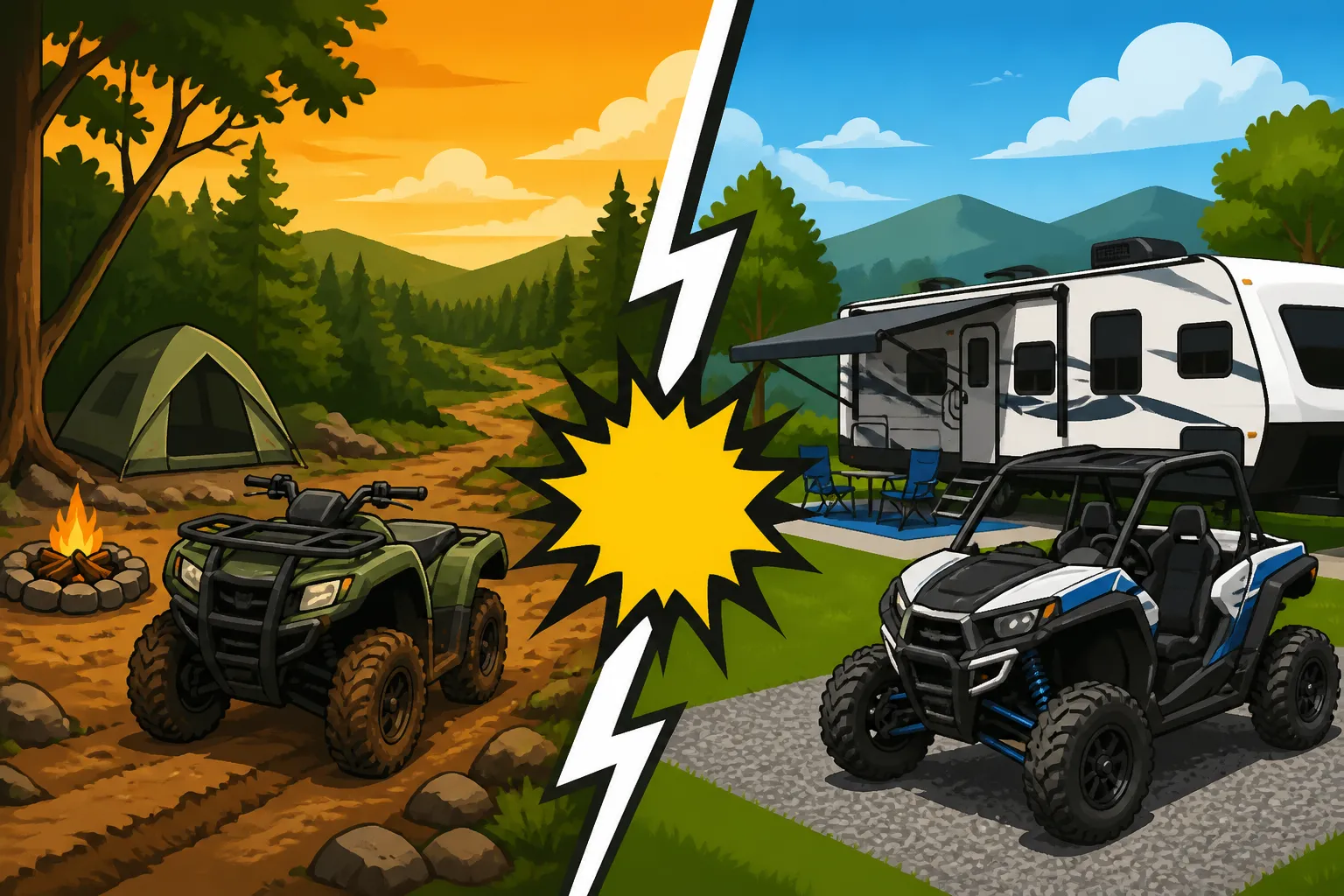
Primitive sites and RV sites are different kinds of camp
What a primitive campsite usually offers
A primitive site is generally a basic place to pitch a tent or park a simple camping setup without the utility connections associated with an RV site. “Primitive” does not automatically mean remote, secluded, or beside a trail, though. At one campground it might be a quiet tent area; at another, it may simply mean a site without hookups. Check the campground’s description rather than relying on the label alone.
That distinction matters after a long ride. If your group is happy with a tent, sleeping bags, and a cooler, a basic site may be all you need. If anyone is counting on a shower, a charging outlet, or a short walk to a restroom, find out what facilities are nearby and whether they are shared. A site description that says “primitive” may not answer those practical questions.
Also ask how the site is reached. Is there room to park your tow vehicle and trailer? Is the ground level enough for a tent? Can you unload your ATV or UTV without blocking another camper? Those details can matter more than a scenic view when you arrive tired, in the dark, or during wet weather.
What to expect from an RV site
An RV site is designed for a recreational vehicle, but that does not mean every site has the same hookups or layout. Some may provide utilities, while others may offer a parking space without every connection your rig needs. Confirm the site’s specific setup, including the kind of hookup available, site dimensions, surface, and whether your trailer can remain attached.
Think through your full parking footprint. A side-by-side, tow vehicle, and enclosed trailer can take up considerably more room than the RV alone. If you are traveling with a group, a site that comfortably fits one RV may not have space for a second vehicle or another machine. Ask about parking arrangements before booking rather than trying to solve a crowded-site puzzle at check-in.
An RV site can be a good fit when your group wants a more predictable base camp. You may have a place to sleep, prepare food, dry gear, and charge devices without packing everything into a tent. But hookups do not guarantee that a campground is close to the trails, that machines may be driven between the site and trailhead, or that the site is quiet. Confirm those points separately.
| What to compare | Primitive site | RV site |
|---|---|---|
| Typical setup | Tent or basic camping arrangement | RV or camper, with site features varying by campground |
| Utilities | Often limited or unavailable at the site | May include hookups; confirm what is provided |
| Space needs | Check tent area and vehicle parking | Check RV dimensions, tow vehicle, trailer, and machine parking |
| Best fit | Campers comfortable with a simpler setup | Campers who want to use an RV or camper as their base |
| Questions to ask | Restroom access, water access, parking, ground conditions | Hookup type, site length, surface, parking, and trailer space |
Match the campsite to the ride you are planning
Think about trail access before you choose a site
A campground can be associated with an off-road destination without every campsite being directly beside a trail or allowing you to ride from your site. Ask whether the campground is on the riding property, near a trailhead, or simply within driving distance. Then confirm how you are expected to get the machine to the trail.
That distinction is especially important when planning around Arkansas riding areas such as Wolf Pen Gap near Mena, Mill Creek near Ozark, or Hot Springs Off-Road Park. A nearby campground can be a convenient base, but convenience does not tell you whether you can ride from the campsite, need to trailer to a staging area, or must follow a separate access route. For planning, compare the campground’s directions with the trail information in Arkansas ATV Trails: Where to Ride and Arkansas Trailheads With Trailer Parking.
If you are unfamiliar with the area, use a mapping tool such as onX Offroad to get a sense of roads, trail systems, and distances while building your plan. Treat a map as a planning aid, not permission to ride a route. Confirm access, closures, and current rules with the land manager or campground before setting out. This is especially useful when the route includes forest roads, private land, or an unfamiliar trail entrance.
Account for permits and machine rules
The campsite and the riding area may have separate rules. A reservation for a campsite does not necessarily cover a trail permit, and a trail permit does not automatically grant access to every road or property nearby. Check the riding area’s requirements for each machine, including any permit, width, or seasonal restrictions.
This is worth checking before you load the trailer. Some Arkansas trails have width limits or seasonal closures, and a large side-by-side may not fit through every gate. Read Arkansas ATV Trails With Width Limits and Arkansas Trail Closures After a Storm when deciding which routes fit your machine and trip dates. If a campground advertises trail access, ask what that means in practice and whether access conditions change with weather.
For public riding areas, review the appropriate permit information before leaving home. Arkansas’s national forest riding areas may have distinct requirements, so do not assume one pass applies everywhere. Arkansas Riders Need Two Different Forest Passes is a useful starting point for understanding why the forest and trail destination matter when you plan.
Choose based on your group and camping style
When a primitive site makes sense
Primitive camping can work well for riders who already own tent gear, want a simple place to sleep, and do not mind bringing the essentials. It may also suit a group that spends most of the day riding and treats the campsite as a place to cook, clean up, and rest. The tradeoff is that you need to be more deliberate about water, food storage, lighting, weather protection, and charging.
Picture a couple driving from Little Rock for a weekend ride. They have a tent, a small stove, and a tow vehicle with room for their gear. A primitive site could be a comfortable, uncomplicated choice if they confirm parking, restroom access, and the site’s condition. If heavy rain is expected, however, they may want to ask about drainage and whether the vehicle can reach the site without getting stuck.
Primitive does not necessarily mean cheaper overall. You may save on the site itself, depending on the campground, but bring more equipment or spend more time setting up. Compare the full trip: campsite, food, firewood if allowed, water, permits, and the effort required to pitch and pack away camp. Check a campground’s current details directly rather than assuming the same facilities or charges apply from one place to another.
When an RV site is the better fit
An RV site can make the trip easier for families, larger groups, or riders who want a comfortable place to return to after a muddy day. It may provide a more convenient setup for sleeping and preparing meals, but comfort depends on the site’s actual features. Confirm the hookups and the space available for your vehicle, trailer, and machines before choosing.
For example, a family bringing a UTV, an RV, and a separate tow vehicle may need more parking than a couple arriving with a small camper. Ask whether the site accommodates all of it, whether additional parking is available, and where the machine can be unloaded. These questions are also useful if you plan to rent a machine; Arkansas Cabins That Come With Machines and Arkansas ATV Camping With Trail Access can help you compare the kinds of lodging and ride arrangements available.
An RV site is not always the easiest option for a short trip. Setting up and leveling the camper, managing hookups, and maneuvering a trailer can take time. If your group is only staying one night and already has tent gear, a basic site might be simpler. Consider who is traveling, how much equipment you have, and whether the convenience of the RV setup will meaningfully improve the weekend.
Questions to ask before you reserve
Confirm facilities, space, and access
Before paying for a site, ask the campground to describe that specific site rather than giving only a general overview of the property. Find out whether it has water, electricity, or sewer connections; what restroom and shower facilities are available; and whether those facilities are close to your site. If you are tent camping, ask whether the ground is suitable for a tent and whether the site is shaded or exposed.
For RV camping, give the campground the length of the RV or trailer and explain whether you are bringing a tow vehicle, a machine, or both. Confirm the parking layout and whether there is room to turn around. If you are towing through hilly terrain or narrow roads, ask for the recommended approach and whether the final access road is suitable for your setup.
Then clarify the riding connection. Ask whether the machines can be ridden from the campground, whether you must trailer to a trailhead, and what access rules apply. Do not assume that a road shown on onX Offroad or another map is open to your machine. Use mapping to prepare questions, then confirm the route with the property or relevant land manager.
Plan for weather, gear, and a backup
Arkansas riding conditions can shift the needs of a campsite. Rain can turn a simple arrival into a muddy parking challenge, while hot weather makes shade, hydration, and a place to dry out after riding especially valuable. A forecast is useful, but also ask the campground about the ground and access road. A low, soft site may be a poor match for a heavy RV and trailer after rain.
Pack according to the site type. Primitive campers may need their own lighting, drinking water, bedding, cooking supplies, and a way to keep essentials dry. RV campers should bring the adapters and equipment their particular rig requires, but confirm the site’s connection details first. For either setup, keep riding gear separate from sleeping and cooking areas when possible; muddy boots and dusty helmets can quickly take over a small camp.
Finally, have a backup plan for riding. Trail closures, storms, or access restrictions can change the day’s schedule. Check Arkansas Trail Conditions Before You Tow before you leave, and keep a paper map or offline navigation option in case service is unreliable. A little preparation can prevent a campsite choice from becoming a frustrating trip-wide problem.
Disclaimer
This article is for general informational purposes only and does not constitute professional advice. Laws, prices and regulations vary by location and change over time. Consult a qualified professional for guidance on your specific situation.