Arkansas WMA Riding Behind a Gate
A gate on an Arkansas Wildlife Management Area road is more than an obstacle to drive around: it can mark a route that is closed to motor vehicles. The hard part is knowing whether an exception applies, especially during hunting season or when a trail crosses more than one type of public land. Here’s how to check before you ride and what to do when the status is unclear.
What a gate means on an Arkansas WMA
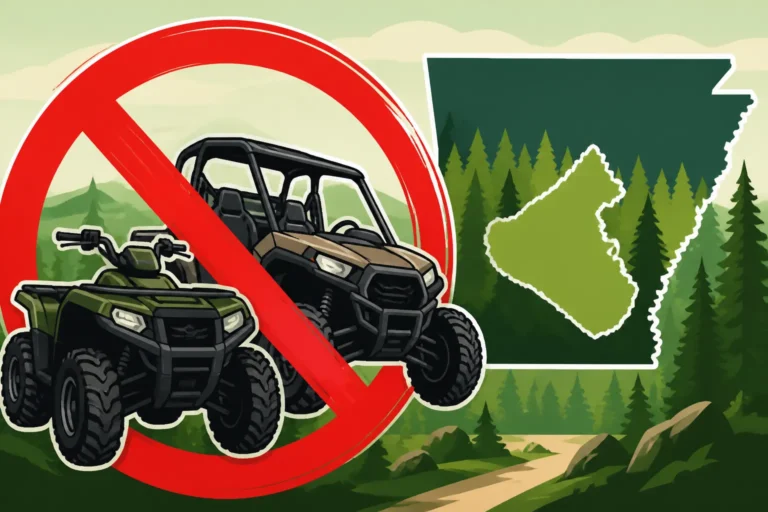
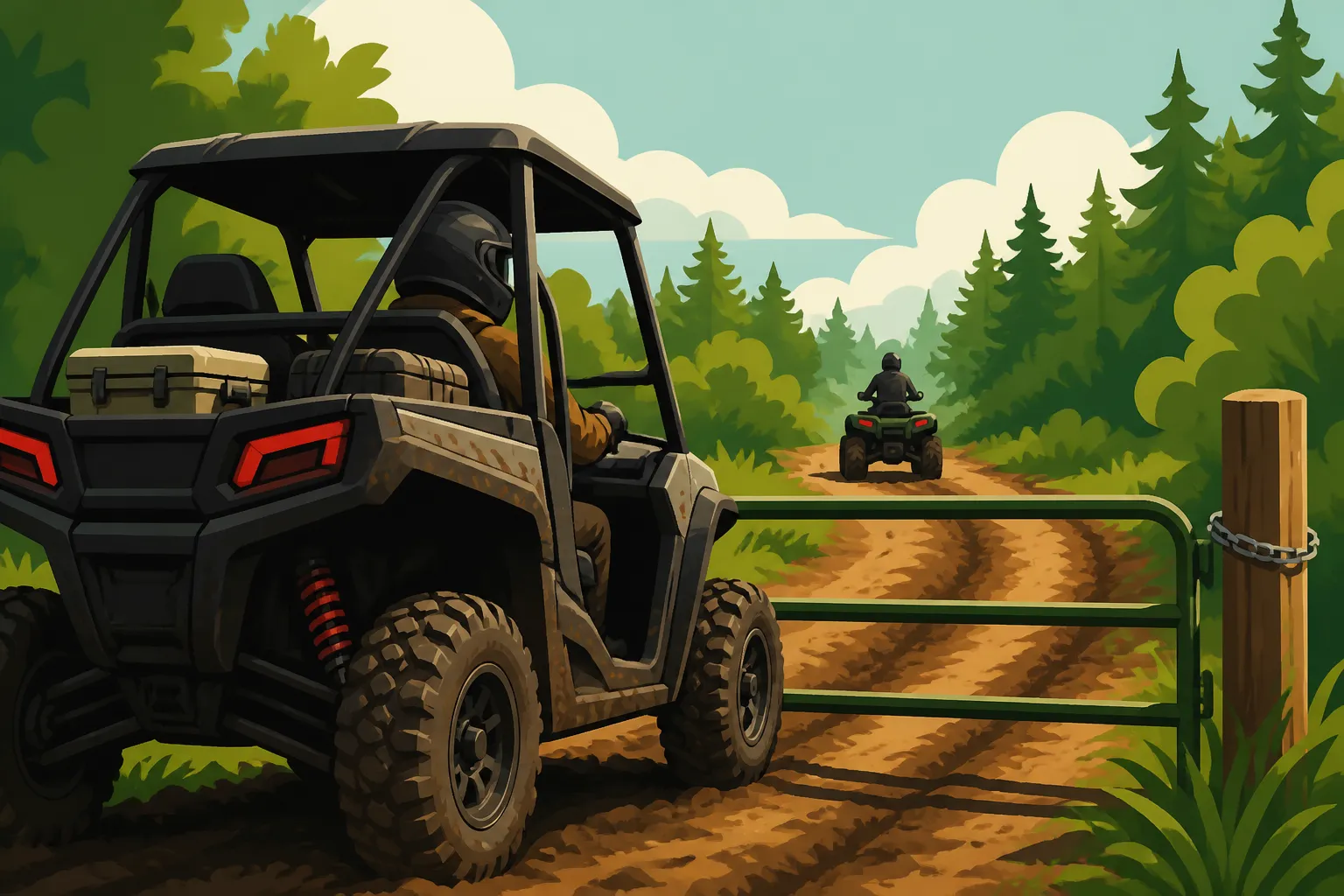
For a rider, the safe starting point is simple: treat a gated or cabled WMA road as closed to motorized travel unless current rules clearly authorize your use of that route. A gate may be locked, chained, or left open temporarily; its physical position does not necessarily tell you whether riding is allowed. Nor does seeing tire tracks prove that a road is open to the public.
Wildlife management areas are managed for conservation and recreation, with vehicle access controlled by area rules and posted signs. Roads that are open to vehicles may be limited to particular routes, purposes, dates, or conditions. A road beyond a barrier may be closed to protect habitat, reduce disturbance, prevent damage, or control access during a season. Walking or hunting access does not automatically mean you can ride an ATV or UTV there.
The distinction matters because a WMA road is not the same thing as a designated OHV trail. A route might look like a trail and still be a closed management road. Likewise, a public road crossing a WMA may have different rules from an internal road behind a gate. The sign, map, and current area regulations—not the appearance of the track—are what you need to verify.
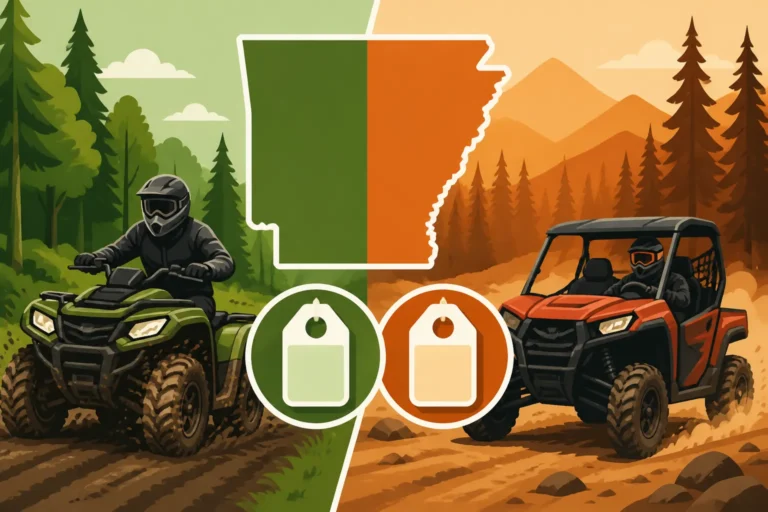
A forest pass or registration decal does not cancel a WMA closure. A permit may satisfy a separate requirement for riding in a particular national forest or OHV area, but it does not give permission to pass a closed barrier on WMA land. If your trip involves both a forest OHV trail and a WMA road, check the rules for each land unit and each route. The overview in Arkansas WMA Vehicle Rules in Plain English and the explanation of Arkansas Riders Need Two Different Forest Passes can help separate those requirements.
| What you see | What it means for a rider | What to check |
|---|---|---|
| A gate or cable across a road | Treat motorized use beyond it as closed unless a specific rule says otherwise | Signs, current WMA regulations, and the route’s status |
| An open gate | The road is not automatically open to ATVs or UTVs | Whether the route is designated open and whether dates or purpose limits apply |
| A marked open road | Access may be allowed under stated conditions | Vehicle type, dates, direction, and any permit or seasonal restriction |
| A trail or tire tracks beyond the gate | Appearance and past use do not establish permission | Official area information and posted restrictions |
| A forest OHV permit | It may satisfy a forest riding requirement | Whether the route is on the permitted forest system or a separate WMA closure |
How to check whether an exception applies
Some WMA access rules allow limited vehicle use in defined circumstances. Those exceptions are not a general pass to ride wherever a gate blocks the way. Their wording, location, season, and purpose matter. A rule for traveling to a hunting camp, for example, should not be treated as permission to take a recreational loop behind a closed barrier.
Before riding, use this process:
-
Identify the exact area and route. Confirm the WMA’s name and determine whether the road is actually within the WMA. Land boundaries can be confusing where a WMA adjoins a national forest, private land, or another public area. Don’t rely only on a trail app’s colored line.
-
Read the current WMA regulations for that area. Look for vehicle-access rules, open-road lists, seasonal dates, named exceptions, and restrictions on ATVs or UTVs. The general rule for one WMA may not answer the question for another. Start with Arkansas WMA Roads Open to Vehicles and check whether Arkansas WMAs Named in the Exception List is relevant to your specific area.
-
Check the gate and nearby signs. A posted closure, seasonal notice, or direction sign can clarify the route’s status. Take a photo or note the wording if you need to confirm it later, but do not treat a lack of signs as permission to pass a barrier.
-
Match the exception to your actual trip. Ask whether it covers this road, your machine, your activity, and your travel date. If an exception applies only to a defined hunting activity or trip to and from a camp, riding for recreation beyond the gate is a different use.
-
Confirm any separate permit requirement. A WMA rule and a national forest OHV rule can both apply during the same outing, but they solve different access questions. A permit required for one area does not authorize travel on a closed road in another.
-
If the wording is unclear, stop and verify before entering. Contact the relevant land manager or agency office and describe the WMA, road, machine, dates, and purpose. A broad question such as “Can I ride here?” may not reveal the key detail: whether the particular gated road is open to your intended use.
A map is useful, but it is not always enough. Some digital maps show roads without indicating whether vehicles are currently allowed. A route may also have a temporary closure or a seasonal restriction that is not visible in an older download. Use a map to locate the road, then check current regulations and notices to establish what the line means legally.
Common situations behind a gate
Riding for recreation
Wanting to explore a side road or make a loop is not, by itself, an exception to a closure. If the route is gated and no current rule specifically allows your use, turn around. Do not ride around the end of a cable, move a barrier, or detour through vegetation to get to the other side. That can damage the area and turn a questionable access decision into a clear violation.
Hunting or traveling to a camp
Hunting-related vehicle rules can be narrower than riders expect. A limited allowance for access connected to hunting does not necessarily permit general trail riding, scouting wherever you choose, or using a closed road as a shortcut. Check whether the regulation applies to your activity and whether it limits travel to a route or to getting to and from a camp. Arkansas Hunters Riding During Open Season and Travel To and From Camp Only cover the distinction between a defined hunting-related use and general riding.
Do not assume that hunting season opens every gated route. A road can remain closed even when hunting is underway, and an access exception may apply only to a specific area or situation. If the wording does not clearly cover your plan, confirm it with the land manager before you go.
A gate is standing open
An unlocked or open gate is not a reliable signal that the road is open to off-road vehicles. Staff, contractors, emergency responders, or authorized land users may have opened it temporarily. A gate can also be left open while a closure remains in effect. Read the signs and check the area’s current rules just as you would if the gate were shut.
You have an OHV permit or registration decal
A permit, registration, or decal can be necessary and still not be sufficient. It does not usually turn a closed WMA road into an open one. Think of access as a set of separate checks: is this machine covered by the relevant registration rules, does the riding area require a permit, and is this specific route open to this type of use? For WMA-specific access, see Arkansas WMA Access for a Quad. For forest permit questions, see Why One Forest Pass Does Not Cover the Other.
There are tracks beyond the gate
Tracks may have been left by an authorized worker, a permitted land user, or a rider who should not have been there. Tracks cannot tell you who made them or what permission they had. Do not use them as evidence that the road is open. If the route is not clearly authorized for your ride, turn around.
The WMA overlaps with a forest riding area
Some outings involve adjacent or overlapping management boundaries. A road that is open under one land manager’s rules can meet a closed road under another’s. Check the boundary and the rules on both sides; do not assume that a valid forest permit, trail pass, or route designation carries across the line. When a barrier or sign marks a transition, stop and verify what applies beyond it.
What to do when you reach a closed gate
The practical choice is to stop, keep the machine on the allowed side, and turn around unless you can confirm a specific exception applies. Don’t lift a cable, squeeze around the gate, follow another vehicle through, or make a new route beside it. A closed road is not an invitation to find another way in.
If the gate’s status is uncertain, note the WMA name, road location, sign wording, and date. Check the current agency information or ask the land manager before returning. If an exception seems relevant, explain the exact trip rather than relying on a general statement about hunting, camping, or holding a permit. Ask whether it covers the road, machine, purpose, and date in question.
Plan a backup route before unloading. A trail map can help you locate open alternatives, but verify that each one is currently authorized. If you arrive and find a closure you did not expect, it is safer to change plans than to treat the gate as optional. For broader guidance on barriers and road status, see Arkansas WMA Gated and Cabled Barriers and Arkansas WMA Riding on Open Roads.
A quick pre-ride check can prevent a wasted trip and an avoidable enforcement problem:
- Confirm the WMA and the land manager for your planned route.
- Check current rules for that specific area, including seasonal and purpose-based restrictions.
- Identify which roads are open to motor vehicles rather than simply visible on a map.
- Confirm that any exception clearly applies to your machine and planned use.
- Keep separate any WMA access rule, forest permit, and vehicle registration requirement.
- Turn around at a closed gate unless you have verified authorization to proceed.
When in doubt, do not ride past the barrier. WMA access can depend on details that are easy to miss from the trailhead, and an open-looking road or a permit for another riding area does not settle the question. Verify the route first, then ride only where the rules allow.
Disclaimer
This article is for general informational purposes only and does not constitute professional advice. Laws, prices and regulations vary by location and change over time. Consult a qualified professional for guidance on your specific situation.