Why One Forest Pass Does Not Cover the Other
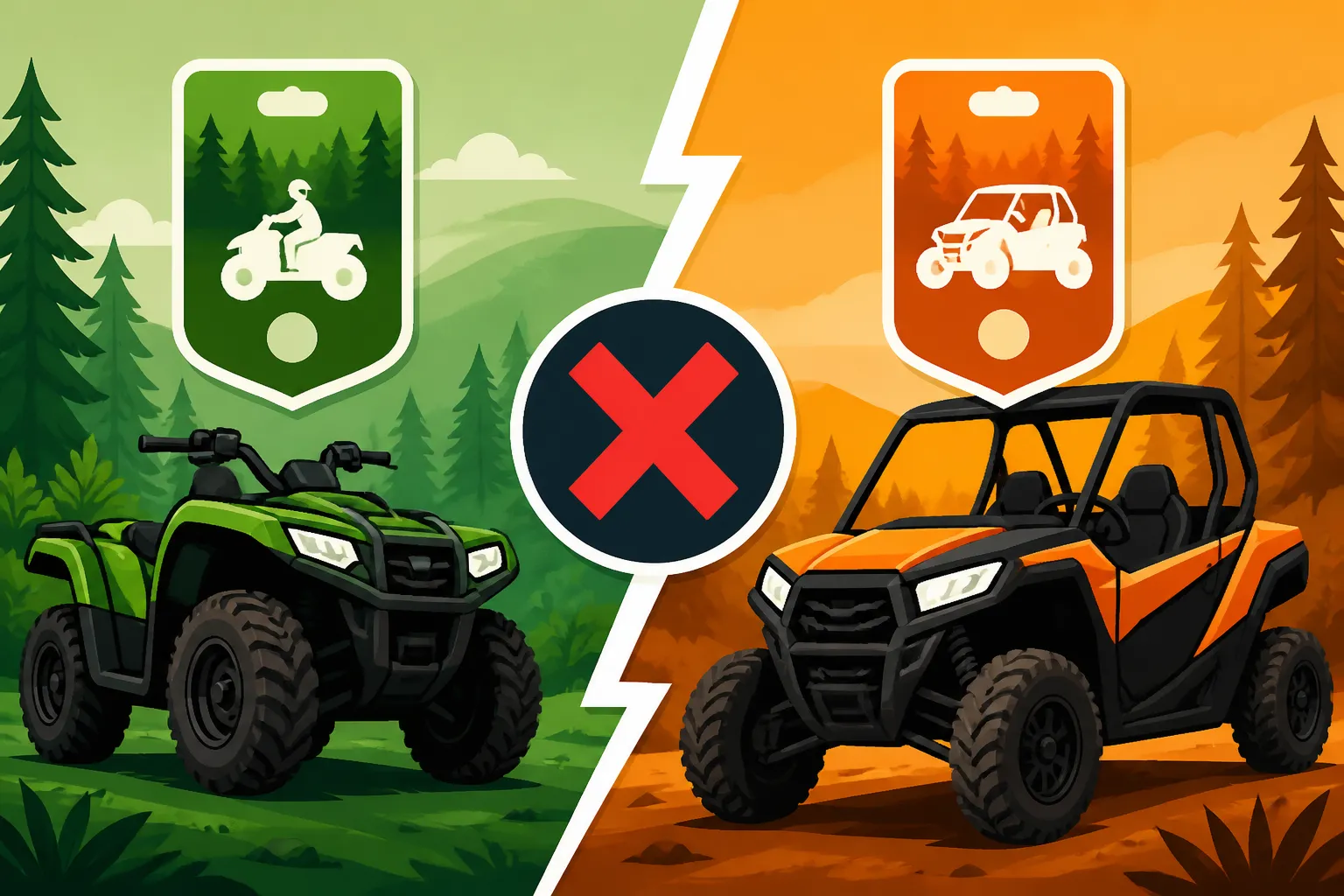
A forest OHV pass is not a statewide riding permit. If a trip includes trails in both the Ouachita and Ozark-St. Francis national forests, you may need a separate pass for each forest. Knowing where each pass applies—and checking trail access before you travel—helps prevent a costly mix-up at the trailhead.
Why one forest pass does not cover the other
Arkansas’s national forests are managed as separate areas, with different designated OHV trail systems and permit arrangements. A pass bought for riding in one forest generally applies only to the trails and land covered by that forest’s program. It does not automatically give you access to the other forest’s trails.
This is an easy distinction to miss. Both forests are in Arkansas, both offer riding opportunities, and a rider may visit more than one on the same trip. But a pass is not a general Arkansas OHV permit. Its coverage is tied to the specific program and area for which it was issued.
For example, Wolf Pen Gap is associated with the Ouachita National Forest, while Mill Creek OHV Trail System is in the Ozark-St. Francis National Forest. A permit that works for one area should not be assumed to work at the other. Check the rules for the exact trail system you intend to ride. The broader picture is covered in Arkansas OHV Permits: Two Forests, Two Prices and Arkansas Riders Need Two Different Forest Passes.
There are several different documents riders may call a “permit,” “pass,” or “registration.” They are not interchangeable:
- A forest OHV pass covers riding in a particular public-land program, subject to its terms.
- An Arkansas registration decal is a state registration requirement for qualifying machines. It does not replace a forest pass.
- A private park admission or permit applies under that park’s rules and does not necessarily cover nearby public trails.
- A city UTV permit may apply to certain local streets under a local ordinance, not to forest OHV trails.
A rider could have a current state registration decal and still need the applicable forest pass. Likewise, buying a forest pass does not, by itself, make a machine street legal or meet every state registration rule. Keep these obligations separate when planning. If you are unsure whether a machine needs state registration, see Do You Need to Register an ATV in Arkansas?.
A pass’s limits can also be narrower than “the whole forest.” Public forests contain roads, trails, recreation areas, and land with different access rules. A permit for a designated OHV system does not mean every road or track in that national forest is open to motorized riding. Follow posted signs, gates, maps, and current agency directions.
What each pass covers
Think of a forest pass as permission under a specific riding program, not as a statewide credential. The details depend on the forest and the trail system. Before purchasing, confirm that the pass you are selecting is intended for your destination and machine.
| What you are checking | Why it matters |
|---|---|
| Forest or trail system | A pass for the Ouachita program may not cover an Ozark-St. Francis riding area, or vice versa. |
| Designated riding area | A forest pass does not necessarily authorize riding everywhere within that forest. |
| Machine covered | Some programs issue permits per vehicle, so a group may need a pass for each machine. |
| Pass duration | Day and annual options may exist, but the available choices and terms can differ by program. |
| Display or proof rules | You may need to display a pass on the machine or carry proof where it can be shown. |
| Trail status | A valid pass does not override a closure, seasonal restriction, width limit, or other trail rule. |
Ouachita and Ozark-St. Francis are separate programs
The practical difference is geographic and administrative: the forests operate their own designated riding areas and permit systems. Don’t choose a pass just because the seller, recreation site, or pass name includes “Arkansas.” Match it to the forest and trailhead on your itinerary.
For instance, if your plan is to ride at Wolf Pen Gap, check the Ouachita requirements. If you plan to ride at Mill Creek, check the Ozark-St. Francis requirements. If your trip includes both, treat them as two permit checks, not one. The overview Why Mill Creek Charges Less Than the Ouachita can help explain why the programs may not have identical terms; the key point is that different prices or options do not make one pass valid in both places.
A pass may be per machine
Do not assume that one pass covers a truckload of ATVs or every machine in a family group. Forest OHV permits are often associated with an individual vehicle, and the applicable program’s terms determine how many permits are needed. Check this before setting out, especially if riders are bringing multiple machines or renting.
This distinction affects budgeting and preparation, but it also affects what you need to show at the trailhead. The details are discussed in Arkansas Permits Are Per Vehicle. If you are purchasing for a group, confirm whether the permit is tied to a machine, its operator, or another condition specified by the issuing program.
A pass does not guarantee that a trail is open
Having the right pass is only one part of legal access. Trails can be closed temporarily for weather, maintenance, safety, seasonal restrictions, or resource protection. Gates and signs may also limit access to a particular route or type of machine.
Check the current status shortly before leaving, not just when you first plan the trip. A route shown on an older map may be closed or have a restriction that matters to your vehicle. Review Arkansas Trail Conditions Before You Tow and consult the current information for the forest and trail system.
Planning a trip that includes both forests
When a ride includes more than one national forest, plan the permits by destination. This is more reliable than buying a single pass and hoping it applies everywhere. A short checklist helps make the difference clear before you load the machines.
- List each riding area and trailhead. Write down the name of the forest and the specific OHV system for each day. “Arkansas trails” is too broad to identify the correct pass.
- Identify the relevant permit program for each stop. Confirm the pass name and coverage with the official forest or permit information.
- Check how many machines need permits. If a group is bringing several vehicles, verify whether each machine requires its own pass.
- Choose the correct pass duration. Compare the available day and annual options for each forest separately. An annual pass in one program does not necessarily cover another.
- Confirm purchase and proof requirements. Check where the pass can be purchased, whether it must be printed, and whether it needs to be displayed or carried.
- Check trail status and machine restrictions. Review closures, width limits, seasonal rules, and other requirements for the route you plan to ride.
- Keep state and local requirements separate. Confirm registration, street-use rules, and any private park requirements independently of the forest pass.
If you’re making a multi-day trip, do not assume that buying one annual pass solves every access question. It may be useful for repeated visits to a particular program, but it does not automatically extend to another forest. Arkansas Annual Versus Day Permits can help frame that choice, while the current forest information should settle which options are actually available and where each one works.
Buying the pass
Some Arkansas forest OHV permits are offered through Recreation.gov, but availability and purchase instructions can vary by program. Start with the official information for the forest you will ride, then follow its current purchasing directions. A general explanation appears in Arkansas Permits Bought on Recreation.gov.
When purchasing online, read the pass description carefully before completing the order. Check the forest name, valid area, duration, vehicle coverage, and any instructions about displaying the pass. Save the confirmation and any proof the program says to carry. If you need a printed copy, prepare it before leaving rather than relying on a phone connection at a remote trailhead.
A phone screenshot can be a useful backup if permitted by the program, but it should not replace a required physical display or printed document. Follow the official instructions rather than guessing based on what another rider carries. If the pass is lost or damaged, use the program’s replacement guidance; Arkansas Permit Replacement If Lost covers the issue more generally.
When the itinerary changes
A planned route may change because of weather, a closure, a mechanical problem, or a full parking area. If you decide to move to another trail system, stop and check whether your current pass applies before riding. Driving from one forest to another does not carry the first forest’s authorization with you.
If the new destination requires a separate permit, secure it before entering the riding area, using the purchase method accepted by that program. Don’t rely on the idea that you can explain the change later or buy a pass only if someone checks. A permit requirement applies whether or not a ranger happens to be present.
For a trip that crosses between forests on different days, keep the permit information for each stop organized. One simple approach is a separate note for each date with the trail system, pass, machine, and proof instructions. That can be especially helpful when several people are coordinating the same trip.
Common permit mistakes and how to avoid them
Most pass problems are caused by assuming that two similar-looking rules are the same. The following mistakes are preventable with a few checks before departure.
Treating the pass as statewide
A pass is not automatically valid anywhere in Arkansas. Verify the forest and trail system printed in the pass description. If your destination is not clearly included, ask the issuing program before riding.
Buying for the wrong forest
Trail names, towns, and forest boundaries can be confusing, particularly when a trip is planned from a general map or online discussion. Confirm the managing forest for each riding area. For specific trail options, start with Arkansas ATV Trails: Where to Ride, then verify the permit and access details for the actual destination.
Assuming one pass covers every machine
A driver may buy one pass for a whole group when the program requires a separate permit for each vehicle. Before checkout, confirm how the pass is assigned. Match the number of permits to the number of machines, not the number of drivers or passengers unless the program’s rules say otherwise.
Confusing a forest pass with state registration
A forest pass and state registration answer different questions. The pass concerns access under a forest OHV program. State registration concerns the machine under Arkansas requirements. One document does not automatically substitute for the other.
Likewise, a forest pass does not authorize ordinary road riding. Arkansas road-use restrictions and local ordinances are separate from forest permit rules. If a planned route includes public streets, check the applicable road rules rather than assuming forest access makes the machine street legal.
Assuming an old pass or map is enough
A pass may have a limited term, and trail access can change. Do not rely on an old receipt, saved web page, or map without confirming that it remains applicable. Check the validity dates and current trail status before the ride.
Skipping display instructions
Even a valid pass can be difficult to verify if it is not displayed or carried as required. Read the instructions, attach or store the pass as directed, and keep proof accessible. Carrying Your Forest Permit at Mill Creek provides a trail-specific example of why the display and proof details matter.
To avoid losing or damaging a paper pass, keep the original in the required location and consider a separate backup copy if the program allows it. A waterproof document sleeve can help protect spare paperwork in a gear bag; Amazon is one possible place to find one, but a sleeve does not replace any required on-machine display.
Riding past a gate or into a closed area
A pass is not permission to bypass a barrier, ignore a closure, or use an unmarked route. Gates, cables, signs, and trail markers communicate access rules. If a route is closed or its status is unclear, choose a confirmed open trail instead. For more on what may be checked at a riding area, see What a Forest Ranger Checks on an Arkansas Trailhead.
Relying on another rider’s answer
A friend’s pass may be for a different forest, machine, or date. A rider’s experience can help you know what to ask, but it is not proof that the same pass covers your itinerary. Confirm with the relevant program, especially when permit instructions or trail status may have changed.
A practical pre-ride checklist
Before loading your ATV or UTV, make sure you can answer these questions for every planned riding area:
- Which national forest manages the trail system?
- What specific pass does that program require?
- Does the pass cover the exact trail system and planned date?
- How many permits are needed for the machines in your group?
- Is the pass a day or annual option, and what are its terms?
- Does the program require a printed pass, a visible display, or proof carried by the rider?
- Are the trails open, and are there width or other machine restrictions?
- Do you also need a separate Arkansas registration decal?
- Are any private park or local rules relevant to the itinerary?
- Do you have a backup plan if the intended trail is closed?
The most important habit is to check each forest independently. If your plans include the Ouachita and Ozark-St. Francis national forests, make two separate permit checks and keep the proof for each area clear. That small step helps avoid arriving with a valid pass that simply does not apply to the trail you came to ride.
Frequently Asked Questions
Can one Ouachita pass cover a ride at Mill Creek?
Do not assume so. Mill Creek is in the Ozark-St. Francis National Forest, and its permit requirements are separate from those for Ouachita riding areas. Confirm the current pass requirements for Mill Creek before riding.
If I have an Arkansas registration decal, do I still need a forest pass?
A state registration decal and a forest OHV pass serve different purposes. A qualifying machine may need state registration, while a designated forest riding area may also require its own pass. Check both sets of rules.
Does a forest pass let me ride anywhere in that national forest?
No. A pass applies under the relevant OHV program and does not automatically open every road, trail, or parcel of land. Follow designated routes, signs, closures, and machine restrictions.
Do I need a separate forest pass for every machine?
The number of permits depends on the program’s terms. Some forest permits are issued per vehicle, so check how many machines your group is bringing before purchasing.
What should I do if I change riding areas during the trip?
Before entering the new area, check which forest manages it and whether your existing pass applies. If the new destination has a separate permit requirement, obtain the correct pass before riding there.
Disclaimer
This article is for general informational purposes only and does not constitute professional advice. Laws, prices and regulations vary by location and change over time. Consult a qualified professional for guidance on your specific situation.