Dogs at an Arkansas Trailhead Camp
A dog can make an Arkansas ATV trip more enjoyable, but trailhead camps and riding areas have rules that are easy to overlook. In national forest campgrounds, picnic areas, parking areas, and trailheads, pets must be leashed. Here’s how to plan around that requirement, keep your dog comfortable at camp, and check the rules before heading to a different riding area.
Where Arkansas trailhead camp leash rules apply
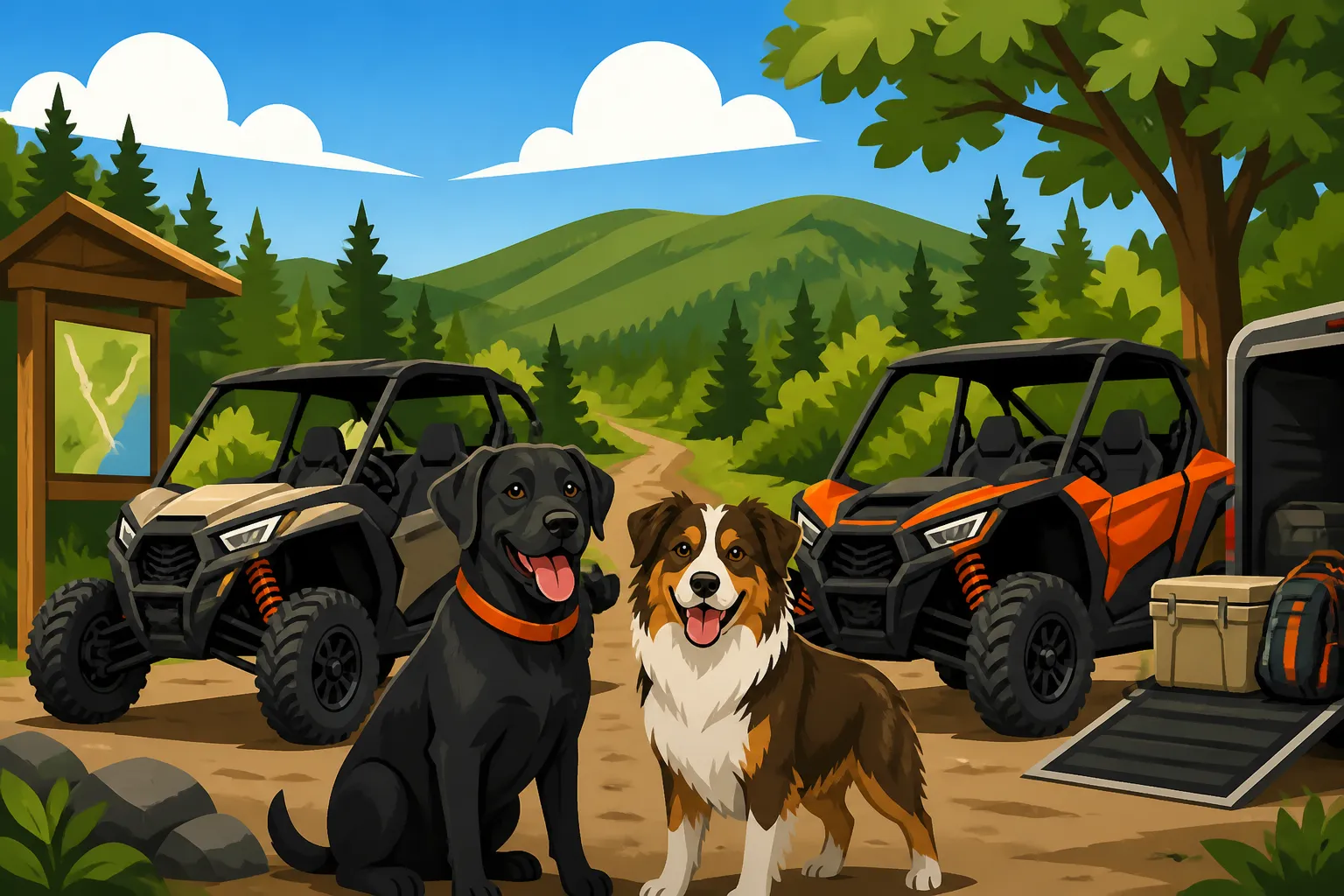
According to the USDA Forest Service, dogs and other pets must be on a leash at national forest campgrounds, picnic areas, parking areas, and trailheads in Arkansas. That covers the places where riders often unload machines, organize gear, and take breaks—not just the campsite itself.
Treat the leash rule as part of your arrival routine. Keep your dog leashed while you park, unload, walk through the trailhead, and settle in. A dog that is calm at home may react differently to unfamiliar machines, exhaust noise, other dogs, or riders moving around a busy lot. A leash helps you keep the dog close and reduces the chance of an unexpected encounter.
The rule is specific to the settings named by the Forest Service. Don’t assume that a pet policy at one campground or trailhead automatically applies to a different place, or that a dog can go off leash once you leave a parking area. Check signs and current directions for the specific recreation site and route you plan to use. If the policy is unclear, ask the land manager before you travel.
It’s also useful to distinguish national forest land from other public land. The National Park Service oversees regulations within the boundaries of the Buffalo National River. A rule you have checked for a national forest may not settle what applies at a National Park Service site, so confirm pet requirements with the agency managing the destination.
| Place or situation | Practical approach |
|---|---|
| National forest campground | Keep your dog leashed, including while arriving and setting up. |
| National forest picnic area | Keep your dog leashed in the area. |
| National forest parking area | Leash your dog before unloading or walking around the lot. |
| National forest trailhead | Keep your dog leashed at the trailhead and check route-specific signs before proceeding. |
| Buffalo National River | Check National Park Service rules for the location you plan to visit. |
| Private campground or riding park | Ask the operator about its pet policy; do not assume federal rules are the only rules that apply. |
Before choosing a destination, review Arkansas ATV Trails: Where to Ride and Arkansas ATV Camping With Trail Access. Those topics can help you narrow down the kind of riding trip you want, but verify the pet policy for the exact campground, trailhead, and route. A general description of a riding area is not a substitute for site rules.
Planning a dog-friendly camp and ride
The easiest trips start with a decision about what your dog will actually do while you ride. A pet-friendly campground does not necessarily mean a dog can accompany you on every trail, ride in every machine, or remain unattended at camp. Confirm those details with the land manager or campground operator rather than relying on assumptions.
If your dog will stay at camp while you ride, consider whether you can supervise it and keep it comfortable. An unfamiliar campsite can bring new sounds, wildlife, passing visitors, and other pets. A secure setup and a familiar routine can help, but they don’t replace checking the campground’s rules about unattended animals. If you cannot confirm that leaving your dog is permitted and safe, plan for a person to stay with it or make another arrangement.
For a dog joining the outing on foot, think about where it will be allowed and how you will manage it around machines. Trailhead areas can be busy and noisy, and a leashed dog still needs room to stay out of the way of trailers and moving vehicles. Keep the leash short enough to prevent your dog from crossing in front of a machine or reaching other visitors. Move to a safe place before stopping to adjust gear or give your dog water.
Pack for the dog, not just the ride. Useful basics include a sturdy leash, a backup leash, a collar or harness that fits securely, water, a bowl, waste bags, and any food or medication your dog needs. A spare leash can be useful if the main one breaks or gets damaged. If you need to replace or add basic walking gear, Amazon may be one place to compare options, but check that the product suits your dog and the conditions you expect.
Make sure identification is current and easy to read. Take a recent photo of your dog, and keep the photo accessible on your phone in case you become separated. Before leaving home, check that your dog is comfortable wearing its walking equipment and can settle around the kinds of sounds and activity it may encounter. A dog that is frightened by loud machines may be happier staying home or resting with a trusted person.
For a longer trip, decide where the dog can take breaks and where it can rest away from the machines. Don’t leave a pet in a vehicle without considering the conditions and the animal’s needs. Heat, poor ventilation, and lack of supervision can turn a short stop into a serious risk. If your dog cannot safely stay at camp while you ride, revise the plan rather than trying to improvise at the trailhead.
Trail rules, permits, and machine access
A dog’s leash requirements are only one part of planning an Arkansas off-road trip. Check that your machine is allowed on the route, that the route is open, and that you have any required permit or day-use pass. Permit requirements differ by land manager and trail system, so don’t treat a state registration decal as proof that every trail is open to your machine.
According to the USDA Forest Service, nonresidents generally do not need a separate state OHV registration or trail permit to operate on federal public lands such as Arkansas national forests if they stay on designated routes. However, rules and entry permits can differ for land managed by another agency, including state wildlife management areas. Specific trail systems in the Ozark-St. Francis National Forests, including Mill Creek and Moccasin Gap, require a day-use fee or permit, according to the Forest Service. Confirm the requirement for your intended trail before you leave.
In the Ouachita National Forest, designated motorized trails such as the Wolf Pen Gap Trail Complex have seasonal and holiday operating periods. The USDA Forest Service gives the general operating season as the first Friday in March through October 31, with additional specified holiday periods. Check current Forest Service information before planning a trip, since a closed trail can affect both your ride and your campsite choice. For details on permits and reciprocity, see Arkansas Riders Need Two Different Forest Passes and Arkansas OHV Permits: Two Forests, Two Prices.
Trail access may also depend on the machine. The Arkansas Department of Finance and Administration defines a UTV or side-by-side as 80 inches or less in width. Check width limits and gate access for the specific trail system before towing out. A dog-friendly camp does not mean a trail will accommodate every machine.
According to the Arkansas General Assembly, operating an ATV on public streets and highways is generally unlawful, with limited exceptions such as farming, hunting, or direct road crossings. Don’t use a public road as a shortcut between camp and a trail unless the applicable exception covers what you plan to do. The article Can You Drive an ATV on the Road in Arkansas? explains the road-use issue in more detail.
Equipment rules matter, too. The USDA Forest Service requires internal combustion engines on off-highway vehicles in the National Forest System to have a properly installed and maintained spark arrester. Arkansas law also prohibits operating an ATV with a modified exhaust or a removed or modified spark arrester, according to the Arkansas State Legislature. These requirements apply to the machine, not the dog, but they are part of preparing for a lawful forest ride. See Arkansas Spark Arrestor Requirements before making changes to an exhaust system.
A practical checklist before you go
Use a short pre-trip check to avoid arriving at a trailhead only to discover that your dog, machine, or planned route is not a good fit.
- Confirm who manages the destination. Find out whether it is national forest land, a National Park Service area, a state wildlife management area, a private park, or a private campground. Different managers can have different rules.
- Check the pet policy for the exact site. For national forest campgrounds, picnic areas, parking areas, and trailheads, the USDA Forest Service requires pets to be leashed. Confirm any additional rules for the campground and the route.
- Check that the trail is open. Seasonal closures, weather, maintenance, or other restrictions can affect access. Verify the status with the land manager before towing.
- Confirm machine access and permits. Check route and width limits, and find out whether the trail system requires a pass or day-use fee. For background, see How to Buy an Arkansas Forest OHV Permit.
- Prepare the dog’s gear. Pack a secure leash, backup leash, identification, water, bowl, waste bags, food, and medication. Keep the dog leashed where required.
- Make a supervision plan. Decide who will stay with the dog if it cannot accompany the ride. Confirm that the campground permits your plan; don’t assume an animal may be left unattended.
- Keep machines and pets separated during loading. Secure the dog before starting or moving a machine, and give it a calm place away from trailers and traffic.
- Have a backup plan. If the dog is stressed, the site does not allow pets, or the campground cannot safely accommodate your arrangement, be ready to change the plan.
A little preparation makes the trip easier for everyone using the trailhead. Leash your dog in the forest locations covered by the Forest Service rule, confirm site-specific pet policies, and check machine access and permits separately. If you’re still comparing destinations, Arkansas ATV Trail Etiquette Locals Expect is useful background for sharing riding areas responsibly.
Sources
- USDA Forest Service — Wolf Pen Gap – Ouachita National Forest (checked November 2, 2026)
- State of Arkansas Department of Finance and Administration — State of Arkansas Department of Finance and Administration Fiscal Impact Statement HB1606 (checked November 2, 2026)
- National Park Service — Buffalo National River (checked November 2, 2026)
Disclaimer
This article is for general informational purposes only and does not constitute professional advice. Laws, prices and regulations vary by location and change over time. Consult a qualified professional for guidance on your specific situation.