Arkansas Private Park Insurance Rules
Arkansas private off-road parks do not all use the same insurance rules. A park may ask for proof of coverage, require a signed waiver, or set separate terms for rentals. Knowing which rules apply to your own machine—and which apply only to a rented one—can help prevent a surprise at check-in.
Why insurance rules differ at private parks
A privately operated riding park can set its own admission conditions, subject to applicable law. That means there is no single insurance checklist that applies to every Arkansas private park. One operator may ask riders to sign a waiver but not request proof of insurance; another may have different conditions for rentals, organized events, or particular areas of the property.
The first step is to distinguish a private park from a public riding area. A private park’s entry conditions are set by its operator. Forest land and other public riding areas may have their own permits, closures, and equipment rules, but those requirements are not a substitute for checking the private park’s terms. Similarly, an OHV permit for public land does not automatically satisfy a private operator’s insurance requirement. For a broader overview, see Arkansas Private Off-Road Parks Compared and Arkansas Permits at Byrd’s and Similar Parks.
The word “insurance” can also mean different things in a park’s instructions. The operator might be asking you to show your own policy, describing coverage available for a rental, or referring to the park’s own liability arrangements. Those are not interchangeable. Ask what the park means before assuming that a waiver, park pass, or rental charge provides the protection you need.
A park’s insurance is not your personal coverage
A park operator may carry insurance to protect its business against certain claims. That does not necessarily insure a visitor, pay for damage to a visitor’s machine, cover another rider’s injuries, or pay for every accident on the property. The operator’s insurance contract governs its coverage; it should not be treated as a rider’s personal policy.
Likewise, the fact that a park allows a machine onto its property does not confirm that the machine or rider is insured. Permission to ride and insurance coverage are separate questions. If a park says that insurance is required, get the requirement in writing and confirm that your particular policy meets it.
A waiver is not an insurance policy
Parks commonly use waivers or assumption-of-risk forms to explain the hazards of off-road riding and set out the terms of participation. A waiver may affect what claims a participant can bring, but it does not pay medical bills, repair a machine, or provide liability protection.
Do not read a waiver as proof that the park will cover your losses. Before signing, understand what activity and property the document covers, whose release is involved, and whether it applies to every rider in your group. A parent or guardian may need to handle paperwork for a minor, but the park’s procedures and applicable law matter. See Arkansas Private Park Waiver Forms for more on the paperwork side, and Arkansas Private Park Waivers and Rules for other common entry conditions.
What insurance may cover, and what it may leave out
The key question is not simply whether you have insurance. It is whether the policy covers the machine, rider, activity, location, and type of loss involved. Policies differ, and off-road use can be treated differently from ordinary road use. A policy card or a broad description of coverage may not answer the questions a park or an injured person would ask after a crash.
Liability coverage
Liability coverage may help with certain claims that you caused injury or property damage to someone else. Whether it applies to an ATV or side-by-side used off-road depends on the actual policy wording, exclusions, and circumstances. Coverage for a road vehicle should not be assumed to include recreational off-highway use.
Ask your insurer directly whether the policy covers riding your specific machine at a private off-road park in Arkansas. Be clear about whether you will ride on marked trails, take part in an event, carry passengers, or let someone else operate the machine. An answer about “ATV coverage” may not settle every detail if the policy distinguishes among machine types or uses.
If a park specifies a coverage type or limit, ask the operator exactly what documentation it accepts. Then ask your insurer whether your policy meets that requirement. Do not guess based on the name of your policy or the fact that a machine is registered.
Physical damage to your machine
Liability coverage and coverage for damage to your own machine are separate issues. Depending on the policy, physical damage coverage may be limited or excluded during off-road use. A crash, rollover, water damage, collision with another vehicle, or recovery from a difficult trail may be treated differently under the policy.
Ask the insurer what happens if your machine is damaged at the park, including whether recovery, towing, or accessories are covered. Also check for conditions that could matter in practice, such as who is allowed to operate the machine and whether damage during organized events is treated differently.
Medical expenses and injury claims
A health plan, personal accident policy, or other medical coverage may help with eligible treatment, but it is not the same as liability coverage. It also may not cover every expense or resolve a claim involving another person. If you are relying on any existing coverage, check its terms rather than assuming that riding off-road is included.
A park’s waiver does not replace health coverage. Nor does a machine’s registration decal confirm that the rider has medical or liability protection. Review each type of protection separately and consider what financial risk remains if an injury occurs.
Common coverage questions to ask
| Question | Why it matters |
|---|---|
| Does the policy cover this ATV or side-by-side off-road? | Road-use coverage may not extend to off-road riding. |
| Is the specific private park or activity excluded? | Some policies distinguish among uses, locations, or events. |
| Who may operate the machine? | Coverage may depend on the operator meeting policy conditions. |
| Does coverage include damage to the machine itself? | Liability coverage alone may not pay to repair your vehicle. |
| What proof can the insurer provide? | The park may ask for documentation before admitting the machine. |
| Does the policy cover passengers or additional riders? | The answer may depend on the policy and circumstances. |
These are practical questions, not a substitute for reading the policy. If the response from an insurer is unclear, ask for clarification from someone who can interpret the specific contract. Keep written confirmation with your trip information.
Your own machine and a rented machine are different cases
The insurance questions change depending on whether you bring your own ATV or side-by-side or rent one at the park. With your own machine, you need to understand your personal policy and the park’s entry conditions. With a rental, you also need to understand the rental agreement and what any optional protection actually does.
Bringing your own ATV or UTV
Before towing to the park, ask whether riders bringing their own machines need to show proof of insurance. Confirm whether the requirement applies to every vehicle, every operator, or both. If the park does not require proof, that does not mean your own policy covers the activity; it only tells you that proof may not be a condition of entry.
Check whether the operator requires any particular paperwork, such as a policy document or other evidence of coverage. Ask how the park handles a machine registered to someone who is not riding, or a machine shared among members of a group. If the park has a special event or guided activity, ask whether its requirements differ from ordinary admission.
Also check whether the park has rules about passengers, age, safety equipment, or machine condition. Those rules are separate from insurance, but they can affect who may ride and how the machine can be used. Arkansas Private Park Age Minimums covers age rules that may apply at different kinds of parks.
Renting a machine at the park
A rental agreement may include conditions about damage, deposits, deductibles, exclusions, or the renter’s responsibility. Some operators may offer a protection product or describe coverage as part of the rental process. Do not assume that a damage waiver is insurance, that it covers every kind of damage, or that it removes your responsibility for all losses.
Ask the rental business to explain in plain language:
- Whether the charge or product is insurance, a damage waiver, or another contract term.
- What types of damage are included and excluded.
- Whether there is a deductible, deposit, or maximum responsibility.
- Whether rollover, water, tire, undercarriage, or recovery damage is treated differently.
- Who is authorized to drive and whether the coverage changes if another person takes the controls.
- What happens if the machine is damaged while parked or transported.
The rental shop’s rules may be stricter than the park’s rules. A park might not request proof of personal insurance from every visitor, while the rental contract may still make the renter responsible for damage. Review both sets of terms. For more on that distinction, see Arkansas ATV Rental Insurance and Deposits and Arkansas Rental Damage Policies.
If you want to use your own policy for a rental, contact your insurer before booking. Ask whether it covers rented off-road machines, damage to the rented machine, liability to other people, and use at that specific park. Do not assume that auto coverage for a rental car applies to an ATV or side-by-side.
Rentals arranged through a third party
If a machine is booked through a lodging package, tour provider, or other business, find out which company owns or supplies it and which agreement controls. The company collecting payment may not be the company responsible for the machine or the land. Ask who will provide the machine, who handles damage claims, and who to contact if there is a problem.
A guide or tour may have additional participant forms and operating limits. Those documents can affect your responsibilities even if you are not renting the machine directly. Check the terms before arrival, particularly if the group includes children, multiple drivers, or a passenger who will not be operating the vehicle.
What to confirm before you arrive
A short call or written message to the park can prevent a frustrating check-in. Policies may differ by activity and may change, so rely on the operator’s current instructions rather than an old post, a friend’s recollection, or an assumption based on another park.
Use this process:
- Explain your plan. Say whether you are bringing your own ATV or side-by-side, renting, joining a guided ride, or attending an event.
- Ask whether insurance is required. Find out whether the rule applies to visitors, machine owners, operators, passengers, or only certain activities.
- Ask what coverage is meant. Confirm whether the park is asking for liability coverage, physical damage coverage, or something else.
- Ask what proof is accepted. Find out whether a policy document, insurer’s letter, or another form is needed, and whether the name on it must match the rider or machine owner.
- Confirm rental terms separately. Request the rental agreement and ask about damage responsibility, exclusions, deposits, and additional drivers.
- Get the answer in writing. Save an email or message with the park’s instructions, along with the documents you may need at check-in.
- Contact your insurer. Describe the exact machine and activity and ask about exclusions, covered operators, and claims procedures.
When checking the rules, ask whether they apply to the entire property or only a particular trail, event, or activity. A park may have separate instructions for guided rides, organized groups, rentals, or overnight stays. Confirm whether your planned visit fits the category you are asking about.
If the operator says insurance is not required, you can still decide whether your own financial exposure is acceptable. Admission rules are a minimum condition for entry, not a recommendation that you ride without coverage. If your insurer cannot confirm coverage, consider postponing the ride until you understand the risk or can arrange appropriate protection.
Keep relevant documents accessible on your phone or in a secure paper copy. If the park needs to verify coverage at the gate, searching through email with a weak signal can delay check-in. Do not send sensitive policy information to an unfamiliar contact unless you have confirmed that the request is legitimate and necessary.
If the park asks for proof or an accident happens
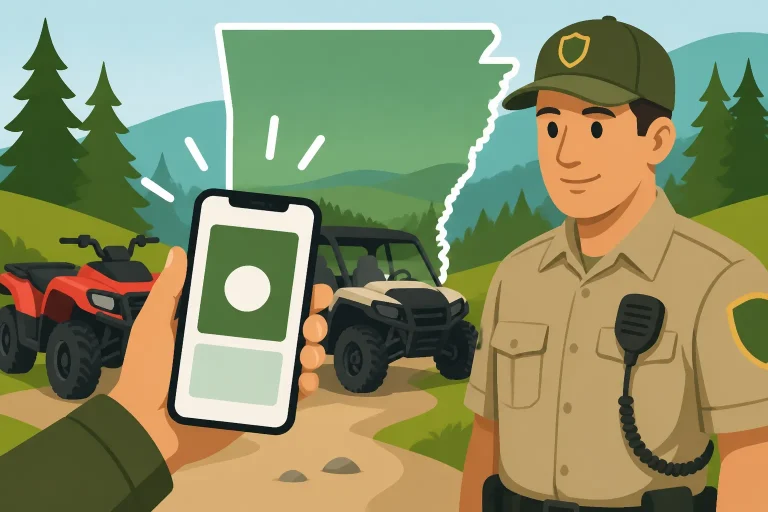
If you reach the gate and discover that proof is required, ask what documentation will satisfy the rule. A verbal statement that you are insured may not be enough. If the needed document is not available, do not assume that staff can make an exception; ask about the park’s options before unloading or entering.
If the park will not admit your machine, follow its instructions and avoid riding on the property without permission. Do not treat an entry dispute as a reason to take a machine onto a public road or another private property. For guidance on other requirements that may apply at private venues, see Arkansas Private Park Insurance Rules is the topic of this article, so instead review [Arkansas Private Park Camping Rules] if your visit includes an overnight stay.
After an accident, prioritize safety and seek emergency help when needed. Follow the park’s reporting procedure and exchange relevant information with anyone involved. Take reasonable notes about the time, location, people involved, and what happened. Preserve photos, messages, rental paperwork, and insurance documents.
Notify the appropriate insurer promptly and answer questions accurately. Avoid assuming that the park, rental company, or another rider will automatically cover the loss. If there is a dispute about responsibility, a serious injury, or a substantial claim, consider getting advice from a qualified professional who can review the facts and relevant contracts.
For a rented machine, contact the rental provider as soon as practical and follow the agreement’s reporting instructions. Do not authorize repairs, discard damaged parts, or agree to a payment amount without understanding the process. Keep a copy of any incident report or written communication.
For your own machine, ask your insurer how to report a claim and what steps to take before repairs. If another person was involved, avoid making broad statements about fault at the scene. Focus on accurate information, safety, and timely reporting.
Frequently Asked Questions
Does every private ATV park in Arkansas require insurance?
No single rule or checklist should be assumed to apply to every private park. Each operator may set its own entry conditions. Contact the park directly and confirm what applies to your visit.
Does signing a waiver mean I am insured?
No. A waiver is a legal document about participation and risk; it does not itself provide insurance or pay medical, repair, or liability costs.
Will my auto policy cover my side-by-side at a private park?
Do not assume so. Coverage depends on the policy language, exclusions, machine, activity, and circumstances. Ask your insurer specifically about off-road use at a private park.
If the park does not ask for proof, can I ride without coverage?
The park’s proof requirement and your policy coverage are separate questions. Not being asked to show insurance does not confirm that you are covered or remove the financial risks of a crash.
Does rental protection cover every kind of damage?
Not necessarily. A rental product may have exclusions, limits, or conditions. Read the agreement and ask about rollover, water, recovery, and additional drivers before accepting the machine.
Disclaimer
This article is for general informational purposes only and does not constitute professional advice. Laws, prices and regulations vary by location and change over time. Consult a qualified professional for guidance on your specific situation.