Arkansas Ticket Cost for Road Riding
It’s a truly frustrating moment: you're out enjoying your ATV or UTV, perhaps just making a quick hop down a county road, and suddenly, you see those flashing lights. You know deep down that riding on public roads isn't generally allowed in Arkansas, but the reality of facing a ticket and its associated costs can be a real punch to the gut. This guide will help you understand not just the immediate financial sting of an Arkansas road riding ticket, but also the ripple effects and how you can steer clear of one altogether.
The Immediate Sting: Fines and Court Costs for Illegal Road Riding
When a law enforcement officer pulls you over for riding your ATV or UTV on an Arkansas public road where it's not permitted, the first thing you're probably thinking about is the actual dollar amount on the ticket. While I can't give you exact figures that change over time and vary by jurisdiction, I can tell you that the cost is never just "the fine." It's a combination of several financial elements that can quickly add up.
Understanding the Base Fine
The base fine for operating an off-highway vehicle (OHV) on a public road in violation of Arkansas statutes like [Arkansas ATV Road Rules: What 27-21-106 Says] will be determined by the specific statute cited and the jurisdiction (city, county, or state) where the infraction occurred. This is the amount that represents the penalty for the actual violation. It's often set by a municipal ordinance or a state law with a range that allows judges some discretion.
You might assume it's a minor traffic ticket, but remember, an ATV or UTV isn't considered a typical road vehicle in Arkansas. This means the penalties can sometimes be more significant than a simple speeding ticket. Depending on the county or city, and whether it’s your first offense, the fine could range from a couple of hundred dollars to several hundred. It’s important to understand that these aren't just suggested amounts; they are legal penalties designed to deter behavior deemed unsafe or unlawful on public thoroughfares.
The Inevitable Court Costs and Surcharges
Beyond the base fine, there are almost always additional costs tacked on, often referred to as "court costs" or "administrative fees." These aren't punitive in nature but are standard fees levied by the court system to cover the administrative expenses of processing your case. These can include charges for filing documents, clerk services, and even specific state funds that all courts are required to collect.
These fees are non-negotiable and are added on top of your fine. It's not uncommon for these court costs and various surcharges to add another substantial chunk of change to your total bill, sometimes even equaling or exceeding the initial fine itself. This is why checking with the specific court (or the District Court or Justice of the Peace office indicated on your citation) is crucial. They can give you the most accurate total. When you receive a ticket, it’s not just a request for a payment; it’s an invitation to engage with the legal system, which comes with its own set of administrative expenses. This is part of the overall [Arkansas Penalties for Illegal Road Riding] that riders face.
The Ripple Effect: Hidden Costs and Long-Term Consequences
A ticket for riding your ATV or UTV on an Arkansas road goes far beyond the immediate fine and court costs. There are several "hidden" costs and long-term consequences that can impact your finances, your time, and even your ability to enjoy your machine in the future. These are the aspects that people often overlook until they're deep in the process.
The Headache of Impoundment and Towing
One of the most immediate and often surprising costs can be vehicle impoundment. If you're caught riding your off-road machine illegally on a public road, especially if it's considered a significant violation or a repeat offense, law enforcement has the authority to tow and impound your ATV or UTV. This means your machine isn't just sitting by the side of the road; it's being hauled away to an impound lot.
The costs associated with impoundment are steep. You’ll typically face a towing fee, which can be considerable, especially if you're in a rural area and the nearest impound lot is far away. Then, there are daily storage fees for every single day your machine sits in the lot. These can add up incredibly quickly. Before you know it, what started as a few hundred dollars in fines could spiral into over a thousand dollars just to get your machine back. And remember, you usually have to pay these fees in full before they'll release your vehicle.
Legal Fees and Lost Time
While many people opt to just pay a ticket for illegal road riding, there might be situations where you feel the need to consult an attorney, especially if the circumstances are complex, or if you believe you were riding within one of [Arkansas's Six Statutory Road Exceptions]. Hiring legal counsel, even for a brief consultation, comes with its own costs. Attorneys charge hourly rates, and those hours can accumulate rapidly, easily eclipsing the cost of the ticket itself.
Even if you don't hire a lawyer, simply dealing with the ticket takes time – your time. This could mean taking time off work to go to court, waiting in line at the clerk's office, or making arrangements to retrieve an impounded vehicle. For many, time is money, and lost wages or the sheer inconvenience of dealing with bureaucracy can be a significant, unquantifiable cost. Imagine losing a day's pay, or two, just to deal with a traffic offense. It's a hassle that nobody wants, and it's a direct consequence of getting caught.
Insurance Implications and Future Troubles
While Arkansas does not generally require insurance for ATV registration for off-road use, a citation for illegal road riding could still have an impact on your personal insurance policies. If the violation is recorded as a moving violation, it could potentially affect your driving record and lead to an increase in your auto insurance premiums. Insurers look at your overall risk profile, and any citation that suggests risky behavior could be a red flag.
Furthermore, if you were to be involved in an accident while illegally riding on a public road, your personal liability could be enormous. Your standard auto insurance would almost certainly not cover you, and any ATV-specific policy you might have for off-road use would likely deny a claim for an incident that occurred on a prohibited road. This could leave you personally responsible for damages, medical bills, and legal defense costs – a financial catastrophe that makes a simple ticket pale in comparison.
Understanding Why: Arkansas's Road Riding Laws and Exceptions
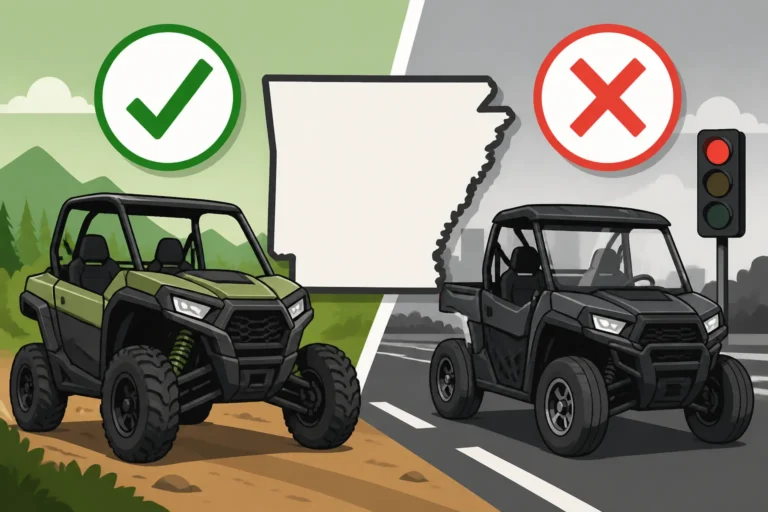
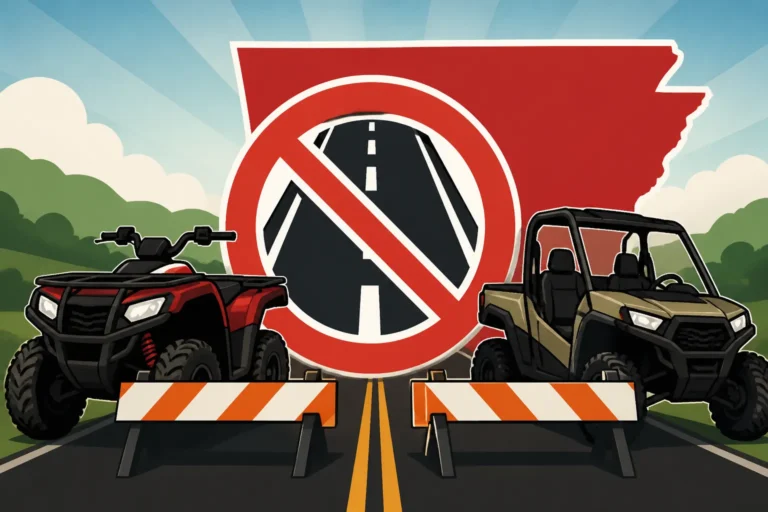
To truly understand the cost of a ticket, you have to understand why these tickets are issued in the first place. Arkansas law is quite clear: off-highway vehicles like ATVs and UTVs are generally prohibited from operating on public roads. This isn't just a suggestion; it's enshrined in state statute.
The General Prohibition: Not Designed for the Road
The fundamental reason for the prohibition is that ATVs and UTVs are designed for off-road use, not for public highways. They lack many of the safety features required of street-legal vehicles, such as proper turn signals, mirrors, or even basic crash protection for occupants. Their tires are usually designed for dirt and mud, not asphalt, which can significantly affect handling and braking on paved surfaces. This is why the state prioritizes public safety by restricting their use on roads.
However, the law isn't an absolute ban. Arkansas recognizes that sometimes, limited road use is necessary or practical. This is where [Arkansas's Six Statutory Road Exceptions] come into play. These exceptions are very specific and include things like agricultural or hunting operations, crossing a highway at a ninety-degree angle after a complete stop, or utility company work. It's critical to know these exceptions inside and out, because misunderstanding them is a common reason people get tickets. For instance, just because you're riding to your deer stand doesn't automatically mean you're covered by the "hunting operation" exception for an extended road trip.
Local Ordinances and Their Nuances
Adding another layer of complexity are local ordinances. While the state broadly prohibits ATVs on roads, [Arkansas Towns Can Open Their Streets to UTVs]. This is a relatively new development that allows cities and towns to pass their own ordinances permitting UTVs (and sometimes ATVs) on certain public streets within their municipal limits. However, these ordinances come with very strict rules.
For example, a town might allow UTVs on streets with speed limits under 35 mph, but not on state highways that pass through the town. They might also require a city-issued permit, specific safety equipment (like those aftermarket SuperATV mirrors or turn signals), proof of insurance, and that the driver hold a valid driver's license (often age 16 minimum, as outlined in [Arkansas Age Rules for a Street UTV Driver]). If you're riding in a town that has such an ordinance, and you don't meet all of its specific requirements, you're still liable for a ticket. This is why it's absolutely crucial to check the specific rules of the town you're in. Don't assume.
Staying Legal: How to Avoid a Ticket on Arkansas Roads
The best way to avoid the financial strain and headache of an Arkansas road riding ticket is, quite simply, to ride legally. This means understanding the rules and adhering to them strictly. Prevention is always cheaper and less stressful than dealing with the consequences.
Know the Law and Your Location
First and foremost, you need to educate yourself thoroughly on [Can You Drive an ATV on the Road in Arkansas?]. Familiarize yourself with Arkansas state statute 27-21-106 and its exceptions. Understand precisely what qualifies as a "hunting operation" or "farming operation" for road use, and that a brief jaunt to the store likely won't fit the bill.
If you plan to ride within city limits that might allow UTVs, do your homework. Call the city clerk's office in advance. Ask about their specific ordinance, what type of machines are allowed, what equipment is required, and whether you need a city permit. Don't rely on what "everyone else does" or hearsay. The onus is on you, the rider, to know the local rules. A quick phone call could save you hundreds or even thousands of dollars. Many towns have specific rules on [Arkansas UTV Street Legal Rules by Town], and these can vary wildly.
Equip Your Machine Properly (When Permitted)
If you are in a location that allows limited road use for your UTV (and occasionally ATVs), make sure your machine meets all the specified equipment requirements. These often include:
- Headlights and Tail Lights: Required for visibility, especially if riding near dusk or dawn.
- Brake Lights: Essential for signaling stops to other traffic.
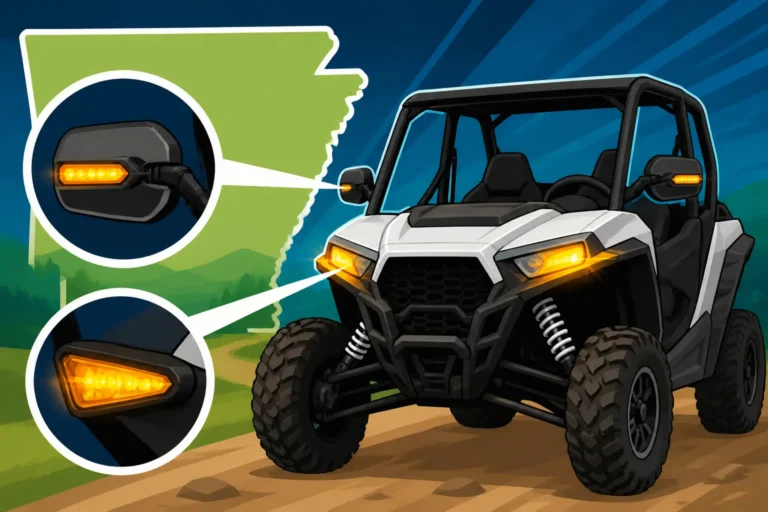
- Turn Signals: Crucial for communicating your intentions, often required by local ordinances.
- Mirrors: Side mirrors and a rearview mirror can be mandated to provide proper visibility.
- Windshield: Some ordinances may require a full windshield.
- Horn: A working horn is often a requirement for street-legal vehicles.
Companies like SuperATV offer a wide range of aftermarket accessories and kits that can help bring your UTV up to snuff for local street-legal requirements, should your chosen riding area permit it. However, installing these features does not automatically make your machine street legal everywhere in Arkansas. Always confirm with local authorities.
Carry Your Paperwork
If you get stopped by law enforcement, having your paperwork in order can make the encounter smoother, even if you still receive a ticket. Make sure you have proof of ownership, like a bill of sale or registration document. If your machine is registered, carry your registration decal paperwork. If you're operating under a specific local ordinance that requires a permit, ensure that permit is on display or readily available.
While [Arkansas Has No ATV License Plate] for off-road use, deputies will still want to verify ownership and ensure the machine isn't stolen. Providing clear, organized documentation shows you're a responsible owner, which can sometimes work in your favor. It also prevents additional complications or delays in resolving the situation, as a deputy might ask to see [What a Deputy Can Ask to See] at a stop.
An Ounce of Prevention…
The table below summarizes the potential costs you could face if you're ticketed for riding your ATV or UTV on a public road in Arkansas. Remember, these are categories of costs, not specific dollar amounts, as those are subject to change and local jurisdiction.
| Type of Cost | Description | Impact |
|---|---|---|
| Base Fine | The statutory penalty for operating an off-road vehicle on public roads. | Can range significantly, often starting in the low hundreds, but varies by location and specific violation. |
| Court Costs | Fees levied by the court system for processing your case. | Usually a fixed amount, added to the fine. Can add another hundred dollars or more. |
| Surcharges/Fees | Additional state or local fees, sometimes for specific funds (e.g., victim's compensation). | Can add a significant percentage to the total, pushing the overall cost higher. |
| Towing/Impoundment | If your ATV/UTV is deemed a hazard, evidence, or you cannot legally operate it. | Initial tow fee (could be hundreds) plus daily storage fees (typically $25-50+ per day). Can quickly become the largest expense. |
| Legal Fees | If you choose to hire an attorney to contest the ticket or advise you. | Hourly rates, can quickly exceed the fine and court costs, potentially thousands of dollars for complex cases. |
| Lost Wages/Time | Time off work for court appearances, dealing with impoundment, or legal meetings. | Directly impacts your income and personal time. The value of your time is a real, though unbilled, cost. |
| Insurance Impact | Potential increase in premiums if the violation affects your driving record. | Long-term financial impact that can accumulate over several years. Your [Arkansas Insurance for a Street-Permitted UTV] might also become more expensive. |
| Machine Modifications | If you're cited for equipment violations (e.g., no lights), and you decide to equip your machine for legal road use where allowed. | Cost of parts (e.g., SuperATV accessories) and installation. This is an investment to prevent future tickets in certain zones. |
Ultimately, avoiding a ticket for illegal road riding in Arkansas comes down to responsible planning and strict adherence to the law. Don't take chances, and always verify local ordinances before venturing onto public streets with your ATV or UTV.
Disclaimer
This article is for general informational purposes only and does not constitute professional advice. Laws, prices and regulations vary by location and change over time. Consult a qualified professional for guidance on your specific situation.