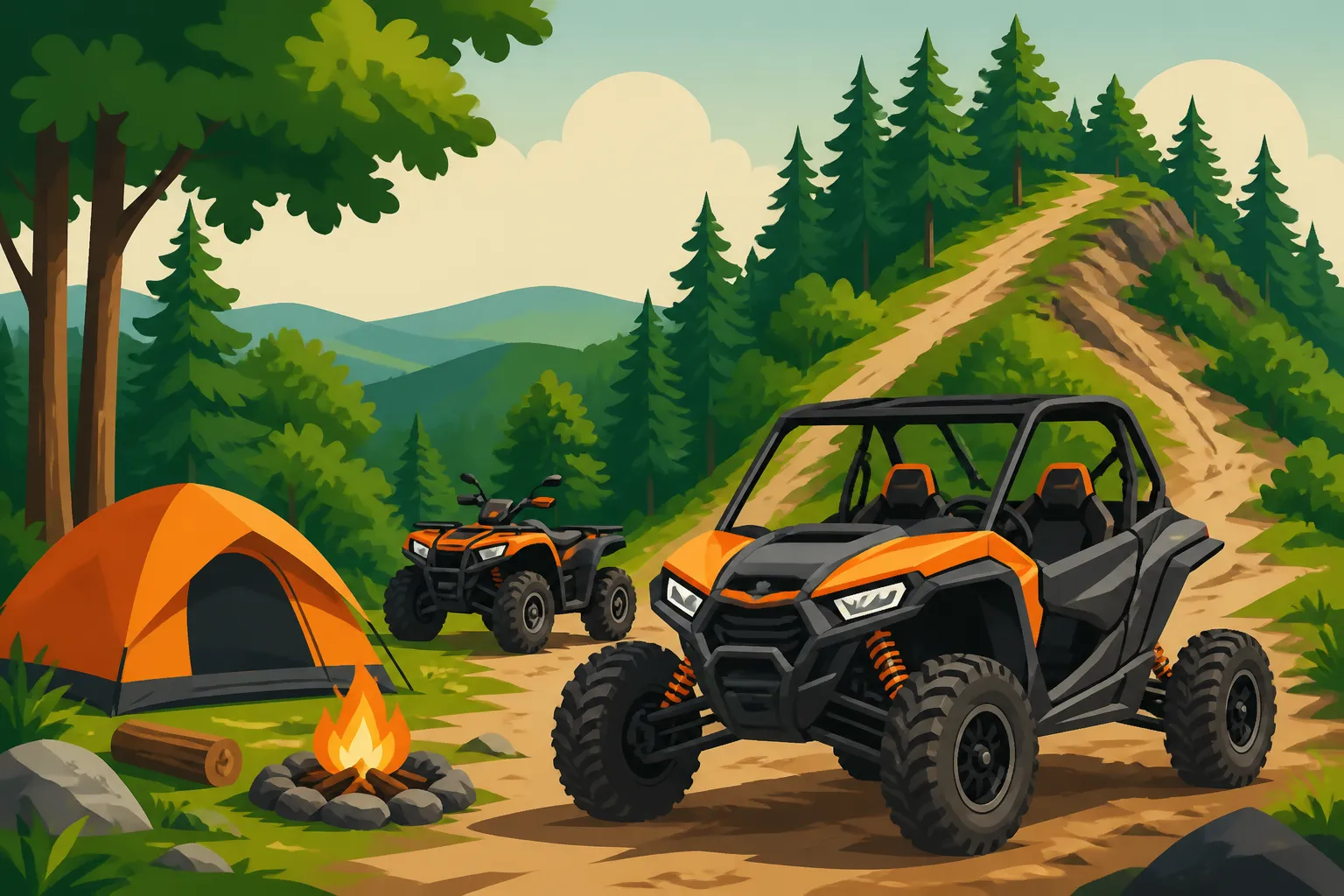
Arkansas Campgrounds Next to a Trailhead
Finding a campsite near an Arkansas ATV trail can turn a long drive into an easy riding weekend, but “near the trail” does not always mean you can legally ride straight from your site. This guide explains how to choose a campground, compare popular riding areas, check access and permits, and avoid the last-minute surprises that can derail a trip.
Choose a campground near the kind of riding you want
Arkansas has very different riding experiences, from forest routes in the Ouachita and Ozark-St. Francis National Forests to privately operated off-road parks. Start with the riding area, then look for a campground that fits its access rules and your group’s needs. The broad overview in Arkansas ATV Trails: Where to Ride can help you compare regions before you commit to a reservation.
Wolf Pen Gap and the Mena area
Wolf Pen Gap is a familiar base for riders exploring the Ouachita Mountains near Mena. Its forest setting is a big part of the appeal, but it also means you should treat the campground and trailhead as separate pieces of the plan. A place to camp nearby does not automatically grant permission to ride across connecting roads or land to reach a trail. Confirm the legal route from your campsite to the trailhead before unloading.
Mena can work well as a town base if your group wants lodging, meals, or supplies in addition to a riding day. When comparing options, ask how far the campground is from the trail access you plan to use, whether a trailer can be parked at the site, and whether your machine must be transported to the trailhead. For area-specific planning, see Wolf Pen Gap: Arkansas’s Best Known OHV Complex and Arkansas Riding Near Mena.
Mill Creek, Byrd’s, and Hot Springs
Mill Creek OHV Trail System is another forest-riding option, in the Ozark-St. Francis National Forest region near Ozark. Before booking camping nearby, check which trailhead you intend to use and what facilities are actually available there. A campground that is convenient by car may still require you to trailer your ATV or UTV to the legal riding access point. Start with Mill Creek OHV Trail System in Arkansas, then verify current trail and camping details with the land manager.
For a different setup, Byrd’s Adventure Center on the Mulberry River is a private destination where camping and recreation are part of the visit. Hot Springs Off-Road Park is also a privately operated riding option; ask the park directly about its current camping choices and what access is included. Private parks set their own rules, so confirm whether a reservation includes a riding pass, whether camping is beside the machine or in a separate area, and whether trail access begins at the property. Explore Byrd’s Adventure Center on the Mulberry River and Hot Springs Off-Road Park in Arkansas as starting points.
| Riding area | What to clarify about camping | A good fit when |
|---|---|---|
| Wolf Pen Gap near Mena | Whether the campground is separate from the trailhead, and how you’ll legally reach trail access | You want forest riding and are comfortable planning a short drive or trailer transfer |
| Mill Creek near Ozark | Which trailhead and campground facilities are available for your dates | You want to ride in the Ozark-St. Francis National Forest area |
| Byrd’s Adventure Center | What camping options and riding access come with your booking | You want a private destination with recreation and camping in one trip |
| Hot Springs Off-Road Park | Current camping availability, park rules, and what access your reservation includes | You prefer a private park and want to ask about on-site arrangements |
Understand what “next to a trailhead” really means
A campground can be close on a map and still be inconvenient or unsuitable for riding. The difference often comes down to land ownership, legal access, vehicle width, and whether the route between camp and trail is open to motorized travel.
Close by does not always mean connected
Before reserving, ask the campground operator a very specific question: “Can I ride from my campsite to the trail system on a legal route, or do I need to trailer my machine?” That wording helps avoid misunderstandings. A listing may describe a place as trail-adjacent because it is close to a trailhead, not because machines are allowed to travel between the campground and trail.
This matters especially around national forest land. A nearby forest road, private driveway, or unmarked connector is not necessarily open to ATVs or UTVs. Gates, seasonal closures, land boundaries, and local rules can affect a route that looks straightforward on a map. Confirm access with the campground and the relevant land manager, and review Arkansas National Forest Riding Explained before assuming a road or trail is available to your machine.
For a private park, ask whether trail access starts within the property and whether a separate permit or check-in is required. A campground may be part of the same destination but still have rules about where machines can be parked, when they can be operated, or which routes are allowed. Get the details before you arrive, rather than trying to sort them out after dark with a trailer in tow.
Check parking, width, and site layout
A campsite that fits a tent or camper may not have room for a truck, trailer, and side-by-side. Ask about the site’s dimensions, turning space, surface, and any shared trailer parking. If the campground has narrow roads, steep approaches, or tight turns, a large tow vehicle can make arrival stressful even when the campsite itself looks spacious.
Trailhead parking has its own limitations. Some lots have room for trailers; others may be small, rough, or busy during popular weekends. Review Arkansas Trailheads With Trailer Parking and confirm the specific trailhead you plan to use. If your machine is wide, check gate and trail restrictions before choosing the route. A trail system’s general name does not guarantee every route accommodates every UTV.
It also helps to ask whether you can leave a trailer at the campground while riding, whether a machine can remain outside overnight, and whether the campground expects vehicles to stay within designated parking areas. These practical details are easy to overlook when you are focused on trail access, but they can shape the whole weekend.
Plan for permits, maps, and basic facilities
A comfortable campsite does not replace the paperwork and preparation needed for the ride itself. Public forest trails, private parks, and wildlife areas can have different requirements. Check the rules for the exact place you plan to ride, not just the general region.
Separate campground costs from riding requirements
When you make a reservation, ask what the booking covers. Camping and trail access may be separate, and a campground reservation should not be assumed to include any riding permit. Public-land permits may also differ between forest areas, while private parks set their own entry and use rules. Review Arkansas OHV Permits: Two Forests, Two Prices and check directly with the relevant land manager or park for the requirements that apply to your trip.
If you are riding a machine registered in another state, or bringing a rental, verify what documentation and permits are expected. Keep any required registration or permit information accessible, and make sure the machine fits the trail’s width and equipment rules. For a broader look at planning a legal ride, Arkansas Riders Need Two Different Forest Passes covers an important distinction for riders visiting forest trail systems.
Do not assume every area has the same facilities. A trailhead may have limited services, and a campground may not provide water, hookups, or a place to wash a muddy machine. Read Arkansas Trailheads With No Water and confirm the campground’s amenities directly. If your group needs drinking water, power, showers, or a dump station, ask about those items by name rather than relying on a vague “full-service” description.
Use maps as a planning aid, not permission
A mapping app such as onX Offroad can help you compare trailheads, roads, and nearby destinations while planning. Still, map lines do not establish that a road is open to your machine or that you have permission to cross private land. Check the land manager’s information and posted signs, and use the app as one part of your research rather than your only source.
Download or save the information you need before leaving town, especially if you expect weak cell service in the mountains. Keep a paper map or written directions as a backup, and note the campground address, trailhead name, and any turn-by-turn directions that could be difficult to recall after a long drive. If a route on your screen appears to cross a gate or private property, pause and verify rather than trying it in person.
Check trail conditions close to departure, too. Rain, maintenance, seasonal restrictions, or storm damage can change which routes are usable. onX Offroad may help you organize your route planning, but confirm closures and access with the responsible agency or park. Arkansas Trail Conditions Before You Tow is useful to review before you load the trailer.
Book the right setup for your group
The best campground is not necessarily the one closest to the trailhead. It is the one that makes the whole trip workable: enough room for your gear, a clear legal plan for reaching the trails, and facilities that match the way your group travels.
Ask these questions before you reserve
A quick phone call can prevent a frustrating arrival. Ask whether the campground permits ATVs or UTVs on its internal roads, whether you can ride from the site to trail access, and whether the campground has a designated trailer parking area. If the answer is unclear, ask for the name of the trailhead or route the staff member is describing and verify it with the land manager.
Then check the practical details. Confirm what kind of site you are booking, whether the ground is suitable for your camper or tent, what amenities are available, and whether there are restrictions on generators, quiet hours, pets, or campfires. If you are arriving late, ask how check-in works and where to park without blocking other guests. These questions are especially helpful for a group with several machines or a long trailer.
Finally, ask about the riding side: permit requirements, trail closures, width limits, machine rules, and whether your chosen route is suitable for the least experienced rider in your group. Conditions and operating details can change, so direct confirmation is more reliable than a saved comment from an old trip report.
Build a simple arrival and riding plan
For a first visit, plan to arrive with enough daylight to find the site, unload safely, and confirm the next morning’s route. If you reach camp late, trying to locate a trailhead or understand a confusing connector in the dark can add unnecessary stress. Save the campground’s contact details and the trailhead directions before you leave home.
A practical weekend plan might look like this:
- Choose the riding area and confirm which trails are open to your machine.
- Contact the campground to verify site space, trailer parking, and legal access to the trail.
- Check permits, registration documents, and any private-park requirements.
- Review conditions shortly before departure and save offline directions.
- Arrive, unload, and confirm the trailhead plan before the first ride.
- Leave time for loading, cleanup, and a final check of the campground’s rules.
If you want to stay in a cabin rather than camp, compare lodging near the riding area and ask whether the property allows trailers and machine parking. Arkansas Cabins Near a Riding Area can help you explore that option. onX Offroad can also be useful while comparing route locations, but keep checking official access details so your planned shortcut is not a closed road or private connector.
The same careful approach applies when traveling with children, first-time riders, or a mixed group of quads and side-by-sides. Choose a base with enough space to organize helmets, fuel, tools, and food, and make sure everyone knows where the group will meet if riders become separated. A little planning at camp makes the trail day feel much less rushed.
Disclaimer
This article is for general informational purposes only and does not constitute professional advice. Laws, prices and regulations vary by location and change over time. Consult a qualified professional for guidance on your specific situation.