Arkansas Private Park Helmet Rules
A helmet rule at one Arkansas off-road park may not match the rule at another. Even where state law does not require a helmet for ordinary ATV riding, a private property can set its own entry conditions. Check the park’s current rules before you load up, especially if children, passengers, or rental machines are involved.
Why a Private Park Can Require a Helmet
Arkansas does not have a general statewide helmet requirement for off-road ATV riding. That does not mean you can ride helmet-free at every private park. A private operator can set safety conditions for using its trails, and those conditions may include a helmet for every rider or only for certain machines, activities, or age groups.
Think of the park rule as a condition of access, separate from the state’s traffic laws. The park can require you to wear protective gear even if state law does not. Staff may also enforce the rule at check-in, during a safety briefing, or out on the trails. If you will be riding in a town where a UTV ordinance applies, check those rules separately; private-park policies do not answer whether street use is allowed. Arkansas ATV Helmet Requirements explains the broader distinction between helmets and off-road law, while Arkansas UTV Street Legal Rules by Town covers local street rules.
A waiver does not cancel a park’s helmet requirement. Signing a waiver generally means acknowledging certain risks and conditions; it is not permission to ignore posted rules or staff directions. Read the park’s Arkansas Private Park Waivers and Rules information before you go, and ask what happens if a rider arrives without approved equipment. A park may refuse entry or restrict a rider from using the trails.
Requirements can differ even between facilities that offer similar riding. One property might require helmets for everyone, while another might set different conditions for youth riders, passengers, rentals, or particular trail activities. Policies can also be updated, so an old social media post or a friend’s memory is not a reliable substitute for checking directly with the operator.
| What to check | Why it matters |
|---|---|
| Whether helmets are required for every rider | A rule may apply to both ATV riders and UTV occupants, or only to specified groups |
| Approved helmet type | The park may specify an off-road or full-face helmet, or require particular safety labeling |
| Youth and passenger rules | A child may need a correctly sized helmet even when an adult rider’s equipment is accepted |
| Rental equipment | A park or rental shop may provide helmets, but selection and availability can vary |
| Enforcement and exceptions | Staff can explain whether a rider without an approved helmet can rent, enter, or ride |
What to Confirm Before You Arrive
Ask the park directly rather than relying on a general statement that “helmets are recommended.” Recommendation and requirement are different. If the website says helmets are required, find out whether that means every person on the property, every person on a moving machine, or only riders under a certain age. If the wording is unclear, call or message the operator and keep the answer with your trip details.
Confirm these points for each person who will ride:
- Who must wear a helmet? Ask about adult drivers, youth riders, ATV passengers where permitted, and every seat in a side-by-side. Do not assume that a passenger is exempt because the driver wears a helmet.
- What kind of helmet is accepted? Find out whether a bicycle helmet is not accepted, whether an off-road helmet is preferred, and whether the park has a specific certification or condition requirement.
- Are there age-specific rules? Park rules for children can be stricter than general rules for adults. Check Arkansas Private Park Age Minimums as well as the helmet policy; meeting an age minimum does not automatically mean a child is ready or properly equipped to ride.
- Can you use a rental helmet? Ask whether helmets are included, whether they are available in children’s sizes, and whether you can bring your own instead. Rental details can vary by operator, so check Arkansas ATV Rental Age and License Rules and Arkansas Rentals That Include Helmets if you are renting.
- What happens if equipment is missing or does not fit? A shop may have limited sizes, and a helmet that does not fit securely is not a safe substitute for one that does. Ask whether you can purchase or borrow a suitable helmet onsite, or whether the rider will be unable to go out.
Also ask whether the helmet requirement changes by machine or activity. A park might have different procedures for ATV trails, guided tours, youth programs, or UTV rentals. If your party plans to switch machines during the day, clarify whether each person will need a different style or size. The park’s Arkansas Private Park Insurance Rules may also explain why it asks riders to follow safety procedures, but insurance requirements and helmet rules are not the same thing.
When a property does not publish a detailed helmet policy, use a conservative plan: bring a properly fitted helmet for each rider and passenger, then follow the operator’s instructions. That avoids having a trip derailed by a rule you did not know about. It does not guarantee that a helmet will meet a particular park’s standards, so still confirm the accepted type.
Choosing and Bringing a Helmet
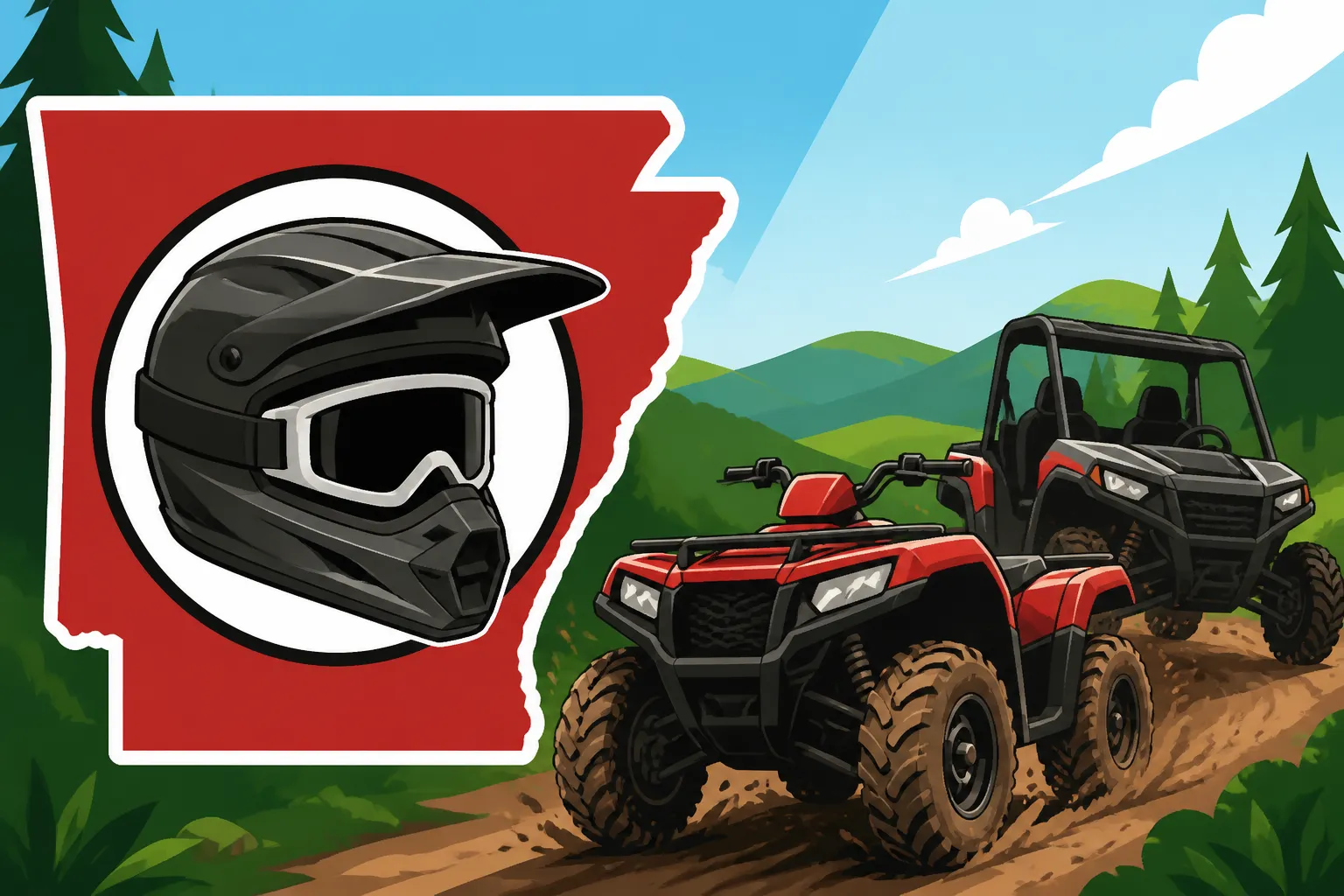
A park’s minimum requirement is not necessarily the only consideration. A helmet should fit securely, stay in place when fastened, and be appropriate for the machine and riding conditions. For rough trails, branches, dust, and flying debris, riders often prefer a purpose-built off-road helmet with eye protection. The park may specify what it accepts, so verify that before buying or packing gear.
Check fit before the trip, especially for a child or a rider using a borrowed helmet. The helmet should sit level and snug, without rocking freely or sliding over the eyes. Fasten the chin strap and make sure it holds the helmet in place. A helmet that is too large, damaged, or difficult to secure is not a good choice simply because it is available.
If you are shopping online, including through Amazon, check the exact product description, sizing guidance, safety labeling, and return conditions before ordering. Do not assume that every helmet sold for recreational use meets a park’s standard. If you are unsure whether a particular model is accepted, send the product details to the park and ask before the ride. Keep the packaging and allow enough time to resolve a sizing issue rather than discovering the problem at check-in.
Inspect your helmet before each ride. Look for cracks, damaged padding, a worn strap, a broken buckle, or signs that it has taken a hard impact. Replace a helmet if it has been compromised, even if the outside looks mostly intact. A used helmet of unknown history may be a poor bargain when its condition cannot be verified.
Pair the helmet with eye protection that stays in place. Goggles can help keep dust and debris out of your eyes, while some helmets use a face shield. Ask whether the park requires eye protection separately; a helmet policy does not automatically cover it. For other equipment and riding expectations, review Arkansas Private Park Insurance Rules and the individual facility’s posted rules before setting out.
Helmet use is only one part of riding safely. Follow the park’s speed limits, trail directions, passenger restrictions, and briefing instructions. Make sure everyone knows how to stop the machine and what to do if the group gets separated. A helmet can reduce the risk of serious head injury, but it cannot prevent every crash or replace careful riding.
Rental Helmets, Children, and the Day-of Check
If you are renting, ask who supplies the helmet and whether you can bring your own. Rental fleets may have different sizes and styles, and a helmet that is available when you book may not be the right fit for every rider in your group. Confirm availability in advance for children, smaller adults, and passengers. If you need a specific size, ask the rental shop to confirm it rather than assuming it will be waiting at the counter.
Before leaving the rental area, check the fit and fastening system. Make sure the helmet is clean and undamaged, and ask staff to show you how to secure any unfamiliar buckle. If it shifts significantly or the strap cannot be tightened correctly, ask for another size. Do not let time pressure turn an unsuitable fit into an acceptable one.
Children need particular attention. Their helmet should be sized for them, not shared with an adult or held in place by tightening a strap excessively. Check the park’s age and passenger rules as well as its helmet policy. For broader questions about supervision and young riders, see Arkansas Rules for Riders Under Twelve. A helmet does not make an otherwise prohibited passenger arrangement acceptable.
Before unloading, use this quick check:
- Confirm the park is open and that its helmet policy still applies to your planned activity.
- Count the helmets you need, including for passengers and children.
- Check each helmet’s condition, size, and strap.
- Pack eye protection and any other equipment the operator requires.
- Keep the park’s response about helmet type or rental availability with your booking information.
- At check-in, listen for updated instructions and follow signs and staff directions.
If a rider arrives without an acceptable helmet, the best next step is to ask the operator whether a suitable one is available. Do not assume that a waiver, a quick purchase from an unrelated vendor, or a helmet that looks similar will satisfy the rule. The park decides what it accepts on its property. If no compliant helmet is available, the rider may need to sit out or change plans.
Arkansas law and a private park’s safety policy answer different questions. State law addresses legal requirements; the property operator decides the conditions for riding there. Checking both before travel helps prevent confusion at the gate and gives every rider a better chance of having properly fitted gear for the day.
Disclaimer
This article is for general informational purposes only and does not constitute professional advice. Laws, prices and regulations vary by location and change over time. Consult a qualified professional for guidance on your specific situation.