Machines Too Wide for a Gate
A machine that fits comfortably on a trailer may still be too wide for an Arkansas trail gate. That can turn a planned ride into a frustrating turnaround, especially when width limits, gate clearance, and forest permits are easy to confuse. Here’s how to check your machine’s real width, understand what a gate does and doesn’t tell you, and avoid hauling to a route you can’t use.
A gate opening is not the same as a trail-width rule
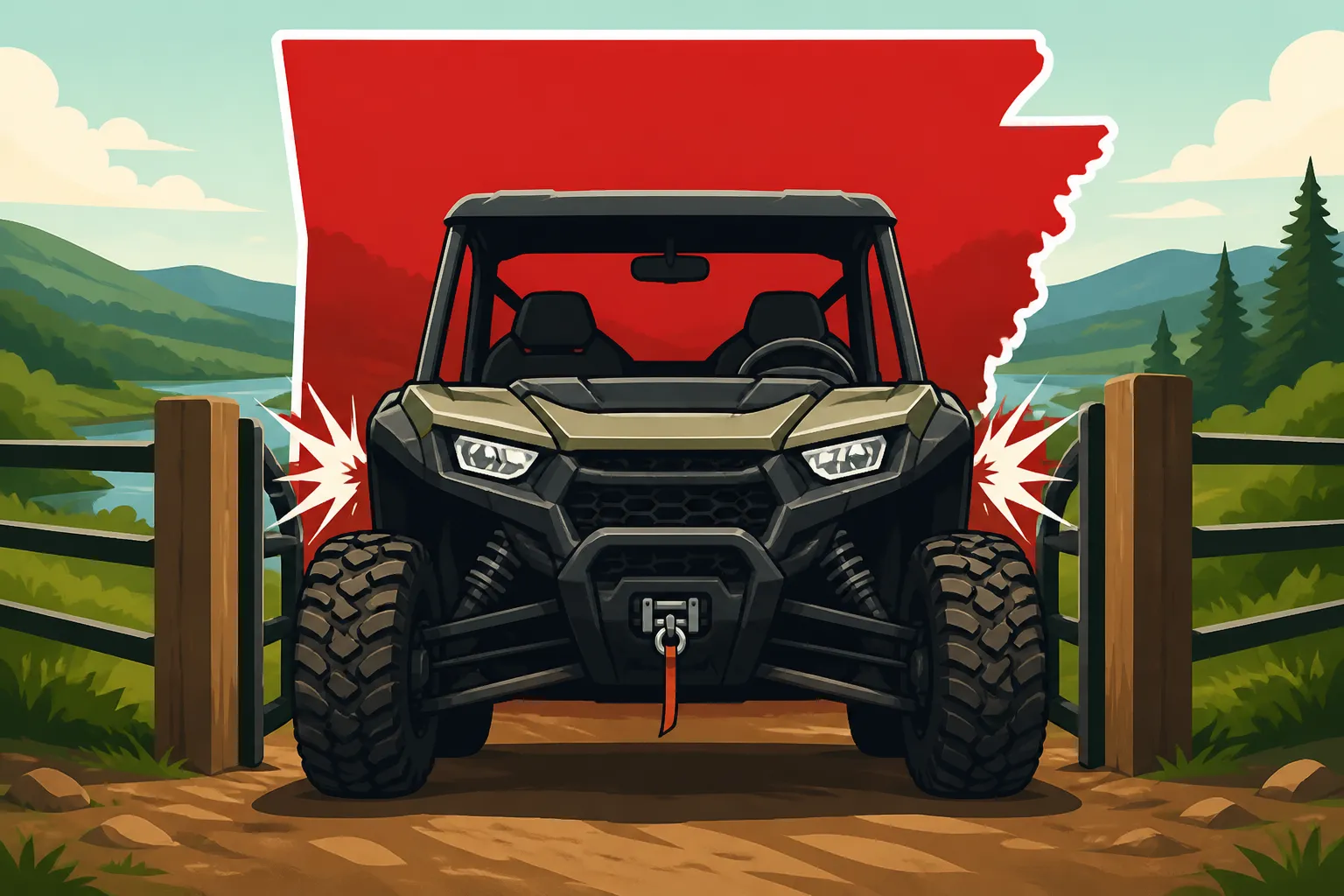
Arkansas riding areas can use gates to restrict vehicle access, and some gates are associated with a 72-inch clearance. But the width of a physical opening and the maximum machine width allowed on a route are not automatically the same thing. A gate may be narrower than the route beyond it, or it may serve as a practical limit on which machines can enter. The controlling information is the current rule for the specific trail or road, not an assumption based on how wide the opening looks.
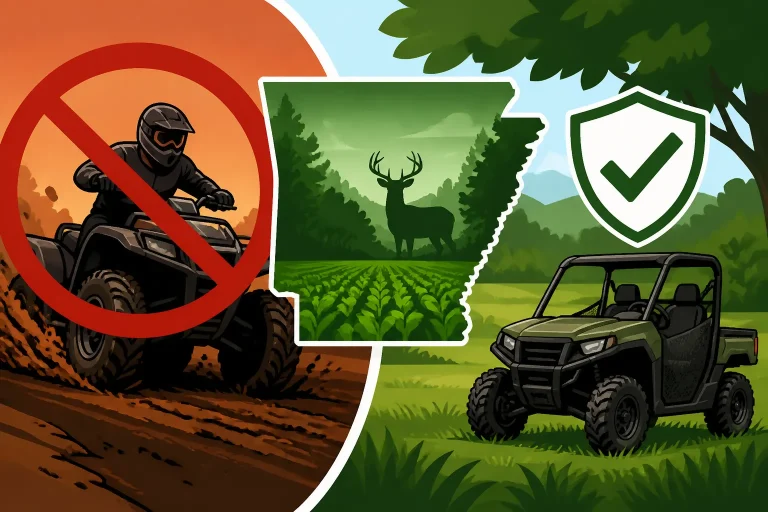
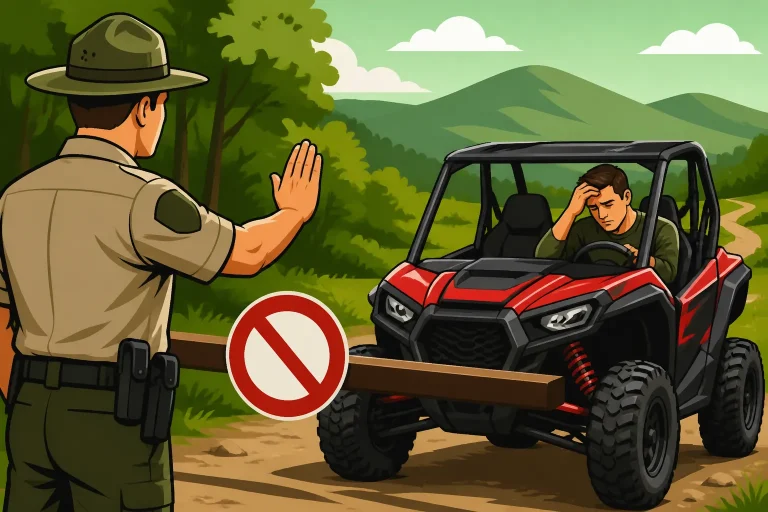
This distinction matters in both directions. A machine that can squeeze through a gate is not necessarily allowed on the route. And a machine wider than a gate should not be driven around it, through a fence, or across vegetation to reach the trail. Barriers may mark a restriction, protect the land, or prevent access to a closed route. Going around one can create safety and legal problems, even if the wider trail looks open on the other side.
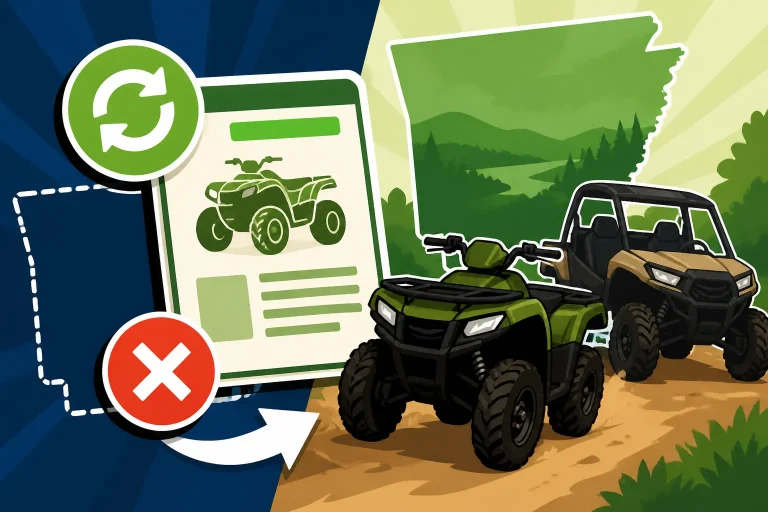
Before choosing a route, look for the posted width limit and any machine restrictions from the agency or riding area that manages it. The overview of Arkansas ATV Trails With Width Limits can help you identify why restrictions matter, but conditions and rules need to be checked for the particular area and route you plan to ride.
A gate is still useful as a warning. If your machine’s actual width is close to the opening, do not rely on being able to angle through it. The opening may narrow at the posts, the ground may slope, or the machine may need room to turn after passing through. A tight fit can damage the machine or the gate, and a gate that opens inward or has hardware in the way may leave less usable space than it first appears.
Arkansas trail systems are not interchangeable. A width restriction at one access point does not establish a statewide maximum for every trail. A route managed by one forest, a private park, or another land manager may have its own rules. For a closer look at one type of access constraint, see Arkansas Gates That Stop 72-Inch Machines. Treat that information as a reason to verify the exact trail, not as a blanket measurement for every Arkansas riding area.
Measure the machine you plan to ride
The width printed in a brochure or listed in a manufacturer’s specifications is a good starting point, but it may not match the machine as it is set up today. Wheel and tire choices, spacers, fender extensions, and other modifications can affect the widest point. Accessories such as mirrors, nerf bars, or a cargo attachment may also stick out beyond the body.
Measure the machine in its riding configuration. If the driver will use it with particular accessories installed, include those parts in your check. A simple tape measure—from a hardware store or a retailer such as Amazon—can help, but take the measurement carefully and keep the machine on level ground.
A practical measurement process:
- Park on a flat surface with the wheels pointing straight ahead.
- Identify the machine’s outermost points from side to side. Check tires, fenders, bodywork, and any installed accessories rather than measuring only across the seats or frame.
- Measure between those outermost points, keeping the tape level and perpendicular to the machine’s direction of travel.
- Repeat the measurement to check your result. If the number is near a posted limit or gate opening, measure again at the specific points that seem widest.
- Record the measurement and take a photo of the tape in place. This can help when you call a trail office or compare your setup with a published limit.
For a side-by-side, check both sides and the front and rear of the machine. A tire can be wider than the body, while a mirror or accessory may be the actual outermost point. For a quad, consider handlebar ends, handguards, and wheel or tire changes. If a measurement is close to the limit, ask the land manager how it applies to your configuration; don’t round down in your favor.
You may also need to distinguish between the machine’s width and the usable width of a gate. The gate opening is the narrowest clear space between obstacles, not necessarily the distance between the outer edges of the posts. Hinges, latches, braces, rocks, and uneven ground can reduce the space available. A tape measure helps with your machine, but do not trespass or interfere with a locked or posted gate to measure it.
If you are considering a route because a friend’s machine fits, confirm that your own setup is comparable. The same model can measure differently after changes to its tires, wheels, or accessories. A machine that just clears a gate may also be difficult to maneuver safely at the trail entrance. Turning, backing, and staying on the established route can require more room than simply passing through the opening.
Check the route, gate, and permit separately
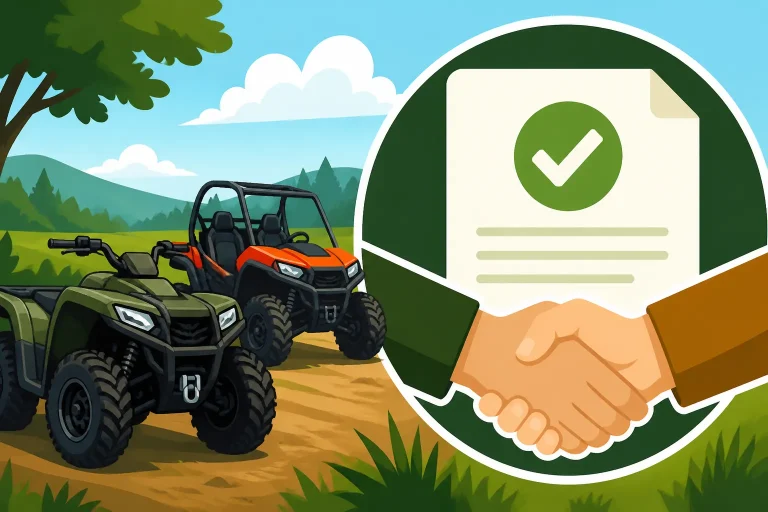
A permit answers whether you have the required access authorization for a particular riding area. It does not automatically confirm that every machine is permitted on every trail, nor does it guarantee that the machine will fit through a gate. Width, route access, trail status, and permit requirements are separate checks.
Arkansas riders may need to consider which forest or riding area they plan to use. Arkansas Riders Need Two Different Forest Passes explains why one pass should not be assumed to cover every forest system. Review Arkansas OHV Permits: Two Forests, Two Prices for the broader permit distinction, then confirm the current rules and pass details with the official manager for your destination. Permits and route restrictions may be handled separately, so check both.
Use this checklist before you tow:
| Check | What to confirm | Why it matters |
|---|---|---|
| Actual machine width | Measure the widest points with the intended setup and accessories | Published specifications may not reflect modifications |
| Trail or road restriction | Find the width limit and eligible machine types for the exact route | A gate opening alone does not establish legal access |
| Gate clearance | Confirm the access point and any physical obstacles | The clear opening may be less than it appears |
| Current route status | Check closures, construction, storm damage, or seasonal restrictions | An otherwise suitable route may be temporarily unavailable |
| Permit coverage | Confirm the permit applies to the destination and machine | A pass does not replace width or route eligibility |
| Trailhead access | Verify parking, entrance, and staging details | A machine may meet the trail rule but still be unable to reach the staging area |
When a rule is unclear, contact the land manager or the riding area before departure. Give the exact trail or access point, the machine’s measured width, and the main modifications or accessories that affect its outside dimensions. Ask whether the measurement is taken at the widest part of the machine and whether the posted limit applies to the whole route or only a particular access point. This is more useful than asking whether a general class of side-by-side or ATV is allowed.
Also check conditions shortly before leaving. A trail may be closed or an entrance may be changed after you planned the trip. How to Check Wolf Pen Gap Trail Status is a useful example of why trail status deserves its own check, while Arkansas Trail Conditions Before You Tow covers the broader planning issue. A map or old trip report can help you understand an area, but it should not replace current access information.
If the route uses a gate that appears narrower than your machine, don’t count on passing at an angle, letting air out of the tires, or removing parts at the trailhead unless the land manager specifically confirms that the setup is allowed and safe. Such workarounds can cause damage, create a hazard, or violate the route’s rules. Choose a suitable route or machine instead.
If your machine does not fit, change the plan
A too-wide machine does not mean the whole trip has to be abandoned. It means you need to match the machine to a route that accepts it. Search for riding areas with published width limits that accommodate your setup, and confirm the route, gate access, and permit requirements before you tow. A trail that allows wider vehicles may still have narrow spurs, restricted sections, or access roads that your machine cannot use.
If several machines are traveling together, plan around the limits of the widest one. A group may have a mix of quads and side-by-sides, but a route suitable for the smaller machines may not work for the largest. Confirm that every machine can use the intended route rather than splitting up at a gate without a safe, agreed plan.
Rental machines need the same check. Ask the rental operator for the machine’s width and whether it is approved for the specific trail system you intend to visit. Don’t assume that a rental company’s location near a trail means every rental model can use every route. If a permit is required, confirm whether the rental includes it or whether you must arrange access separately.
For an owned machine, avoid making width changes solely to get through a gate unless the change is safe, legal, and accepted by the trail manager. Removing mirrors, handguards, or other equipment may affect safe operation. Changing tires or wheel spacing can also affect handling. The better solution is usually to select a compatible route rather than alter a machine to force access.
Keep a record of your machine’s measured width and the information you confirmed with the land manager. If you modify the machine later, measure it again. When you arrive, obey signs and barriers even if the opening looks large enough. Width is only one part of access: trail closures, vehicle type, permits, and land-use rules still apply.
Before heading out, make a final check of the route’s current restrictions, access point, and permit requirements. That small amount of planning can save a long drive, prevent damage at a gate, and help keep trails open for other riders.
Disclaimer
This article is for general informational purposes only and does not constitute professional advice. Laws, prices and regulations vary by location and change over time. Consult a qualified professional for guidance on your specific situation.